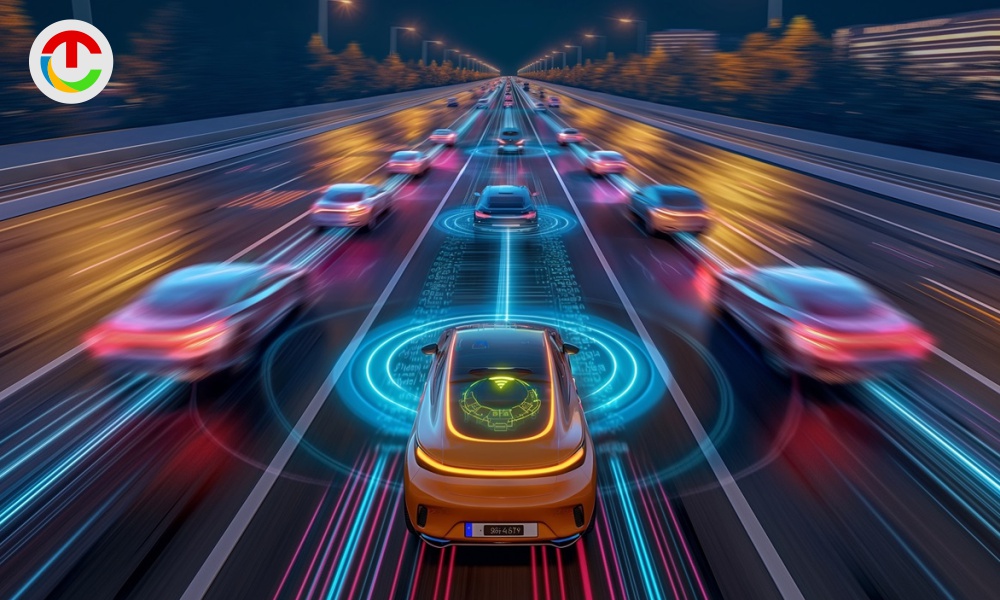
The race toward autonomous vehicles is heating in the United States, with tech giants, automakers, and startups competing to deliver safer, smarter, and more efficient self-driving cars. While many factors contribute to the development of autonomous systems, one technology stands out as a cornerstone of progress: NVIDIA’s CUDA. By enabling high-performance computing on graphics processing units (GPUs), GPU compute is transforming the way autonomous vehicles perceive, process, and respond to the world around them.
High-Speed Data Processing: The Heart of Autonomy
Autonomous vehicles rely on a vast array of sensors lidar, radar, cameras, and ultrasonic devices, to navigate the environment safely. Each sensor generates enormous volumes of data every second, and this data must be analyzed in real time to make split-second driving decisions. Traditional central processing units (CPUs) struggle to keep up with these demands, often causing delays that could compromise safety.
This is where the NVIDIA GPU comes into play. By harnessing the parallel computing power of NVIDIA GPUs, Parallel GPU allows multiple data streams to be processed simultaneously. The result is a dramatic increase in computational speed and efficiency, enabling vehicles to “see” and respond to their surroundings almost instantaneously. For American consumers, this means self-driving cars that are not only faster but also significantly safer.
Enhancing Machine Learning and AI Capabilities
At the core of autonomous driving is artificial intelligence (AI). Self-driving cars rely on machine learning algorithms to recognize pedestrians, interpret traffic signals, and predict the behavior of other drivers. These algorithms require immense computational resources, particularly for deep learning models.
CUDA accelerates this process by providing a platform optimized for AI workloads. It enables developers to train complex neural networks more efficiently, reducing the time it takes to bring autonomous systems from concept to real-world application. Companies like Tesla, Waymo, and Cruise have leveraged GPU computing frameworks to improve object detection, path planning, and decision-making algorithms, making AI-driven vehicles more reliable and intelligent on American roads.
Real-World Applications in U.S. Cities
Several U.S. cities have become testing grounds for autonomous vehicle technology, from San Francisco’s bustling streets to the highways of Phoenix. These urban environments present unique challenges, including unpredictable traffic patterns, pedestrians, cyclists, and dynamic weather conditions.
GPU-powered systems allow vehicles to handle these challenges by processing multiple sensor inputs in real time. For instance, during sudden changes in traffic or unexpected obstacles, autonomous systems can calculate optimal driving paths within milliseconds. This capability is essential for gaining public trust, a critical factor in the widespread adoption of self-driving technology.
Reducing Development Costs and Time
Developing autonomous vehicles is notoriously expensive, with billions invested in hardware, software, and testing. By leveraging CUDA for high-performance computing, automakers can significantly reduce both development time and costs. Simulations that once took days can now be completed in hours, accelerating the innovation cycle.
Furthermore, CUDA enables rapid prototyping and testing of AI models, allowing engineers to identify and resolve potential issues before vehicles hit the road. This not only saves money but also enhances safety, as every system undergoes rigorous virtual testing before deployment.
The Future of Autonomous Mobility in America
As the demand for self-driving technology grows, CUDA’s role is only set to expand. Future advancements in GPU computing and AI promise to make autonomous vehicles even more capable, reliable, and affordable. In the long term, widespread adoption of self-driving cars could reduce traffic accidents, ease congestion, and provide mobility solutions for Americans who cannot drive, such as the elderly or disabled.
Government agencies, private companies, and research institutions are already collaborating to integrate CUDA-powered systems into autonomous vehicle platforms. This cooperation ensures that innovations meet stringent safety standards while delivering the performance necessary for real-world applications. By bridging the gap between AI research and practical implementation, GPU Accel is helping shape the future of American transportation.
Conclusion
The autonomous vehicle revolution is not a distant dream it is happening now, and the United States is at the forefront. While multiple technologies contribute to the development of self-driving cars, CUDA stands out as a critical enabler. From real-time data processing and AI acceleration to cost reduction and enhanced safety, it is clear that GPU Accel plays a pivotal role in making autonomous vehicles a viable and trustworthy option for Americans.
As cities and highways evolve to accommodate these vehicles, the impact of NVIDIA’s technology will become increasingly visible, driving the future of mobility forward. For anyone watching the transformation of the automotive industry, one thing is certain: parallel GPU is not just a tool; it is a game-changer in the journey toward fully autonomous transportation.