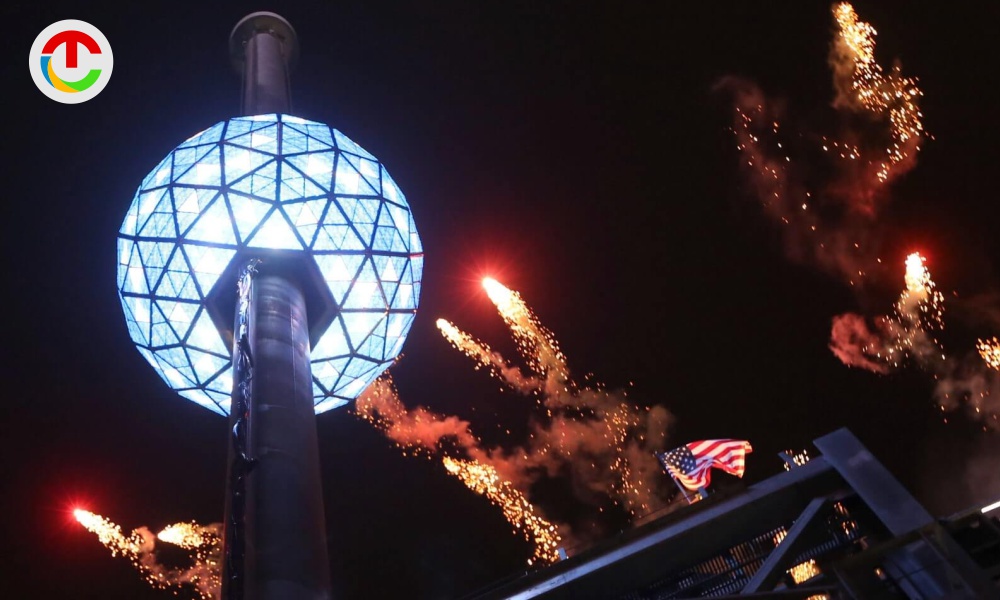
Every December 31st, as the final seconds of the year tick away, millions of people pause at home, in bars, on city streets, and across time zones to watch the New York new year ball drop. It’s a ritual so familiar that it almost feels timeless. Yet behind those 60 seconds of glitter and countdown lies one of the most enduring business success stories in American culture.
What began as a simple spectacle has evolved into a global marketing asset, cultural anchor, and masterclass in brand longevity, one that many modern companies could learn from.
From Public Spectacle to Brand Powerhouse
The origins of the NYC ball drop date back to 1907, created as a way to draw attention to Times Square and celebrate the arrival of a new year. At the time, it was less about marketing and more about visibility. But over the decades, something rare happened: consistency met scale.
While trends, platforms, and consumer habits changed, the event remained reliably familiar. That consistency built trust. Trust built attention. And attention over time became an enormous economic value.
Today, the event is inseparable from New Year’s Eve itself. That kind of brand association is something companies spend billions trying to achieve.
The Economics of a Moment Everyone Shares
From a business perspective, the real genius of the Times Square countdown is that it monetizes attention without exhausting it. Advertising slots, sponsorships, broadcast partnerships, and tourism all converge around a single moment that audiences actively choose to watch.
Major brands don’t just buy ad space; they buy cultural proximity. Being associated with the countdown means being associated with hope, renewal, and optimism, emotions that are notoriously difficult to manufacture through traditional marketing.
The result is an event that generates value far beyond its runtime, driving brand recall long after the confetti is swept away.
Media Distribution at Unmatched Scale
Another reason the New York new year ball drop has become such a powerful asset is its flawless understanding of distribution. Long before “omnichannel” became a marketing buzzword, this event mastered it.
It’s broadcast live on major U.S. networks, streamed online, clipped for social platforms, replayed in highlight reels, and referenced in pop culture. Each format reinforces the same message: this is where the year officially begins.
For businesses, the lesson is clear. The strongest brands don’t rely on a single channel; they create moments that naturally travel across platforms without losing meaning.
Why Ritual Outperforms Campaigns
Many corporate marketing efforts chase novelty. The ball drop proves the opposite: repetition, when paired with emotional resonance, creates staying power.
The NYC ball drop succeeds because it functions as a ritual. Rituals create anticipation. Anticipation creates loyalty. Loyalty creates longevity. People don’t tune in because they’re surprised they tune in because they expect it to be there.
In an age of constant disruption, that reliability is a competitive advantage.
What Business Leaders Can Learn from a Century-Old Tradition
For U.S. executives and brand leaders, the lessons are surprisingly practical:
- Consistency builds equity. You don’t need to reinvent yourself every year to stay relevant.
- Emotion drives attention. Rational messaging matters, but emotional moments endure.
- Scale comes from trust. Audiences return because the experience delivers, year after year.
The New York new year ball drop didn’t become iconic overnight. It earned its place by showing up reliably, visibly, and authentically for more than a century.
Learn more about the fascinating history of the Times Square ball drop on
Evolving Without Losing Identity
What’s perhaps most impressive is how the event has modernized without diluting its core. Technology upgrades, sustainability improvements, digital integrations, and global broadcasting have all been layered on thoughtfully.
This balance between innovation and identity is something many companies struggle to achieve. Change too fast, and you lose recognition. Change too slowly, and you lose relevance. The ball drop demonstrates that evolution works best when anchored in a clear, unwavering core.
Read more exclusive interview with Zainab Lakhani
Conclusion
In a fragmented media landscape where attention is scarce and trust even scarcer, the New York new year ball drop remains a rare constant. It proves that shared moments still matter and that brands capable of creating them can transcend generations.
For businesses chasing short-term wins, this century-old tradition offers a different playbook: build something meaningful, show up consistently, and let time do the rest.
That’s not just a New Year’s Eve lesson it’s a business one.