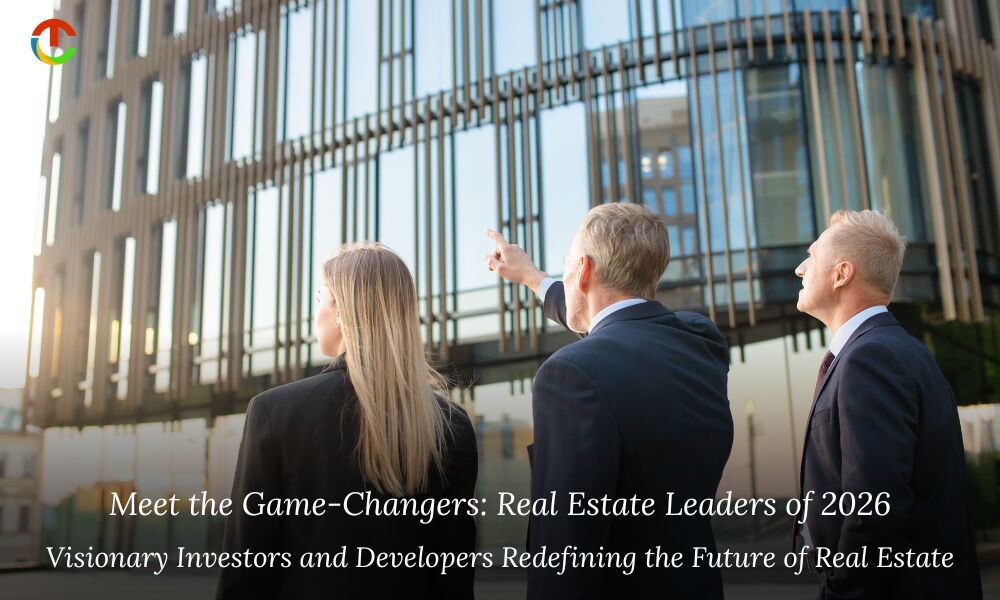
Innovation and adaptability have always been key components of the real estate sector. A new generation of real estate executives is leading the way as 2026 approaches. In addition to changing the way the market functions, these real estate game-changers are having long-lasting effects that will affect how properties are purchased, sold, and developed for years to come.
These leaders are advancing the sector with everything from innovative technology that is changing our perception of real estate to sustainable housing options. Visionary brains are more needed than ever to address the issues of affordable housing, energy-efficient construction, and real estate investment as global urbanization accelerates.
The Rising Real Estate Visionaries of 2026
In the world of real estate, there are game changers who aren’t just reacting to market changes—they’re setting the agenda. One such individual is Daniel Leung, a 30-year-old real estate mogul whose real estate group has redefined the notion of sustainable urban development. By prioritizing energy-efficient buildings and eco-friendly materials, Daniel is at the forefront of the green real estate movement.
In addition to lessening their negative effects on the environment, his company’s eco-friendly residential communities provide homeowners long-term benefits. Investors and locals who want to follow sustainable real estate trends are drawn to these initiatives. Because of his work, he has also been invited to attend some of the most prominent conferences for game changers, where professionals convene to talk about the future of urban development.
Get to Know the Real Estate Investors Creating New Standards
By building portfolios that stretch the bounds of what is conceivable, some investors are causing waves. One such person is the well-known real estate investor Jade Lopez. Jade, who is in her mid-30s, has purchased more than 100 properties, ranging from multi-family homes in New York City to opulent condos in Miami. What is her motto? “Diversification is essential.” According to Jade, a portfolio with a variety of real estate assets might be more resilient and flexible during market swings.
Her ability to spot high-growth real estate markets and make investments in places where others see risk is largely responsible for her success. She was known as “The Investor Who Retired at 30,” for example, because she was among the first investors to profit from the housing bubble in emerging economies.
The Real Estate Dilemma: Adapting to Shifting Needs
Today’s leaders are always adjusting to satisfy shifting consumer needs since the real estate market is never static. The CEO of a leading real estate company, Carlos Martinez, emphasizes the significance of adjusting to the changing market environment. The lack of reasonably priced homes will be a significant issue for the sector in 2026. In cities with sizable populations of young professionals and families, Carlos and his colleagues have created an inexpensive, sustainable housing concept that is gaining popularity.
His company’s strategy is to provide buyers with reasonably priced, contemporary living spaces by constructing smaller, better homes with less of an impact on the environment. The objective is to increase the number of people who can become homeowners without sacrificing comfort or quality.
2026 Real Estate Trends to Keep an Eye on
As 2026 progresses, these game-changers are introducing a new wave of inventions that are probably going to become industry mainstays:
Smart house Integration: Voice-activated house assistants and automated lighting are just two examples of how smart home technology is becoming a crucial component of real estate. From upscale condos to cheap housing units, industry leaders are already integrating these technology into every facet of new buildings.
Tokenization of Real Estate: Blockchain technology is progressively entering the market, enabling investors to purchase property shares using tokens. A greater number of people are now able to invest in real estate because to this innovation.
Co-Living Spaces: As metropolitan populations grow, co-living spaces are becoming more and more common, particularly in places like New York, London, and San Francisco. These areas are intended to offer reasonably priced homes while encouraging a feeling of community among occupants.
Read our Exclusive interview with Tim Lewandowski
Property in 2026 and Later
Long into the future, these game-changers in real estate will continue to have an impact. They are changing the way we think about development, investment, and housing as they keep pushing the envelope. Learning from these industry experts can give anyone hoping to enter the market in 2026 and beyond important insights into what it takes to thrive in a setting that is changing quickly.