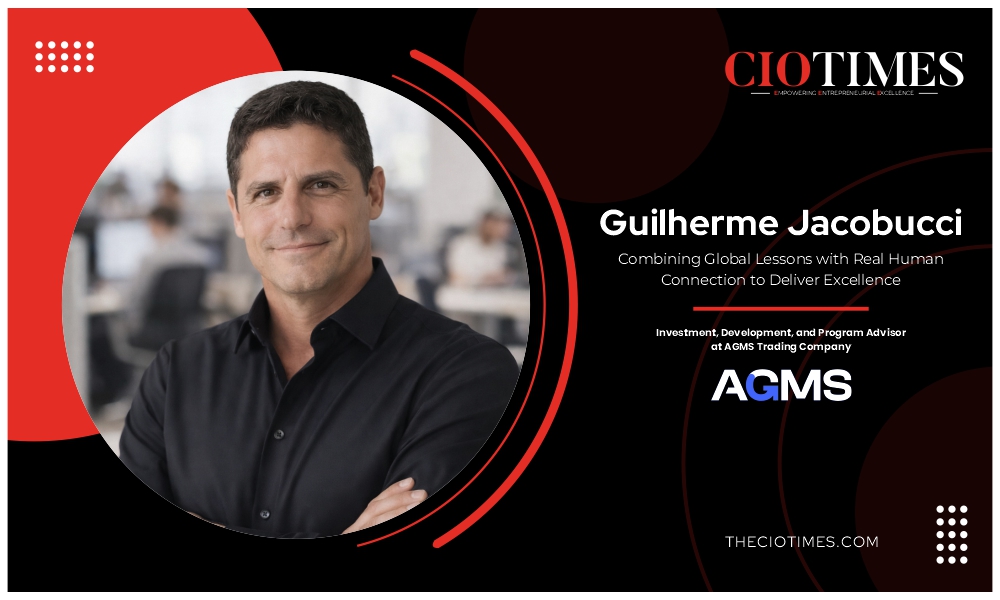
Business leaders have a radical approach to their overall contribution to the world. They can see fuelled growth long before it comes into sight. While standing in a space they wish to develop, they can envision the infrastructural, real estate, and hospitality blueprint that will open the doors to transformation and opportunities. Their streak to improve or outgrow is a daily motivation. A similar leader is Guilherme Jacobucci, Investment, Development, and Program Advisor at AGMS Trading Company, (an AGMS HOLDING company), Saudi Arabia. His vision aligns with marking a city as future-ready.
A Structured Framework
Clarity, accountability, and adaptability are the 3 constants for him when he spoke about leadership principles. These fundamentals do not differ, while the scale, stakeholders, and technical challenges may vary. His career gave him room to be in the construction and development ecosystem. From highly regulated infrastructure to ultra-luxury hospitality and mixed-use master plans, he has done it all. He can very well handle pressure and work complexity. Years of expertise have brought ease for him in tackling high-magnitude projects. The complexity remains predictable and manageable for him now.
Being crystal clear about the project is crucial, he believes. Teams give their best when objectives are unambiguous, control is well defined, and decisions are anchored in facts rather than hierarchy.
He adds, “Accountability follows naturally when roles, responsibilities, and outcomes are clear, performance becomes measurable, and trust is built across organizations and cultures.”
He equally prioritizes flexibility. Each project is different, and leadership today demands this flexibility with no compromise on principles. Keeping the momentum of the project constant, a leader must adapt to market shifts and emerging tech, while anticipating these aspects, and soaking it all in.
Guilherme’s philosophy is grounded in execution. Regardless of managing infrastructure programs or bespoke developments, a resilient and solution-focused stewardship allows teams to defeat challenges while being consistent.
Architecture of Value Generation
The intent behind the transformation aimed at via Vision 2030 is what keeps him motivated. He views the initiative not as a collection of isolated megaprojects; it is a systemic re-engineering of how a nation plans, governs, builds, and creates value for future generations, for Guilherme.
The scale needed to be matched is done with determination. The projects are onboarded at a national level, implemented with global standards, while being promoted by leadership that is ready to enhance its legacy models. This thought is very rare globally, he stresses.
He adds, “From my perspective, the most compelling aspect is the shift from asset delivery to ecosystem creation. We are no longer building individual developments; we are shaping destinations, industries, and platforms that integrate technology, sustainability, culture, and economic resilience.”
Where innovation is an exception, the idea integration accelerates substantially from envisioning to implementation.
Another aspect that excites him the most on an individual level is the opportunity he gets to contribute to projects that won’t become outdated for years. Vision 2030 is about legacy, about building with purpose, discipline, and responsibility. Being part of that journey, and helping translate national ambition into tangible, world-class outcomes, is both a privilege and a profound professional responsibility.
The Light Ahead
The biggest moments behind The Saudi Edge Resort weren’t about smart business moves; they were just personal. For the last 20 months, this project has pushed Guilherme harder than any financial model ever could. It’s been a massive test of what it actually takes to stay the course when things get messy.
The journey was never a straight line. Right from the start, there were big, public institutions that basically said they couldn’t pull it off. Being discredited like that is tough, not because of the ego hit, but because you know what’s at stake. Instead of getting defensive, the team just went quiet. They put their heads down, focused on the work, and decided that the best way to prove the sceptics wrong was to just deliver.
The scariest turning point was the funding. Originally, it was supposed to be a partnership with the government. But as things moved along, it became clear the public side wasn’t going to put up the money. That left them with a brutal choice: walk away, make the project smaller, or figure it out themselves. They chose to go entirely private. It meant staying up late, rethinking every risk and every dollar, but it was the only way to keep the project’s identity intact.
Even the marketing became about more than just business. It wasn’t about selling a hotel room; it was about getting people to believe in a dream. They spent a lot of time telling the story through films and dossiers, trying to find investors who cared about more than just a quick return, people who actually “got” what they were trying to build.
It’s still not easy. They’re still dealing with land deals, banking headaches, and the grind of managing global teams. But the support has been a huge surprise. Nearly everyone involved, 98% of the partners and investors, have stuck by them, even when things looked bleak.
Guilherme adds, “The Saudi Edge Resort still has a long road ahead before groundbreaking, and many challenges are yet to come. But founding a project like this was never meant to be comfortable.”
Building something like this was never going to be comfortable. It takes a lot of patience and the guts to stand by an idea when nobody is sure what comes next. What keeps them going is a simple, gut-level feeling: this project deserves to exist. And as long as they keep showing up and adapting, it’s going to happen.
Competency and Devotion Do the Job
Guilherme has managed portfolios as large as exceeding $5B with teams of 1200+ professionals. He is a leader who is with the team at all times. He faces crisis head-on with the team while bringing up solutions together. This builds faith and confidence in demanding environments as well. When he expects loyalty, competence, and responsible actions from the team, he also acts as a shield for them. No team member is allowed to be mistreated, disrespected, or subjected to rudeness or offensive behaviour. There is no place for objectionable people and behaviours in the team. He considers human respect and high performance as on the same level.
Nurturing an ideal leadership structure helps balance strategic oversight with hands-on execution. He has a high regard for teams that are technically competent and loyal to the team and the organization. Loyalty, for him, is about trust, shared values, and clarity of purpose. It becomes a behavioral outcome when standards are non-negotiable, decisions are transparent, and accountability applies equally to everyone.
At a strategy level, his job is to define direction, governance, and priorities. It ensures that each project is aligned with the broader objectives of the program or portfolio. At the integration level, he remains glued to the critical path: key risks, interfaces, commercial exposure, and decision points. He avoids micromanagement but stays abreast of execution and anticipates issues before they escalate.
He adds, “This balance is only possible when strong leadership layers are empowered and held accountable. With the right people in place, strategy and execution stop being competing forces; they reinforce each other.”
Built Trust
People who work with Guilherme often say alignment with him feels natural, not forced. That’s because he doesn’t treat reliance as something to be negotiated. He sees it as something built quietly, over time, through how you show up, especially when things get messy or uncertain. Pressure doesn’t change his approach; if anything, it makes his priorities clearer.
He’s open by default. He’d rather have an uncomfortable conversation early than deal with confusion later. In his experience, problems don’t damage trust; avoiding them does. When risks and constraints are spoken about honestly, people feel included, not managed, and that makes moving forward easier.
Years of working on complex, large-scale projects have taught him how different stakeholders think and what they worry about. He listens first, speaks plainly, and keeps discussions grounded in reality. Past successes matter, but he treats them as commitments, not credentials. Consistency is what earns confidence.
Relationships matter to him, but only when they’re real. He takes time to understand people, respects boundaries, and doesn’t shy away from tough conversations. At the core are values shaped early on responsibility, loyalty, and long-term thinking. Management, for him, is about care and accountability. When that’s present, belief follows, and people move forward together because they want to.
Conscious Strategizing
Luxury, infrastructure, and sustainability generate lasting value only when regarded as an interconnected system instead of conflicting priorities. At The Saudi Edge Resort, the team aims to redefine luxury, viewing it not as extravagance but as purposefulness where design, operations, and environmental stewardship support each other through decades rather than just development phases.
From the beginning, it purposefully chose to transcend conventional ESG compliance and integrate regeneration into the project’s value framework. Sustainability is approached not as an additional requirement or certification task, but as a guiding framework that influences all significant decisions from land usage and timing to design, infrastructure, and operational strategies. This enables the project to achieve global ESG standards while also generating real, lasting economic and social benefits.
A key change the team implemented was understanding that today’s ultra-high-net-worth clients are no longer looking for temporary experiences; they desire transformation, durability, and a lasting legacy. That understanding directly influenced the master plan. Focusing on regenerative ecology, restoring biodiversity, managing water, establishing farm-to-table systems, and enhancing longevity-oriented wellness and medical frameworks, they connected environmental stewardship with asset durability, pricing strength, and resilience in long-term demand.
Infrastructure decisions were equally vital. Staged advancement, cohesive behind-the-scenes systems, employee communities, training centres, and sustainable utilities were created to guarantee optimal performance from the outset, while permitting the project to grow responsibly as time progresses. This systematic method lowers lifecycle expenses, safeguards asset functionality, and boosts investor trust, essential components of sustainable value generation that are frequently ignored in luxury projects.
Supervision is crucial for upholding ESG integrity. Well-defined decision points, quantifiable success metrics, and adherence to globally acknowledged standards guarantee that sustainability pledges remain intact amid commercial pressures. Simultaneously, they consciously designed the project to appeal to green funding, ESG-related investment tools, and long-term institutional capital, enhancing financial sustainability together with environmental and social results.
He adds, “Ultimately, long-term value is created when luxury enhances place rather than consumes it. By anchoring The Saudi Edge Resort in regeneration, cultural authenticity, and longevity, we are not only meeting ESG expectations—we are future-proofing the asset.”
He aims to deliver a destination that appreciates in relevance, resilience, and meaning over time, setting a new benchmark for how ultra-luxury developments can coexist responsibly with the environments and communities that sustain them.
Bridging the Gap Between Local and Global
Guilherme has worked in diverse sectors from Europe and South America to Africa and the Middle East. This has helped him in forming his leadership perspective. This exposure helped him grasp that each environment is different. Yet the causes of success and failure can be surprisingly similar.
In his early days, he learned that risk is not as it shows on paper. There are risks involved in funding structures, supply chains, labor markets, or political cycles. This guided him to move beyond the theoretical aspects of risks and focus on lived risk. These were the aspects that truly mattered. This has helped him to be cautious without being conservative, and decisive without being reckless.
Administration has been a global thing. In such diverse continents, projects suffer when decisions are vague, accountability is diluted, or control hesitates to take ownership. Working beyond boundaries helped him realize that this is about clarity. It invites stability in environments where external forces are volatile. Ideal administration imparts confidence while safeguarding projects from personalities, politics, and short-term pressures.
Look, when you strip everything away, getting a project done isn’t about some fancy manual or a set of technical specs; it’s about people. For Guilherme, execution has always been deeply personal. He’s spent his career realizing that you can’t just force a project to life; you have to actually connect with the human beings behind the work.
His way of leading is really just a map of everywhere he’s been. In Europe, he saw the beauty of a clear process, but it was South America that taught him that without real, honest relationships and the grit to pivot, a plan is just a piece of paper. Africa was a masterclass in being scrappy and making things happen when you have almost nothing to work with, while the Middle East showed him the pure adrenaline of what’s possible when massive ambition finally meets the right resources. Every person he’s sat across from in those places changed how he listens and how he builds certainty.
He’s learned that you can’t just fly in and start barking orders. To really make an impact, you need those high, non-negotiable standards, but you also have to give the local team the space to do things in a way that makes sense to them. It’s not about lowering the bar; it’s about making sure the people on the ground actually feel like they own the victory.
All those years of working across different time zones and cultures have made him a lot more grounded. It’s taught him how to stay patient when things are a mess, when to stand firm on what matters, and maybe most importantly, when to put the boss title aside and just be a student. He’s a firm believer that when you treat people with as much respect as the process, you can build something incredible anywhere on the map.
Holistic Approach
The ultimate aim of the projects that pose an opportunity for innovation must have a clearly defined path. The future will be molded by developments that operate as living systems, not by bigger assets or faster delivery.
Guilherme emphasizes that we, as humans, exist in an era where luxury, infrastructure, and sustainability are inclusive discussions. Innovation places itself at the intersection of these. Modern-day concepts like farm-to-table and farm-to-treatment-table systems hint towards a broader shift. These developments become self-supporting ecosystems that connect land, health, food, and human performance in a closed-loop model. They are about resilience, quality control, and long-term independence from fragile global supply chains.
Ecological innovation, he says, is set to influence how future projects are conceived and delivered. Elements such as re-wilding, landscape regeneration, biodiversity corridors, water-sensitive design, and native habitat recovery are no longer seen as add-ons, but as foundational components. When ecological principles are embedded early in the masterplanning process, they deliver more than environmental benefits, shaping healthier microclimates, lowering long-term operational costs, and strengthening land value over time. In this context, sustainability moves beyond regulation and becomes a deliberate driver of resilience, performance, and long-term return.
Furthermore, he says, a major frontier is the evolution from experiential to transformational development. The projects from now on will revolve around rarity, depth, and in-depth meaning. Neatly scrutinized environments that elevate personal growth, longevity, learning, and reconnection will outperform high-volume destinations. Innovation in this realm is subtle; it is about designing places that change how people feel, think, and live, long after they leave.
In infrastructure, true innovation lies in flexibility. Designs that support phased growth, adaptable utilities, and cleaner energy systems allow assets to change as needs change. When command and planning anticipate regulatory shifts, demographic trends, and evolving ESG priorities, projects remain relevant without costly reinvention, and that resilience is what ensures longevity.
He asserts, “The future of innovation in our industry is not technological alone—it is philosophical. It is about building less, but building better. About creating developments that enhance their environment rather than consume it, that generate long-term relevance rather than short-term attention.”
The next-gen projects will be about accommodating ambition with restraint, innovation with responsibility, and growth with regeneration. It engraves places that are valuable to society and the planets to come, not only for the investors from a commercial point of view.
Built Forward
For Guilherme, legacy has been more about relevance than on time. It was never about scale, cost, or visibility. Nation molding projects attract attention in the early years, he believes. An actual legacy is observed years later, when the project is still functioning with purpose, dignity, and value.
A legacy development, in his view, keeps serving the nation long after the original sponsors, leaders, and delivery teams step away. It withstands political cycles, market shifts, and changing demographics because it is shaped by long-term intent, not short-term optics. That balance calls for restraint as much as ambition, knowing when not to build, when to protect land, culture, and ecosystems, and when durability must come before speed.
It also exists in systems, he adds. Strong administration, clear ownership models, disciplined operations, and institutional knowledge transfer ensure that projects do not decay once construction ends. Delivery is one-half of the responsibility. The other half is the structures that enable others to operate, maintain, and evolve the asset responsibly.
He states, “On a human level, legacy is about people. It is reflected in the professionals who grow through these programs, the local communities that benefit from them, and the standards that become embedded in the national development ecosystem. If teams emerge stronger, more capable, and more principled than when they started, that is legacy in action.”
There is also a moral dimension. Nation-shaping projects must respect the place of their culture, environment, and identity. Developments that enhance their surroundings rather than overpower them earn legitimacy and long-term acceptance. When a project becomes part of a nation’s story rather than an interruption of it, it has achieved something lasting.
Ultimately, he defines legacy as responsibility extended through time. It is the discipline to build in a way that future generations will understand, respect, and find useful. When a project no longer needs defending because its value is self-evident, that is legacy.
Advice for the Future Leaders
When he speaks to emerging leaders, his advice is refreshingly grounded. Stop chasing scale, he says, and start learning how to carry responsibility. Big projects aren’t impressive because of their size; they’re demanding because of the decisions they force, the consequences they carry, and the number of lives they touch. Long before managing billion-dollar budgets, leaders need to learn how to manage pressure, risk, and accountability with humility, not bravado.
One lesson he returns to often is that strategy, finance, and delivery can’t be separated. A strategy that looks good on paper but can’t be built goes nowhere. A financial model that ignores execution quickly unravels. And delivery without commercial awareness just becomes an expensive activity. The leaders who last are the ones who are comfortable in both worlds who can sit in the boardroom and then walk the site, understanding numbers, contracts, timelines, and people without switching personas.
He’s equally clear about teams. Bigger doesn’t mean better. In fact, oversized structures usually slow things down and blur accountability. He prefers small, capable teams built on trust. Find good people, give them space to do their work, stand up for them when things get tough, and expect integrity, commitment, and performance in return. When pressure hits, and it always does, your team is what holds everything together.
He also believes many problems are created early and paid for later. Unclear contracts, vague presidency, and fuzzy decision-making may seem manageable at first, but they have a way of resurfacing at the worst possible moment. The strongest leaders simplify from the start. They build clarity into systems before construction begins, knowing that when pressure rises, simple structures outperform clever ones’ every time.
Presence matters deeply to him. Leadership, in his mind, can’t be done from a distance. When things go wrong, he believes leaders should step in, stand shoulder to shoulder with their teams, and work through the issue together. People don’t follow job titles; they follow those who show up, take responsibility, and protect their teams from unnecessary noise. Demanding excellence never requires disrespect.
Above all, he believes power has to be anchored in values, not ego. Large projects have a way of testing character as much as capability. Acting with fairness, transparency, and respect, especially when no one is watching, matters. Reputation, he often reminds younger leaders, is as valuable as capital, and far harder to rebuild once lost. It’s a lesson Guilherme has carried throughout his career.
He says, “If you can combine clarity of thought, financial discipline, execution rigor, and human leadership, scale will come naturally. If you chase scale without those foundations, it will eventually expose you.”
Here is a glimpse of some casual banter with Guilherme:
Currently reading books: The Secret of the Millionaire Mind, and Good to Great.
One word about self: unshakeable
Most important lesson learned? (Personal or professional):
That faith in God comes first, and clarity and integrity must follow.
Placing God at the center of my life has taught me that leadership, ambition, and success are responsibilities, not entitlements. When faith guides decisions, clarity of purpose emerges naturally, and integrity becomes non-negotiable. Skills and ambition may open doors, but it is faith-anchored integrity that sustains conviction, strengthens teams, and allows you to navigate pressure with humility and conviction.
Best professional advice received:
To never give up—and to understand what that truly means.
The best professional advice I’ve ever received was not simply about persistence, but about resilient conviction. Never giving up does not mean being reckless or ignoring reality; it means refusing to abandon your principles, your work ethic, or your responsibility when pressure, doubt, or opposition appear. It means adapting strategy without compromising values, learning from setbacks without internalizing failure, and continuing to move forward even when progress is slow or recognition is absent.
Favorite quotes:
- Commit your work to the Lord, and your plans will succeed – Proverbs 16:3
- Success is not final; failure is not fatal: it is the courage to continue that counts – Winston Churchill
- I have not failed. I’ve just found 10,000 ways that won’t work – Thomas Edison
- The best way to predict the future is to create it – Peter Drucker
- Risk comes from not knowing what you’re doing – Warren Buffett