Earning trust in the enterprise landscape is tough. It can be done only when consistency, expertise, and integrity exist. Organisations that embody these qualities form the backbone of IBM’s collaborative ecosystem. Every partner like PKS Software ensures that the solutions delivered are innovative and resilient. This network is built on shared standards of excellence. By engaging with providers who meet the highest standards, IBM strengthens its position as a leader in shaping business technologies. The outcome is dependable service, measurable progress, and a foundation that enables enterprises to achieve sustainable success with confidence.
Trusted Transformation
PKS Software, founded in 1991 and headquartered in Germany, has established itself as a trusted authority in the modernisation of mission-critical legacy systems. With deep expertise in IBM i and IBM Z platforms, the firm delivers clarity and strategic transformation to enterprises seeking resilience and innovation.
Its disciplined technology is anchored in transparent analysis and fact-based decision logic. It positions mature systems as assets rather than liabilities. By combining reliability with forward-looking innovation, the organisation enables businesses to secure measurable progress and long-term success in an evolving digital landscape.
Bridging Legacy and the AI Era
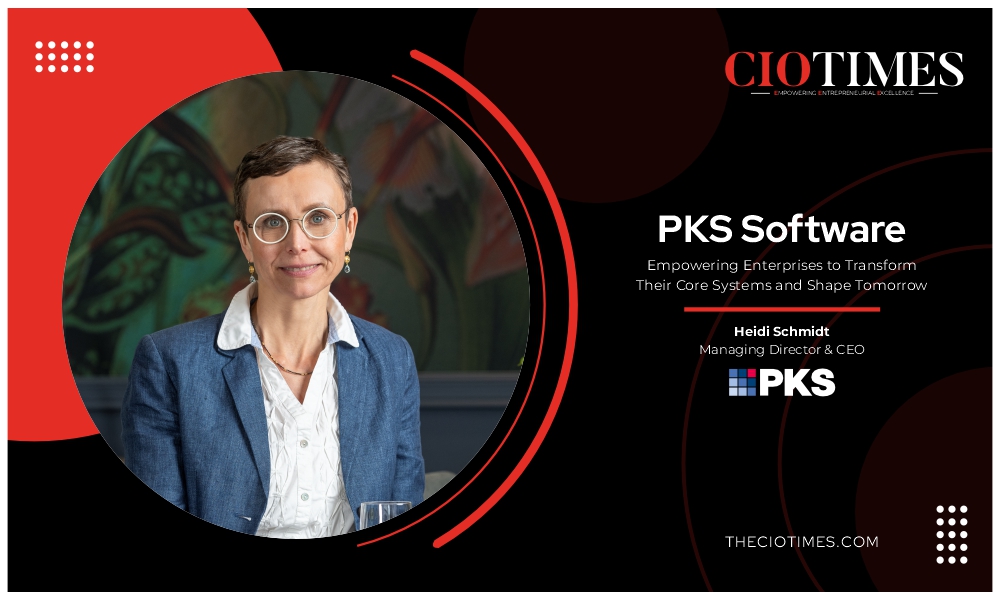
Heidi Schmidt, the CEO of PKS Software GmbH and an IBM Champion, specialises in modernising mission-critical enterprise applications across IBM i and IBM Z. Alongside the PKS team, she helps organisations preserve critical business knowledge, address technical debt, and build practical pathways towards modern, AI-driven architectures.
Enterprise Continuity
For more than thirty years, PKS Software has established itself as a trusted authority in the modernisation of mission-critical enterprise systems. This ensures operational continuity while enabling transformation. In an era defined by accelerated innovation, the organisation positions resilience as the foundation of credible change. The firm begins with transparency, identifying critical applications, dependencies, and risks. This is before advancing through carefully sequenced modernisation. APIs are introduced around proven capabilities, tightly coupled components are separated, and migrations proceed only when strategically justified. Each step delivers measurable value, enhancing agility and resilience without compromising daily operations.
Conscious Debt Management
Technical debt has been a boardroom topic as an IT concern. It has direct implications for innovation, competitiveness, and business agility. It is deferred decision-making with compound interest. It accumulates not only in code, but also in architecture, interfaces, skills, documentation, testing, and operating processes. That is why a periodic clean-up project is never enough.
The team highlights some critical distinctions on how Enterprise leaders should manage technical debt as a permanent business portfolio. They are as follows:
1. Strategic Portfolio management
PKS Software positions technical debt as a permanent portfolio rather than a periodic clean-up. It accumulates across code, architecture, interfaces, skills, documentation, and operations. It requires classification and prioritisation to safeguard resilience and compliance.
2. Business-linked Outcomes
The firm emphasises translating technical debt reduction into tangible business impact. Boards will fund faster product launches, reduced risk, improved auditability, and shorter recovery times, not “cleaner code” in isolation.
3. Governance and Investment Discipline
PKS advocates embedding ownership and continuous investment into architecture governance and product roadmaps. The objective is not zero debt, but conscious debt understood, prioritised, and actively managed for strategic advantage.
4. Hidden Value
The prevailing narrative around legacy systems often defaults to replacement rather than reinvention. PKS Software challenges this assumption, asserting that legacy is not defined by age but by the absence of strategic options. IBM environments frequently embody decades of refined business logic, regulatory decisions, customer requirements, and operational lessons intellectual property that is rarely documented elsewhere. To discard such systems without rigorous understanding risks losing hard‑won intelligence.
The organisation advises leaders to treat applications as an asset portfolio: reinvesting in differentiating components, retaining stable utilities, modernising interfaces, and retiring only where appropriate. The strategic question is not “old or new?” but “where does capability create value, and which architecture provides the greatest freedom to evolve?” By reframing the debate, PKS elevates the conversation from emotional replacement narratives to evidence‑based portfolio management, aligning technology decisions with enterprise resilience and competitiveness.
Strategic Agility
Application modernisation is too often treated as a destination. PKS Software positions it as a continuous capability embedded within the operating model. In this executive framing, it is a muscle rather than a milestone. Organisations that succeed maintain a precise understanding of their application landscape. This is where business capabilities reside, how systems interconnect, and where change introduces risk.
They adopt modular architectures, automated testing, modern source-code management, DevSecOps practices, and rigorous engineering standards. Crucially, they fund modernisation as part of ongoing product development. They also organise differently: business experts, architects, developers, and operations teams share responsibility for the lifecycle of capabilities. It is with decisions made close to relevant knowledge but within enterprise guardrails.
Knowledge is institutionalised through documentation, repositories, and repeatable methods, rather than residing with a few long‑serving specialists. By contrast, one‑time initiatives often deliver new platforms without altering behaviours, creating fresh legacy within a decade. Continuous transformation means continuously creating options to integrate, replace, scale, automate, or retire components as business imperatives demand.
Smart Modernisation
Artificial intelligence is revamping enterprise software development, analysis, and maintenance. PKS Software emphasises that the most crucial impact will be the ability to understand complex systems quickly and translate that knowledge into safe and governed action. IBM environments often comprise millions of lines of code, multiple languages, and decades of embedded business rules. AI can now explain programmes, generate documentation, identify patterns, support testing, and propose refactoring, while agentic tools will increasingly orchestrate workflows end‑to‑end.
Yet probabilistic AI requires reliable context. A language model cannot infer the architecture of a mission‑critical estate from random source files. PKS therefore combines deterministic analysis with AI: structural facts, dependencies, data flows, and application context provide the grounding, while AI makes that intelligence accessible and actionable. PKS eXplain delivers reproducible analysis, while IBM Bob advances platform‑aware, governed workflows for IBM i and IBM Z. The future lies in this combination. The deterministic system intelligence plus AI‑powered execution with human accountability is preserved for consequential decisions.
Enterprise Convergence
The organisation’s relationship with IBM has evolved from a predominantly platform-focused partnership into a broader innovation ecosystem. IBM i and IBM Z remain central to PKS Software’s technology strategy because they support critical processes. These are the operations where reliability, security, and transactional integrity are non-negotiable. However, these platforms are no longer isolated environments. They are increasingly connected to open-source technologies. These include APIs, cloud services, containers, modern developer tooling, and enterprise AI.
As an IBM Business Partner and through its involvement in the IBM Champion community, PKS Software has experienced the importance of this ecosystem firsthand. Customers, partners, user groups, and IBM experts continuously challenge one another to make these platforms more accessible to a new generation.
The organization envisions that the upcoming era of enterprise computing will be defined by the convergence of platform-integrated AI, hybrid cloud, and cyber resilience. IBM z17 and Power11 bring AI deeper into the transactional core. Red Hat OpenShift provides a consistent hybrid application layer for it. Watsonx strengthens enterprise AI and governance, and IBM Bob introduces platform-specific AI workflows for development and modernisation.
The Trust Anchor
In the coming years. IBM Z is visualised as the dependable anchor of the hybrid enterprise. Not every workload belongs on the mainframe. That is the strength of a hybrid architecture. Digital channels, analytics, SaaS platforms, and cloud-native services can evolve at different speeds. Simultaneously, the transactional core continues to deliver consistency, security, and availability. This strategic advantage is connecting these environments without introducing unwanted complexity.
IBM Z will combine transaction processing with practical AI close to sensitive data. PKS Software sees this as strategically important for use cases such as fraud detection, risk assessment, and personalized decision-making. This is where latency, data movement, and governance are critical factors. This platform is also advancing in pervasive encryption, confidential computing, threat detection, cyber resilience, and quantum-safe security.
PKS Software considers its role distinctive. So, it will remain a highly governed execution environment for the processes and data where enterprises cannot afford uncertainty. The organisations that capture the greatest value will be those that modernize platform access, automate delivery, and extend their capabilities across the broader enterprise architecture.
1. Transformation Leadership
The digital transformation programmes rarely fail because of technology alone. In its experience, outcomes are often determined at the interfaces between people: between business and IT, strategy and execution, central governance and local accountability, and established expertise and the next generation. The team shares four decisive factors:
2. A shared and credible narrative
Leaders must articulate why change is necessary. Also, thought must be given to what must be preserved, and what the organisation should look like afterwards. When transformation is framed simply as a technology replacement, people naturally defend the systems and expertise that have served the organisation for years
3. Decision clarity
Complex programmes lose momentum when ownership of scope, architecture, priorities, or acceptable risk is unclear. Effective governance is not about adding committees; it is about establishing clear decision rights and enabling rapid escalation when required.
4. Recognise the value of those who understand the existing environment.
Experienced specialists should not be viewed as representatives of the past, but as architects of the transition. At the same time, they must be empowered and expected to transfer their knowledge.
5. Leadership must encourage learning without allowing drift.
Transformation requires experimentation, but every initiative should be grounded in a clear hypothesis, measurable outcome, and defined decision point.
Hence, it is safe to say that successful transformation ultimately requires a balance between respecting the strengths of the existing organisation and having the conviction to challenge established ways of working.
6. Modernising Enterprise Intelligence
The organisation begins by understanding and identifying that innovation without context can introduce uninvited risks. Through its eXplain platform and consulting methodology, the team establishes a structured, reproducible view of complex application estates. It analyses programmes, calls, data structures, dependencies, and data flows, connecting the technical landscape with underlying business capabilities.
This enables clients to identify duplicated logic, obsolete components, critical dependencies, reusable services, and areas where valuable business rules remain embedded within inaccessible code. That outcome extends beyond documentation. It provides a strategic foundation for informed decision-making. A client may determine that a proven pricing engine should be exposed as a service. It needs to be a firmly coupled domain that can be progressively decoupled when need be.
PKS Software also enables organisations to preserve and transfer institutional knowledge. Experienced employees can validate business context, while the analysis platform captures structural intelligence for future teams and AI-enabled workflows. This is an approach that allows organisations to modernise without compromising reliability: preserving what creates distinctive value, removing what hampers progress, and providing modern access to proven capabilities. It shares practical examples, case studies, and whitepapers through pks.de, recognising that modernisation gains credibility when leaders can see how complex analysis has been translated into practical, manageable steps.
The System Context
Since 1991, the team is triumphantly delivering transformation programmes. It also stays updated with emerging technology or business trends while highlighting the systems context. Although enterprises are heavily dependent on generative AI, cloud platforms, and automation, a substantial number of them rely on how their existing software actually works. Without that context, AI produces plausible answers rather than dependable decisions, cloud programs migrate complexity instead of reducing it, and automation accelerates processes that may already be poorly designed.
A second underestimated trend is knowledge erosion. The retirement of experienced specialists is often discussed as a staffing problem, but it is a strategic data-loss event. When undocumented business rules disappear with individuals, organizations lose the ability to change confidently. Capturing technical and functional knowledge must therefore become part of enterprise risk management.
The third trend the team witnesses is a shift from application inventories to living semantic models of the enterprise. These are continuously updated representations of systems, dependencies, business capabilities, data and risks. These models will become the context layer for humans, AI agents, and governance processes.
Lastly, leaders underestimate the value of selective modernisation. The future will not be won by the organisation that replaces the most. It will be won by the organisation that can decide most precisely what to retain, transform, integrate, or retire.
Autonomous Governance
The organisation believes CIOs should foster greater enterprise autonomy by strengthening accountability. As AI, automation, and intelligent operations become increasingly embedded within enterprise environments, organisations must establish clear boundaries defining which decisions AI may recommend, which it may execute within defined parameters, and which require human oversight. These boundaries should exhibit business impact, reversibility, regulatory obligations, and the quality of available evidence.
Equally important is comprehensive observability and traceability across autonomous workflows. Organisations must be able to determine which models, data, tools, and policies informed an action. It also focuses on understanding what changed, validating the outcome, and intervening or reversing decisions when necessary.
Governance must evolve beyond static approval frameworks towards continuous assurance throughout the technology lifecycle. IBM’s direction for watsonx.governance similarly emphasises continuous visibility, enforceable controls, and accountability across heterogeneous AI environments. The quality of enterprise context will ultimately determine the quality of autonomous decision-making. Agents operating with incomplete architecture, outdated documentation, fragmented data, or ambiguous ownership risk automating complexity rather than resolving it. Reliable system inventories, deterministic analysis, data lineage, and clearly defined policies are therefore foundational to responsible autonomy.
As enterprises move towards more autonomous operating models, CIOs will also need capabilities spanning AI product ownership, model and agent risk management, red teaming, process redesign, and human oversight. PKS Software believes that autonomy should strengthen organisational resilience, making operations more intelligent, responsive, and adaptive without creating opaque dependencies that undermine accountability.
A Strategic Evolution
The team’s long-term strategy is grounded in a clear principle: enterprises should not have to sacrifice the strengths of their existing technology foundations to achieve meaningful transformation. The organisation will continue to operate at the intersection of business-critical legacy systems, software intelligence, and pragmatic modernisation. Its focus is to help clients transform complex application estates into transparent, manageable environments and translate that understanding into sustained modernisation.
This includes modern development environments, modular architectures, APIs, DevSecOps, selective migration, and AI-enabled engineering. The team’s eXplain platform will increasingly serve as a trusted context layer. It uses deterministic analysis to reveal the underlying structure of application estates and enables AI to help teams interpret and act on that intelligence. The objective is faster, more informed, and better-governed transformation.
Technology, however, remains only part of the equation. PKS Software recognises that lasting transformation depends on technical expertise, commercial judgement, collaboration, and the ability to connect different generations and disciplines.
Also Read:- CIO Times Magazine for more information