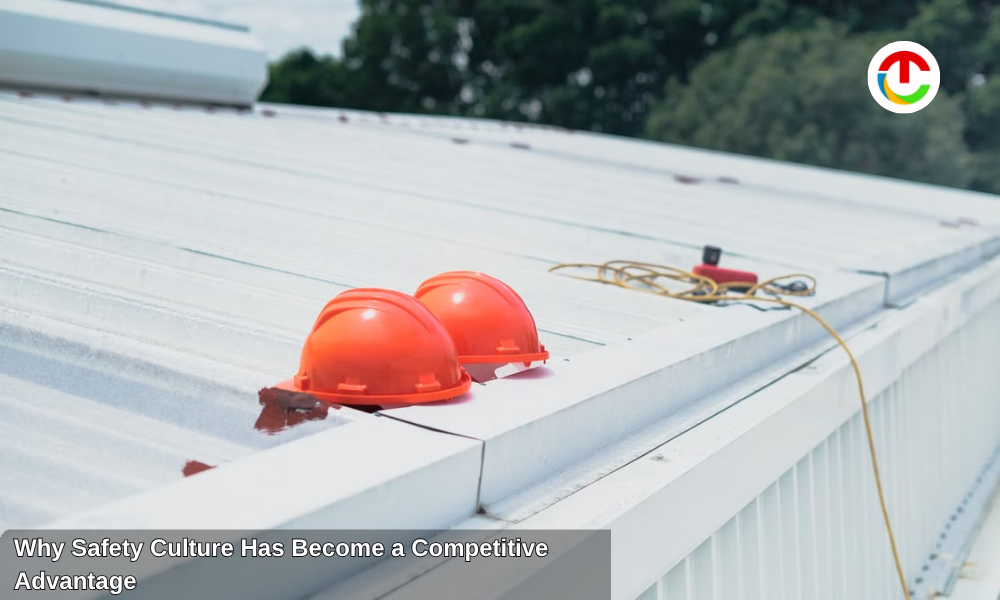
Is safety just a box you tick to keep the inspectors happy?
Safety culture often gets treated that way by many organizations. However, the ones that are thriving today view it in another way. They view safety culture as a competitive advantage. When you have a strong safety culture you can:
- Cut injury costs
- Keep your best people
- Win more contracts
It all begins with a few simple practices most of your competitors are overlooking.
Inside this guide:
- What Is Safety Culture (Really)?
- The Real Cost Of Getting Safety Wrong
- How Fitness For Duty Exams Build A Safer Team
- 4 Ways Safety Culture Beats Your Competitors
What Is Safety Culture (Really)?
Safety culture is how your team thinks about risk. It’s not the poster on the break room wall. It’s what people do when no one is watching.
Employees raise concerns about hazards when there is a strong safety culture. Management responds quickly to safety issues. And everyone understands that being injury free is more important than meeting a deadline.
That’s the difference.
A poor safety culture relies on rules. A great one relies on people who genuinely care… and preparing your employees for the task at hand.
Fitness for duty exams are where most organizations fail. Fitness exams ensure that an employee is able to safely perform the physical and mental tasks associated with a job. They are conducted prior to employment, post-injury, or after an extended period of time away from work. Conducting fitness for duty exams along with routine employee health screenings (hearing tests, pulmonary function tests, vision tests, etc.) allows you to have a better understanding of your employee’s health over time. That way you can identify issues before they become a problem – rather than waiting until after an injury occurs.
Pretty simple, right?
But here’s why it matters so much right now…
The Real Cost Of Getting Safety Wrong
Workplace injuries are expensive. Very expensive.
Overexertion, slips, trips and falls, and being struck by equipment rank among the five leading causes of on-the-job injuries that seriously hurt workers and cost U.S. employers $38.26 billion a year. Serious injuries are those that result in time off from work of more than five days. That’s just direct medical expenses and lost production.
It doesn’t include:
- Overtime to cover the missing worker
- Hiring and training a replacement
- Damaged equipment
- Lost production
Here’s the kicker…
Private sector employers experienced approximately 2.5 million nonfatal injuries and illnesses in 2024. That equals lots of missed workdays, delayed production and dissatisfied customers.
Businesses with a good safety culture just don’t see these kinds of invoices. That money goes back into the growth of their business.
How Fitness For Duty Exams Build A Safer Team
Most injuries don’t come out of nowhere.
Too much lifting, pushing, pulling and carrying causes more serious workplace injuries than anything else, at a cost of more than $13 billion annually. Many of these injuries occur when a worker’s body is pushed into a job it isn’t ready for.
That’s where fitness for duty exams come in.
They enable you to place the right person in the right job. They also provide a safe bridge back for returning employees instead of dumping them right back into strenuous activity.
A solid program usually covers three key moments:
- Pre-placement: before a new hire starts a physically demanding role
- Return-to-work: after an injury, illness or long leave
- Ongoing checks: when a worker’s health or performance raises a real concern
Consider it a pre-flight checklist. Just because your plane took off without problems yesterday doesn’t mean the pilot neglects his checks. Don’t neglect your workforce.
And the best part?
Employees see that you care. When a business invests in their well-being, they understand: your health matters, on every shift. It builds trust — and trust is the cornerstone of every great safety culture.
Keep in mind that fitness for duty exams should be nondiscriminatory and job-related. Ensure that your program is compliant with the ADA and any local regulations that may apply. Remember, the purpose of fitness for duty exams is not to weed people out, but to keep everyone safe.
4 Ways Safety Culture Beats Your Competitors
Alright… now for the good stuff. How does a robust safety culture become a true competitive advantage for your business in the future?
1. Keep Your Best People
Safety is something workers are noticing more than ever these days. According to one survey, 1 in 4 workers claimed they have left a job because they felt it was unsafe.
Think about that for a second…
It takes time and money to replace an experienced employee. You lose their expertise, productivity and rapport with your customers. A safe workplace retains talent.
2. Win More Contracts
Large customers don’t want to do business with risky contractors. Some evaluate safety history prior to awarding a contract. A good record (and a culture that supports it) puts you ahead of the pack.
3. Boost Productivity
Safe teams concentrate on their work. Workers who are not distracted by the fear of being hurt perform more efficiently with fewer errors. There are also fewer stoppages, investigations and delays resulting from incidents.
It makes sense, right?
4. Protect Your Reputation
One moment can erase years of good work. Negative news travels quickly — through social media, local news outlets and by word of mouth. A robust safety culture safeguards your brand as much as it does your employees.
That’s a win-win-win.
The Bottom Line On Safety Culture
Safety culture is no longer just an expense line item. Safety culture is smart business. Companies that excel:
- Spend less on injuries
- Keep their best workers
- Win more business
In summary — foster a safety culture that encourages individuals to speak up. Support that with fit for duty testing and routine medical examinations. Integrate safety into every decision made from hiring practices to the daily shift meeting.
Start small. Pick one area, fix it, and build from there.
Frequently Asked Questions
1. What are Fitness For Duty Exams?
Fitness For Duty Examinations (FFDEs) are medical evaluations used to determine if an employee is able to perform their job without risking their health. They are commonly used during the pre-hiring process, following an injury, or if there are concerns that an employee’s health may be at risk while on the job.
2. How does safety culture give a company an edge?
An effective safety culture reduces injury costs and prevents trained employees from leaving your company. It can even make your company more appealing to customers. That’s a competitive edge over others who don’t consider safety a priority.
3. Who needs Fitness For Duty Exams?
Any position can be improved. Some examples are jobs with physical labor and safety hazards: Construction, manufacturing, warehousing, transportation and utilities. Anywhere a mistake can cause harm to themselves or others.
Also Read :- Scaling Pain: Overcoming Operational Bottlenecks in Rapid Growth