Purchase requests, supplier responses, sourcing events, invoices and spending activity provide procurement teams with valuable information. But information gathering is just the first step. To make the most of procurement data, businesses must identify its insights and take action based on them. By sifting through vast amounts of data, finding patterns, and consolidating insights,AI in procurement data can provide a more comprehensive and cohesive set of data for sourcing, supplier and spending decisions.
Understanding the Value Hidden in Procurement Data
Procurement data can uncover the frequency of expenditure, when suppliers are active, what it demonstrates about the value of purchases, and routine procurement requirements. Situations such as this, once the information is dispersed in various systems, however, may take time to find useful patterns.
A connected approach collates procurement information into a whole to make it easy for teams to grasp the trends in supplier, category, sourcing, and purchasing. A clearer view helps with better planning and informed decisions.
How Intelligent Analysis Turns Data Into Insights?
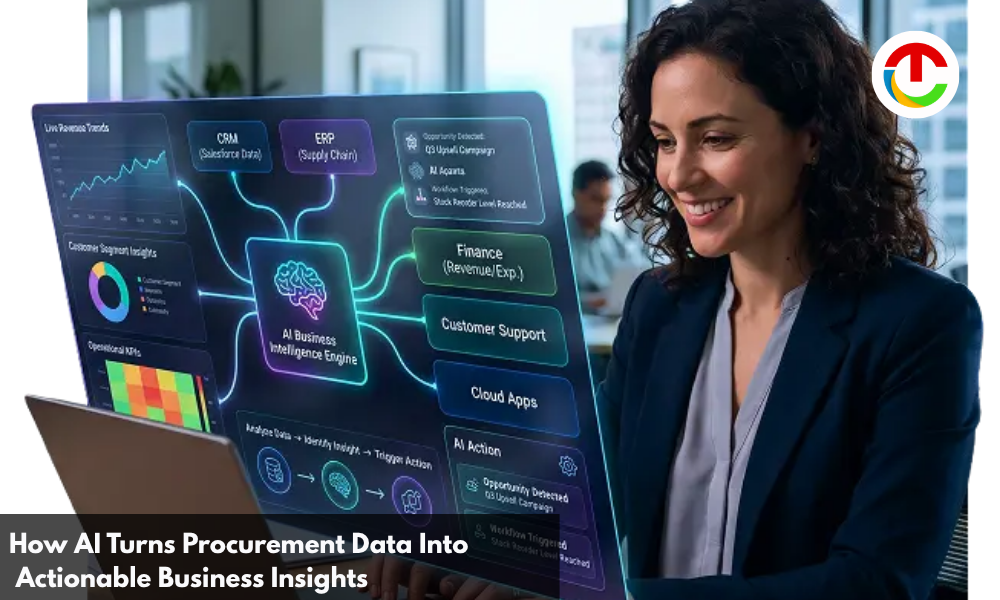
Large amounts of procurement data can be fed into intelligent systems, which can discover patterns that are hard to find manually. AI in procurement data processes allow companies to access, analyse, and present information in complex data sets, call to the surface key trends and issues, and guide them toward further investigation.
1. Identifying Spending Patterns
By looking at the purchase activity for each supplier and category, trends in purchasing activity can be identified. This is helpful information for teams to understand where expenditure is focused and if anything needs further consideration.
2. Understanding Supplier Activity
Supplier data can show shifts in supplier activity, responsiveness, price and participation. These signals can be consolidated to enable procurement professionals to pay attention to meaningful shifts within their supplier base.
3. Finding Sourcing Opportunities
Sourcing from the past may give you the context you need for what you need in the future. Teams can gain insight from the performance of their past buyers and suppliers to learn about the possibilities for a wider range of suppliers or more effective negotiations.
4. Supporting Procurement Planning
If the goods or services are being purchased again, they may offer helpful insights into the provision of goods or services in the future. Identifying these patterns can assist the teams in creating a more streamlined sourcing process and preparing to meet the coordination needs of requirements.
Turning Sourcing Data Into Practical Intelligence
Sourcing creates extensive amounts of information in the form of requirements, supplier proposals, quotes, assessments, negotiations, and decisions. RFP software can serve to structure this information in a streamlined sourcing process, making it easier to handle and review supplier responses.
The linkage of information on sourcing with other procurement data provides teams with more information about supplier activity and purchasing decisions. Historical proposals are helpful references, and information about responses from suppliers can help procurement professionals evaluate future sourcing opportunities.
Making Procurement Insights Actionable
A procurement team could find an unexpected amount of spending in a category, or behaviours of suppliers that they’d like to investigate further, or maybe a chance for a more competitive opportunity. These results can help teams identify the regions that should be explored, instead of keeping them buried in the big database.
An integrated RFP software system can likewise improve the sourcing information, making it effortlessly accessible and consistent. The procurement process can be streamlined with suppliers’ responses organised, information evaluated, and better tracking of sources. This establishes a firmer ground upon which decisions can be made and maintains expert control of the final decision.
Where Procurement Intelligence Can Create Business Value?
Effective information organisation allows procurement professionals to gain a better understanding of performance, explore opportunities and plan for future needs.
- Supplier performance and supplier relationship planning.
- Analysing spending and categories.
- Sourcing and negotiating preparation.
- Procurement risk identification
- All purchasing and sourcing planning for future needs.
Rather, with intelligence, an issue may be explored using relevant evidence, and then alternatives can be compared and choices made as to where efforts will add the most value.
Connecting Data Across the Procurement Lifecycle
It becomes more valuable to know more about a procurement if multiple steps of its life cycle are presented simultaneously. As a result of a sourcing event, a supplier could subsequently become a regular supplier on which orders are placed, invoices are created, and further performance data is gathered. When considering each stage individually, procurement teams are limited in the context they can have.
AI in procurement data can then use this data to look at relationships among these interconnected activities and between sourcing decisions and supplier activity and purchasing behaviour. This wider view can enable teams to determine if their procurement activities are achieving the desired results and what could be improved.
Creating Better Insights From RFP Activity
Sourcing events do not just end up being for closing a deal with a supplier; they can provide information that is relevant long after the supplier is selected. These answers can give insights into market participation, commercial distinctions, supplier capacities and potential scope for clarifying requirements. RFP software can assist in maintaining and organising this information in a way that makes it simpler to point out in future sourcing activities.
This, coupled with other procurement data, helps companies gain a better view of their supply chains. The sourcing results provide context for future events, and this can help the team to have a more informed perspective on the market and supplier actions when thinking about new requirements.
Conclusion
AI in procurement data holds a lot of information such as spending, source, spend activity, purchasing behaviour and operational performance. Effectively structuring and interpreting this data can help businesses gain insights beyond simple reporting, enabling better decision-making in procurement. By leveraging human expertise with the power of AI in procurement, we can develop a procurement function that is more responsive and insightful.
When organisations need to make procurement data actionable for business intelligence, Procol offers an AI-powered procurement platform for sourcing, supplier operations, procurement purchasing, spend management, and procurement orchestration. Its RFP software functionalities enable businesses to organise sourcing processes and track suppliers’ responses, and its wide platform links procurement data throughout the procurement lifecycle.
Also Read :- How Can Digital Twins Help Enterprises Meet Sustainability Goals?