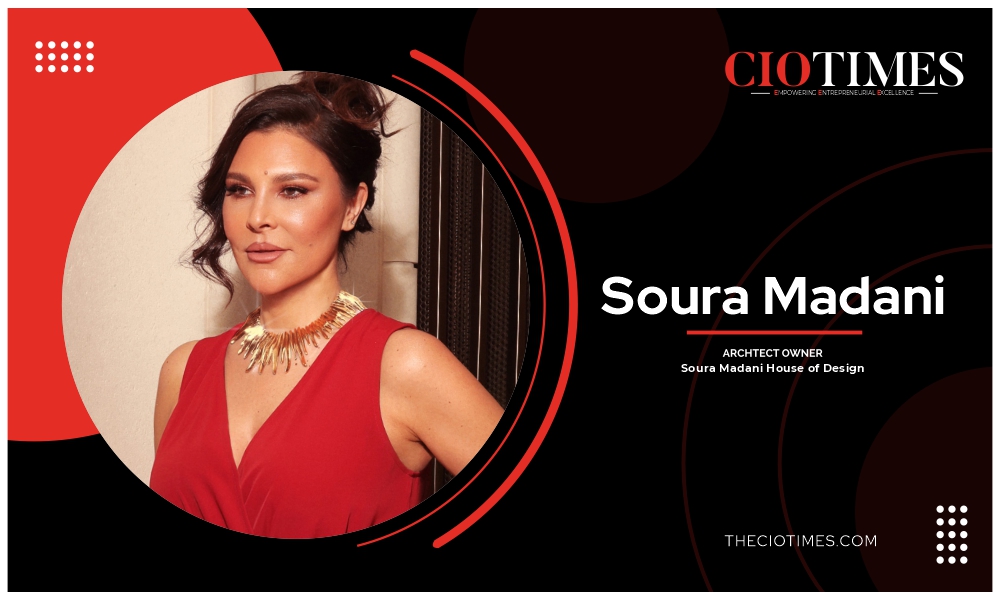
The interiors of a space whisper a story in our ears. Upon entering a room, one can feel the emotion the place expresses through its interior layout. The design speaks volumes about the space, the individual who owns the space, and the harmony it evokes. One needs experts like Soura Madani, Owner of Soura Madani House of Design, to capture the essence of the room and turn it into an unforgettable visual treat. Her professional journey from studying architecture at Jordan University to establishing Soura Madani House of Design as one of the region’s most influential design firms is deeply rooted in a cultural landscape where art, architecture, and the aesthetics of everyday life are inseparable from personal identity. Growing up in Jordan, Soura was surrounded by craftsmanship and beauty that nurtured her awareness of how spaces shape emotion and experience. This early fascination naturally led her to study Architectural Engineering at Jordan University, where she developed the technical foundation to translate creative vision into tangible form.
Upon graduation, she joined a leading regional design firm, ranked among the top in the Middle East and globally. The experience broadened her understanding of residential, commercial, and hospitality design while emphasizing the value of discipline, teamwork, and thoughtful project execution. Yet, she envisioned creating a design practice that extended beyond aesthetics, one that was purposeful, identity-driven, and deeply empathetic.
That vision took form in Soura Madani House of Design, a studio built on the belief that spaces should reflect individuality and foster community. Over the years, SMHD has become recognized for its cultural intelligence, quiet sophistication, and seamless blend of technical rigor and creative storytelling, establishing itself as one of the region’s most influential design firms.
Shaping the Creative Canvas
“Detail is destiny”. This guiding philosophy became the heartbeat of Soura Madani House of Design, shaping its foundation and creative ethos from the very beginning. The firm was born from a vision to redefine design as an act of stewardship, crafting environments that serve people and communities with clarity, empathy, and emotional depth.
Soura shares, “Early in my career, I observed a gap where design often prioritized spectacle over substance, and I wanted to establish a practice that valued meaning over noise.”
She intended to create a practice grounded in authenticity, where meaning, purpose, and human connection outweighed visual noise.
As SMHD evolved and gained international acclaim, that founding vision expanded into a deeper commitment to innovation, mentorship, and sustainability. The firm began exploring advanced materials, adaptive design methodologies, and environmentally responsible practices while cultivating a studio culture that encourages young designers to think critically, act ethically, and design consciously. What began as an identity-driven vision has since matured into a philosophy that harmonizes heritage with technology, and local culture with global sophistication, ensuring SMHD’s work continues to resonate with relevance, integrity, and timeless impact on the world stage.
Heritage Refined
SMHD’s signature approach, celebrated for merging Middle Eastern aesthetics with global design standards, grew from a deep desire to honor the region’s rich cultural heritage without falling into clichés or ornamental excess. From the beginning, Soura envisioned a design language rooted in authenticity, guided by a narrative-driven philosophy where materiality, proportion, and light become the true storytellers. Influenced by her early exposure to iconic international design houses renowned for their timeless craftsmanship, she infused those values into a contextual expression that speaks with quiet confidence and enduring grace.
Rather than relying on overt traditional motifs, SMHD weaves layers of artisanal craftsmanship, texture, and restrained color palettes to evoke both memory and place. This thoughtful balance preserves cultural depth while embracing contemporary expectations of functionality, sustainability, and modern refinement. Through this sophisticated synthesis of heritage and innovation, it continues to craft spaces that are at once timeless and progressive, deeply rooted in identity yet effortlessly aligned with a global design sensibility.
Shaping Authentic Spaces
Over the past two decades, Soura Madani House of Design has completed more than 200 projects across diverse regions, a testament to its longevity, growth, and continued relevance in a highly competitive industry. This enduring success is anchored in resilience, adaptability, and an unwavering commitment to quality and authenticity. In a field defined by constant evolution and shifting client expectations, the firm has nurtured a culture that views challenges not as obstacles but as opportunities for creative problem-solving.
Soura shares, “Our collaborative leadership empowers teams to take ownership while maintaining a shared standard of excellence.”
A strong emphasis on mentorship, continuous learning, and strategic innovation allows the studio to stay ahead of emerging trends without compromising its foundational values. Above all, its focus on identity-driven design spaces that connect deeply with people and place has ensured the firm’s continued trust and distinction across global markets and typologies.
Each SMHD project, whether a royal palace, a fine dining destination, or a private residence, begins with listening to an empathetic understanding of the client’s vision, cultural context, and lived experience. These insights are then distilled into a narrative where materiality, light, and proportion align seamlessly with both function and emotion. Rather than relying on ornamental excess, the studio emphasizes purposeful detailing, infusing warmth into monumental spaces and intimacy into grand volumes. Close collaboration with artisans and fabricators ensures every bespoke element reinforces the project’s story. Across every scale and setting, SMHD’s work aspires to craft timeless environments that honor heritage, elevate experience, and preserve memory, creating spaces that feel profoundly authentic and enduring.
Crafted Elegance
Collaborations with luxury brands such as The Ritz-Carlton and St. Regis have allowed Soura Madani House of Design to express a creative philosophy grounded in clarity, proportion, and material honesty. Each project is envisioned as a narrative, an opportunity to translate a brand’s global legacy into spaces that feel both locally rooted and emotionally resonant. The firm’s guiding principle lies in balancing the refined sophistication intrinsic to world-class hospitality brands with the warmth and cultural depth of the region in which each property resides.
SMHD’s design process emphasizes spatial choreography, craftsmanship-driven detailing, and the orchestration of light to shape experience with subtlety and intent. Every design decision is guided by the belief that hospitality is not merely about aesthetics, but about creating environments where rituals and daily moments unfold naturally. The result is a seamless blend of elegant and authentic spaces that feel welcoming, memorable, and timeless, reflecting both the essence of the brand and the soul of the place it inhabits.
Crafting Meaningful Luxury
SMHD’s recognition as the Best Luxury Commercial Interior Design Firm in Jordan by the Luxury Lifestyle Awards in 2022 marked a defining milestone in the firm’s journey. For Soura, the honor stands as both a personal and professional affirmation of years dedicated to excellence, integrity, and empathy in design. On a personal level, it reflects the resilience and vision that guided SMHD’s evolution from a modest studio into a regional design leader. Professionally, it reinforces the firm’s unwavering commitment to delivering work that harmonizes creativity with operational precision and cultural intelligence.
This recognition serves as an enduring source of motivation an inspiration to continue innovating responsibly while nurturing the next generation of design talent. It underscores SMHD’s belief that true luxury lies not only in aesthetics, but in purpose, craftsmanship, and authenticity. Above all, the award strengthens the studio’s resolve to remain a benchmark of quality, meaning, and sophistication in the realm of luxury interiors across Jordan and beyond.
Cultural Synergy
Leading a wide range of projects across global cities such as Amman, Dubai, and London, Soura has mastered the art of fostering collaboration, creativity, and alignment within culturally diverse design teams. At the foundation of his approach lies a culture built on respect, empathy, and openness principles that ensure every voice within the team is heard and valued. Clear and early alignment on project objectives allows creative diversity to thrive within a unified vision. Through transparent communication, the use of digital collaboration tools, and consistent dialogue, SMHD maintains cohesion across geographies and disciplines. Mentorship remains integral to Soura’s leadership, empowering individuals to refine their craft while adhering to collective standards of excellence. This synergy transforms cultural diversity from a challenge into a creative strength, producing designs that are innovative, contextually grounded, and globally resonant.
Projects such as the Alraya Palace and the Royal Hashemite Court embody this same philosophy, reflecting a harmonious balance between heritage and modernity.
She adds, “We engage deeply with cultural research and stakeholder dialogue to understand symbolism and history.”
Each design journey begins with deep cultural research and meaningful engagement with stakeholders to interpret layers of symbolism and national identity. Rather than replicating tradition, SMHD reimagines it, integrating traditional forms and materials into contemporary frameworks that meet modern functional and aesthetic demands. Every element, from spatial hierarchy to intricate craftsmanship, is purposefully designed to celebrate legacy while projecting confidence in the future. The result is a design language defined by grace, respect, and innovation, an architectural dialogue between past and progress.
Resilient Vision
As a woman leading a globally recognized design house, Soura’s journey has been defined by resilience, confidence, and an unwavering pursuit of mastery in a field long shaped by male dominance. She faced challenges ranging from implicit bias to the delicate balance between cultural expectations and professional ambition. Through consistent excellence, supportive professional networks, and the creation of an inclusive studio culture, she transformed these obstacles into stepping stones for growth.
Soura asserts, “Empowering the next generation to lead with empathy and rigor is a core passion.”
Today, she continues to inspire future women leaders in architecture and design by championing mentorship, ethical leadership, and authenticity.
About her most insightful lesson learnt in her professional journey, she shares:
Mastery is a continuous practice fueled by curiosity, discipline, and empathy.
Sustainable Sophistication
Soura believes the future of luxury design will be defined by sustainable innovation, biophilic principles, and an unwavering commitment to cultural authenticity. In the coming decade, the MENA region and the global design community alike will witness a greater fusion of smart, durable materials with sensory warmth, creating environments that nurture both functionality and emotion.
She envisions interiors that dissolve the boundaries between indoor and outdoor spaces, fostering wellness and a deeper connection to nature. Authentic storytelling, rooted in local craftsmanship, will replace surface-level aesthetics, while flexibility will become essential as spaces evolve with modern lifestyles. For her, the true essence of luxury in the next era will lie in timelessness, emotional resonance, and a design philosophy guided by responsible creativity.
Timeless Responsible Luxury
For her, sustainability and cultural storytelling form the very foundation of the future of luxury design. She believes that true luxury extends far beyond visual appeal it embodies responsibility, meaning, and endurance. Through sustainable materials, ethical sourcing, and lifecycle-conscious thinking, design can achieve longevity that is both environmentally sound and sensorially rich.
Equally, cultural storytelling roots each space in identity and emotion, weaving authenticity into every detail. By uniting these two forces, Soura envisions a redefined model of luxury one that transcends fleeting trends and becomes an act of stewardship, honoring people, place, and planet for generations to come.
Discussing about cultural storytelling led to asking her about her current favorite book or designer to which she shared:
“I’m deeply inspired by the work of Barbara Barry, whose timeless, tactile, and human-centered designs embody quiet luxury and emotional resonance.”
Global Ambition
Looking ahead, Soura envisions SMHD solidifying its position as a global leader in identity-driven design, with a focused expansion across the Gulf States and other international markets.
She shares, “We aim to deepen our research and development in materials and bespoke finishes, pushing innovation that bridges craft and technology.”
Equally important to her vision is nurturing the next generation of designers through enhanced mentorship programs that preserve SMHD’s culture of excellence and inclusivity. By forging strategic collaborations that merge cultural intelligence with global standards, Soura aims to ensure that SMHD continues to be a trusted partner in delivering transformative and meaningful design experiences worldwide.
Resonant Design
Soura envisions a legacy rooted in the idea of design as stewardship, crafting spaces that honor identity, enrich human experience, and endure with grace beyond the pull of fleeting trends. Her life’s work is guided by a commitment to serve both people and place with empathy, clarity, and a sense of quiet mastery that allows meaning to outshine extravagance.
Her creative journey is continually inspired by a personal philosophy she holds close: “Design is not about spectacle, but about meaning.” For her, true leadership in design emerges from resonance and care, creating environments that linger in memory long after one has left them.