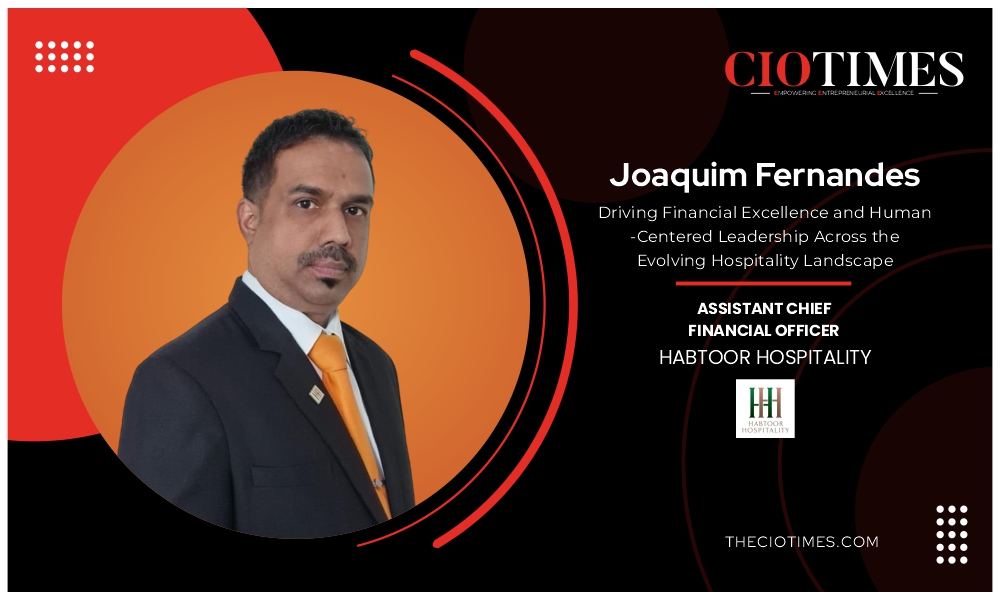
Joaquim Fernandes: Driving Financial Excellence and Human-Centered Leadership Across the Evolving Hospitality Landscape
With over three decades of experience in hospitality finance and operations, Joaquim Fernandes, Assistant Chief Financial Officer at Habtoor Hospitality, a member of the Al Habtoor Group, stands as a paragon of financial excellence and integrity. From his early beginnings in Goa, India, to overseeing the financial governance of some of Dubai’s most prestigious hotels, Joaquim’s journey reflects a rare blend of strategic insight, operational precision, humble attitude and people-centric leadership.
After completing his schooling at St.Rita’s High School, he pursued and completed Graduation in Finance at Shree Damodar College of Commerce & Economics Goa, thereafter his professional journey began in 1991 at The Leela Beach Kempinski Goa, where he discovered that finance in hospitality extends beyond numbers; it defines organizational integrity and guest experience. After moving to the UAE, he joined Abu Dhabi National Hotels Co. as a cluster accountant, refining his skills in financial control, discipline, and process-driven management. His subsequent leadership roles as Director of Finance at Mayfair Hotel Dubai, Dhow Palace Hotel, Holiday Inn Embassy District, Grand Excelsior Al Barsha, and Metropolitan Hotel Dubai deepened his understanding of how finance interlinks with operations, revenue management, and procurement.
Today, at Habtoor Hospitality, Joaquim oversees a diverse portfolio that includes seven world-class hotels, such as the Waldorf Astoria Dubai Palm Jumeirah, Al Habtoor Grand Resort, Al Habtoor Palace, V Hotel by Curio collection, Hilton Dubai Al Habtoor City, Al Habtoor Polo Resort, Metropolitan Hotel Dubai as well as six signature business units, including La Perle by Dragone, Al Habtoor Polo club, Al Habtoor Sports hub, Atrium, Metropolitan Catering services & Metropolitan Hotels International.
His leadership philosophy, anchored in transparency, emotional intelligence, and strategic foresight, continues to shape a legacy where finance serves not just as a control function but as the foundation of trust, growth, and enduring excellence.
Evolving Leadership
Having progressed from accounting positions to senior financial leadership, Joaquim recognizes that success in hospitality extends far beyond numbers; it begins with people. He believes that empowering and mentoring teams, fostering accountability, and creating a culture of shared knowledge are essential to sustainable growth.
He adds, “I also realized the importance of adaptability; in hospitality, markets change rapidly, and financial strategies must evolve just as quickly.”
Another key realization has been the power of effective communication. Translating complex financial data into actionable insights for non-financial stakeholders not only enhances collaboration but also builds trust across departments. To him, finance is not merely a control mechanism; it is a strategic function that guides, influences, and aligns with the broader business mission.
His most defining learning moments have centered around strategic planning, working alongside senior management to shape financial forecasts; cross-functional collaboration, partnering with sales, marketing, and operations to drive revenue and efficiency; and leadership development, mentoring teams, and nurturing high-performance cultures. He has also honed his innovation abilities, leveraging emerging technologies for better decision-making and risk management, proactively identifying and mitigating financial exposures.
Through these experiences, he has deepened his financial acumen, strategic foresight, and leadership capability skills that continue to define his impact within the hospitality sector and contribute meaningfully to organizational growth.
A Heap of Achievements
Joaquim has been awarded the ‘Individual Excellence Award’ at Al Habtoor Group’s Employee Excellence Award 2019. He has successfully led Habtoor Hospitality Management in the implementation of various projects in the Hospitality Division. Those were:
- HH Policies & Procedures,
- Vat Implementation & RFID – Fixed Asset Tagging,
- Unified Chart of Accounts (BC Navision), JANA – Purchasing & Inventory System,
- Unified Vendors Codes (Jana & BC Navision),
- Pro-cash- Online Payment Solution by ADCB.
Principles Driving Profitability
Joaquim shares, “As a finance leader, I see myself not just as a custodian of numbers but as a strategic partner to operations.”
His approach centers on ensuring that every dirham spent contributes to efficiency, brand equity, and guest satisfaction. His financial philosophy is anchored on three key pillars: transparency, strategic growth, and performance measurement.
a Financial Transparency:
Joaquim believes transparency builds trust, accountability, and confidence among stakeholders. By adhering to global standards such as GAAP, USALI, and IFRS, he ensures that financial information remains clear, accessible, and aligned with best practices, empowering informed decision-making and reinforcing stakeholder credibility.
b. Strategic Growth:
He emphasizes diversification of revenue streams beyond traditional hotel operations, extending into food and beverage, spa, and event segments. Strategic collaborations and partnerships further drive innovation, efficiency, and enhanced guest experiences key contributors to sustainable profitability.
c.Performance Measurement:
Joaquim advocates for disciplined performance tracking through key performance indicators (KPIs) such as revenue growth, profit margins, and ROI. Regular financial analyses enable him to identify improvement opportunities and optimize operational performance.
To him, profitability is not about cost-cutting but about optimizing resources, aligning financial strategies with long-term organizational goals, and driving value creation across every facet of the hospitality enterprise.
Adaptive Finance
Dubai’s hospitality sector has transformed into one of the world’s fastest-paced and competitive markets, prompting a significant evolution in financial management practices. Today, the focus lies on agility, data intelligence, and guest-centric investments that drive both profitability and experience.
Financial leaders increasingly depend on real-time analytics, automation, and advanced revenue management systems to monitor performance across diverse portfolios. This data-driven approach enables continuous optimization of pricing, cost structures, and resource allocation, ensuring sustained returns without compromising service excellence. What distinguishes Dubai’s hospitality landscape is its culture of innovation.
He asserts, “Our success depends on balancing financial discipline with the entrepreneurial spirit that defines Dubai’s hospitality vision.”
Key areas of adaptation include dynamic pricing and revenue management, where financial teams leverage analytics to forecast demand, monitor competitor performance, and tailor strategies to specific customer segments. Cost optimization remains equally critical, achieved through energy-efficient initiatives, operational streamlining, and strategic supplier negotiations. Meanwhile, technology investments from upgraded PMS and CRM systems to data analytics and digital marketing enhance operational efficiency and strengthen guest engagement.
Ultimately, financial management in Dubai’s hospitality industry has shifted from a reactive function to a strategic driver of growth, aligning financial discipline with the city’s forward-looking, innovation-led vision.
Balanced Calculations
Balancing strategic foresight with day-to-day financial management, according to Joaquim, demands both structure and adaptability. Strategic foresight involves anticipating challenges, forecasting demand, and reading market shifts with clarity, while operational finance relies on precision, discipline, and consistency in execution.
At Habtoor Hospitality, he ensures this balance through rolling forecasts, regular financial reviews, and real-time data dashboards that provide management with actionable insights. Collaboration with department heads remains central to his approach, aligning financial decisions with operational goals and guest satisfaction.
He asserts, “I believe in blending technology with human insight; data tells you what is happening, but experience tells you why.”
To sustain this balance, his team focuses on high-impact financial activities such as cash flow management, accounts control, and KPI monitoring. Automation and streamlined workflows enhance productivity while minimizing errors. Strategic foresight remains a continuous process, with regular reviews and adjustments ensuring that financial plans evolve alongside market conditions.
Joaquim also emphasizes the importance of technology integration, leveraging property and revenue management systems, along with financial planning software, to enhance accuracy and responsiveness. For him, the essence of effective financial leadership lies in aligning short-term operational efficiency with long-term business sustainability, creating a model that seamlessly blends agility and foresight.
Technology Empowering Finance
Technology continues to redefine the financial landscape of modern hospitality, and Joaquim Fernandes views it as a catalyst for smarter, faster, and more transparent decision-making.
He shares, “At Habtoor Hospitality, our adoption of ERP systems, unified chart of accounts, unified vendor codes, RFID – Fixed Asset Tagging, and digital payment solutions has not only improved efficiency but also strengthened compliance and control.”
For him, the goal is not to let technology replace human judgment but to empower it, using automation and analytics as tools that support insight, precision, and sound financial leadership.
Automation has streamlined core processes such as accounts payable and receivable, significantly reducing errors and manual workload while boosting overall productivity. Analytics now plays a central role in guiding financial decisions, providing predictive insights into occupancy, revenue, and cost trends. This data-driven approach enables the team to forecast performance, refine pricing strategies, and proactively respond to market dynamics.
Digital reporting has further transformed visibility across operations. Real-time dashboards and performance metrics allow managers and executives to access critical financial data instantly, ensuring agility and transparency in decision-making.
By integrating automation, analytics, and digital reporting, Joaquim and his team have transitioned from reactive reporting to proactive financial management, driving accuracy, efficiency, and long-term business value while maintaining the essential human judgment that underpins strategic decision-making.
Financial Consistency
Drawing from his extensive experience across multiple properties and regions, Joaquim Fernandes believes that maintaining financial discipline and consistency across a diverse hotel portfolio requires a structured framework built on standardization, accountability, and continuous learning.
a. Standardized Processes and Procedures
Consistency begins with unified systems. Implementing standardized accounting policies, reporting formats, and financial procedures across all properties ensures accuracy and comparability. Centralized financial planning, budgeting, and variance analysis enable portfolio-wide visibility, helping identify performance gaps and optimization opportunities. Establishing shared services and cost centers for accounting, procurement, and revenue management promotes efficiency and cost savings. Automation of financial processes, such as accounts payable and receivable, further streamlines workflows and enhances precision.
b. Financial Discipline
Joaquim emphasizes the importance of setting clear, measurable financial goals for each property and the portfolio as a whole. Tracking key performance indicators (KPIs) like revenue growth, profit margins, and ROI ensures alignment with strategic objectives. Robust financial controls authorization limits, approval hierarchies, and compliance mechanisms safeguard integrity and prevent operational risks.
c. Consistency and Best Practices
He advocates for the regular sharing of best practices across all hotels to strengthen financial performance and operational excellence. Routine financial reviews and audits uphold transparency and regulatory compliance, while continuous training programs empower finance teams to stay agile and skilled.
For Joaquim, financial discipline is not driven by spreadsheets but by culture, a shared commitment to precision, accountability, and excellence that unites every property under a common financial vision.
Governance Integrity
Joaquim states, “Governance is the backbone of sustainability.”
With decades of experience in internal audit and financial leadership, he believes that governance and accountability are not about control but about foresight, identifying and preventing risks before they arise. Within the hospitality ecosystem, where operations span multiple properties and regulatory landscapes, he views effective governance as the key to maintaining transparency, compliance, and long-term credibility.
His approach rests on the principle that accountability begins with culture. A transparent, well-structured financial environment ensures that teams at every level understand their responsibilities and act with integrity. Joaquim emphasizes that governance must evolve continuously, adapting to industry changes while ensuring that policies, technology, and people remain aligned toward the same goal, operational excellence rooted in trust.
a. Internal Auditing
A strong and independent internal audit function is central to Joaquim’s governance framework. He ensures that the internal audit team operates autonomously, with direct access to the board of directors or audit committee, thereby preserving objectivity and authority. Adopting a risk-based audit approach, his team prioritizes high-impact areas to identify potential vulnerabilities, evaluate control effectiveness, and recommend improvements. Regular audit cycles are conducted across all business units to ensure compliance with financial policies, procedures, and regulatory mandates. These audits go beyond compliance checks; they act as preventive mechanisms that strengthen organizational discipline and operational consistency.
Joaquim believes, Internal Audit is all about discipline & assisting the organization in achieving the GOAL (Doesn’t Audit “YOU” it Audits “FOR YOU” ). Our Roles are different but our Goal is one ” Team work is a key to success”.
b. Governance and Accountability
In Joaquim’s view, clear policies and transparent communication are the cornerstones of accountability. He believes that every financial professional must have access to well-defined operational and financial policies to ensure uniformity across all levels. Roles and responsibilities are explicitly outlined for finance teams, management, and the board to establish ownership and prevent overlap. Regular financial reporting to management, the board of directors, and key investors further reinforces transparency, ensuring stakeholders remain informed and confident in the organization’s direction.
c. Compliance and Regulatory Requirements
In an industry governed by a complex network of rules, Joaquim places great importance on maintaining up-to-date compliance frameworks. His teams monitor and adhere to a range of local and international standards, including VAT and corporate tax laws, municipality and tourism fees, labor regulations, and financial reporting standards. Regular compliance audits identify potential gaps and allow for corrective measures before issues escalate. Moreover, he encourages periodic training and awareness programs so employees remain informed about the latest regulatory developments. This proactive approach ensures that compliance is seen not as a burden but as a continuous commitment to operational integrity.
d. Technology and Automation
For Joaquim, technology is a crucial enabler of good governance. Habtoor Hospitality has implemented advanced financial management systems that deliver real-time visibility into performance data. Automated processes reduce human error, accelerate reporting timelines, and enhance transparency across departments. Automation in reporting also minimizes manual workloads, allowing finance teams to focus on analysis, decision-making, and strategic value creation.
e. Continuous Improvement
Joaquim believes that governance is never static; it is a living framework that must evolve with time. He ensures that all operational and financial policies are reviewed and updated regularly to maintain relevance and effectiveness. Continuous monitoring and evaluation of financial operations help identify emerging risks and improvement areas. Additionally, he values stakeholder feedback from employees, management, and owners as an essential input for refining governance structures and reinforcing accountability.
For Joaquim, effective governance is more than compliance; it is about building a culture where integrity and responsibility are instinctive. In his leadership philosophy, governance thrives when people don’t just follow policies; they believe in them.
Value Through Experience
For Joaquim Fernandes, finance and guest experience are two sides of the same coin. In his view, financial leadership in hospitality extends far beyond balance sheets or profit margins; it’s about creating value that endures. Every investment, cost-saving initiative, or strategic decision must ultimately enhance the guest experience, strengthen brand equity, or drive sustainable growth. He firmly believes that profitability achieved at the expense of guest satisfaction is neither sustainable nor aligned with long-term brand success.
In the hospitality sector, financial strategies must serve as enablers of experience. The way resources are allocated directly impacts how guests perceive value, comfort, and service consistency. Joaquim emphasizes that aligning financial management with guest satisfaction is not merely a balancing act; it’s a philosophy that fuels both operational efficiency and emotional connection with the brand.
a. Guest Satisfaction
At the core of Joaquim’s financial philosophy is a strong investment in guest experience. He ensures that resources are strategically allocated toward enhancing service delivery, employee training, and the overall quality of amenities and facilities. Guest feedback plays a vital role in this process. Continuous collection and analysis of insights help identify opportunities for improvement and refine operational strategies. Joaquim also recognizes the growing power of personalization. By leveraging data and analytics, his teams craft tailored experiences that foster loyalty and deepen the emotional connection between guests and the brand.
b. Brand Value Creation
For Joaquim, financial strategies must contribute directly to brand differentiation and long-term value creation. Investments in marketing and brand building are designed to define a clear and unique value proposition for each property. He places a strong emphasis on consistency, ensuring that service quality, facilities, and overall guest experiences remain uniform across every touchpoint. Reputation management is another critical element of this framework. By actively monitoring online reviews, social media engagement, and other digital channels, the organization maintains a strong, trustworthy image that reinforces guest confidence and brand credibility.
c. Financial Strategies
Joaquim’s approach to financial strategy integrates both analytical precision and operational empathy. Through dynamic pricing, yield management, and revenue optimization, he ensures financial performance remains strong without compromising guest satisfaction. Cost management is handled with a balanced perspective, efficiencies are pursued, but never at the cost of service quality. He also advocates continuous investment in technology, such as advanced property management systems and customer relationship management platforms, to improve real-time decision-making, streamline operations, and elevate the overall guest journey.
d. Alignment
True alignment, according to Joaquim, lies in making financial decisions that are guest-centric at their core. Every initiative is evaluated not just for its profitability but for its impact on guest satisfaction and brand perception. Measuring return on investment (ROI) extends beyond numbers to include intangible outcomes like trust, loyalty, and reputation. He believes the key is maintaining equilibrium, balancing short-term financial objectives with long-term investments that sustain guest delight and reinforce brand value.
For Joaquim, financial leadership in hospitality is about stewardship, ensuring that every financial decision contributes meaningfully to the experience guests take home and the value the brand builds over time.
Green Growth Strategy
In today’s hospitality landscape, sustainability and cost optimization are no longer competing goals but interconnected pillars of responsible growth. For finance leaders, eco-conscious profitability means embedding sustainability into the organization’s core financial strategy rather than treating it as a separate initiative. Joaquim believes that true leadership lies in demonstrating how green practices can simultaneously drive operational efficiency, profitability, and long-term brand equity.
a. Sustainable Cost Optimization
Energy efficiency – Adopt energy-efficient technologies such as LED lighting, smart HVAC systems, and energy-saving appliances to reduce consumption and operational expenses.
Water conservation – Incorporate low-flow fixtures, water recycling systems, and smart irrigation to minimize water usage and reduce waste.
Waste reduction – Introduce comprehensive recycling programs, eliminate single-use plastics, and implement composting initiatives to reduce landfill contributions and disposal costs.
Sustainable procurement – Partner with suppliers who follow ethical and sustainable practices, ensuring responsible sourcing and a lower environmental footprint.
b. Guest Experience Enhancement
Eco-friendly amenities – Provide sustainable amenities like refillable toiletry dispensers, reusable straws, and cloth bags to enhance guest satisfaction while reducing waste.
Sustainable dining – Offer locally sourced, organic, and plant-based menu options that align with global sustainability trends and guest preferences.
Green spaces – Design rooftop gardens, landscaped courtyards, and biophilic interiors that improve aesthetics, promote well-being, and elevate the guest experience.
Eco-conscious communication – Engage guests through transparent communication on sustainability practices via in-room materials, digital displays, and social media, inspiring shared responsibility.
Cost savings – Sustainable operations lead to measurable savings through reduced utility consumption, waste management efficiencies, and lower resource dependency.
Revenue growth – An increasing number of eco-conscious travellers are willing to pay a premium for sustainable experiences, driving incremental revenue.
Brand value – Demonstrating a commitment to environmental responsibility strengthens brand reputation, builds guest loyalty, and positions the brand as a leader in sustainable hospitality.
By aligning financial discipline with sustainability, hospitality organizations can achieve profitability that not only benefits the business but also contributes positively to the planet and future generations.
Passionate Leadership
For finance professionals aspiring to advance their careers in the Middle East’s dynamic hospitality sector, passion, humility, discipline, integrity, punctuality, self-confidence, willpower, attitude & approach, remain non-negotiable values. Finance is undeniably demanding, yet for those who approach it with curiosity and purpose, it can be one of the most fulfilling career paths.
When work is embraced as a passion, it not only enriches personal growth but also positively impacts those around colleagues, teams, and guests alike. Cultivating a mindset of “Work as Passion” can transform daily routines into meaningful contributions and lay the foundation for long-term success in hospitality finance.
Joaquim’s Recommendations ( ✓ )
- Ownership Toward Responsibilities
Take a proactive, accountable, and committed approach to work that goes beyond assigned duties and contributes to broader organizational goals.
Discipline forms the framework for success. It drives consistency, focus, and self-control, helping professionals achieve both short-term and strategic objectives.
- Eye for Detail and Accuracy
Accuracy is the cornerstone of financial credibility. A meticulous, observant, and perceptive approach ensures precision in every report and decision.
True leadership lies in sharing knowledge, mentoring peers, and guiding teams with confidence and humility to achieve collective success. Treat everyone equally and follow open door policy. Your value isn’t defined by your position, but by kindness you show others.
Maintain professional integrity by staying clear of office politics and gossip. Transparency, honesty, and reliability are essential traits of a trusted finance professional.
Genuine passion naturally translates into exceptional service, fostering experiences that exceed guest expectations and reinforce brand reputation.
Hospitality can be demanding, marked by long hours and complex challenges. Passion and purpose make it easier to navigate such situations and bounce back stronger.
Those who thrive in hospitality often find joy in human connection, drawing inspiration from diverse interactions and ever-changing daily experiences.
When personal values align with professional goals, work becomes deeply satisfying, fostering a sense of meaning in every achievement.
Professionals who go the extra mile, take initiative, refine their skills, and demonstrate commitment inevitably attract opportunities for advancement.
ü Develop a Strong Foundation
Build a solid understanding of financial principles by mastering accounting, budgeting, and analytical frameworks.
Gain operational exposure beyond finance, including operational departments such as Front Office, F&B Service, Culinary, Housekeeping, Engineering, Sales & Marketing, Reservations, and Human Resources.
ü Stay Adaptable and Agile
Be open to new challenges and evolving market demands.
Develop a flexible skill set across financial analysis, forecasting, and digital tools to remain versatile.
ü Network and Build Relationships
Participate in industry events, conferences, seminars, and professional forums to stay informed and connected.
Seek mentorship from seasoned professionals who can offer practical insights and career guidance.
ü Stay Informed and Compliant
Follow industry publications and stay current with trends, best practices, and changes in regional laws or financial regulations.
In essence, career success in hospitality finance is not defined solely by technical expertise; it’s built on passion, professionalism, and the continuous pursuit of excellence.
Faith
I strongly believe in my faith and in the teaching of Jesus Christ, as it keeps me grounded and focused with all the pressure and challenges in the corporate world.
Do to others what you would have them do to you” (the Golden Rule). I am the way and the truth and the life. God so loved the world that he gave his one and only Son, that whoever believes in him shall not perish, but have eternal life. Love your neighbor and forgive your enemies. With God all things are possible. I am the bread of life, he who comes to Me will not hunger, and he who believes in Me will never thirst. who has no sin throw the first stone. Do not be anxious about anything, but in every situation, by prayer and petition, with thanksgiving, present your requests to God and whatever you ask for in prayer, believe that you have received it, and it will be yours.
Modesty Reflects
Joaquim is humble by nature. He feels immense gratitude towards the Almighty Jesus and his family for keeping him in their prayers and for their constant support. He does not forget to mention his mentor, Mr. Omar Khalaf – CFO Habtoor Hospitality. He emphasizes his mentor being an amazing leader who leads with humility and, a true inspiration. He holds high regard for getting an opportunity to work under his direction. Finally sincere thanks to Mr.Khalaf al Habtoor, Mr.Mohammed Al Habtoor & the Rulers of U.A.E.
‘’Behind every successful man there is a woman” for me it’s my wife Narcisa Fernandes ‘’