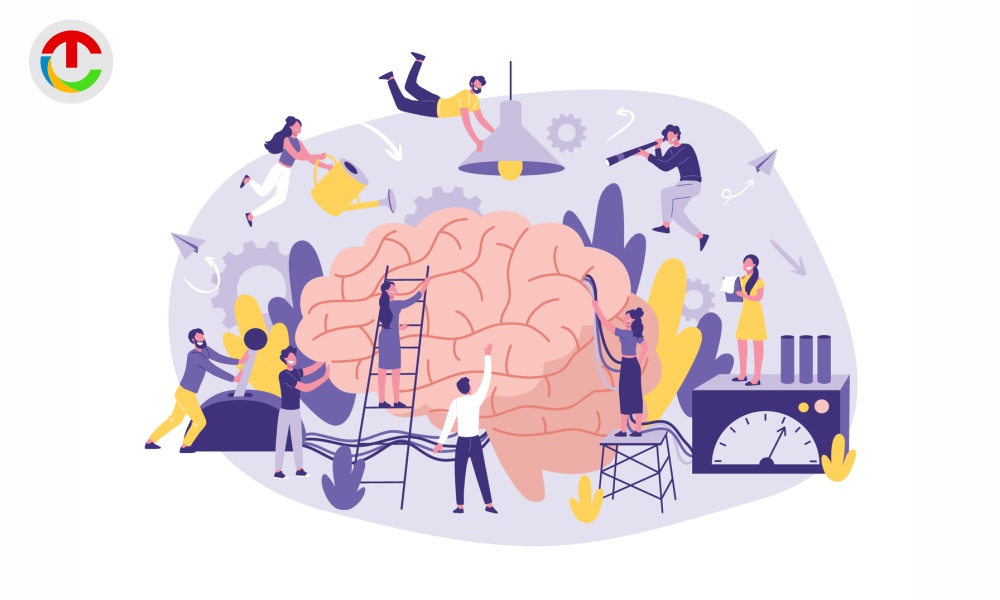
How Change Management Drives Successful Martech Implementations?

Marketing technology has become the backbone of modern marketing teams. From CRM platforms and marketing automation to analytics and AI-driven tools, martech promises efficiency, scale, and better customer insight. Yet many organizations discover that simply buying new technology does not guarantee better outcomes. Tools sit underused, teams resist adoption, and expected ROI never materializes. The missing link, more often than not, is change management.

Successful martech implementation is not a technical project it is a human one. Technology only creates value when people understand it, trust it, and use it consistently.

Martech Fails When People Are Left Behind

On paper, most martech implementations look solid. Vendors are vetted, budgets approved, and timelines defined. What is often underestimated is how deeply new tools disrupt existing workflows. Marketers are asked to work differently, measure performance differently, and sometimes rethink their roles altogether.

Without structured change management, this disruption creates confusion and resistance. Teams may continue using old tools out of habit, distrust data from new systems, or feel overwhelmed by unfamiliar interfaces. Over time, the technology becomes a sunk cost rather than a growth driver.

Organizations that succeed recognize early that adoption not installation is the real milestone.

Aligning Technology with Marketing Strategy

One of the most overlooked aspects of martech projects is strategic alignment. Technology should support marketing goals, not dictate them. When tools are introduced without a clear “why,” teams struggle to see their relevance.

Effective change management begins by connecting the technology to outcomes marketers care about: better campaign performance, clearer attribution, faster execution, or improved customer experience. Leaders who clearly explain how a new platform supports these goals create buy-in before training even begins.

This strategic clarity also helps prevent tool overload. Not every feature needs to be used immediately. Phased adoption, guided by business priorities, makes change feel manageable rather than overwhelming.

Leadership Sets the Tone for Adoption

Martech adoption is heavily influenced by leadership behavior. When leaders actively use dashboards, reference data from new systems, and model new workflows, teams follow. When leadership remains detached, adoption stalls.

Strong change management requires visible leadership involvement. This does not mean micromanaging tools, but showing commitment to new ways of working. Leaders who acknowledge learning curves, encourage experimentation, and allow room for mistakes create psychological safety around change.

This trust is critical. Marketing teams are more willing to embrace new platforms when they believe the organization is invested in their success, not just the software.

Training That Goes Beyond Features

One common reason martech projects fail is inadequate training. Too often, teams receive a one-time demo focused on features rather than real use cases. Information overload sets in, and confidence drops.

Human-centered change management emphasizes role-based training. A campaign manager, data analyst, and content strategist do not need the same depth of knowledge. Training should focus on how the tool makes each role easier and more effective.

Ongoing enablement is equally important. Refresher sessions, internal champions, and easily accessible documentation help reinforce learning long after launch. Adoption improves when teams feel supported, not rushed.

Managing Resistance with Empathy

Resistance to new technology is often mislabeled as stubbornness. In reality, it is usually driven by fear fear of reduced competence, increased workload, or loss of control. Ignoring this emotional dimension is a costly mistake.

Thoughtful change management treats resistance as valuable feedback. Listening sessions, surveys, and informal check-ins surface concerns early. Addressing them openly builds credibility and reduces friction.

When people feel heard, they are more likely to engage. Change becomes something done with them, not to them.

Measuring What Matters During the Transition

Traditional martech success metrics often focus on technical performance: system uptime, data accuracy, or integration completion. While important, these metrics do not capture real adoption.

Organizations that prioritize change management track behavioral indicators alongside technical ones. Usage rates, workflow adoption, campaign execution speed, and decision-making quality reveal whether the technology is truly embedded.

Sharing early wins such as time saved or improved campaign performance reinforces momentum. These tangible results help teams see progress and stay motivated during the transition.

Building a Culture Ready for Continuous Change

Martech ecosystems are never static. Tools evolve, integrations expand, and new capabilities emerge. Successful organizations treat each implementation as part of a broader transformation, not a one-time event.

Strong change management builds long-term adaptability. Teams become more comfortable experimenting, learning, and adjusting. Over time, change stops feeling disruptive and starts feeling normal.

This cultural shift is what ultimately differentiates high-performing marketing organizations. Technology becomes an enabler, not a burden.

Conclusion

The most successful martech implementations share a common trait: they prioritize people as much as platforms. While technology enables scale and insight, it is human behavior that determines impact.

By investing in communication, leadership alignment, training, and empathy, organizations turn complex martech projects into sustainable growth engines. In the end, tools may power marketing but it is change management that ensures those tools actually deliver results.


Why CUDA is Key to the Future of Autonomous Vehicles in America?

The race toward autonomous vehicles is heating in the United States, with tech giants, automakers, and startups competing to deliver safer, smarter, and more efficient self-driving cars. While many factors contribute to the development of autonomous systems, one technology stands out as a cornerstone of progress: NVIDIA’s CUDA. By enabling high-performance computing on graphics processing units (GPUs), GPU compute is transforming the way autonomous vehicles perceive, process, and respond to the world around them.

High-Speed Data Processing: The Heart of Autonomy

Autonomous vehicles rely on a vast array of sensors lidar, radar, cameras, and ultrasonic devices, to navigate the environment safely. Each sensor generates enormous volumes of data every second, and this data must be analyzed in real time to make split-second driving decisions. Traditional central processing units (CPUs) struggle to keep up with these demands, often causing delays that could compromise safety.

This is where the NVIDIA GPU comes into play. By harnessing the parallel computing power of NVIDIA GPUs, Parallel GPU allows multiple data streams to be processed simultaneously. The result is a dramatic increase in computational speed and efficiency, enabling vehicles to “see” and respond to their surroundings almost instantaneously. For American consumers, this means self-driving cars that are not only faster but also significantly safer.

Enhancing Machine Learning and AI Capabilities

At the core of autonomous driving is artificial intelligence (AI). Self-driving cars rely on machine learning algorithms to recognize pedestrians, interpret traffic signals, and predict the behavior of other drivers. These algorithms require immense computational resources, particularly for deep learning models.

CUDA accelerates this process by providing a platform optimized for AI workloads. It enables developers to train complex neural networks more efficiently, reducing the time it takes to bring autonomous systems from concept to real-world application. Companies like Tesla, Waymo, and Cruise have leveraged GPU computing frameworks to improve object detection, path planning, and decision-making algorithms, making AI-driven vehicles more reliable and intelligent on American roads.

Real-World Applications in U.S. Cities

Several U.S. cities have become testing grounds for autonomous vehicle technology, from San Francisco’s bustling streets to the highways of Phoenix. These urban environments present unique challenges, including unpredictable traffic patterns, pedestrians, cyclists, and dynamic weather conditions.

GPU-powered systems allow vehicles to handle these challenges by processing multiple sensor inputs in real time. For instance, during sudden changes in traffic or unexpected obstacles, autonomous systems can calculate optimal driving paths within milliseconds. This capability is essential for gaining public trust, a critical factor in the widespread adoption of self-driving technology.

Reducing Development Costs and Time

Developing autonomous vehicles is notoriously expensive, with billions invested in hardware, software, and testing. By leveraging CUDA for high-performance computing, automakers can significantly reduce both development time and costs. Simulations that once took days can now be completed in hours, accelerating the innovation cycle.

Furthermore, CUDA enables rapid prototyping and testing of AI models, allowing engineers to identify and resolve potential issues before vehicles hit the road. This not only saves money but also enhances safety, as every system undergoes rigorous virtual testing before deployment.

The Future of Autonomous Mobility in America

As the demand for self-driving technology grows, CUDA’s role is only set to expand. Future advancements in GPU computing and AI promise to make autonomous vehicles even more capable, reliable, and affordable. In the long term, widespread adoption of self-driving cars could reduce traffic accidents, ease congestion, and provide mobility solutions for Americans who cannot drive, such as the elderly or disabled.

Government agencies, private companies, and research institutions are already collaborating to integrate CUDA-powered systems into autonomous vehicle platforms. This cooperation ensures that innovations meet stringent safety standards while delivering the performance necessary for real-world applications. By bridging the gap between AI research and practical implementation, GPU Accel is helping shape the future of American transportation.

Conclusion

The autonomous vehicle revolution is not a distant dream it is happening now, and the United States is at the forefront. While multiple technologies contribute to the development of self-driving cars, CUDA stands out as a critical enabler. From real-time data processing and AI acceleration to cost reduction and enhanced safety, it is clear that GPU Accel plays a pivotal role in making autonomous vehicles a viable and trustworthy option for Americans.

As cities and highways evolve to accommodate these vehicles, the impact of NVIDIA’s technology will become increasingly visible, driving the future of mobility forward. For anyone watching the transformation of the automotive industry, one thing is certain: parallel GPU is not just a tool; it is a game-changer in the journey toward fully autonomous transportation.

JustPaid.ai: Driving Breakthroughs in Technology While Transforming Accounts Receivable’s for Companies Worldwide

The most forward-thinking leaders are those who identify gaps before anyone else and transform them into meaningful solutions. For years, businesses have struggled with slow, scattered, and manual AR B2B payment processes. That’s exactly where JustPaid.ai comes in. It’s an intelligent accounts receivable platform designed to simplify, accelerate, and enhance the reliability of global AR B2B payments. By bringing automation, clarity, and real-time insights into one place, JustPaid.ai helps companies regain control of their cash flow. It fills a long-standing market need and gives businesses a smarter, more confident way to operate and grow.

From the outset, the inspiration behind JustPaid.ai was rooted in a clear reality: every company in the United States, whether an early-stage startup or a large enterprise, relies on consistent, timely payments. Yet revenue collection has traditionally been a manual, people-dependent, and often disorganized process. It simply didn’t need to remain that way.

With more than a decade of startup experience, the founders repeatedly witnessed how much time leaders, finance teams, and operators spent tracking contracts, sending invoices, following up, and trying to understand what was actually owed. The work was necessary, but not scalable, and the complexity only intensified as companies expanded.

Driven by this gap, the early vision behind building an AI-powered accounts receivable platform was to create something dramatically more advanced, an intelligent system that could function like a world-class finance team. The intention was to deliver a platform flexible enough to match any company’s billing structure instead of forcing businesses into rigid frameworks.

The concept aligned with the idea of a “Zapier for Finance,” where any billing model, usage-based, milestone, subscription, percentage-driven, or hybrid, could come to reality through JustPaid.ai to bill customers. AI would manage the intricate workflows behind the scenes, enabling companies to prioritize product development rather than chasing payments.

At its core, the goal has always been consistent: to equip every B2B business with a modern, intelligent, and highly scalable way to collect revenue while eliminating the friction that slows growth.

Billing Flexibility

In addressing how JustPaid.ai supports diverse billing models while maintaining speed, accuracy, and compliance, the company has always operated with a clear principle: use the most advanced technology available, no matter where it originates. It draws on breakthroughs from leading AI labs, models and companies applying them to precise financial workflows. Each task is routed to the model best suited for it, creating a seamless experience where customers never feel the underlying complexity.

Its flexibility is powered by a modular, workflow-driven architecture. Every billing model, subscription, usage-based structures, milestones, or hybrid is broken down into programmable components. This allows the platform to adapt to whatever structure a business relies on while keeping performance consistently fast.

Accuracy and compliance remain central. The platform adheres to strict industry standards, maintains full auditability, and ensures human oversight where it adds value. Every AI-driven action is transparent and reviewable, giving finance teams complete confidence.

To maintain high performance, the infrastructure is optimized for speed and scalability. Even intricate billing operations execute quickly because the system carefully manages where computation occurs and which models are activated. The objective stays constant: deliver world-class speed without compromising precision or trust.

In the end, the architecture behind JustPaid.ai is intentionally unobtrusive, highly flexible, AI-powered, compliant by design, and built to handle demanding enterprise workloads with ease.

Connected Financial Ecosystems

In addressing how JustPaid.ai delivers seamless integration across major systems like Salesforce, HubSpot, NetSuite, QuickBooks, Stripe, and many others the company approaches interoperability with a clear purpose: to strengthen the tools businesses already depend on. Most organizations arrive with an established tech stack. Rather than replacing these systems, JustPaid.ai enhances them by embedding directly into existing workflows and removing the manual tasks that slow finance teams down.

When sales contracts reside in Salesforce or HubSpot, or when deals close in NetSuite, it ingests both structured and unstructured data. Its AI interprets contract terms, understands billing logic, and automatically generates the appropriate billing workflows. This significantly reduces the workload on finance teams and eliminates the back-and-forth that typically occurs between sales and finance.

The JustPaid.ai Stripe integration offers another strong example. Businesses can operate JustPaid.ai on top of Stripe or integrate it into an existing Stripe setup. The platform adds intelligence to the payments layer, making billing and collections more adaptable without disrupting core infrastructure.

It also ensures that clean, structured data flows back into systems like QuickBooks. When a payment is completed, the transaction is automatically recorded, keeping the ledger accurate without manual reconciliation.

The guiding philosophy is straightforward: companies operate in a heterogeneous environments and will always use multiple tools. JustPaid.ai is built to embrace that reality, pulling in relevant data, interpreting it through AI, and pushing back precise, organized output. This level of interoperability gives finance teams a single source of truth and dramatically improves operational efficiency.

Customer-Centric Workflows

In addressing how customer experience and operational efficiency work together within the billing and payment cycle, JustPaid.ai focuses on giving companies the right balance between automation and personalization. The platform offers multiple ways to use its AI personas, depending on how tailored or hands-off a company wants its outreach to be.

Some organizations choose simple, standardized reminders, clean, boilerplate messages that automatically include essentials like invoice numbers, amounts, and due dates. These are intentionally consistent and minimal, supporting finance teams that prefer a straightforward, practical approach.

Others want a more customized touch. It also provides fully configurable personas that adapt to the tone and communication style a business wants for specific customers or segments. This allows for thoughtful, relationship-driven messaging, whether for key accounts or the full customer base.

Because most revenue communication still occurs through email, the platform handles the full cycle: it sends messages, monitors replies, reads bank activity, and instantly pauses all outreach the moment a payment is detected. Once a customer pays, follow-ups stop in real time, ensuring a respectful and accurate experience.

Teams can also blend AI personas with their internal finance staff. High-touch calls can stay with the in-house team, while JustPaid.ai manages ongoing, personalized email communication behind the scenes.

The strength of the platform lies in this flexibility, automated when efficiency matters, personalized when relationships matter, and always adaptable to the needs of the business and its customers.

Adaptive Billing

In addressing how JustPaid.ai simplifies accounts receivables management for businesses ranging from startups to global enterprises, the company has spent years focused on solving a challenge that becomes increasingly difficult at scale: every organization bills differently. Each business brings its own pricing structure, workflows, and operational nuances. Traditional billing and AR systems impose rigid templates that may work early on but fall apart as revenue models grow more complex. The organization was created to eliminate that rigidity.

Rather than requiring businesses to conform to software limitations, the platform is designed to adapt to the company itself. By leveraging advancements from leading AI labs, large-scale language models, OCR technology, and modern cloud infrastructure, it gives any organization access to world-class automation without the need for a large finance team.

A central element of this approach is its AI-driven personas, intelligent agents that function much like real team members within a finance department. They read documents, interpret redlines, understand customer requirements, manage follow-ups, and support real-time revenue collection. It provides the closest experience to having a human managing AR operations, but with consistent speed and unlimited scalability.

Flexibility remains one of the platform’s greatest strengths. Whether a company uses usage-based billing, milestones, subscriptions, percentage models, or any hybrid approach, JustPaid.ai enables them to build and automate workflows without constraints. As organizations expand and their revenue structures become more intricate, finance teams often reach capacity; the platform lifts that burden.

Ultimately, JustPaid.ai aims to give every business, from early-stage to enterprise, a natural, intelligent way to bill according to their needs and accelerate payments with significantly less manual work.

Cognitive Billing

In exploring how it uses artificial intelligence and machine learning to enhance accuracy, predict payment behavior, and improve collection efficiency, the company applies AI in highly targeted ways to address the most time-intensive challenges in accounts receivable. One of the biggest hurdles in finance is working with unstructured contracts. Since no two agreements look alike, some are straightforward, others are filled with nuances that shift billing logic. It’s models read and interpret them much like a human would. The system understands the language, identifies critical terms, and converts everything into clean, structured data that can be billed immediately.

The platform also learns from each business over time. If contracts follow a recognizable style or if finance teams consistently make certain adjustments, JustPaid.ai adapts to those patterns. It effectively models how the company interprets revenue, resulting in steadily improving accuracy the more it’s used.

For prediction and collection performance, the platform applies modern machine learning to evaluate historical payment behavior and forecast future outcomes such as payment timing, customer responsiveness, and cash-flow risk. This enables smarter prioritization of follow-ups, early identification of issues, and faster payment cycles with dramatically less manual effort.

Across all of this, the philosophy remains consistent: deploy AI where it creates meaningful leverage, keep humans involved for oversight, and continually increase accuracy and efficiency as the system learns.

Trusted Global Operations

In addressing how JustPaid.ai ensures data security, compliance, and transparency while driving financial transformation through automation, the company treats these responsibilities as foundational to its platform. Because businesses trust JustPaid.ai to manage revenue, one of their most sensitive and mission-critical functions, security and reliability are non-negotiable.

The platform maintains SOC 2 compliance, one of the software industry’s highest benchmarks for security and operational rigor. This certification confirms that JustPaid.ai upholds strict standards around data handling, encryption, access controls, internal processes, and continuous monitoring. Many companies require SOC 2 before adopting any financial technology, making this level of assurance essential.

Beyond formal certifications, the organization approaches compliance through collaboration. Every organization brings its own set of requirements, especially when operating across global markets. During onboarding, the team reviews those needs in detail and adapts system configurations accordingly. Regional regulations, workflow expectations, and internal governance policies are all treated as integral parts of the implementation process.

Transparency remains equally important. It functions as an assistive platform. AI handles the heavy lifting, but finance teams stay in control. Users can see exactly how the platform operates, review actions, and make adjustments, ensuring complete oversight of revenue collection. AI enhances efficiency, but human judgment remains central.

Given the diversity of global regulatory environments, the company tailors its approach to each market in which a customer operates. The goal is consistent everywhere: provide a secure, compliant, and fully transparent ecosystem that businesses can rely on, regardless of geography or scale.

Strategic Horizon

In considering how intelligent automation is reshaping finance roles, it focuses on freeing teams to concentrate on higher-value work. Across many organizations, finance, operations, and engineering teams spend an enormous amount of time building internal tools just to keep revenue operations running, dashboards, CRM workflows, spreadsheets, and custom billing logic. That effort drains energy from the company’s core mission. The JustPaid.ai is built to remove that burden.

The platform replaces the need for companies to constantly reinvent internal systems by managing the entire contract-to-cash workflow. Finance no longer has to interpret contracts or chase payments, operations no longer stitches data across tools, and engineering no longer maintains internal billing infrastructure.

JustPaid.ai essentially serves as the internal system that companies shouldn’t have to build themselves. By automating contract understanding, billing logic, collections, and reconciliation, teams regain the time to focus on product development, customer experience, and strategic decision-making.

The result is straightforward: instead of maintaining repetitive processes, people are empowered to do the work that truly moves the business forward. Intelligent automation doesn’t replace talent; it amplifies it.

Seamless Revenue Scaling

When considering how a revenue operations platform should maintain performance, reliability, and scalability as a business grows from 100 to 100,000+ customers, the organization’s long-term vision becomes clear. The company is focused on giving organizations an infrastructure that expands effortlessly without requiring oversized finance teams or constant system rebuilds. As customer volume increases and billing complexity rises, it aims to make that complexity disappear.

The platform is built on top of the world’s most trusted and extensively tested cloud providers, the same backbone used by leading global B2B SaaS companies. These multi-billion- and trillion-dollar ecosystems have spent decades strengthening performance, security, elasticity, and uptime, and JustPaid intentionally leverages this foundation rather than reinventing it.

Architecturally, the system is designed for flexibility and horizontal scalability. As operational demands rise, the platform adjusts in real time, ensuring consistent behavior whether a company processes a few hundred invoices or millions. The organization leverages the same infrastructure that support the world’s best companies.

Instead of relying on experimental or unproven infrastructure, it prioritizes modern, enterprise-grade cloud standards that customers already trust. This gives organizations confidence that the platform will remain resilient and dependable at any growth stage.

The organization’s mission is straightforward: revenue operations should never become a barrier to scale. As businesses grow, the platform grows with them seamlessly, reliably, and at any volume.

Adapting the Global Trends

In addressing how JustPaid.ai supports global teams and cross-border payment processes in an increasingly remote and distributed world, the company emphasizes a simple belief: modern businesses are global from day one. Teams now operate across time zones, customers span continents, and revenue moves between countries every single day. It was built to support that reality, not limit it.

The platform was intentionally designed to be multi-layered and adaptable so it can scale across regions and empower teams working from anywhere. Many of it’s customers already run international operations, and the company continually evolves its capabilities to meet those needs, whether it’s facilitating cross-region invoicing, enabling payments from one country to another, or giving distributed teams a unified system to manage their contract-to-cash processes.

Although the company’s current commercial focus remains centered on U.S. sales, demand from global markets continues to grow. Organizations worldwide face similar challenges around billing complexity, collections, and intelligent automation. For JustPaid, expanding global support is a natural progression of its roadmap.

Enterprises no longer operate within a single country, and it’s approach reflects that shift. The company is building an infrastructure where cross-border workflows are as seamless and dependable as domestic ones. As distributed models become the standard, it aims to ensure revenue operations remain smooth, scalable, and fully location-agnostic.

Committed to Sustainability

JustPaid.ai plays a crucial role in promoting smarter, paperless, and more resource-efficient financial ecosystems by championing a fully digital approach to financial operations, aligning with the intersection of sustainability and digital transformation. The company operates on the core belief that modern finance must be entirely digital. This foundation means every invoice created and delivered through it is electronic, eliminating the need for physical mailers, printed statements, or paper check requests, with the entire workflow from sending an invoice to confirming payment happening digitally inside the platform. 

However, the contribution extends beyond simple paper elimination; a significant part of the long-term vision is making invoicing intelligent. The system is designed to understand the context of the transaction, recognizing who signed the contract, which emails are associated with the agreement, and identifying the correct point of contact. If an invoice recipient does not respond, the system flags it for the finance team, ensuring that invoices are not sent “into a void,” a common inefficiency with traditional, paper-based processes. 

JustPaid actively supports customers who are moving away from paper checks entirely, enabling fully digital payment flows that significantly reduce paper usage, accelerate payment cycles, and cut down on the environmental costs associated with manual processing. Behind the scenes, the platform’s intelligence further minimizes waste by reading bank activity to confirm when an invoice is paid, whether via a digital transfer or a deposited check, and automatically halting all reminders. 

This automation prevents unnecessary follow-ups, reduces communication churn, and avoids the waste associated with legacy accounts receivable (AR) systems that often continue sending paper notices long after a payment has been made. 

For the organization, sustainability is defined by more than merely going paperless; it is about building a smarter, more efficient financial ecosystem that reduces waste across every step of the revenue management, helping companies operate in a modern, resource-efficient way that supports both improved business performance and a more sustainable future.

Future Anticipation

JustPaid.ai’s vision for future innovations centers on dramatically increasing flexibility and intelligence in financial operations, ensuring clients stay ahead as AI and automation continue to evolve in the B2B financial landscape.

Looking ahead, the company is focused on building a platform that can model any revenue workflow a client needs, be it subscription or some new entirely new structures or billing concept. The goal is to make the system so adaptable that finance teams are never constrained by their tools, accommodating the increasing complexity and creativity in how companies price, track usage, and structure revenue.

The organization views AI as a major catalyst for advancement in finance, not a replacement for human professionals. While finance professionals will maintain the critical roles of reviewing, auditing, interpreting nuance, and guiding strategy, AI will handle tasks that traditionally consumed days or weeks. This means tasks that historically required month-end consolidation will happen instantly, and reports that used to be retrospective will be available in real-time, with AI constantly analyzing trends as revenue flows in.

The company recognizes that the model of running a business on monthly check-ins is outdated. Modern companies require up-to-the-second visibility into their financial status. Therefore, it is shifting the closing process from slow, manual work toward continuous, real-time accounting. AI will be instrumental in this transformation, immediately surfacing insights the moment revenue changes, flagging anomalies, comparing performance to historical patterns, and enabling leaders to make confident decisions without the delay of offline workflows.

JustPaid.ai is heavily investing in this future, building flexible workflows, real-time intelligence, and AI systems that learn how a business operates, clearly demonstrating its intention to lead the next era of financial automation.

FDA Approves First New Antibiotic for Gonorrhea in Decades

In an effort to combat rising drug resistance, the FDA has approved the first new antibiotic to treat gonorrhea in decades. The clearance coincides with a warning from public health experts regarding zoliflodacin resistance and the pressing need for novel therapies. Antibiotic research and international efforts to fight resistant illnesses have advanced significantly with this milestone.

Concerning the Novel Antibiotic

The treatment-resistant Neisseria gonorrhoeae, the bacteria that causes gonorrhea, is the target of the recently approved medicine zoliflodacin.

Important characteristics:

The first oral antibiotic in decades designed specifically to treat resistant gonorrhea

Effective against strains that don’t respond to traditional therapies

created as part of the Global Antibiotic Research and Development Partnership (GARDP) program.

Possibility of lowering issues including newborn infections and infertility

Impact on Public Health

Experts point out that gonorrhea antibiotic resistance has emerged as a major worldwide health concern. Zoliflodacin may considerably lessen the need for outdated antibiotics, delaying the emergence of resistant strains.

Read more exclusive interview with Aisha Ali

Advantages consist of:

focusing on illnesses that have a lower chance of developing resistance

Oral delivery to facilitate patient adherence

supporting more extensive international efforts to create novel antibiotics

Future of Antibiotic Research

While the FDA approval is promising, scientists caution that continued antibiotic research is essential. The emergence of zoliflodacin resistance remains a possibility, emphasizing the importance of monitoring and responsible use. Partnerships like GARDP are central to accelerating the development of novel treatments for resistant infections worldwide.

Final Thought

The FDA’s approval of zoliflodacin is a landmark achievement in the fight against gonorrhea and antibiotic resistance. By combining innovative research, global collaboration, and careful implementation, this new drug could reshape the approach to drug-resistant infections, offering renewed hope for public health.

A Novel Algorithm for Interpreting Intelligence in Brains, Minds, and Machines

Researchers at the University of Toronto have created a revolutionary algorithm that promises to greatly enhance how machines understand human brain activity, marking a breakthrough in computational neuroscience. The paper, “Brains, minds, and machines: A new algorithm for decoding intelligence,” presents cutting-edge computational methods that could hasten the development of brain-machine interfaces and brain decoding studies.

Using Mixture Models to Rethink Brain Decoding

The incorporation of mixture models for domain adaptive brain decoding, a mathematical technique that permits data from several people to significantly contribute to model training without creating detrimental transfer effects, is one of the most intriguing parts of this research. By allowing each subject’s data to affect the model through continuous mixture weights rather than just being included or removed, this approach reframes how source selection is handled in brain decoding tasks.

This new algorithm for decoding intelligence uses convex optimization techniques to calculate these weights based on performance metrics, resulting in improved generalization across diverse brain datasets. When tested on over 100 participants, the algorithm demonstrated state of the art performance while requiring significantly less training data, showing that smarter selection, rather than sheer data volume, can lead to more accurate brain decoding.

Explore more interviews with Mohamed Abu El-Makarem

Why This Is Important

Better Brain-Machine Interfaces: More responsive mind-controlled gadgets that assist individuals with paralysis or mobility issues may result from improved decoding.
Decreased Data Requirements: By achieving great performance with up to 62% less data, the method improves the efficiency and scalability of research.
Cross-Subject Generalization: One of the main obstacles to brain decoding research is subject variability, which is addressed via mixture models.

Final Thought

A significant step toward the smooth integration of brains, minds, and machines has been taken with the creation of this algorithm for decoding intelligence. The future of brain-machine interface is expected to be more potent, accurate, and accessible than before as researchers continue to improve domain-adaptive decoding frameworks like these.

Health Canada Greenlights New Rare Disease Medication

Patients with few treatment options now have hope thanks to Health Canada’s historic approval of a novel medication treatment for a rare ailment. This approval demonstrates Canada’s dedication to offering patients with uncommon diseases cutting-edge treatments.

The Role of Health Canada in Increasing Access to Drugs for Rare Diseases

The approval of medications for rare diseases by Health Canada is a major step forward in the battle against illnesses that only impact a small percentage of people. These therapies, sometimes known as “orphan drugs,” have the potential to change the lives of people with long-ignored illnesses.

The Role of Health Canada in Increasing Access to Drugs for Rare Diseases

The approval of medications for rare diseases by Health Canada is a major step forward in the battle against illnesses that only impact a small percentage of people. These therapies, sometimes known as “orphan drugs,” have the potential to change the lives of people with long-ignored illnesses.
Explore more interviews with Puneet Taneja

Important Information Regarding the New Drug Approval

Targeted Treatment: A small but increasing number of Canadians suffer from a rare disease that the recently approved medication is intended to treat.

Life-Saving Potential: Patients with few or no available treatment options now have new hope thanks to the treatment’s encouraging clinical trial results.

Health Canada’s Commitment: This approval is part of Health Canada’s ongoing efforts to expand access to rare disease drugs and improve the quality of life for those living with rare conditions.

Health Canada’s Orphan Drug Strategy

Orphan Drug Designation: The drug has received Health Canada orphan drug status, which expedites its approval process and provides incentives for manufacturers to develop treatments for rare conditions.

Approval Process: Health Canada’s approved drug database lists this new treatment, allowing healthcare professionals to stay updated on approved therapies.

Why This Matters: A Breakthrough for Rare Disease Patients

This approval is a major step forward in providing effective treatments for rare diseases in Canada, ensuring that Canadians have access to cutting-edge therapies. The success of this approval further emphasizes the importance of research and development in the rare disease sector, where every new treatment represents hope for a better future.

A Positive Step Toward Better Health Outcomes

With Health Canada’s approval of rare disease drugs, the healthcare landscape is becoming more inclusive and innovative. This approval is a beacon of hope for patients who have been waiting for effective treatments for years. As Health Canada continues to prioritize rare diseases, we can expect even more breakthroughs in the future, ensuring that Canadians receive the best care possible.

How Humanoid Robots Are Set to Transform the Construction Industry

The construction sector is about to undergo a significant change. As businesses investigate how construction robotics and embodied AI might collaborate with humans to increase productivity, efficiency, and safety, humanoid robots may be the next big thing in the construction industry. These robots are evolving from science fiction to practical solutions for heavy lifting and precise duties.

The Reasons Behind the Growth of Humanoid Robots in Construction

  • Task Versatility: Humanoid robots are capable of doing a variety of tasks, including material handling, surveying, welding, and bricklaying.
  • Enhanced Safety: By doing dangerous jobs, robots can lower the number of accidents and injuries at work.
  • 24/7 Productivity: Unlike human labor, robots are able to work nonstop, ensuring that tasks are completed on time.
  • Data-Driven Efficiency: Humanoid robots with sensors and artificial intelligence (AI) offer real-time insights regarding the status and caliber of projects.

Want to read? Robotics in Construction

Important Takeaways from Industry Professionals

Humanoid robot integration in manufacturing and construction might boost productivity by 20–30% over the next ten years, according to a study by McKinsey Robotics.

In the future, experts predict that humanoid robots will work alongside human teams in the construction sector, forming a hybrid workforce.

Investor interest in humanoid robot stocks is growing, indicating a high level of trust in the industry’s prospects for expansion.

Catch our exclusive interview with Rakan Al Ali

Challenges and Considerations

  • High Initial Costs: Deploying humanoid robots requires significant upfront investment.
  • Workforce Adaptation: Human workers will need training to collaborate effectively with AI-driven robots.
  • Regulatory Compliance: Safety and operational standards must evolve to accommodate robot-assisted construction.

A Glimpse into the Future

The construction industry is on the cusp of a robotic revolution. As humanoid robots in construction continue to evolve, companies that embrace construction robotics and AI-embodied coworkers will gain a competitive edge. With safety, efficiency, and innovation at the forefront, these robots could redefine how we build the world around us.

Trends in Robotics Funding: New Investments Affecting the Automation Industry

The robotics sector is rapidly changing, and the future of automation is being shaped by an increase in venture capital and private equity investments. These investments, from start-ups to well-established businesses, are driving the next generation of robots that will revolutionize a variety of industries, including manufacturing and healthcare. These ten significant robotics investments are changing the market.

Investment Rise in Robotics in 2025

Global Robotics Funding Growth: In 2025, key players like Armada Investment AG increased their focus on automation technologies, and venture capital firms supported creative entrepreneurs, giving the robotics business unparalleled funding.

Venture Capital: Robotics startups, notably AI-driven robotics that are pushing the boundaries of autonomous vehicles and logistics, have garnered record fundraising rounds.

The Role of Private Equity: Robotics companies have benefited greatly from private equity’s ability to grow rapidly, which has helped the industry as a whole.

Top Investment Areas in Robotics

Industrial Robotics: As manufacturing moves towards automation, investors are increasingly drawn to companies specializing in industrial robotics. These robots are being used for tasks like assembly, packaging, and quality control, improving efficiency and reducing labor costs.

Healthcare Robotics: Innovations in medical robotics, such as surgical robots and robot-assisted rehabilitation, are receiving a lot of attention. Companies in the robotics healthcare sector are attracting funding for breakthrough developments.

Autonomous Robotics: Investors are especially interested in autonomous robotics for applications like delivery drones and robotic vehicles, areas with significant potential to disrupt logistics and transportation industries.

Investments in Robotics and AI: What You Need to Know

Leading Investors in Robotics

Bezos Investments: Known for his keen interest in emerging technologies, Jeff Bezos has been a key player in robotics investments. Through his various funds, he has supported innovative robotics ventures.

Armada Investment AG: This firm has made a significant push into the robotics space, focusing on high-impact projects with potential for global scalability.

Venture Capital Giants: Top VCs like Sequoia Capital and Accel have been pouring money into robotics startups, fueling the expansion of automation solutions across various industries.

The Future of Robotics and Automation

The trend towards robotics and automation will only continue to accelerate, as both private equity and venture capital firms see significant growth potential in this space. Innovations in AI, machine learning, and automation are expected to dominate the robotics funding landscape in the coming years.