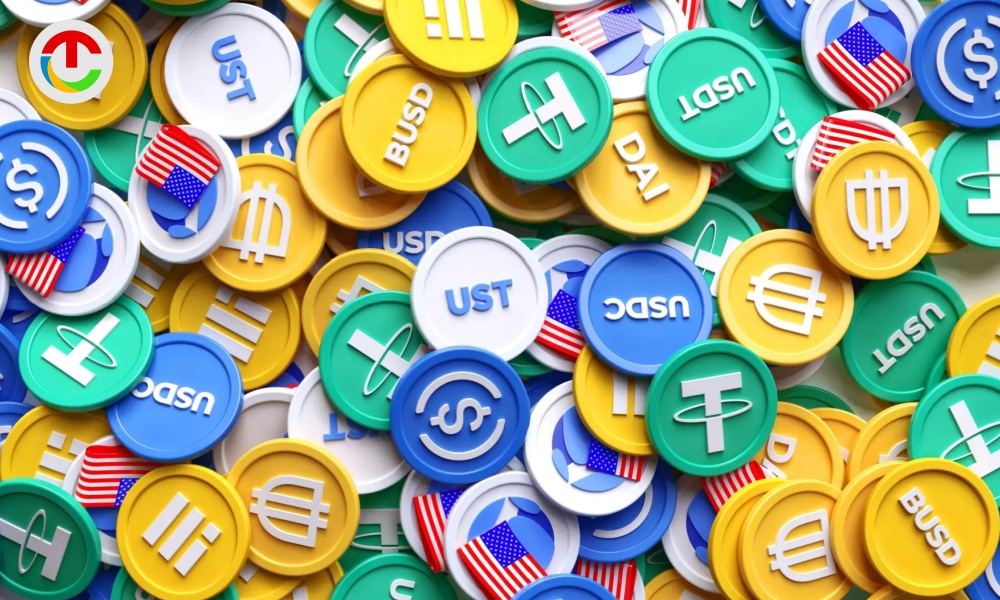
Newer technologies follow a typical pattern. Cryptocurrencies like Stablecoins are at the center of what we often consider as ‘ChatGPT moment’ for finance professionals. Talking about finance, the technology may change, but confidence is the foundation. In today’s digital age, after scrutiny, trust is the best currency. Today, some of the world’s largest financial institutions are actively experimenting with blockchain-based money and digitized financial instruments not as speculative bets, but as infrastructure upgrades.
This evolution is less about hype and more about efficiency, transparency, and global reach. Let’s explore how this transformation is unfolding and why it matters.
From Experimentation to Infrastructure
Banks are no longer asking whether blockchain belongs in finance; they are asking where it fits best. Internal pilots have given way to production-level systems that handle real value. One of the most notable developments is the use of stablecoins as settlement tools between institutions.
Unlike volatile cryptocurrencies, these digital units are designed to maintain a consistent value. For banks, that predictability makes them suitable for moving funds across borders, settling trades, or managing liquidity between subsidiaries, often in minutes rather than days.
Several global banks now use private blockchain networks to simulate real-world settlement processes. These controlled environments allow compliance teams, auditors, and regulators to observe transactions in real time, reinforcing confidence and operational integrity.
Why Wealth Funds Are Paying Attention
Sovereign wealth funds and large asset managers are traditionally conservative, guided by long-term mandates and risk-adjusted returns. Their interest in blockchain isn’t about chasing short-term gains; it’s about future-proofing portfolios.
Tokenized assets, digital representations of real-world instruments such as bonds, funds, or real estate, offer compelling advantages. Ownership can be divided into smaller units, enabling better diversification. Transactions can be settled almost instantly, reducing counterparty risk. Most importantly, every movement is recorded on an immutable ledger, simplifying audits and reporting.
For wealth funds managing billions, even small improvements in settlement speed or operational cost can translate into meaningful gains over time.
Tokenization: Redefining Ownership and Access
Tokenization is reshaping how financial assets are issued and managed. Instead of relying on layers of intermediaries, institutions can issue digital versions of traditional securities directly on a blockchain.
Banks are already using this approach for pilot bond issuances, money market funds, and structured products. Investors receive tokens that represent legal ownership, with smart contracts automating interest payments, redemptions, and compliance checks.
For wealth managers, this opens the door to offering previously illiquid assets such as infrastructure projects or private credit to a broader set of qualified investors, without compromising regulatory standards.
The Role of Stable Value Digital Money
While tokenized assets represent “what” is being traded, stablecoins often represent “how” value moves between parties. In institutional settings, they act as digital cash equivalents, enabling near-instant settlement and reducing reliance on traditional correspondent banking networks.
This is particularly useful in cross-border contexts, where time zone differences and legacy systems can delay transactions. By using blockchain-based settlement, banks can operate on a 24/7 basis, improving capital efficiency and client experience.
Importantly, institutions are selective. They prioritize transparent reserve structures, strong governance, and regulatory alignment factors that directly influence trust.
Managing Risk and Regulation
No serious institution adopts new technology without addressing risk. Compliance, custody, and legal clarity remain top priorities.
Banks integrate blockchain systems with existing risk frameworks, ensuring that digital assets meet the same standards as traditional ones. Custody solutions often provided by regulated entities protect private keys and enforce strict access controls.
Regulators, too, are evolving. In many jurisdictions, clearer guidance has reduced uncertainty, encouraging more institutions to participate. This regulatory engagement reinforces the legitimacy of pegged crypto and tokenized instruments within mainstream finance.
What This Means for the Future of Finance
The growing involvement of banks and wealth funds signals a structural shift. Blockchain is no longer a parallel system; it is becoming part of the financial core.
Over time, clients may not even notice the technology behind their transactions. What they will notice are faster settlements, greater transparency, and more flexible investment options. Tokenized funds could rebalance automatically. Cross-border payments could clear in seconds. Reporting could be near-instant and verifiable.
This isn’t a replacement for traditional finance; it’s an upgrade.
Conclusion
The adoption of stablecoins and tokenized assets by banks and wealth funds reflects a careful balance between innovation and responsibility. Institutions are moving deliberately, guided by experience, regulatory engagement, and real-world testing.
As these systems mature, they are likely to redefine how value is issued, transferred, and stored quietly but profoundly. For an industry built on trust, that measured approach may be the most disruptive change of all.