According to recent announcements, Kroger is carefully balancing long-term projections with competitive price. In response to shifting customer purchasing habits and escalating competition from stores like Walmart and Amazon, the company seeks to achieve sustainable growth. Kroger intends to solidify its position as one of the biggest supermarket retailers in the US by improving its pricing approach and making technological investments.
Kroger’s Growth Strategy: Emphasizing Customer Value
Competitive pricing, according to Kroger’s new leadership, will boost market share and foster customer loyalty. In order to ensure that customers benefit right away, the plan entails reinvesting cost savings from operational gains into lower shelf prices. Recent reports state that Kroger intends to maintain competitive prices while continuing to enhance product availability, supply chain effectiveness, and retail operations.
This strategy is similar to more general trends in the grocery industry, where stores put value and convenience first in order to keep consumers.
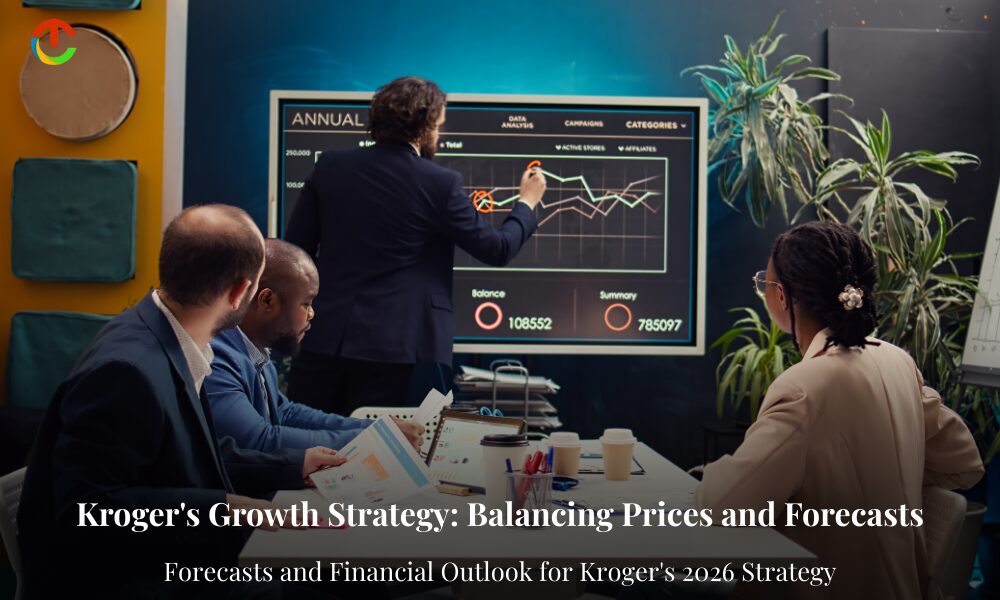
Forecasts and Financial Outlook for Kroger’s 2026 Strategy
According to financial forecasts, adjusted operating profit may be between $5.0 billion and $5.2 billion, and profits per share are anticipated to be between $5.10 and $5.30.
These projections demonstrate Kroger’s dedication to steady growth as opposed to rapid expansion. Additionally, the corporation is investing between $3.8 billion and $4 billion in capital expenditures to enhance logistical networks, technology, and store infrastructure.
Kroger is hopeful about long-term growth despite conservative estimates because of its diverse operations and solid consumer base.
Digital Innovation and Technology’s Function
Digital sales have increased significantly in recent years; according to Kroger’s most recent data, e-commerce sales have increased by 20%.
Kroger is moving toward a hybrid fulfillment model that blends automated technology and store-based deliveries in order to increase online profitability. Through collaborations with delivery services like Instacart and Uber Eats, the business may increase its online presence and offer quicker service.
Furthermore, Kroger has implemented AI-powered products like digital shopping assistants that assist consumers with meal planning and grocery list management based on previous purchases. These developments are intended to improve customer interaction and customisation.
Kroger’s Competitive Advantage and Pricing Strategy
According to industry projections, supermarket prices will rise more slowly than restaurant pricing in 2026, which might encourage more people to prepare meals at home. By boosting foot traffic and grocery spending, this trend may help supermarket businesses like Kroger.
Increasing the number of private-label products, running discounts, and streamlining the supply chain are all part of Kroger’s approach. By taking these steps, the retailer may continue to offer competitive prices without jeopardizing their financial stability.
Investor Perspectives: Strategic Presentations and the Kroger Pitchbook
Additionally, they show how Kroger is transitioning from an acquisition-driven strategy to one that is more efficiency-focused. The company hopes to maintain long-term development even in a fiercely competitive retail environment by increasing productivity and operational rigor.
Kroger’s Growth Rate and Prospects
Kroger seeks to preserve profits while providing value to customers by coordinating its price strategy with operational savings. Kroger’s balanced strategy can help it maintain its position as one of the leading companies in the supermarket industry as it continues to change.