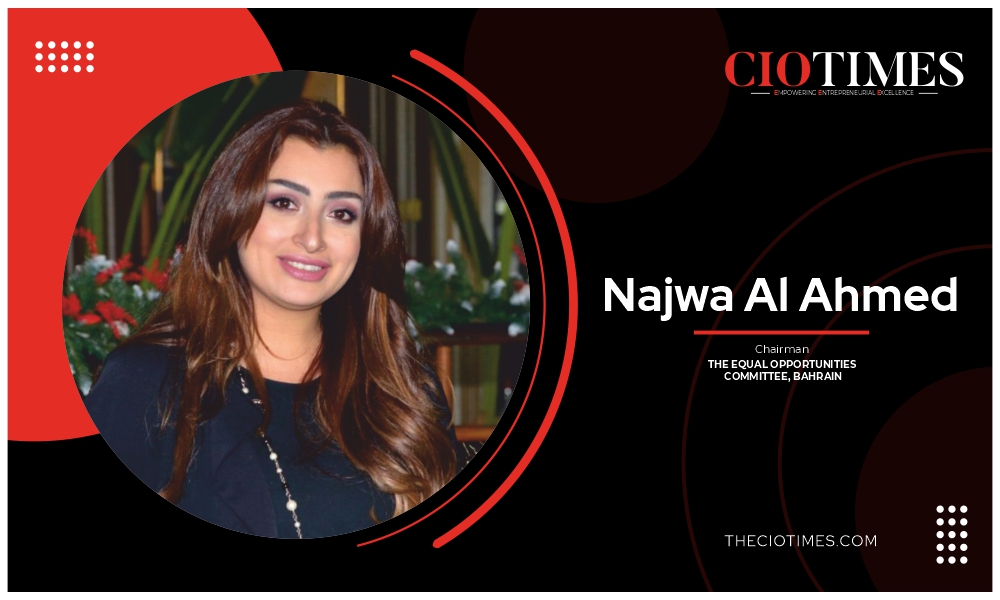
Women leaders are reshaping the future of Human Resources by blending empathy with strategic insight. As change-makers, they champion inclusive cultures, progressive talent practices, and people-centric policies that drive organizational success. A similar leader is Najwa Al Ahmed, Chairman of the Equal Opportunities Committee, Bahrain. She is a human resource leader whose leadership strengthens workforce resilience, nurtures diversity and equity, and aligns human capital strategies with business goals. By leveraging data, technology, and emotional intelligence, she elevates HR from an administrative function to a strategic powerhouse. Her journey inspires innovation, mentorship, and ethical leadership, proving that empowering people is the foundation of sustainable growth and long-term excellence in today’s evolving workplace.
People Strategy
With more than two decades of experience shaping people strategies, her view of Human Resources has evolved alongside the growing complexity of organizations themselves. What was once largely seen as a support-driven, reactive function has become a core strategic force influencing organizational outcomes. As human capital emerged as a true competitive advantage, HR moved from operating on the sidelines to being fully embedded in the business.
She adds, “When inclusion is treated as a strategic priority rather than a compliance requirement, it becomes a powerful driver of organizational strength and social credibility.”
This includes anticipating future skill needs, shaping leadership behaviors, and building systems that sustain long-term performance. For Najwa, HR’s transformation was never about asserting influence, but about earning trust through data-driven insights, measurable impact, and consistent alignment with business priorities.
The Human Science
In shaping her views on how modern HR leadership is grounded in science rather than theory alone, she consistently highlights the balance between evidence and experience. Data and behavioral insights provide the structure needed to identify patterns, assess risks, and inform sound decisions, while organizational psychology offers a deeper understanding of what truly motivates people at work. Yet she believes science reaches its full value only when paired with seasoned judgment developed over years of close engagement with individuals and teams.
For Najwa, effective HR decision-making emerges at the intersection of analytics, psychological insight, and human intuition. This professional wisdom, refined through listening, observing, and learning from both success and failure, does not compete with data; it sharpens it. The result is leadership that is not only precise but empathetic and built for long-term sustainability.
Inclusion With Impact
As Chairman of the Equal Opportunities Committee, she approaches inclusion not as a policy exercise, but as a core business imperative with measurable outcomes. She views inclusion as a foundational driver of trust, innovation, reputation, and long-term organizational viability far beyond a complementary initiative or compliance obligation.
For her, translating inclusive intent into real cultural and business impact means embedding it into leadership accountability, everyday decision-making, and the organization’s unwritten norms. Inclusion gains momentum only when leaders are held responsible for outcomes and when equitable practices shape how decisions are made and behaviors are rewarded.
Najwa asserts, “When inclusion is treated as a strategic priority rather than a compliance requirement, it becomes a powerful driver of organizational strength and social credibility.”
Strategic Alignment
As a senior HR leader navigating an increasingly complex business environment, Najwa anchors alignment in deep business fluency. She believes HR leadership begins with a clear understanding of where the organization is headed, the risks it must manage, and the capabilities that will define future success, not just an awareness of current operations.
In her view, a people strategy cannot live in isolation or exist as a static plan. It must function as a dynamic framework that evolves in step with business priorities, guiding decisions on role design, workforce reskilling, and leadership expectations. For Najwa, true alignment is achieved when talent and people decisions actively drive strategy execution, enabling the business to move forward with clarity, agility, and confidence.
Empowered Equity
In reflecting on the most effective initiatives, she has led to advance equity, diversity, and fairness within a traditionally structured industry, she consistently points to efforts that create lasting opportunity rather than symbolic progress. Her work has been closely aligned with the national movement supporting women’s advancement in the Kingdom of Bahrain, with a strong focus on increasing participation, visibility, and empowerment across the workplace.
She shares, “I am particularly proud of my contribution to advancing women’s participation and empowerment in alignment with the national movement supporting women in the Kingdom of Bahrain.”
By recognizing discipline, resilience, and performance in all their forms, these initiatives strengthened representation while sending a broader cultural message. For Najwa, empowering women is not only a social responsibility it is a strategic advantage that elevates both organizations and society.
Leadership Resilience
Having navigated multiple economic shifts and organizational cycles, she believes the leadership qualities most critical for HR leaders during periods of uncertainty and transformation are courage, clarity, and composure. In her experience, effective HR leadership requires the confidence to challenge decisions that may deliver short-term gains but undermine long-term sustainability, especially under intense pressure.
She also emphasizes the responsibility of bringing clarity when change feels ambiguous, helping leaders and employees understand not only what is evolving, but why it matters. For Najwa, emotional steadiness, ethical judgment, and a long-term perspective set strong HR leaders apart, enabling them to guide organizations through transformation with trust, resilience, and purpose.
Talent Balance
In addressing how organizations can adapt workforce strategies amid rapidly shifting, multi-generational talent expectations, she emphasizes that today’s employees are not avoiding accountability; they are seeking accountability that feels meaningful. In her view, performance and engagement are not competing priorities; they strengthen one another when people feel trusted, respected, and genuinely invested in.
She believes organizations must move beyond one-size-fits-all workforce models and embrace more personalized approaches to career development, flexibility, and recognition, without diluting performance standards.
She shares, “Retention is no longer driven by loyalty alone, but by relevance, growth, and purpose.”
Resilient Workforce
Drawing on her extensive experience, Najwa sees strong human capital management as a key driver of organizational resilience, performance, and reputation. She observes that organizations with well-developed people practices bounce back more quickly from disruption, navigate change with greater agility, and build lasting trust with stakeholders.
For her, resilience is cultivated long before a crisis occurs through sustained investment in leadership development, a healthy organizational culture, and the well-being of employees. Over time, these efforts not only enhance performance but also shape how an organization is perceived, making it a magnet for top talent, investors, and the broader community.
Emotional Leadership Edge
She emphasizes that while technical competence can open doors, it is personality, emotional intelligence, and behavioral awareness that determine the longevity and impact of leaders and teams. She believes that leaders who understand their own strengths and triggers, as well as those of others, are better equipped to build trust, navigate conflict, and foster psychologically safe environments where high performance can flourish.
She adds, “Behavioral awareness is no longer a ‘soft skill’; it is a core leadership capability that directly affects results.”
People Governance
As a Board Member at InvitaBahrain, she leverages her HR expertise to bring a people-focused perspective to governance, strategic oversight, and sustainable growth. She views governance as more than compliance; it is about ensuring the organization has the leadership capability, ethical grounding, and talent sustainability needed to achieve its mission.
Najwa’s contributions center on connecting board-level decisions with the long-term health of human capital, recognizing that sustainable growth depends on developing leaders, nurturing culture, and maintaining a workforce capable of driving organizational success over time. Her HR lens ensures that strategy and people priorities are fully aligned at the highest level.
Balanced Leadership
She approaches the development of future-ready leaders as a practice of integration rather than compromise. She believes that empathy without accountability can drift without direction, while accountability without empathy risks disengagement and missed potential.
Najwa adds, “Leadership development must focus on judgment; helping leaders know when to be firm and when to be flexible.”
This careful balance allows innovation to thrive within a disciplined, values-driven framework, ensuring leaders can drive results while fostering trust, collaboration, and sustainable impact across the organization.
Strategic HR Leadership
She believes a persistent misconception at the executive level is that HR’s influence stops at talent management or employee engagement. In her view, this underestimates the strategic reach of modern HR, which serves as the organization’s compass guiding sustainability, ethical leadership, and long-term value creation.
She sees HR not merely as a support function, but as an organizational architect: shaping culture, influencing governance, managing human risk, and ensuring people decisions align with future readiness. By positioning HR as a steward of organizational health, Najwa demonstrates how the function can drive growth that is responsible, resilient, and deeply human-centered, reshaping the narrative of what HR truly delivers at the executive table.
People Specific
Looking ahead, Najwa sees the most transformative trend redefining HR’s strategic role as the shift toward human-centered organizational design. While technology remains an important tool, she believes the future of HR will be shaped by its ability to create environments where people can perform sustainably, balancing wellbeing, ethics, continuous learning, and adaptability at the heart of the operating model.
For her, HR is evolving from a focus on efficiency to becoming a true steward of organizational health, ensuring that systems, culture, and leadership practices collectively support long-term resilience, engagement, and ethical growth across the enterprise.
Enduring Impact
Reflecting on her career journey, she defines meaningful impact in Human Resources as leaving organizations stronger than she found them, more ethical, resilient, and human-centered. For her, true influence comes from shaping leaders, safeguarding culture, and embedding practices that support sustainable success.
She shares, “I hope to inspire the next generation of HR professionals to lead with both intellect and integrity.”
Najwa hopes her legacy will position HR as a respected, strategic, and evidence-driven discipline, recognized not just for managing talent but for driving organizational outcomes.