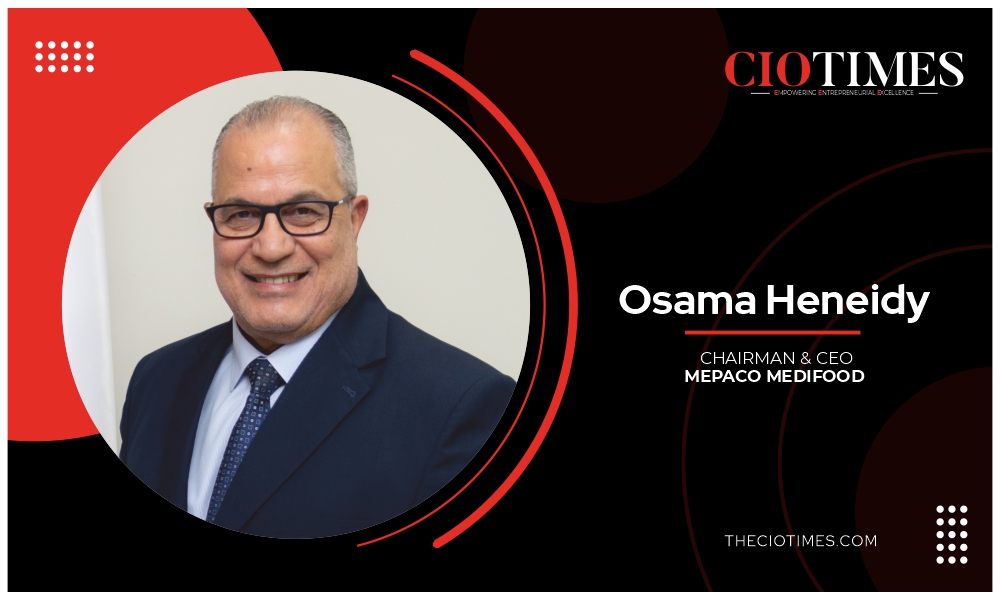
The pharmaceutical industry plays a crucial role in improving people’s lives. It does so by developing innovative medicines, vaccines, and therapies that prevent and treat diseases. Pharma industry leaders are well in-tune with the cutting-edge research, global health initiatives, and patient-focused care, which contributes to life expectancy of general public. Today, we present to you a similar talented pharma industry leader, Osama Heneidy, Chairman & CEO at Mepaco-Medifood. His professional journey began in the pharmaceutical sales sector, where he built a strong foundation in understanding both patient needs and market dynamics. During those formative years, he gained firsthand insight into the challenges faced by healthcare providers and patients alike, learning the importance of attentive listening, adaptability, and data-driven decision-making.
He later advanced into leadership roles within multinational organizations such as Novartis, where he was introduced to global best practices in operational excellence, compliance, and strategic execution. Managing diverse teams across various markets deepened his appreciation for structured processes, measurable performance, and forward-looking planning.
As his career evolved, Osama took on executive leadership roles in prominent regional and local companies, including EVA Pharma and Tabuk. These positions enabled him to focus on transformation, innovation, and sustainable growth particularly within highly competitive environments.
Today, Osama combines these diverse experiences to lead an organization that unites modern pharmaceutical expertise with the long-standing heritage of plant-based medicine and nutritional supplements. His leadership philosophy is grounded in discipline, strategic vision, and a steadfast belief in empowering teams to drive innovation while maintaining a strong commitment to affordability and patient well-being.
Global Excellence
Working with global industry leaders such as Novartis instilled in Osama a deep appreciation for operational excellence, compliance, and unwavering quality. These renowned organizations demonstrated how pharmaceutical companies can achieve large-scale growth while maintaining an uncompromising focus on patient safety.
He shared,” The discipline of adhering to global standards, while remaining agile in diverse markets, has stayed with me throughout my leadership journey.”
Leading prominent regional firms further strengthened Osama’s understanding of adaptability and cultural intelligence. Every market brings its own regulatory frameworks, economic conditions, and patient expectations, requiring leaders to balance global best practices with local nuances. The enduring lesson he carries forward is that true and sustainable success in the pharmaceutical industry stems from trust built through transparency, consistent quality, and enduring partnerships with all stakeholders.
Purposeful Innovation
One of the key challenges Osama faces as a leader is striking the right balance between two often competing priorities: driving innovation and ensuring product affordability. At Mepaco-Medifood, he has transformed this challenge into a defining strength. Through strategic investments in advanced technologies, the reinforcement of local supply chains, and the optimization of operational efficiency, the company successfully reduces costs without ever compromising on quality.
He shares, “I also believe innovation doesn’t have to mean expensive.”
For him, it is about developing solutions that patients can genuinely access and benefit from. This philosophy drives Mepaco-Medifood’s close collaboration with research institutions and regulatory bodies to ensure that new ideas reach the market swiftly and at fair prices. Ultimately, Osama defines success not by how advanced a product appears on paper, but by whether patients can truly afford, trust, and depend on the treatments the company provides.
Foresighted Leadership
For Osama, visionary leadership in the pharmaceutical industry is about foreseeing the future of healthcare and positioning organizations to address patient needs even before they fully emerge. It demands a long-term outlook, a responsible approach to integrating innovation, and the discipline to execute strategies that balance profitability with accessibility.
He asserts,” For me, being a visionary leader also means cultivating resilience”.
While simultaneously building organizations capable of adapting to shifting regulatory, economic, and technological landscapes. It is about inspiring teams with a shared sense of purpose while cultivating an ecosystem where innovation, compliance, and patient-centered solutions coexist harmoniously. For him, every strategic decision and initiative should ultimately contribute to shaping a healthier and more sustainable future for society.
Transformational Leadership
Looking back on his tenure with EVA Pharma and Tabuk Pharma, Osama reflects that what stands out most is not merely the financial growth achieved but the cultural transformation within the organizations. Under his leadership, these companies evolved from traditional structures into agile, innovative entities capable of competing in a rapidly changing industry. This shift, emphasizing efficiency, quality, and diversification remains one of the most significant milestones in his career.
In subsequent leadership roles, Osama recognized the vital importance of resilience. Whether adopting digital tools, reinforcing supply chains, or investing in new therapies, his focus was on preparing companies to thrive amid uncertainty. For him, the true achievement lay in shaping organizations that did more than endure change; they actively led it.
The Pharma Evolution
Looking back at the pharmaceutical industry 20 years ago, Osama notes that it was markedly different. Most companies concentrated on generics and maintaining low prices. While quality existed, the global spotlight was largely absent. Over time, he has witnessed Egypt and the wider MENA region rise to new heights, aligning with international standards, investing in research, and gaining the confidence to export and compete on a global scale.
What excites Osama most about the future is the industry’s expanding horizons. He sees tremendous potential in biotechnology, natural and plant-based medicine, and the application of digital tools to transform manufacturing processes. Egypt, in particular, possesses both the talent and strategic position to evolve beyond being a mere producer; it has the capacity to become a regional hub for pharmaceutical innovation.
He points out, “The future of pharma here isn’t just about making medicine; it’s about shaping integrative healthcare solutions that the world will look to.”
Healthcare Hub
Osama views Egypt and the MENA region as emerging leaders in the global pharmaceutical landscape. For many years, their role was primarily local, focused on meeting domestic demand and producing generics. However, this is changing rapidly. Egypt possesses the talent, resources, and strategic location to evolve into a true hub for innovation, manufacturing, and export.
In Egypt specifically, there is a rich heritage in medicine, spanning from ancient plant-based remedies to today’s modern pharmaceutical facilities. This blend of tradition and innovation provides a distinctive advantage. Osama envisions a future where the MENA region not only supplies affordable medicines but also drives global advancements in biotechnology, natural therapies, and integrative healthcare solutions.
He believes the region stands at a pivotal moment of opportunity: by investing in skills, technology, and strategic partnerships, Egypt and the broader MENA region can become trusted global partners in delivering high-quality healthcare.
Holistic Care
Osama has always believed that true healthcare goes beyond treating illness, it is about enabling people to live healthier, more fulfilling lives. He views integrative health as the future. While medicines remain essential, combining them with proper nutrition, natural therapies, and preventive care significantly enhances the impact on patients’ well-being.
At Mepaco-Medifood, Osama leads efforts at this intersection. The company does more than produce treatments for illness; it actively promotes wellness. This shift from solely “treatment” to comprehensive “wellness” is what drives him.
About the future he shares, “I believe the future of patient care will be holistic, personalized, and empowering.”
Sustainable Operations
In recent years, Osama has observed how vulnerable supply chains can be, particularly in a sector as critical as pharmaceuticals. For him, resilience begins with foresight, identifying potential risks before they turn into disruptions. At Mepaco-Medifood, he has focused on building strong local and regional partnerships, diversifying suppliers, and maintaining a careful balance between efficiency and flexibility. The company has addressed these challenges through proactive planning and adaptable strategies, localizing the production of certain raw materials, expanding its global supplier network, improving production efficiency, and strengthening strategic stock to meet market demand. Sustainability is also a priority for Osama.
He shares, “Healthcare shouldn’t come at the expense of the environment or future generations.”
This philosophy drives Mepaco-Medifood’s investment in greener manufacturing practices, smarter energy use, and initiatives to reduce waste.
Moreover, digital transformation plays a pivotal role in the company’s approach. From real-time tracking of materials to predictive analytics in distribution, technology enables the organization to anticipate challenges and respond quickly. For Osama, it is not just about operational efficiency; it is about creating a resilient system capable of withstanding disruptions while ensuring patients have continuous access to safe and reliable medicine.
Pharma Innovation
Technology is no longer merely a tool in the pharmaceutical industry; it has become a driving force for transformation. Osama believes that in the coming decade, biotechnology, AI, and digital health will not only redefine how medicines are manufactured but also how they are designed, tested, and delivered.
For instance, AI can accelerate drug discovery, optimize clinical trials, and improve demand forecasting. In manufacturing, automation and digital twins enhance efficiency, precision, and sustainability. Digital health, meanwhile, enables a more direct connection with patients, providing real-time insights into how therapies perform in daily life.
What excites Osama most is the potential for these technologies to make healthcare more personalized. Moving away from a one-size-fits-all approach, treatments can be tailored to individuals, supported by manufacturing systems agile enough to meet specific needs. He envisions a future where pharmaceuticals are faster, smarter, and most importantly, closer to the patient.
Resilient Growth
Every leadership journey has its difficult moments, and Osama’s has been no exception. One of the most significant challenges he encountered was guiding organizations through periods of economic uncertainty and evolving regulations. During these times, pressures were intense, with rising costs, strained supply chains, and heightened expectations from patients and stakeholders alike.
Osama asserted, “Challenges can be the greatest teachers.”
Rather than viewing them as obstacles, he approached them as turning points. For instance, financial pressures prompted early investment in efficiency improvements and digital solutions, while regulatory hurdles drove the company to elevate its standards and strengthen its international competitiveness.
In retrospect, these challenges were the experiences that honed Osama’s resilience and clarified his vision. They reinforced the understanding that in the pharmaceutical industry, difficulties are not setbacks; they are opportunities to rethink strategies, enhance operations, and emerge stronger for the patients who rely on the organization.
Future Predictions
Osama’s long-term vision for Mepaco-Medifood is to establish it as a trusted name not only in Egypt but across the region and beyond, a company celebrated for combining the strengths of modern pharmaceuticals with the wisdom of plant-based medicine and nutrition. He aims for the organization to be recognized not merely as a manufacturer but as a pioneer in merging science and nature to deliver products that meet market needs while aligning with global trends toward sustainable natural treatments. Osama believes that nature holds solutions to many of today’s health challenges, and the company’s focus on natural medicine reflects a commitment to providing safe, effective, and sustainable healthcare solutions that genuinely improve people’s quality of life.
He adds, “As for legacy, I don’t see it in titles or achievements alone.”
He hopes to be remembered as a leader who built organizations that prioritized patients, empowered teams to innovate boldly, and contributed to making healthcare more accessible and holistic. Inspiring the next generation of leaders to carry this vision forward would, for him, mark the ultimate success of his journey.