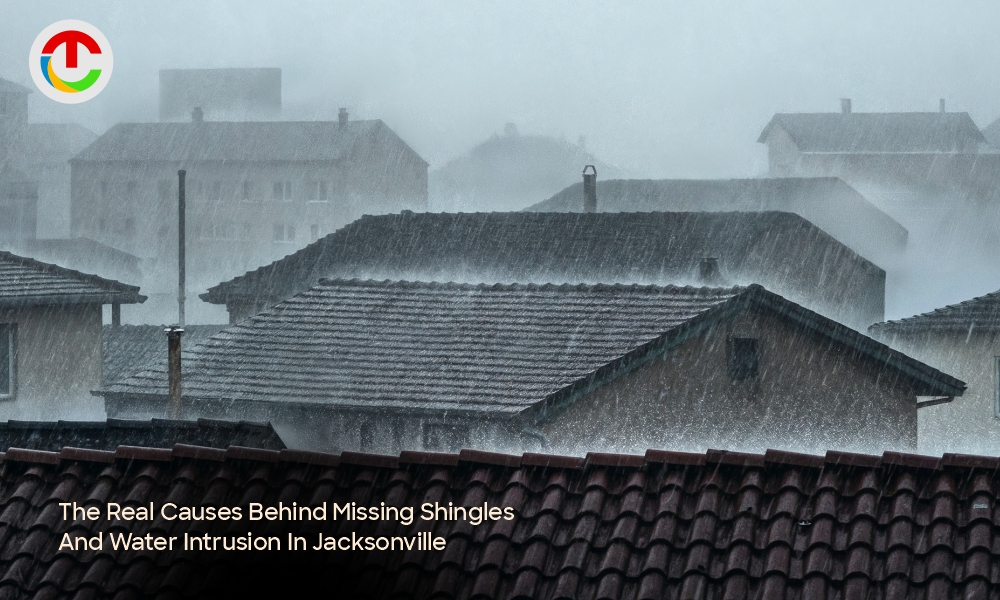
Jacksonville communities see plenty of coastal breezes, warm seasons, and quick shifts in weather. These conditions create real challenges for any roof. Many homeowners notice small changes on their shingles after storms or humid stretches, yet the real source of those changes can feel unclear. A closer look helps reveal why gaps appear on a roof surface and why moisture finds pathways inside.
Local crews such as Trinity Restoration Jacksonville pay close attention to how the weather shapes a roof’s condition. Their work shows how pressure, heat, and aging materials interact in surprising ways. Once these hidden causes make sense, homeowners feel more prepared to protect their spaces and act early.
Wind Stress On Roof Surfaces
Gusty weather brings sudden force that lifts the edges of shingles. Once that lift begins, even a small gap invites air underneath the material. That pressure loosens nails and shifts the placement of the shingle. Over time, a larger section pulls away.
Moisture enters through those raised edges. Humid air collects under the surface, and a roof loses its tight seal. As this cycle repeats during seasonal changes, water reaches deeper layers. This creates a chain reaction that invites even more moisture.
Heat Exposure During Warm Seasons
The heat plays a major role in roof wear. High temperatures cause roofing materials to expand. As shingles expand, their adhesive bonds can weaken, making the edges more flexible than intended.
When temperatures drop, the shingles contract. This repeated movement can leave tiny gaps between layers. Those small openings allow water to slip inside during rainfall. Over time, this cycle of expansion and contraction increases the risk of moisture intrusion and gradual roof damage.
Aging Materials And Wear
Roof surfaces lose strength with age. Older shingles grow brittle and less responsive to changing conditions. Once they lose flexibility, any shift in weather causes cracks or breaks. Small fissures become entry points for moisture.
Aged roofing layers also lose grip on nails. That loosened structure changes how shingles sit on the roof deck. When this happens, gaps form across the surface. Water uses these pathways to enter hidden areas.
Moisture From Humid Air
Jacksonville’s humidity influences the entire roofing system. Warm moisture gathers under shingles and around attic spaces. This creates a damp environment that weakens adhesive strips. As adhesives soften, shingles lose support.
Moist air also affects wood components beneath the surface. Boards swell slightly, creating uneven sections along the roof. This uneven shape makes it easier for shingles to shift. Once shifting starts, water finds a direct route inside.
How A Roofing Service Helps
- Thorough Inspection: A skilled team checks every layer to spot early signs of wear.
- Targeted Repairs: Experts restore damaged shingles and seal weak points with precision.
- Moisture Control: Crews apply methods that limit water movement and protect hidden areas.
- Structural Support: Professionals stabilize roof components that need added reinforcement.
- Preventive Guidance: Homeowners receive clear steps that strengthen roof performance over time.
Jacksonville roofs experience a unique mix of heat, moisture, and shifting weather that places steady strain on shingles and sealants. Each small gap on a roof surface tends to come from several connected causes rather than a single event. Local crews such as Trinity Restoration Jacksonville see these issues daily and understand how each factor links together. Homeowners who understand these patterns take action faster and protect interior spaces from moisture. This insight helps anyone maintain a safer, stronger roof through every season.