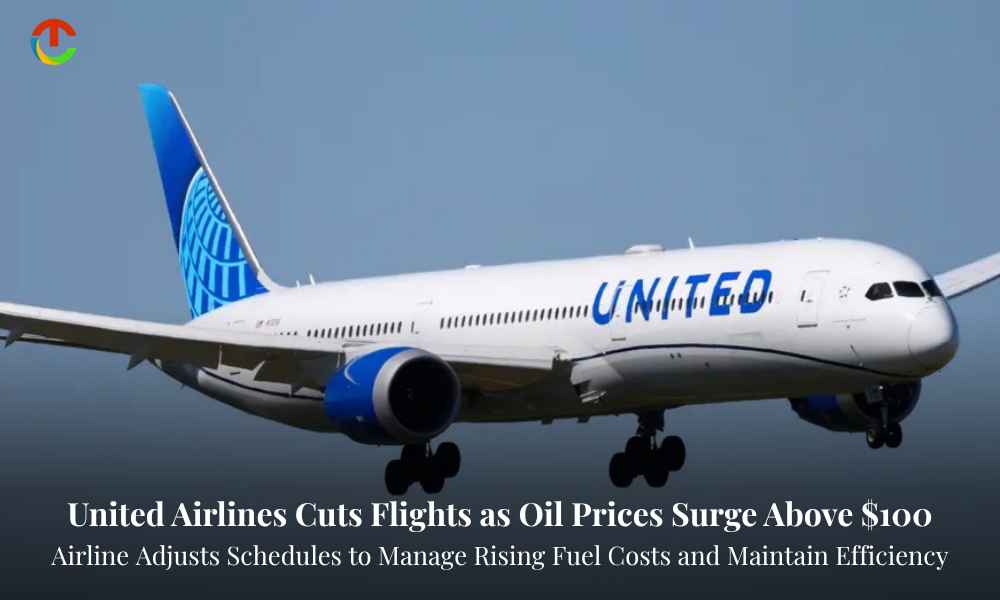
Due to rising oil prices, which are expected to stay over $100 per barrel through 2027, United Airlines has announced plans to cut back on flights. Rising fuel prices, erratic demand, and unstable economic conditions continue to be problems for the aviation sector. In order to maximize operations, control costs, and preserve profitability while effectively serving important routes,
United Airlines modifies its flight schedules.
Flight Cuts and Strategic Modifications
Given that fuel costs make up a sizable amount of operating expenses, the airline has decided to reduce some flights. While retaining high-demand domestic and international flights, United Airlines is concentrating on routes with lesser profitability or overlapping services. The changes are a part of a bigger initiative to improve operations in a climate with high oil prices.
The airline has stressed that this step is not a response to recent market shocks but rather a proactive attempt to adjust to long-term fuel price trends. According to forecasts, oil prices could stay around $100 per barrel for a number of years, forcing airlines to reconsider how they use their fleet and plan their routes.
Effects on Travelers and Reservation Choices
On some routes, passengers might see fewer flying alternatives. To verify availability, travelers are advised to check timetables on the United Airlines website or Google Flights. In order to minimize interruption for frequent flyers and business travelers, United Airlines guarantees that the majority of key hubs and popular destinations will remain well-served.
In order to control expenses and preserve profitability, other significant airlines, such as American Airlines, are also keeping a careful eye on changes in gasoline prices and may employ the same tactics. It is recommended that travelers keep up with timetable modifications and alternate routes.
United Airlines’ Financial Consequences
Since fuel can make up about one-third of all operating costs, rising fuel prices pose a serious threat to airline profitability. United Airlines wants to maximize revenue per available seat mile (RASM) and minimize fuel usage by cutting back on flights on less popular routes.
Strategic flight reductions can help airlines weather periods of high fuel prices while safeguarding their financial line, according to industry analysts. The strategy used by United Airlines shows meticulous planning to strike a balance between passenger service and operational effectiveness, guaranteeing the airline’s competitiveness in the face of unstable energy markets.
More General Industry Trends
Fuel price fluctuations, inflation, and changing travel demand continue to put strain on the airline business. The actions taken by United Airlines are a part of a larger trend in which airlines like American Airlines and Delta are modifying capacity in response to growing expenses. Over the coming years, experts believe that fleet management, route optimization, and airfare modifications will continue to be key airline initiatives.
In a market impacted by growing operating expenses, this climate highlights the value of technological tools like Google Flights for travelers, allowing them to keep an eye on pricing, investigate alternate routes, and make well-informed travel selections.
Future Outlook for United Airlines
The proactive steps taken by United Airlines show the airline’s dedication to passenger service, financial stability, and sustainable operations. The airline attempts to retain efficiency while navigating the difficulties of a high-cost market by matching flight itineraries with anticipated fuel costs.
During this time of increasing energy costs, travelers are advised to keep up with flight availability and other possibilities. In the upcoming years, airlines will need to make strategic operational changes in order to control costs and uphold service standards.