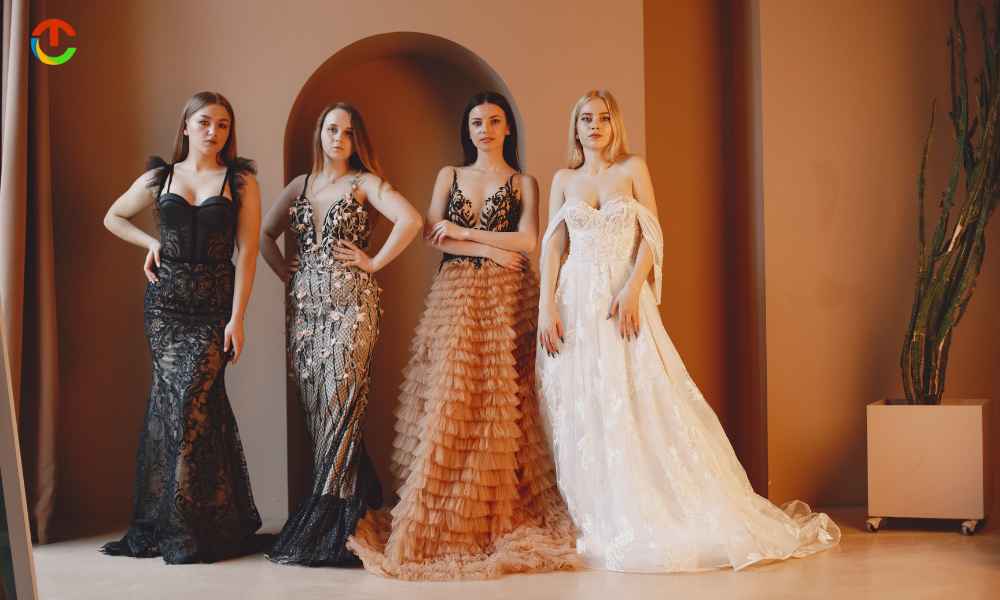
Coming straight to the point, haute couture is opulent clothing made by fashion studios that are in control of the French government. To come under the category of bespoke couture, a particular brand must obey strict guidelines like having a posh studio in Paris with a staff of at least 15 full-time employees. One must also fulfill the requirement of exhibiting at least 35 designs at an annual fashion show.
Brands like Dior, Maison Margiela, and Chanel come into this category, while labels like Tom Ford do not meet the requirements crafted by Chambre Syndicate de la Haute Couture.
The main difference in luxury & high fashion is the uniqueness. Luxury is a common term for items made from fine materials and with meticulous crafting techniques. It increases quality, allowing the fabrics to be sold for high prices. Makers that sell these items are luxury brands.
Reasons Why People Prefer Haute Couture Clothing?
- Status Symbol:
Owning fabrics from a bespoke couture is not only a status symbol, but it is a form of sophistication at its peak. It is considered the highest mark of clothing trends. The target group of such brands is often the elite population in their global circle. They often offer a membership to their target population to visit their latest collections. These come under the Veblen goods category.
- Customized design:
A rich design made especially for the person who’ll purchase the fabric is a unique trend in the haute couture. Each piece is made-to-measure for an individual that makes the fabric a perfect fit & provides a comfort fit on the body. The comfort is such that it cannot be integrated with a readymade fabric which is normally available in normal stores. The feel of the fabric, touch, & the elegance are next level.
- Artistic expression:
It is often referred to as wearable art rather than just clothing. It is a way to appreciate the hours of hard work & creativity behind each piece. The designs used, the fabrics used, the coats given, and the colors integrated all carry a meaning to the specific fabric designed.
- An extraordinary piece:
When crafting such items, clients are guaranteed to possess different items than usual. It reduces the possibility of coming across someone with the same outfit. The clients are intrinsic & very concerned about the fabric being repeated. That itself is a symbol of high fashion. No repetitions, while each fabric is crafted to more than perfection.
The World’s Most Exclusive Club: Who Is Actually Buying Haute Couture?
Pictures from Paris Couture Week might make you wonder – who ends up in these outfits? Not just posing on the steps under bright lights, yet someone out there picks them out, pays for them, slips into them like second skin, stores them where everyday clothes live.
One day, your phone pings. A dress arrives tomorrow. Not here. Far away, something else happens. Clothes take months instead. These pieces cost more than cars. Some pass houses in price. That number? Tiny. Fewer than the crowd at a weekend soccer match. Picture rows of seats. Fill them once. That holds everyone who buys these gowns worldwide. Speed lives elsewhere.
Who might they be?
Nowadays, royal tastes are shifting beyond Europe. Alongside traditional houses come Gulf-region lineages, their choices shaped by grand ceremonies and diplomatic gatherings. These newer collectors treat certain items as must-haves when hosting major events.
Art lovers see these pieces differently. Not as clothes at all. For them, each one holds value beyond wear. Ownership means holding something that grows in meaning. What others call fashion, they treat like history in fabric form. Worth keeps building over time.
How Many People Buy Haute Couture?
When we were intrigued enough to find the numbers, we were astonished by the numbers we saw. The number of people buying these products is way less than we were expecting. The number we found out was 2000 to 4000 clients for artisanal fashion. The majority of them were elite-class women. The prices are also such that only a few can afford to buy the pieces as they’re customized & crafted with extreme care.
With the prices being so high, the profit margins are not as expected. Then, why are brands still into this type of elite class selling? The answer being prestige, & marketing. It is also believed that it is a way to see what can work in the ready-to-wear category.
Want to become a couturier?
The Federation de la Haute Couture et de la Mode (formerly known as the Chambre Syndicale de la Haute Couture) is an establishment that holds the authority on deciding which fashion houses & its designers can wear the badge of artisanal fashion houses. The federation was esyablished in 1868 which is a flagbearer of the French fashion industry. It actively participates in organizing Paris Fashion Week & overseeing the rules & regulations of the country’s industry.
In order to wear the badge of the bespoke couture status, fashion jouses must meet certain criteria like custom made garments for each client & as mentioned earlier, having a studio in Paris with the said employee count.
To name a few clients, here is a list:
- Zofia Krasicki
- Rebecca Vanyo
- Lauren Amos
- Lauren Lepire
Conclusion
Luxury and haute couture may appear similar on the surface, but they represent two very different worlds. Luxury is about refinement, accessibility, and consistent quality, beautifully designed pieces that are produced at scale and meant to be worn and enjoyed. Artisanal fashion, on the other hand, is intimacy, artistry, and time. It is created by hand, for one person, with extraordinary skill and patience. Understanding this difference deepens our appreciation for fashion itself. Luxury offers elegance for many, while bespoke couture preserves the soul of craftsmanship, creativity, and human touch at its most exceptional.