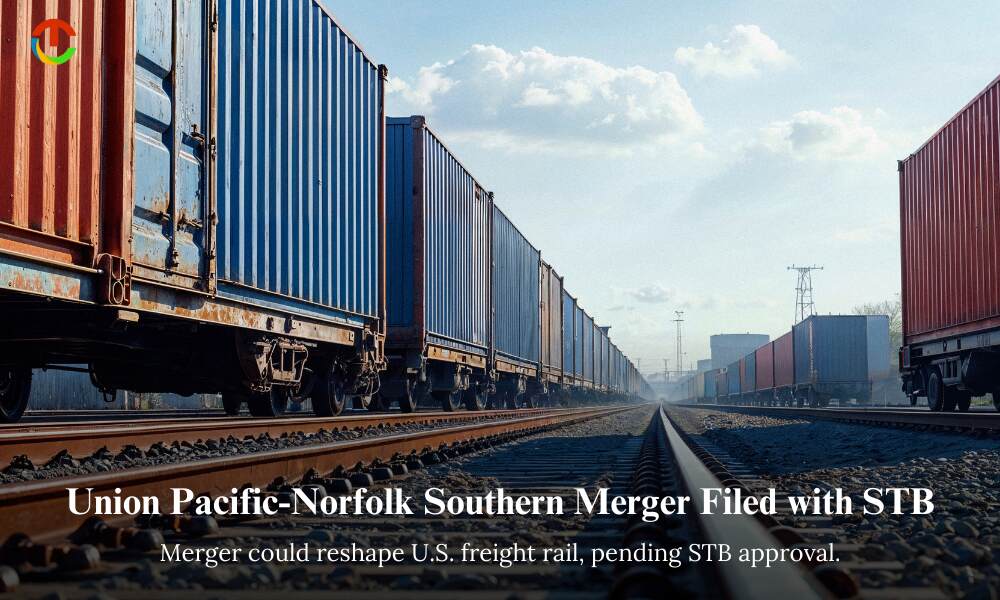
Union Pacific (UP) and Norfolk Southern (NS) have formally submitted their long-awaited merger application to the Surface Transportation Board (STB). With far-reaching effects on both the industry and customers, this major shift has the potential to completely change the freight transportation environment in North America.
Important Aspects
Competition Concerns: The merger has sparked serious worries about how it will affect competition, especially for smaller regional railroads and customers who might have to pay more for transportation. Some are concerned that monopolistic activities in the freight transportation industry could result from less competition.
Logistics and Merger Map: The possible merger will have an influence across the country, particularly in important freight corridors. The Union Pacific-Norfolk Southern merger map identifies regions of overlap between the two businesses and potential areas for increased operational efficiency through unification.
Industry Responses: Many in the transportation sector are cautiously enthusiastic because they think the merger will simplify operations and cut expenses. But there are still concerns about long-term regulatory monitoring, employment losses, and pension obligations.
What’s Next for the Merger in the Regulatory Process?
The Surface Transportation Board (STB) will decide whether to move forward with the merger when it has finished its review. The public, stakeholders, and industry experts will be able to participate in hearings and provide input during the review process. The verdict will have a big impact on the future of freight transportation in the United States, but the final ruling may take months.
Final Thought
The Union Pacific-Norfolk Southern merger application represents a pivotal moment in the freight transportation industry. As the STB begins its review, stakeholders on all sides are eagerly watching to see how this potential consolidation will impact the competitive landscape, pricing, and service levels in the U.S. rail sector.