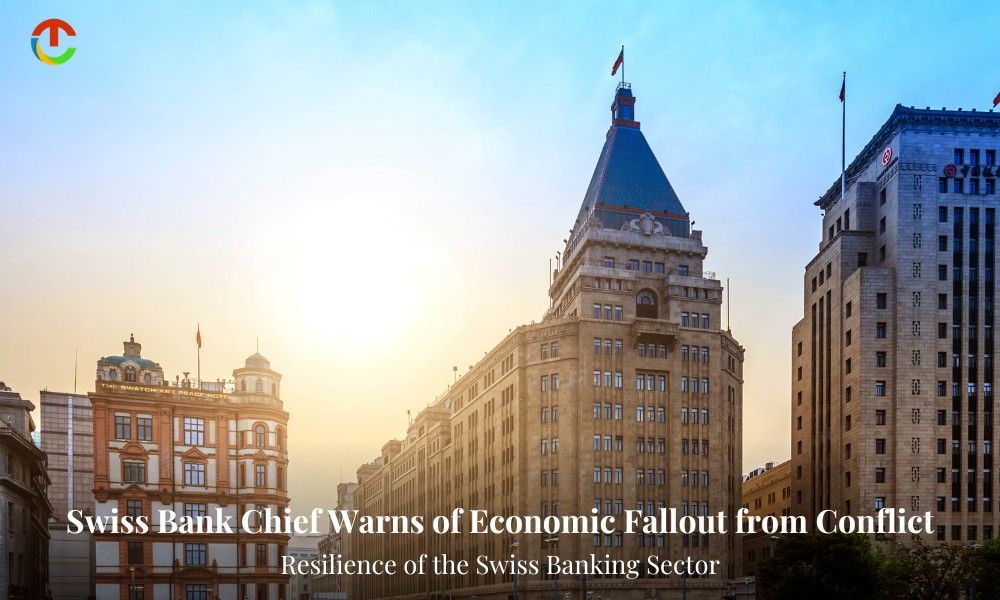
Swiss Bank Chief Warns of Economic Fallout from Conflict

Swiss-Bank
Concerns about the possible economic effects of the prolonged crisis in the Middle East have been voiced by the chairman of the Swiss National Bank (SNB). The leadership of the bank claims that geopolitical tensions may have repercussions on international financial markets, including investment flows, currency stability, and liquidity. Even the safest banking systems can be threatened by foreign wars, notwithstanding Switzerland’s longstanding reputation as a stronghold of financial stability.

The “Swiss war on cash” measures and concerns about bank collapses have drawn attention to the Swiss banking industry in recent years. The SNB chairman’s remarks serve as a reminder to both the public and investors that even neutral financial hubs like Switzerland are susceptible to outside shocks.

Global Markets and Geopolitical Conflict

Commodity prices, transport routes, and energy markets have already been affected by the turmoil in the Middle East. Analysts predict that Switzerland and other financial centers in Europe may be affected. The chairman of the SNB stressed that rising energy prices and foreign exchange volatility could put indirect pressure on Swiss banks and have an impact on capital flows.

plot theories like “Swiss bank conspiracy” and public worries about “Swiss bank fails” have emerged online, reflecting investors’ increased sensitivity during global crises. Even if these assertions frequently inflate dangers, they highlight how crucial it is for central banking authorities to communicate clearly in order to preserve confidence and market stability.

Resilience of the Swiss Banking Sector

The Swiss banking industry continues to be among the strongest in the world despite external challenges. Risks are reduced by strict capital requirements, strong regulatory control, and a long history of financial prudence. However, measures like the “Swiss war on cash,” which aims to decrease untraceable transactions and boost openness, have generated discussion on their effects on the economy and society.

Although these steps are meant to improve security and compliance, analysts point out that they may also have an impact on banking operations, consumer behavior, and liquidity management. Regulators and investors must keep a close eye on these elements when combined with exogenous shocks like geopolitical crises.

Economic Repercussions: What to Anticipate

The chairman of the SNB cautioned that possible economic repercussions might include:

Swiss franc exchange rate volatility has increased.
Changes in investment habits in favor of safer assets
Possible limitations on smaller banks’ liquidity
wider influence on international financial markets

Smaller Swiss banks might be more susceptible to sudden shifts in investor attitude, even while larger banks have substantial capital buffers. Experts stress that timely policy interventions and aggressive risk management are essential to preserving economic stability.

Keeping Your Confidence During Uncertain Times

The resilience of Switzerland’s banking system and open communication in times of crisis are essential to the country’s standing as a stable financial center. Geopolitical crises, no matter how far away, can have immediate and significant economic impacts, as the SNB chairman’s public warning serves as a reminder.

The underlying message is clear: proactive governance, strict regulation, and investor vigilance remain the keys to surviving external shocks, even while tales of “Swiss bank failures” and “Swiss bank war on cash” may dominate media narratives. The Swiss financial sector’s sustained resilience and credibility on the international scene will depend on its capacity to adjust to global difficulties.


Read our Exclusive interview with Kelly Weger

Follow Us

Get notified of the best
deals on our Brand

By  submitting this form, you confirm that you have read and are agreeing to our terms of use regarding the storage of the data submitted through this form.

Top Post

Latest Isssues