In today’s business environment, sustainability has evolved from a peripheral concern into a central driver of long-term value creation. Organizations are increasingly recognizing that resilience, innovation, and competitiveness are deeply tied to environmental and social performance. As a result, leading companies are embedding sustainability into core strategy—aligning purpose with performance in ways that shape both markets and mindsets.
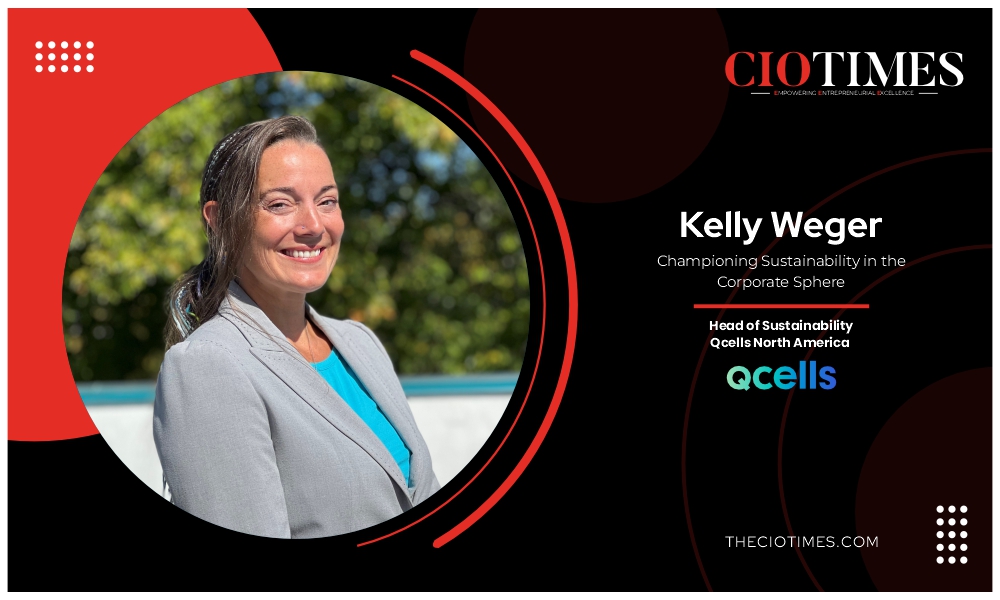
At the forefront of this shift is Kelly Weger, Head of Sustainability at Qcells North America. Known for her ability to translate complex environmental challenges into actionable business strategies, Weger brings both technical expertise and a deeply personal commitment to advancing a more sustainable future. Her work sits at the intersection of corporate leadership, clean energy innovation, and systems-level thinking, an approach that reflects both the urgency and the opportunity of the current moment.
A Lifelong Commitment to the Natural World
For Weger, sustainability is not a professional trend; it is a lifelong calling. Her connection to environmental stewardship began early, shaped by formative experiences in nature that sparked both curiosity and respect for the natural world.
She recalls vivid childhood moments: watching fireflies illuminate summer evenings, listening to the steady rhythm of cicadas, and sensing the arrival of a storm before the first drop of rain. These experiences cultivated an enduring fascination with weather systems, climate, and ecological balance.
“I studied climate change and what causes it,” she explains. “I have dedicated my life to protecting this planet, and after more than a decade helping companies succeed more sustainably, I now have the opportunity to inspire that same commitment across our workforce.”
That sense of purpose continues to guide her leadership. Amid the pressures of corporate life, Weger emphasizes the importance of stepping back to reconnect with the broader mission. She regularly challenges herself and her teams to reflect on fundamental questions: Why does this work matter? How does it contribute to a better future? For her, maintaining that clarity is essential to sustaining momentum and impact.
From Architecture to Enterprise Sustainability
Weger’s path to corporate sustainability leadership is grounded in a multidisciplinary foundation. Trained as an Architect and certified as a LEED Accredited Professional, she developed a systems-oriented perspective early in her career—one that considers the full lifecycle of buildings, materials, and infrastructure.
This training instilled a habit of examining how individual decisions connect to broader systems, from sourcing materials to end-of-life reuse. Today, that same mindset informs her work across complex corporate environments.
“My role, if done correctly, touches nearly every part of the organization,” she says. “From evaluating supply chain risks, including potential human rights concerns, to assessing travel efficiency and understanding the embodied carbon of our products as we localize manufacturing—everything is interconnected.”
Over the course of her career, Weger has worked with more than 200 manufacturing companies to identify tailored sustainability solutions. Recognized by the U.S. Environmental Protection Agency as a national sustainability expert, she combines technical depth with practical implementation—integrating energy efficiency, renewable energy, life-cycle analysis, and behavioral change into cohesive strategies.
Navigating a Rapidly Evolving Energy Landscape
As Head of Sustainability at Qcells North America, Weger operates at the crossroads of technology, policy, and corporate strategy. The energy sector, particularly over the past year, has been marked by volatility—from shifting federal incentives to trade disruptions that have introduced uncertainty across global supply chains.
Yet despite these challenges, the long-term outlook for solar energy remains strong. Solar photovoltaic (PV) technology continues to be one of the most cost-competitive sources of new electricity generation, with ongoing advancements pushing efficiency to new levels. At the same time, rising costs in traditional energy sources such as natural gas are reinforcing the economic case for renewables.
These dynamics have sparked broader debate about the role of government in supporting clean energy. As solar achieves cost parity with conventional electricity in many markets, some question the need for continued incentives. Weger, however, views the transition through a wider lens—one that includes not only cost, but also resilience, reliability, and the systemic transformation required to meet long-term climate goals.
Matching Technology with Human Insight
While technological innovation plays a critical role in addressing climate challenges, Weger is clear that it is not a standalone solution.
“If technology alone could solve global issues, we would not still be discussing climate change in 2026,” she notes.
Although sustainability discussions often focus on advancements such as solar, electrification, and carbon capture, Weger emphasizes that even the most sophisticated technologies cannot, on their own, drive the behavioral change required for meaningful progress. Lasting solutions depend on the intentional integration of innovation with human decision-making, accountability, and responsible implementation.
She cautions that when applied without sufficient foresight, new technologies can unintentionally exacerbate existing challenges. “If we apply new technologies in the wrong places, the wrong ways, or with the wrong motivations, we can make our situation worse than before they were introduced.”
Weger is mindful of this balance in her own work within the renewable energy sector. She advocates for adherence to the Precautionary Principle, underscoring the importance of rigorous due diligence as technologies evolve. While solar energy has a well-established track record as a commercially viable solution, she stresses that continued scrutiny is essential to ensure that innovation does not introduce unintended consequences.
Ultimately, Weger believes progress is not driven by waiting for a singular breakthrough, but by making thoughtful, informed choices that align technological tools with clear purpose and long-term impact.
Leading Sustainably: The Role of Leadership
Through her work with hundreds of organizations, including her time with Purdue University’s Manufacturing Extension Partnership, Weger has observed a consistent pattern: sustainability initiatives succeed most when they are championed at the leadership level.
Grassroots efforts can spark momentum, but without sustained executive support, they often struggle to scale. In contrast, when leadership embeds sustainability into core strategy, it becomes part of everyday decision-making rather than a parallel initiative.
One challenge is that sustainability investments do not always align neatly with traditional financial metrics. While some initiatives yield immediate cost savings, others deliver value through risk mitigation, brand strength, or employee engagement.
To address this, Weger encourages leaders to adopt a broader framework—the Triple Bottom Line of people, planet, and profit—enabling more holistic and strategic decision-making.
A Smarter Approach to Risk
Weger is seeing a notable shift in how organizations approach sustainability, particularly through the lens of risk. As climate-related disruptions become more frequent and visible, companies are increasingly conducting formal assessments of climate-related financial risks, often for the very first time.
These evaluations reveal vulnerabilities that may have previously gone unnoticed, from supply chain disruptions caused by extreme weather to product performance challenges in changing environments. Weger’s own mantra, “Know better, do better,” focuses on forward-thinking continuous improvement, regardless of how nascent a company’s sustainability journey may be today.
Once these risks are identified, sustainability moves from abstraction to business imperative. Leaders become more engaged, discussions with boards become more substantive, and strategies begin to evolve accordingly. As Weger observes, when organizations fully understand their exposure, they are better equipped to act—developing solutions that are both environmentally responsible and operationally sound.
Building Internal Capability for Lasting Impact
A recurring theme in Weger’s work is the importance of internal capability. While external consultants can provide valuable expertise, she believes long-term success depends on building knowledge and ownership within the organization.
During her time developing training programs for energy auditors and carbon analysis, she saw firsthand how internal teams drive sustained progress. Without that internal capacity, even the most well-designed strategies risk losing momentum.
In her view, sustainability must be embedded within the organization’s culture and operations. It requires individuals who can interpret complex data, translate insights into action, and maintain progress over time. Simply put, sustainability cannot be outsourced—it must be lived within the organization.
Honoring Local Context in a Global Challenge
After stepping away from practicing commercial architecture, Kelly put her skills to use right in her own adopted neighborhood, Fountain Square. Weger’s hands-on experience restoring and updating older homes in Indianapolis has reinforced another key principle: sustainability solutions must respect local context.
Efforts to improve energy performance can sometimes conflict with the preservation of historical character, presenting difficult trade-offs. Older buildings, like the ones in Indianapolis, may also face increasing climate-related risks, from flooding to heat stress, making retrofits both complex and costly. These threats not only affect the availability of existing buildings for reuse, but can also have detrimental impacts on affordability, safety, and health for residents and community members, and these can have a vital impact on the local economy as well.
For Weger, successful decarbonization requires more than technical upgrades. It demands collaboration, flexibility, and an appreciation for the cultural and historical fabric of communities. The goal is not simply to modernize, but to do so in a way that preserves identity while advancing resilience.
Aligning Sustainability with Talent and Culture
Beyond operational and strategic benefits, Weger highlights sustainability’s growing role in attracting and retaining talent. Many professionals—particularly younger generations—are seeking purpose alongside compensation and are increasingly drawn to organizations that reflect their values.
However, she emphasizes that authenticity is critical. “Recruitment does not equal retention; if a company does not walk the walk, gifted employees will leave in pursuit of a better match.”
Organizations that embed sustainability into their culture, rather than treating it as a marketing message, are better positioned to build engaged, committed teams.
Enabling Confident Action
As a keynote speaker and educator, Weger focuses on helping leaders move from awareness to action. She has found that hesitation often stems not from outright resistance, but from a lack of confidence in their abilities to discern the right path forward.
“People need to feel knowledgeable enough to take action,” she explains, “yet they are often unaware that inaction is also an act.”
Her approach is to connect sustainability to existing business priorities, making it both relevant and actionable. She points to onshoring as an example: companies may shift manufacturing to improve efficiency or reduce risk, but in doing so, they often also reduce emissions and leverage cleaner energy sources.
For Weger, progress does not necessitate that leaders feel completely dedicated to the ideas of sustainable business. It doesn’t really matter which motivators drive them to act. What matters is that organizations take meaningful steps forward. She helps them to realize that in a rapidly changing world, standing still is a choice in itself, and usually, it’s the one that costs the most.
Navigating Complexity with Clarity
As sustainability becomes more embedded in business strategy, the landscape is also becoming more complex. Increased awareness is accompanied by misinformation, inconsistent policy frameworks, and instances of greenwashing.
Kelly adds, “For new players in this field, it can be very challenging to sift through so much noise and understand what is true, what is exaggerated, and what is just plain wrong.”
She emphasizes the importance of critical thinking, data-driven decision-making, and a disciplined approach to evaluating claims and strategies. And, of course, developing a trusted circle of peers who you can rely on to help you shortcut the cacophony and share real-life experiences and lessons learned.
Advice for the Next Generation
Weger remains inspired by the growing number of professionals pursuing careers in sustainability. She believes their passion is a defining strength—one that is essential to advancing the field.
Importantly, she stresses that sustainability is not limited to a specific role or industry. Every profession—from engineering and finance to marketing and operations—has a role to play in building a more sustainable future.
She adds, “The most beautiful thing about our prosperous future is that literally every industry, every profession, and every role can have a sustainability aspect to it. You don’t have to follow any one path to know you are making a difference.”
Her advice to emerging professionals is to prioritize the development of strong communication skills. The ability to translate complex concepts, appreciate diverse perspectives, and clearly articulate value is essential for driving meaningful change. Those who can bridge disciplines and connect sustainability to tangible business outcomes will be particularly well-positioned to lead in the years ahead. Above all, she emphasizes cultivating a genuine passion for protecting the natural world, and, ultimately, the communities and future generations that depend on it.