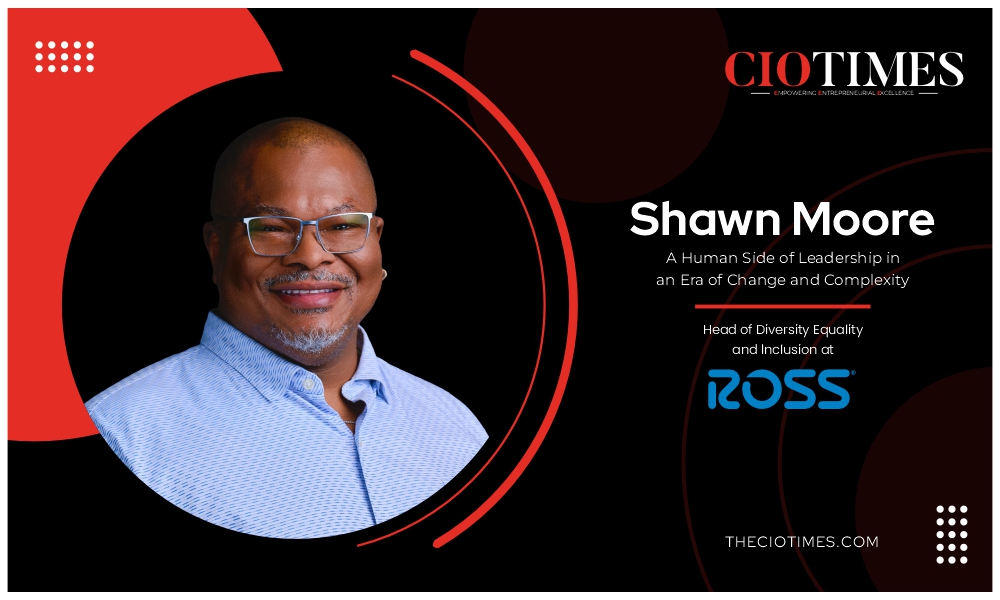
Workplace culture is shaped by the people who influence how employees experience their organization every day: DEI leaders help ensure that opportunities are accessible and that diverse perspectives are welcomed. Shawn Moore, Head of Diversity Equality and Inclusion at Ross Stores, is focused on creating an environment where employees feel they belong. He works closely with teams across the business to support inclusion and strengthen engagement. His efforts help to foster a workplace that values people and encourages them to succeed.
An Equality Advocate
He plays an instrumental role in shaping workplace culture and the employee experience across the organization. As a DEI leader, he helps ensure that opportunity is accessible and that different perspectives are welcomed. He is focused on fostering an environment where employees feel they belong. He works closely with teams across the business to support inclusion and strengthen engagement. His efforts help nurture a workplace that values people and succeeds.
Growth Story
Starting as a six-store retail chain, Ross Stores has become one of the largest off-price retailers in the United States. Over the past four decades, it has grown into a Fortune 500 company with annual revenues of $22.8 billion. Its business model is built around delivering value through everyday savings. Continued store expansion and strong consumer demand have helped the company outperform many traditional retailers in recent years. Today, Rodd Dress for Less® operates 1,917 stores across 44 states, Washington, D.C., Guam and Puerto Rico, while dd’s DISCOUNTS® serves customers through 366 locations in 23 states.
Authority Reimagined
Shawn Moore, believes his understanding of authority has evolved significantly throughout his career. Early on, authority meant clarity, structure, and execution. Military service reinforced the value of discipline and accountability in driving outcomes. Over time, he recognized that authority without trust can limit performance. Today, he views authority as a responsibility to create conditions where people can contribute. The strongest leaders he has encountered earn followership through consistency, fairness, listening, and the ability to act.
The Data Balance
For Shawn Moore, understanding the corporate culture requires looking beyond numbers alone. While metrics such as engagement, retention, promotions, business growth, and reputation offer valuable insights, they tell the story partially.
He believes culture is equally reflected in everyday interactions, the way decisions are made, and whose perspectives influence outcomes.
He adds, “Culture shows up in how people speak in rooms, how decisions get made, and who gets heard.”
These human elements can be harder to measure, yet they often shape performance in practical ways. He cautions against focusing only on what is easy to quantify. Instead, he views data as a starting point, one that helps leaders ask deeper questions and make smarter decisions.
A Dual Approach
He has successfully built and ascended Employee Resource Groups (ERGs) within enterprise environments. He envisions these groups to function in a primary role. As these groups craft communities, the most triumphant ones have been the ones where he kept things flexible for people and grasped the human experience in and outside of work.
He adds, “ERGs also help the organization to understand the employees and what is important. ERGs are a representation of the workplace zeitgeist.”
When ERGs move beyond events and activities, they become part of how the company breaks down barriers to share experiences, and only then do they strengthen the culture.
Leadership in Tension
Difficult decisions require a balance of accountability and empathy. He believes effective leadership starts with understanding the facts and considering how outcomes will affect both people and the organization. He says, “Facts and the truth are consistent. Empathy matters, but it does not replace reality and pragmatism.”
While compassion plays an important role, he views it as most impactful when paired with honesty and practical judgement. He has found that trust grows when leaders remain consistent, especially during challenging moments. He also emphasizes the importance of explaining the reasoning behind decisions. When people understand the ‘why,’ they are more likely to stay engaged. In Shawn Moore’sview, strong leadership requires both empathy and truth.
Functional Leadership Accountability
Based on his experience across employee relations, talent strategy, and DEI, Shawn Moore believes organizations often look at the wrong signals when trying to understand cultural dysfunction. Challenges such as low engagement or rising turnover may be visible, but they rarely tell the full story.
He states, “The real issues often sit in decision-making patterns, leadership capability, and inconsistent accountability.”
He sees deeper issues in how decisions are made, how leaders show up, and whether accountability is applied consistently. When expectations vary, or behaviors go unchecked, culture begins to weaken. He believes meaningful change comes from improving the way an organization functions day to day, not simply from measuring employee sentiment.
Leadership Legacy
Based on years of advising executives and shaping talent, he has found that leaders who leave a lasting influence tend to share four qualities. They are self-aware, understanding how their actions affect others; they are disciplined and dependable. They show courage when difficult choices arise. Most importantly, they invest in people and help others grow. Instead of holding on to control, they build a legacy.
Culture Integration
In Shawn Moore’s view, inclusion and belonging become organizational realities through consistency and integration. He believes inclusion is most effective when it is reflected in everyday workplace interactions.
Leaders must demonstrate it through their actions, while managers play a critical role in reinforcing it. When these practices become embedded in how a business operates, they naturally shape the culture.
He adds, “Inclusion is about everyone being able to contribute to the organization based on their unique perspectives and experiences.”
He does not see inclusion as simply meeting targets or goals. Instead, he believes it is about creating an environment where people can contribute through their unique perspectives and experiences. Inclusion thrives when everyone can participate.
Sustaining Cultural Change
When it comes to sustainable cultural transformation, Shawn Moore, believes daily behaviours have the greatest impact. Systems and symbols certainly matter, but people are influenced most by what they experience each day. He has seen culture change when leaders consistently demonstrate the values and expectations they promote.
He asserts, “A slogan or a new program can capture the imaginations and hearts of the workforce, but without consistent behaviour, change does not last.”
Policies can support those efforts, and symbols can help communicate direction, but neither is enough on its own. A new program may generate excitement and momentum in the short term. Lasting change, however, depends on consistent actions over time. For Moore, culture is ultimately shaped by what leaders do, not just what they say.
Leadership Narratives
Drawing from his journey from instructional design to executive DEI leadership, Shawn Moore, sees storytelling as one of the most powerful yet underused leadership tools. While facts and data provide direction, he believes stories are what truly connect with people. They make ideas more personal and memorable.
He shares, “I often use storytelling and neurolinguistic language to build the image of the future that the facts and data are telling is the best course of action.”
Throughout his career, storytelling has helped him turn strategy into something people can understand, relate to, and act on. He often uses narrative to help others picture a future supported by data and insight. He believes change happens more effectively when people can imagine where they are going rather than simply being told.
Leadership Beyond Titles
After observing leadership and organizational change over many years, Shawn Moore, believes some long-held ideas about leadership no longer reflect today’s workplace realities. One of those is the belief that influence comes primarily from a title.
He shares, “Building trust and new ways of working no longer make micromanagers capable of effectiveness.”
Many of the most impactful people he has encountered earned trust through their character, actions, and commitment to doing the right thing. He also questions the notion that employees perform best under close supervision. In his experience, trust and flexibility lead to stronger results. He also sees culture and business performance as deeply connected. Today’s workforce values transparency, development, and a sense of purpose.
Also Read :- CIO Times Magazine For More Information