Business organizations have grown to be performance-based lately. Monitoring past performance, navigating intelligent dashboards and widgets, and keeping track of revenue and other metrics has been the trend. Acronis is a platform that allows business organizations like Ntreks to make a lasting difference in how businesses grow and serve their customers. Recognizing these contributions is about understanding the thought and commitment behind them. As the digital landscape continues to change, the people who help businesses adapt and move forward deserve their share of the spotlight. Such journeys offer a reminder that progress is shaped by the people who bring them to life.
Building Smarter IT Foundations
With businesses relying on technology for everyday operations, effective IT management has become essential to long-term success. Ntreks helps organizations build a dependable technology environment through managed IT services, cybersecurity, cloud solutions, and strategic consulting. Its proactive approach focuses on identifying potential issues early, protecting critical data, and reducing disruptions that affect productivity. By aligning technology decisions with business needs, the organization enables companies to manage their IT infrastructure more effectively while adapting to changing demands. The focus remains on creating a secure, stable, and scalable foundation for sustainable business growth.
The IT Solutions it provides are as follows:
- Managed IT
- IT Support
- Cyber Security
- Cloud Computing
- IT Consultancy
- Compliance Services
- AI Consulting
Security-First Business Continuity
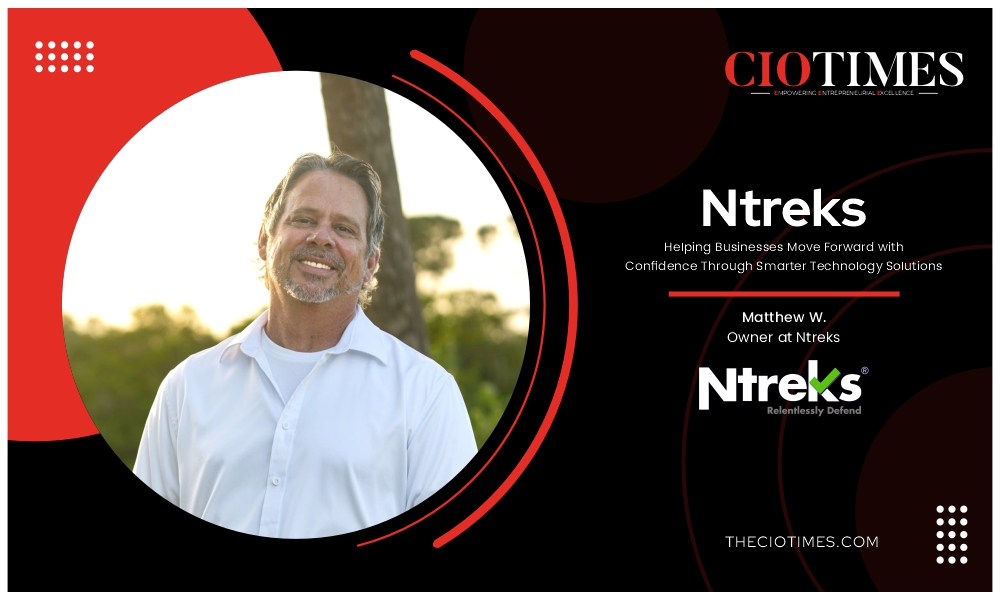
Matthew W. (Owner at Ntreks) explains that the organization approaches every engagement with a clear focus on cybersecurity-first principles and protecting data and users. The company builds this foundation around the NIST CSF 2.0 framework, keeping cybersecurity central to every subsequent decision and action. This principle shapes everyday decisions and reinforces accountability across the full customer relationship. While clients may prioritize workflows and productivity, he emphasizes that security and resilience remain the primary concerns.
In his view, downtime and data loss are major threats. This makes business continuity a constant priority. This approach sets the organization apart from providers focused solely on support and ticket resolution. Solving business challenges through technology gives the team purpose and helps customers remain productive.
Secure Infrastructure Growth
As organizations increasingly operate across cloud, on-premises, and hybrid environments, Matthew explains how Ntreks helps clients build secure, scalable, and reliable IT infrastructure that supports business growth. He emphasizes the importance of following best practices while maintaining a global perspective on the threat landscape and operational needs. At every stage of implementation, the team evaluates whether a solution is not only functional but also secure. Recognizing that every organization has unique requirements, the organization proactively identifies risks, including single points of failure, backup and disaster recovery gaps, and inconsistencies in standardization.
He acknowledges that supporting legacy infrastructure and applications is often necessary initially to ensure client comfort.
He shares, “Given the normal human resistance to change, supporting legacy infrastructure and applications at first is often required for the client comfort, but the task remains to earn enough of their trust that the customer becomes comfortable acting on our recommendations.”
The goal remains to build trust so clients feel confident following Ntreks’ recommendations. Whether migrating workloads to AWS or Azure, retaining on-premises systems, or adopting a hybrid model, decisions are guided by business needs, risk, performance, and cost rather than trends. The team also presents recommendations visually, helping clients understand how the proposed direction can deliver a more secure, scalable, and reliable environment.
Resilient Data Protection
Speaking of enterprise resilience as of now, there are some crucial aspects to be considered, like data protection, backup, and business continuity. Matthew emphasizes that backups are valuable only when they work. Ntreks schedules and performs full restore tests to validate resilience. However, he notes that this is only one aspect of the process. The company also conducts daily deep malware and virus scans of backups to protect them, even in their compressed state.
The company integrates the CSF framework into every operation, enabling it to Govern, Identify, Protect, Respond, and Recover. Simply having a backup file is not enough. True resilience means ensuring the backup is clean, recoverable, sufficiently current, and capable of helping the business resume operations within an acceptable timeframe.
Integrated Security
Ntreks operates as both an MSP and MSSP. The convergence of managed IT and managed cybersecurity is changing what businesses expect from their technology partners. The distinction between IT operations and cybersecurity has become increasingly blurred. Almost everything Ntreks manages as an MSP now carries security implications, including Microsoft 365 administration, user provisioning, endpoint management, patching, remote access, cloud workloads, backups, networking, email, and identity management. These functions cannot be responsibly managed without addressing their security simultaneously.
Ntreks did not simply add cybersecurity products to the traditional MSP model. Instead, the company evolved its approach to make security central to IT environment management. While some smaller clients may require only EDR, others need MDR because their compliance obligations and security requirements differ significantly. Matthew acknowledges that upgrading from EDR to MDR presents challenges and affects budgets. EDR provides sophisticated endpoint detection and response capabilities, while MDR adds human-led monitoring, investigation, and response.
He observes that many organizations manage IT and cybersecurity through disconnected products, dashboards, vendors, and alerts. This creates uncertainty around accountability and increases the possibility of critical gaps. When separate providers manage endpoints, security monitoring, backups, Microsoft 365, and firewalls, each provider may fulfill their responsibilities while important issues remain unresolved. He believes comprehensive MDR implementation improves resilience and compliance, reduces overall risk, and strengthens cybersecurity insurance risk posture. Through proactive security supported by its SOC operations, the team aims to stay ahead of emerging threats and help clients maintain stronger protection.
Continuous Compliance Management
Ntreks works with frameworks such as SOC 2 and NIST. It helps organizations turn compliance requirements into practical security, governance, and risk-management processes. Matthew explains that NIST CSF 2.0 provides a strong starting point for understanding compliance frameworks and identifying gaps in policies and procedures. SOC 2 requires formalized controls, evidence, and validation of their effectiveness. This often helps business owners who are not well-versed in compliance understand how their operations should have been managed from the beginning. Although this creates additional work, he firmly believes the operational benefits make it worthwhile.
He stresses on approaching ongoing compliance as if an organization were following SOC 2 Type I and Type II requirements. Type I evaluates whether controls are appropriately designed and implemented at a specific point in time, while Type II assesses whether those controls operate effectively over a defined period. By applying this approach across compliance activities, organizations can continuously maintain alignment.
He adds, “Someone has to have ownership of the continued compliance effort after the assessments. That’s what many SMBs miss.”
Many SMBs overlook this responsibility: consultants finish assessments, teams address certain issues, policies are documented, and within six months, nobody remains accountable for maintaining controls. He considers this an essential leadership discussion, as executives often focus primarily on obtaining the final attestation.
Practical AI Adoption
Matthew believes AI has received so much attention and praise that many have overlooked its existing limitations. Many business owners are aware of the need to adopt it but they are unsure where it currently fits. The costs involved are also often overlooked. AI may seem simple because it helps write reports, but his vision is different. He views businesses must first identify whether they have a genuine problem that AI can solve. He suggests examining workflow bottlenecks and tasks currently outsourced, as these are important considerations for business owners.
Ntreks has helped several businesses implement simple workflows and automations that met their needs without requiring a large AI-project. For others, the company has deployed private, organization-wide LLMs. Regarding security, he points out that company AI policies requiring employees to read and sign GenAI usage rules can be difficult to enforce. Compliance is valuable but does not necessarily ensure security. The priority is making sure controls are followed. The organization’s Acronis deployments combine GenAI protection with DLP and other complementary controls and rulesets to help prevent employees from mishandling sensitive data.
Matthew adds, “Ntreks pushes for private LLMs over the use of the larger frontier models. This approach doesn’t always fit the budget nor are some of these models as highly functional as the larger public models. Several mixtures are possible to achieve the company goals.”
Cloud Strategy and Security
Cloud computing continues to reshape how companies build and manage their technology environments. Matthew explains that organizations approach cloud computing differently. Some fully embrace it, while others recognize the need but lack a clear understanding of its benefits. In the SMB market, a mix of cloud components, including storage and computing, is commonly used. Ntreks has migrated several on-premises applications to cloud instances to replace aging hardware and improve remote performance. For some clients, it has eliminated entire communications closets. While cloud computing is not always cheaper, its flexibility is difficult to match. The organization has built deployments that scale with demand and reduce resources as usage declines, balancing performance with cost savings. For certain clients, cloud resources are also scheduled to operate only during specific hours, avoiding continuous consumption costs.
Security remains a key consideration. Moving infrastructure to the cloud does not eliminate the need for robust security measures. Relying solely on snapshots or volume copies may not provide a complete recovery and resilience strategy. Cloud infrastructure can still be misconfigured, compromised, deleted, encrypted, or become unavailable. Having infrastructure hosted on AWS does not automatically mean it backed up, he highlights.
Evolving Managed Services
Matthew explains how Ntreks has witnessed the model evolve from break/fix support to managed service providers (MSPs) within the SMB market. He recalls having a background in managed services dating back to the early 2000s and the data center era. Some SMBs still rely solely on the break/fix model, and Ntreks leaves the choice to them if they are unwilling to adopt the MSP approach. However, SMBs, whether clients or not, are increasingly recognizing MSP services as a better investment that benefits everyone involved. Proactive management, monitoring, and support remain central to delivering quality service.
Over the past two decades, the organization has expanded into cybersecurity, GRC, cloud, and consulting, making client relationships less transactional. The company now works alongside leadership teams to help determine the right course of action. Building relationships and fostering trust and confidence remain the company’s most important priorities.
Matthew adds, “We call our clients partners. Technology changes constantly. The particular tools Ntreks deploys five years from now may be completely different. Trust and advisory are durable capabilities.”
Unified Technology Governance and Security
Organizations have accumulated numerous products and vendors such as each new threat has introduced another solution. Endpoint management, EDR, backup, email protection, vulnerability management, SOC/MDR, cloud security, identity, and Microsoft 365 protection have often operated separately. At one point, there seemed to be an application for every need, creating thousands of choices for individual problems. While these tools addressed specific challenges, they also increased costs, staff workload, and system resource consumption, leaving business owners questioning the need for so many applications and vendors.
Over time, these tools and solutions began to consolidate, with individual platforms handling multiple functions. Matthew acknowledges that Ntreks, like other MSPs, has also relied on numerous tools to get the job done. While the earlier approach involved too many solutions, the current environment is far more manageable. Consolidated visibility has improved accountability, efficiency, performance, cost management, and most importantly, security. The goal for Matthew is “one pane of glass, not a glass of pain.” He believes Ntreks’ next phase will focus on governance across the entire technology environment.
He adds, “I believe the next phase of Ntreks is Governance of everything previously discussed. Cybersecurity, resilience, cloud, AI, compliance, IT operations are increasingly interconnected, and somebody needs to govern the whole environment rather than managing each component independently. A managed approach to an unruly animal.”
Integrated Cyber Protection
Ntreks did not choose Acronis simply for its sales appeal. The company had accumulated numerous tools over the years, and Acronis offered a way to consolidate multiple functions within one integrated platform. Previously, the organization relied on separate systems for endpoint protection, EDR/XDR, MDR/SOC, backup and recovery, Microsoft 365 protection, requiring constant switching between consoles and alerting systems.
This consolidation has significantly improved operational efficiency. It provides faster visibility, fewer gaps between security and IT operations, more consistent policies, and easier management across client environments.
He adds, “Let’s not forget Acronis didn’t begin as a cybersecurity company that later decided to add on backup and recovery. Its roots are in backup and recovery, and the platform evolved outward from there into broader cyber protection.”
Strengthening Strategic Partnerships
Ntreks values the recognition as more than a partnership milestone. The company has spent years turning Acronis’ broad technology platform into practical client outcomes, including protection, visibility, management, recovery, and accountability. Clients want their businesses protected, data recoverable, systems monitored, and issues addressed promptly.
Matthew aims to deepen the partnership through regular calls with Acronis team every two months to discuss platform developments, share feedback, and request features based on real client needs. This collaboration helps shape the platform’s future. As Acronis evolves, the organization will focus on adopting capabilities that solve genuine client challenges rather than deploying technology simply because it exists. The priority remains improving security, resilience, efficiency, and business continuity for customers.
Experience-Driven Technology Strategy
Matthew has spent years in the technology industry, witnessing countless technologies come and go. His background spans systems engineering, hosting, and data centers, where hands-on experience shaped his approach to solving technical challenges. Over the years, he has built infrastructure, managed environments, handled outages, designed recovery solutions, migrated workloads to the cloud, and expanded into cybersecurity, compliance, and business leadership. These experiences taught him that when technology fails to meet requirements, finding an alternative or developing a new solution may be necessary.
This has given him little tolerance for technology adopted simply for its own sake. Even the best architecture means little if it is difficult to support, costly to maintain, or creates business risks.
This practical perspective has shaped the organization’s service philosophy. The company focuses on outcomes by asking what problem needs solving, which risks can be reduced, whether recovery is possible, and whether the solution supports the client’s budget and growth.
Dependability Drives Trust
For Matthew, trust is the foundation of a reliable technology services company. While technical competence is essential, clients must trust Ntreks to provide honest advice based on their needs, not simply what is easiest to sell. Trust also means accountability. As technology environments grow more complex, clients should not have to determine who is responsible when something goes wrong. Responsibility rests with the organization.
He shares, “Over the years I’ve learned that trust isn’t established when a contract gets signed. It’s earned over and over again by answering the phone, owning mistakes, giving honest advice, showing up when things aren’t going well and sometimes telling a client not to spend money when they don’t need to. Technology will continue to change.”
As technology evolves, he believes that clients need to know that the organization will help them understand what matters to their business and provide support when needed. This philosophy is why the company does not simply call them clients. It calls them partners.
Also Read :- CIO Times Magazine For more information