When you picture the future of commercial real estate, you might imagine glass towers or smart offices. But a lot of the action is happening in many plainer buildings: warehouses, workshops, showrooms, and flexible business spaces.
Pre-engineered metal buildings are influencing commercial real estate because they can offer faster construction, adaptable floor plans, and more predictable planning. They aren’t right for every project, but they suit many of the low-rise spaces businesses need today.
What Is a Pre-Engineered Metal Buildings?
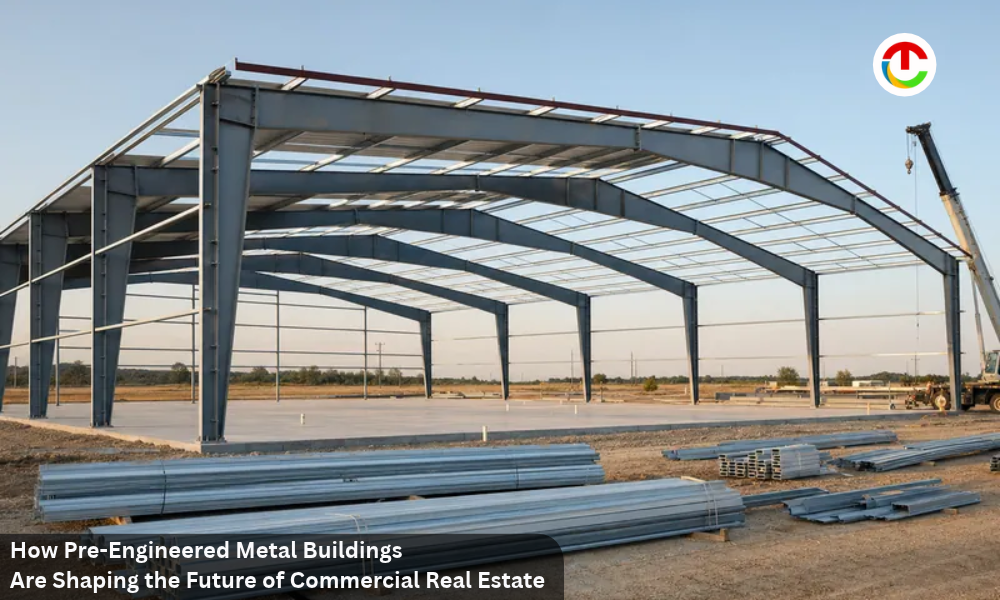
It’s a steel building designed for a specific project, with its main components made in a factory and then assembled on-site.
The “pre-engineered” part can be misleading. It doesn’t have to mean a one-size-fits-all box. Size, layout, and exterior finishes can often be tailored to the project, while local requirements for wind, snow, and seismic loads still need to be met.
These buildings are also well established. In its 2014 annual report, the Metal Building Manufacturers Association said metal building systems accounted for more than 50% of new low-rise, non-residential buildings in the US. It’s an older figure, but it shows how far they had moved into the mainstream.
Why Are Developers and Owners Paying Attention?
Mostly because time and certainty matter. A building that opens sooner can start producing income sooner, while a clearer schedule makes financing and tenant planning easier.
Off-site fabrication helps because much of the work is planned before crews reach the site. That can mean fewer hold-ups during construction and a more accurate view of the timeline and project cost.
Savings aren’t automatic, though. Land, foundations, utilities, permits, and interior finishes can still make up a big part of the budget, so compare complete project costs rather than just the building package.
How Do These Pre-Engineered Metal Buildings Meet Changing Tenant Needs?
They can make space easier to adapt. Clear-span steel framing reduces or removes interior columns, leaving open floors that are useful for racking, equipment, or changing layouts.
That flexibility is especially useful in these types of properties:
1.Warehouses and distribution space:
Open floors can make it easier to plan storage and movement.
2. Flex space:
One building can combine warehouse, office, and showroom areas.
3. Retail and service businesses:
Showrooms, repair shops, and sports facilities can all benefit from wide, open space.
For landlords, adaptable space can also make it simpler to reconfigure a unit between tenants. Planning for a future expansion early can make it easier to grow later too.
What Are Butler Buildings, and How Do They Fit Into Modern Commercial Real Estate?
Pre-engineered metal buildings are not limited to one manufacturer or design. Several established companies have developed their own building systems, and Butler Manufacturing is one example.
A Butler building is a pre-engineered metal building fabricated by Butler Manufacturing and constructed by a Butler Builder, a design-build contractor certified by the company.
The name comes up because the company has a long history in the field. Butler Manufacturing was founded in 1901 and had a full line of rigid-frame buildings on the market in the 1940s.
Butler MFG Parts reports that there are now more than 1,400 Butler Builders and that products such as Butlerib II and the MR-24 roof system have been in production for over 50 years.
For real estate owners, this highlights the importance of regular maintenance, compatible replacement components, and timely repairs in preserving a building’s long-term performance.
Are Pre-Engineered Metal Buildings Sustainable?
They can support sustainability goals, depending on the design and materials. According to the American Institute of Steel Construction, wide-flange structural steel sections produced in the US contain an average of 93% recycled steel scrap, and structural steel is 100% recyclable.
Recycled content varies by product, so ask your supplier for documentation if you’re tracking it for a project.
Energy use depends heavily on the envelope. Insulation, air sealing, reflective roofing, and efficient HVAC and lighting all play a part. Older metal buildings may also fall short of current insulation standards, which makes roof and wall upgrades worth considering when you buy or refinance one.
What Should You Ask Before Building or Buying One?
A few plain questions can tell you a lot:
- Who is responsible for the engineering and local code compliance?
- What is the total cost, including the site work and interior fit-out?
- How realistic is the schedule, and what could delay it?
- Can the building be expanded or reconfigured later?
- What do the roof and coating warranties actually cover?
- For an existing building, are maintenance records and replacement parts available?
Final Thoughts
Pre-engineered metal buildings offer a practical option for commercial projects that need adaptable space and efficient construction. Their value depends on more than the building package: site conditions, code requirements, insulation, warranties, and future maintenance all deserve attention. By assessing these factors alongside long-term business needs, owners and developers can make informed property decisions and choose a suitable building solution.
Frequently Asked Questions
1. What is the main advantage of pre-engineered metal buildings?
They offer faster construction, flexible layouts, and efficient material use.
2. Are pre-engineered metal buildings suitable for warehouses?
Yes, their open layouts make them suitable for storage and distribution facilities.
3. Can pre-engineered metal buildings be customized?
Yes, their size, layout, insulation, and exterior finishes can be customized.
4. Do pre-engineered metal buildings require regular maintenance?
Yes, regular inspections of roofs, fasteners, gutters, and coatings help maintain their condition.
Also Read :- How Steel Buildings in Canada Are Supporting the Electric Vehicle Boom