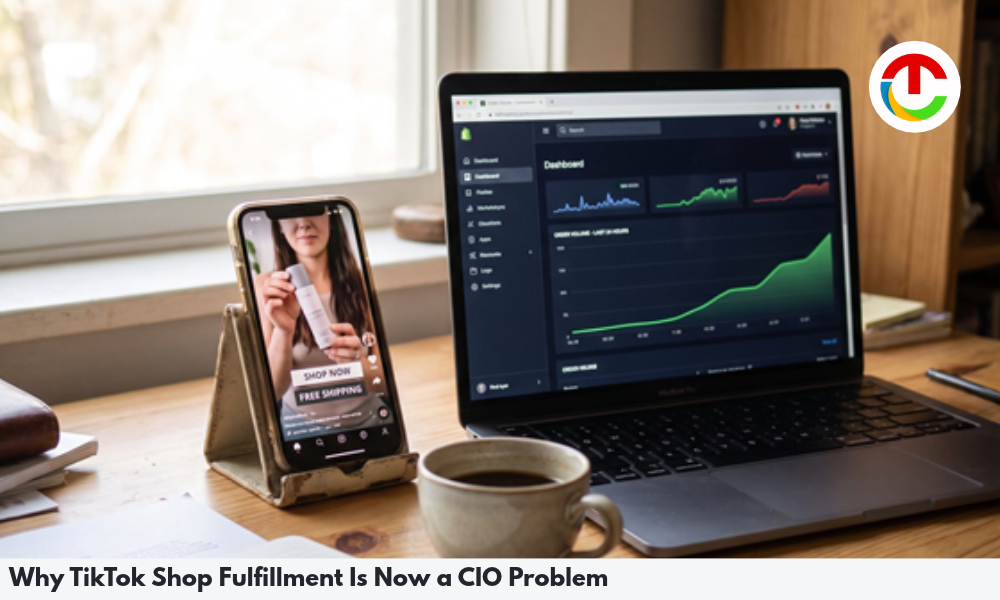
A smartphone showing a short-video shopping feed next to a dashboard of incoming orders
TikTok Shop US sales reached an estimated $11.8 billion in the first half of 2026, up 103% from a year earlier, according to Momentum Works. Behind that number sits a pattern every technology leader should recognize: a product can go from a few orders a day to thousands after a single video, with almost no warning.
That’s a systems stress test. Order capture, inventory sync, label generation and tracking updates all have to hold up under demand that doesn’t follow a forecast. When they don’t, customers see late shipments, and the platform’s seller metrics punish the brand for it.
Most advice on this topic comes from fulfillment vendors writing for sellers. This piece takes the view of the executive who owns the stack: integration, platform risk, surge capacity and how to pick a partner without getting burned.
Why TikTok Shop Volatility Lands on the CIO’s Desk?
Retail and DTC brands that sell through TikTok Shop often discover the problem the hard way, when a viral post outruns the warehouse. Many handle it by partnering with a 3PL warehouse for TikTok Shop that can connect to the platform and absorb the spikes without a rebuild of internal systems. Whether you outsource or not, the underlying question belongs to IT: can your order pipeline flex at the speed of social demand?
The broader market explains why this is no longer a niche concern. The US Census Bureau reported that e-commerce reached $340.2 billion in the second quarter of 2026, or 17.1% of all retail sales, growing 12.2% year over year while total retail grew 6.7%. Online channels are taking share, and social commerce is the fastest-moving slice of them.
TikTok Shop is growing faster still. Tubefilter, reporting Momentum Works estimates, put global gross merchandise value at $50.3 billion for the first half of 2026, up 92%. The same coverage noted roughly $500 million in US sales over Black Friday weekend in 2025. A system sized for steady weekday traffic won’t survive a weekend like that, and the metrics that matter to the platform, such as late dispatch and cancellation rates, start degrading within hours.
The Integration Layer: APIs, WMS and Real-Time Data

An IT engineer reviewing a systems architecture diagram of storefront, API and warehouse integrations
Fulfillment on TikTok Shop is a data flow before it’s a physical one. An order lands through the platform’s API, flows into a warehouse management system, triggers pick, pack and label, and then tracking data has to travel all the way back to the storefront until delivery. Any delay or dropped message in that chain shows up as an angry customer or a seller-health penalty.
Three technical questions deserve answers before you sign anything:
- How does the partner connect: native integration, middleware or custom API work? Each has different failure modes and maintenance costs.
- Is inventory shared across channels or tied to a single one? Fulfillment programs that lock stock to TikTok can leave you short on Amazon or your own storefront.
- Who owns the data, and what visibility do you get? Ask for event-level logs and alerting, not a weekly summary email.
SKU hygiene matters here too. Clean barcodes and consistent product identifiers prevent the mismatches that quietly break automated picking. Teams that treat catalog data as an afterthought tend to find out during their first spike.
Policy Risk: What the February 2026 Mandate Reversal Taught Operators
Platform rules can change faster than your roadmap. In January 2026, TikTok announced that US sellers would need to move to TikTok-controlled logistics options from February 25. On February 17, the company reversed course, as Easyship reported. Sellers who had already rebuilt their operations around the mandate spent weeks of effort on a requirement that never took effect.
The lesson is vendor-risk management, the same discipline you’d apply to any critical SaaS dependency. Architect fulfillment so you can move between seller-managed shipping, platform-run programs and a third-party warehouse without a rewrite. Keep order routing loosely coupled, and keep a documented fallback. Our coverage of how logistics fits into corporate strategy approaches the same issue from the operator side, where logistics is built into the business plan rather than bolted on afterward.
One practical caution. Policies in this space have changed more than once, so confirm current requirements in TikTok’s Seller Center rather than relying on any article, including this one.
A CIO Checklist for Choosing a TikTok Shop 3PL
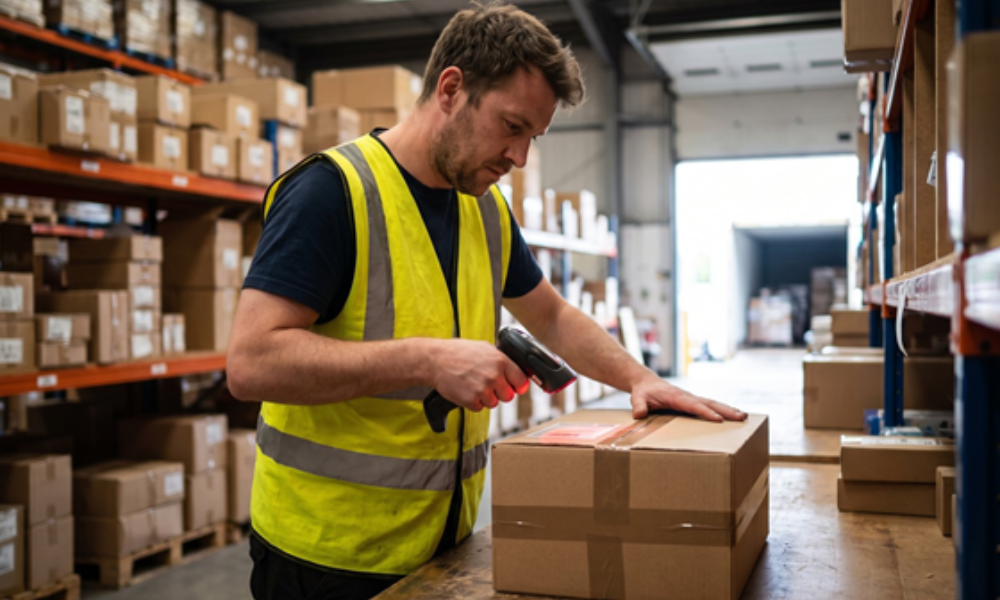
A warehouse worker scanning a barcode on a parcel at a packing station
Ask for proof, not brochures. The following criteria separate partners that can run at scale from those that look good in a sales deck:
- API and WMS compatibility: request a technical walkthrough and sandbox access, and confirm how errors are handled and retried.
- Surge capacity: ask what happens when volume jumps fivefold in a day, and ask for a past example.
- Dispatch speed: the commonly cited baseline is two business days; same-day cutoffs are better for competitive categories.
- Accuracy and returns: vendors such as The Fulfillment Lab advertise 99.8% packing accuracy and 48 to 72 hour returns processing. Treat those as vendor-claimed figures and ask for audited numbers.
- Geographic reach: a network that gets most US orders to customers by ground in two to three days limits both cost and delay.
- Security and data handling: access controls, audit trails and how customer data is stored and deleted.
- Reporting: dashboards that expose cycle times and exceptions in near real time.
- Exit terms: how fast you can retrieve inventory and data if the relationship ends.
Weigh the last item more heavily than most buyers do. Our look at retail supply chain pressures shows how external pressure can change the economics of a logistics arrangement, and an exit clause is cheap insurance.
The Takeaway for Technology Leaders
Treat fulfillment as part of the commerce stack, not a back-office errand. The brands that do well on TikTok Shop over the next few years won’t necessarily be those with the best products; they’ll be the ones whose systems flex when demand or platform policy moves overnight.
Start with a short audit this quarter: map the data path from storefront to doorstep, find the single points of failure, and test it against a simulated spike. If a partner can’t show how it passes that test, keep looking.
Also Read :- Top Military Shop for Tactical Gear and Apparel