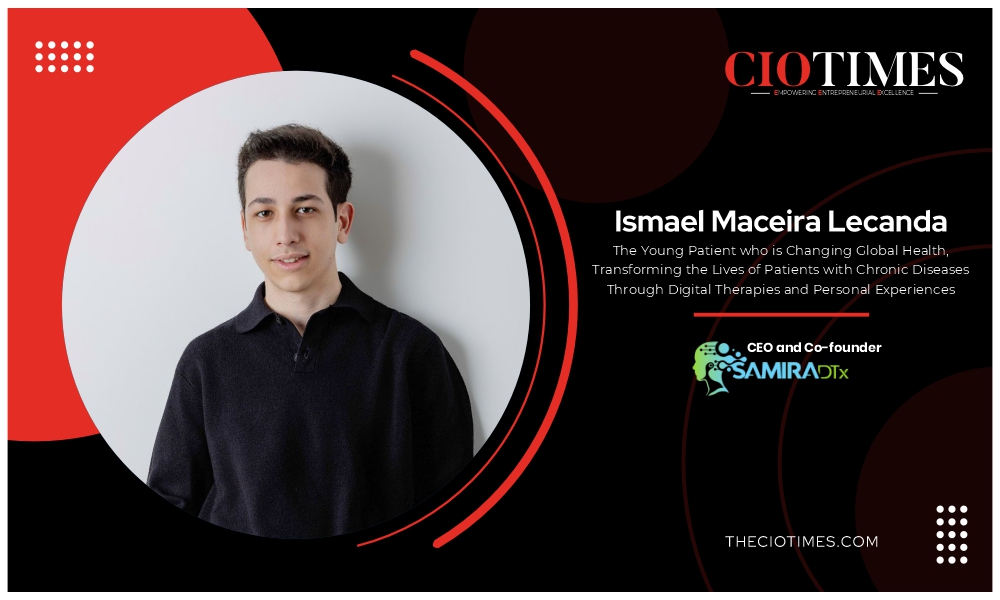
Organizations in the healthcare sector are embracing digital technologies to provide practical solutions. These organizations have become an integral part of modern care, reshaping how support is delivered and experienced. Technology has taken the front seat as it improves outcomes and patient engagement. Industry leaders who adapt to this shift are skilled at crafting care pathways. These are intuitive, adaptive, and human-centric. Among these leaders is a name that cannot be overlooked, despite his young age, today he is 17 years old: Ismael Maceira Lecanda, CEO and co-founder of SAMIRA DTx, which he created at the age of 16 to transform the lives of chronic patients. He combines scientific rigor with thoughtful innovation. It helps redefine how individuals with Chronic challenges navigate a better quality of life.
Ismael Maceira Lecanda is a flagbearer of the concept of democratizing personalized healthcare. Since he has suffered it in his own flesh since he was 12 years old, living with a chronic disease, long covid. Where he discovered the power of technology in health by recovering his memory thanks to video games and all this clinically validated by his neurologist. And he asked himself, if technology is working for me, why can’t it work for thousands of people around the world? So his company SAMIRA DTx was born, which he leads and co-founded with his partner Dr. Carlos Escobar. It carries both technology and ethics in its voice. About it, he considers technology as one part, while the challenge is in structural barriers within healthcare systems. He highlights some points in detail about this:
Ü Accessibility to everyone in terms of healthcare innovation and digital therapeutics for human reasons. The reason here reflects patients, pathologies, and human beings who are bound to get quality care irrespective of their social, economic, or geographical context. Preference for people who are blessed with greater resources, stronger insurance coverage, or access to advanced urban healthcare environments is not the scene here for the SAMIRA DTx team.
He adds, “A key barrier is therefore inequality in access. We must ensure that solutions are designed to reach vulnerable populations, rural communities, and historically underserved groups, not only technologically advanced ecosystems.”
1. Fragmentation in healthcare systems and clinical data.
The lack of interoperability between hospitals, healthcare professionals, insurers, and digital platforms significantly restricts the ability to deliver truly patient-centered care. Without structural integration, personalization risks remaining a set of isolated initiatives rather than a scalable model of care.
2. Health and digital literacy.
Equity is not only about making solutions available but also about ensuring that patients understand them, trust them, and can use them effectively. Education, usability, and cognitive accessibility are as important as the technology itself.
3. Current reimbursement and incentive models need evolution.
Many healthcare systems still reward reactive clinical activity rather than prevention, therapeutic adherence, and measurable health outcomes. True democratization requires a transition toward value-based healthcare models aligned with real patient outcomes.
4. Lastly, a deeply ethical dimension:
data governance, privacy, and the mitigation of algorithmic bias. Personalized care will only be genuinely equitable if it is built on transparency, inclusion, and trust, ensuring that AI does not replicate or amplify existing inequalities.
In all, Ismael Maceira Lecanda envisions that empowering personalized healthcare means ensuring that innovation is not only advanced but also accessible. It also needs to be ethical and scalable, irrespective of their backgrounds.
Ismael Maceira Lecanda Redefining Digital Care
Ismael Maceira Lecanda sees digital therapeutics sitting right at the intersection of medicine, tech, and human behaviour, a space that, for all its promise, is still widely misunderstood. For him, clarity is the priority. He notices people often mistake this field for general wellness apps, but the reality is far more rigorous: we’re talking about clinically validated software built to drive measurable health results, guided by doctors and powered by the patient’s own active role.
This distinction is everything for him. This isn’t just healthcare-flavored technology; it’s a form of treatment that must be held to the same high standards as any pharmaceutical, proving it is safe, effective, and capable of making a genuine clinical impact.
He often compares these tools to traditional medication. While a pill relies on a chemical compound, here the active ingredient is found in algorithms and behavioral design. Both require validation and a clear purpose, yet digital therapeutics offer a unique advantage: they can be deeply personalized and keep the patient continuously engaged.
He believes the industry’s biggest blind spot is seeing this shift as a purely technical one. In his view, the real strength of the medium lies in how it actually reshapes care, making it more preventive, tailored, and centered around the person behind the patient.
For this to become the new standard, he argues we need clearer regulations, rock-solid evidence, and a way to weave these tools into the fabric of everyday medicine. Building trust across the board with clinicians, insurers, and patients alike will only happen through proven outcomes and real-world success.
He sees this as a gradual but meaningful evolution, one that, with the right momentum, will eventually cement digital therapeutics as a fundamental pillar of modern healthcare.
Collaborative Advantage
Reflecting on how open innovation ensures that partnership sharpens rather than blurs a company’s strategic edge, he explains that SAMIRA DTx was built with collaboration in its DNA, a deliberate departure from the isolated silos that have long defined traditional healthcare.
He doesn’t view working together as a secondary feature, but as the primary engine for building better tools. By inviting universities, tech hubs, scientific bodies, and patient groups into the fold, the goal is to produce outcomes that are more meaningful and truly ready to scale. For him, this isn’t just a corporate strategy; it is a fundamental mindset that dictates how every solution is actually shaped.
The secret to making this ecosystem work, he notes, is bringing stakeholders to the table from day one. When patients and doctors are part of the early journey, collaboration creates clarity instead of noise. Patients contribute the invaluable nuance of lived experience, while clinicians ensure every move is medically sound and fits into existing care pathways. The broader network then provides the scientific weight necessary to drive long-term adoption.
He adds, “The academic and technological ecosystem strengthens scientific depth and innovation capacity. Institutions and scientific societies facilitate alignment with healthcare standards and future adoption pathways.”
Throughout this process, Ismael insists that a rock-solid vision serves as the anchor. Partnerships might refine how a project is executed, but the core direction remains steady. In his eyes, designing with people rather than just for them is what ultimately creates solutions that feel grounded, impactful, and deeply aligned with the real-world needs of healthcare.
This approach comes to life through SAMIRA DTx’s growing ecosystem of partners. The company is supported by public institutions such as BEAZ (Bizkaia Provincial Council), SPRI (Basque Government), and actively collaborates with BIOEF (Osakidetza – Basque Health Service), while also working closely with academic institutions like the University of Deusto and DigiPen Institute of Technology Europe. On the technology side, collaborations with centers such as Vicomtech and Tecnalia add further depth.
At the same time, SAMIRA DTx stays closely connected to real-world care through partnerships with healthcare providers like Vithas Hospitals and Quirónsalud, as well as scientific societies including SEMERGEN, SEC, and SEN. Its work is also shaped by ongoing engagement with patient associations such as POP (National Patient Organisation Platform, Asthma and Allergy Spain, and the Spanish Parkinson’s Federation, alongside industry clusters like Basque Health Cluster, GAIA, CDTx, Madrid e-Health, and the Saudi Business Council, ensuring that everything it builds stays grounded, relevant, and closely aligned with both clinical practice and patient needs.
Focused on Precision
Accommodating customization with a desire to be clinically validated and generate ideal outcomes is a challenge, Ismael Maceira Lecanda highlights. It is simultaneously an opportunity too in the digital therapeutics sector.
At SAMIRA DTx, they have as a founding partner Dr. Carlos Escobar, Cardiologist and coordinator of the DTx scientific committee in Spain, who brings a wide scientific value to the company and leads the medical part, with a high rigor in scientific standards
Nurturing a robust scientific framework is key in this sector. Also, maintaining distinction in the validated therapeutic core and the adaptive personalization layers is crucial. The core must be based on clinical and behavioral mechanisms whose efficacy has been demonstrated through scientific evidence, just as with any medical or pharmaceutical intervention. This component must be reproducible, measurable, and generalizable across different patient cohorts.
Customization acts as a dynamic layer that adapts the therapeutic experience to the patient’s individual context: their clinical profile, behavioral patterns, level of adherence, response to treatment, cognitive variables, and environmental circumstances. In this way, the treatment method is personalized for each individual and is efficient enough to cure patients.
He compares this to conventional medicine. The active ingredient of a drug remains the same, but the dosage, treatment regimen, therapeutic combination, and follow-up may vary depending on the patient. The same applies to DTx: the clinical foundation remains validated, while the intelligence of the system allows the intervention to be adjusted in real time.
From a methodological standpoint, Ismael views this as a careful balance, one that calls for strong experimental design, meaningful longitudinal analysis, and ongoing validation in real-world settings. For him, true generalizability isn’t about treating everyone the same; it’s about deeply understanding what works, for whom, and when personalization genuinely makes a difference.
He doesn’t see any tension between these ideas. Instead, he views it as a natural step forward and an evolution toward truly scalable precision medicine, where solid evidence forms the foundation and thoughtful, intelligent personalization shapes how care is delivered in practice.
Creating Actual Impact
Ismael Maceira Lecanda’s academic prowess comprises AI, neuroscience, and business creation his great youth. This exposure has been immensely productive as it has molded his psyche to approach problems by aligning human and technological aspects.
He proudly mentions being self-taught. At 17 and living with long COVID from the age of 12, he has come to realize that traditional education doesn’t always meet the realities of his everyday life. Much of what he has learned has been shaped outside the classroom, driven by his personal experience as a chronic patient, driven by the responsibilities of being a founder building an innovative company, leading people, navigating complexity, and making decisions in moments where uncertainty is constant.
Being open to learning multiple aspects related to one’s work is his mantra. Being confined to one aspect of learning will take you nowhere, as the world is going global, changing fast, and revolves around uncertainty, at times.
Being a member of Generation Z, he has a fresh outlook. Existing in a technologically-dominant environment, their generation was constantly exposed to globalization, rapid change, and constant uncertainty. It built the skill for adaptation, continuous learning, and cross-disciplinary thinking in the generation.
He asserts, “I firmly believe that the major challenges in healthcare cannot be solved from a single discipline. Technology alone does not solve human problems; it must understand behavior, cognition, emotion, and the context in which people live with their condition.”
AI has imbued a skill to bring structure to complex issues, be surrounded by data, identify gaps, and build predictive models capable of generating more precise and personalized interventions. Amidst the chaos, he believes in leveraging technology as a use case to make it accessible to patients.
He states, “Interdisciplinary vision allows me to approach every challenge from three complementary dimensions and with a different perspective: the scientific, the human, and the strategic.”
He sees neuroscience as a lens that helps him better understand how people think, decide, and adapt to change. In digital therapeutics, this matters deeply because outcomes depend not just on the treatment, but on how patients stay engaged and motivated. It has also helped him make sense of his own thoughts and navigate them with more clarity. Building companies has taught him how to turn ideas into something real. For him, innovation is not just about strong technology, but about creating solutions that can truly work, scale, and sustain within healthcare.
This perspective shapes how he approaches problems, bringing together scientific insight, human understanding, and strategic thinking. In practice, it means designing with intention: considering the patient’s experience, the clinician’s role, and the system it lives in. He believes meaningful innovation happens when disciplines come together, and above all, without the patient’s voice, even the best ideas risk falling short of real impact.
Holistic Approach
Being a tech founder, Ismael Maceira Lecanda is also trained in oratory communication, despite his age. He considers it key to taking his company as far as possible. This makes him distinct from other founders, and he gives credit to his decision to opt for the same. Especially in the complex sector like digital health and artificial intelligence.
He says, “Very often, the difference between a great idea and a project capable of generating real impact does not lie solely in the technology itself, but in the ability to communicate with clarity, conviction, and purpose.”
He wishes to share his story as it is an inspirational one. SAMIRA DTx is a result of his own journey as a patient. It helps him communicate while being genuine, rigorous, and effective. His team aspires to be known as a technological and human-centric solutions provider, too. It wants to be looked at as a personal, clinical, and human experience into a real solution for thousands of patients.
As the project has matured, Ismael has come to see communication as more than just a useful skill; it has become the very heart of his leadership. In an industry like digital therapeutics, where so many concepts are still new, helping people truly understand the what and the why is just as critical as the act of building the tech itself.
This leadership philosophy also extends to his broader vision through the ZEO (Zero Ego Operator) manifesto, where Ismael advocates for a new generation of leaders driven by impact rather than ego. Based on values such as collaboration, humility, and long-term thinking, ZEO reflects his belief that companies should be built through a shared vision and purpose, not hierarchy or control.
ZEO is not a title. It is a way of thinking. We believe in leaders who build, not control; in people who do not seek power, but impact; in a more human, open and real way of leading. Because the future will not belong to those who rule, but to those who inspire, connect and create something that really matters.
Ismael Maceira Lecanda says that ZEO is for those who don’t fit into the establishment, for those who turn mistakes into learning and differences into advantages. It’s not about being the boss, but about building something that changes things. In essence, being ZEO is leading without ego, building with vision and having the courage to improve the system from within.
He has realized that innovation isn’t strictly about the hardware or the code. It is about whether people can actually connect with it, trust it, and see how it fits into their daily lives. For him, communication is the vital link that translates complex, technical ideas into something human and relatable.
Whether he is in communication with investors, doctors, or patients, he tailors his approach to meet them where they are, without losing sight of the core message. If an idea can’t be explained in a way that feels clear and grounded in reality, it stands very little chance of being embraced by the world.
Earning Integrity
Reflecting excellence and authenticity from the very beginning builds unmatched trust in the healthcare industry. Being a patient gives him a crystal clear perspective. He is all in when it comes to providing value, as he has a lived experience.
A chronic patient, living with long COVID, helps him to understand unmet needs, the barriers within the system, and what it truly means to create a solution that delivers value to patients. This lived experience brings a very strong legitimacy, because it is not a narrative built from the outside, but from real experience.
Genuine people upon whom we can rely, build trust, Ismael believes. Only pretending to know everything doesn’t create a trustworthy ecosystem.
From the start, he has felt that leadership isn’t about knowing everything; it’s about bringing the right people together and building something you can truly stand behind. He’s been intentional about surrounding himself with a team that blends clinical insight with technical and scientific expertise.
Having a strong clinical backbone, along with a diverse and capable team, has been central to that journey. The support of mentors and institutions has also helped shape both his growth and the company’s direction.
For him, working at the edge of innovation comes with a sense of humility. Trust isn’t something you claim; it’s something you earn over time, through evidence, consistency, and the people you build alongside.
Uncompromised Principles
He believes accelerations in healthcare must be crafted on a framework that sustains clinical integrity and the patient’s voice. His framework is based on a principle: scale the model without compromising rigor, always with the patient at the center.
There’s a modular architecture surrounding three clearly differentiated layers. They are elaborated below:
1. Global clinical core:
This reflects a scientifically validated therapeutic foundation. This layer remains constant irrespective of the country, healthcare system, or cultural context. One meets the clinical evidence, protocols, therapeutic algorithms, and safety criteria here itself.
2. Regulatory and interoperability adaptation:
Each healthcare system has its own regulatory requirements, reimbursement models, interoperability standards, and care pathways. Hence, the SAMIRA DTx Team initiates solutions that are flexible to European and international frameworks.
3. Cultural adaptation and patient experience:
The way a patient interacts with a digital therapeutic, their level of adherence, behavior, and perception of value are deeply influenced by cultural, social, and contextual factors. For that reason, the user experience, language, communication, and engagement mechanisms must be adaptable.
He believes growth depends on local partnerships among clinicians, patients, and regulators. To him, ignoring local context is a major mistake. It’s about balance: keeping the science rigorous while staying flexible enough to ensure the patient’s needs always come first.
Care Reimagined Humanely
Ismael Maceira Lecanda sees value-based medicine as more than just a new model; it is a more honest way to think about care. For years, healthcare has prioritized activity, appointments, procedures, and volume, so it is only natural that shifting the focus toward actual outcomes and patient impact feels like a major adjustment.
It really comes down to one thing for him: putting the person at the center, genuinely. This is a personal conviction, shaped by his own journey as a patient from a young age and later through long COVID, where he saw firsthand how easily the system can overlook the lived reality behind a diagnosis.
He believes the patient’s voice should never be an afterthought. Those living through an illness understand its daily hurdles in a way no medical framework can fully capture, and that insight should be what guides how care is designed and measured.
At the same time, he knows that change in healthcare breeds uncertainty. New approaches have to prove their worth not just in theory, but in real life. That is why he relies on evidence, open dialogue, and consistent results to earn the trust of the industry.
This shift is mandatory for him. This move works better, lasts longer, and finally reflects what truly matters to the patient.
Personal Experience Shapes Insight
He has a high regard for neuroscience. It has molded the way he grasps and crafts design therapeutic interventions. He reminds us of a mistake to assume in healthcare. He considers the assumption that adherence depends only on the patient’s willpower. But in reality, it relies on the working of human cognition: attention, memory, motivation, reward perception, cognitive load, emotion, and habit formation.
He highlights that it is crucial to have an understanding of how people go through information and make decisions, which allows people to design interventions. These are not always clinically upto the mark, but are cognitively sustainable and behaviorally realistic.
Sharing an example, he mentions a patient has different ways of reacting in moments of calm and when there are issues like fatigue, anxiety, or chronic pain. Hence, he crafts a highly patient-centric intervention that is tailored according to the patient’s cognitive and emotional state, reducing friction, simplifying decision-making, and facilitating small steps that support continuity.
Neuroscience helps to gain insights into reinforcement mechanisms and the way habits are built.
Ismael Maceira Lecanda states, “Adherence is not imposed; it is constructed through repeated patterns, meaningful rewards, and an experience that generates a sense of progress and control.”
In the context of digital therapeutics, this is relevant because behavioral design is part of the treatment itself. It is about how the therapeutic content is presented, when it is activated, how it is personalized, and what kind of response it generates in a patient.
From his own experience being a patient, Ismael is aware that an intervention does not adapt to the person’s mental and physical reality. It is unlikely to be sustainable over time.
He asserts, “That is why I believe the combination of neuroscience, behavior, and patient experience is key to building DTx that patients not only use, but truly adhere to and maintain over time.”
Lowering Pace to Build Evidence
In the deep-tech healthcare sector, he considers a natural part of the process: the combination of scientific patience and entrepreneurial urgency. In the startup fraternity, speed is essential as the market evolves swiftly. Patients need to be attended to, and the execution capability also makes a difference. However, he makes an important point here that in the healthcare sector, underestimating scientific rigor is a big no-no. As a small decision can affect people, conditions, and bring unwanted clinical outcomes.
His way of sustaining this balance is clear: we can move fast in execution, but never fast in evidence. His team speeds up the processes that involve technological iteration, product design, user experience validation, and the development of real use cases. It is done while maintaining extremely rigorous standards in clinical validation, data analysis, and safety.
His team works with a lens of continuous validation. Every technological hypothesis must be transformed into a measurable clinical hypothesis. The team designs features not only based on intuition. It looks for evaluation, measurement, and refined practical working. He prefers being around a high-level clinical, scientific, and technological team.
Ismael Maceira Lecanda adds, “In healthcare, patience means the ability to build robust evidence, accept longer validation cycles, and understand that the trust of the ecosystem is earned through results.”
This commitment to rigorous, evidence-led innovation is also reflected in SAMIRA DTx’s leadership of the ISQARE-LC project, a pioneering research initiative exploring the use of quantum computing to understand Long COVID better. he project is being developed within the framework of the initiativeBIQAIN (Bizkaia Quantum Advanced Industries) and BASQ initiatives, promoted by the Provincial Council of Bizkaia and Lantik, which will explore the use of quantum computing to advance the understanding of Long COVID. By applying advanced data analysis and modeling, the project aims to identify hidden clinical patterns and patient subgroups, addressing one of the most complex challenges of the condition. For Ismael, this research carries a deeply personal purpose, aligning scientific exploration with real patient needs.
Personalized Care Shift
Ismael Maceira Lecanda envisions digital therapeutics stepping into a more mature, meaningful phase. It is shaped by changes in technology, regulation, and the way patients relate to their own care. On the technology side, he feels the biggest shift will be toward systems that don’t just deliver fixed interventions, but actually learn and adapt gradually. These tools will start to respond to every patient’s journey in a more natural way, adjusting as needs change.
Ismael Maceira Lecanda is also aware that for this progress to catch firmness, the regulatory part needs to maintain momentum. Clearer pathways and stronger validation will help these solutions move from the margins into everyday healthcare, where they can be trusted and widely adopted.
Simultaneously, Ismael Maceira Lecanda https://www.linkedin.com/in/ismael-maceira-lecanda/sees patients changing, too. They become more conscious, engrossed, and actively take part in their own health. That brings a growing expectation for care that feels continuous, tailored, and supportive.
Witnessing all of this coming together is what he yearns for. He mentions that the future isn’t just about enhanced technology, but about creating solutions that feel human, grounded in real needs, and capable of making a genuine difference in people’s lives
Also Read:- Cio Times Magazine for More Information