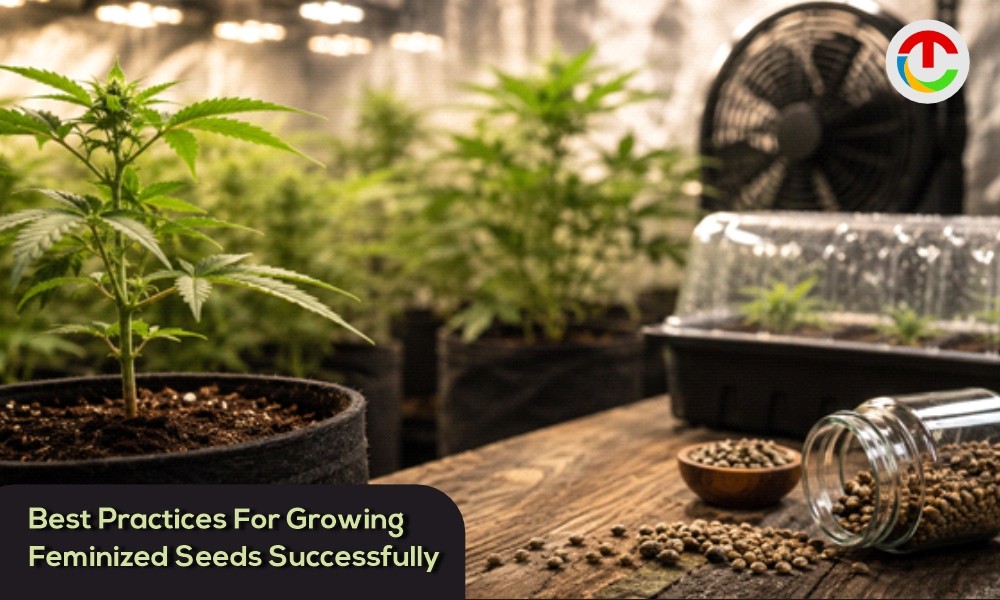
It may seem easy to start a grow until a few mishaps start to add up. The excitement may soon turn to frustration due to poor germination, inconsistent temperatures, intermittent lighting, or an improper setup. Despite feminized genetics making the process easier, successful cultivation still depends on effective environmental management at the very beginning. In addition, most growers pay close attention to harvest expectations but disregard the basics that define plant performance at the initial stages.
That is why understanding practical growing habits matters more than chasing shortcuts. Consistency, preparation, and improved decision-making at every stage of development are expected to lead to strong results.
This article covers the best practices that help you grow feminized plants successfully from germination to harvest.
1. Start With Proper Germination and Strong Genetics
When cultivating feminized seeds, your success starts well before the vegetative stage. Root wellness, plant robustness, and uniformity all begin at germination. Even the best genetics may suffer if the preliminary conditions are unfavorable, so this stage needs attention.
First, focus on moisture balance. Seeds do not require a lot of water but do require a damp environment. Excessive watering may kill the seed before taproot growth begins, and drought may disrupt activation. The warm, dark environment usually favors easier germination due to stable temperatures that promote healthy root development.
Equally important is handling. Rough transfers may damage root tissue and delay early development when the taproot appears. Thus, planting early in your selected media will minimize stress.
Genetics also matters significantly. The reason for selecting feminized varieties is to minimize uncertainty in identifying male plants and to make resource allocation more efficient. Nevertheless, despite reliable genetics, environmental quality is crucial.
Getting things right will save time in the future. Poor starts tend to cause unnecessary issues during the growth cycle.
2. Create a Stable Growing Environment from the Start

One of the quickest methods to erode healthy growth is environmental instability. Feminized plants thrive well in predictable conditions, since any unexpected changes can lead to stress, which impairs growth.
Consistency in terms of temperature should also be given priority. High heat may stress foliage, and low temperatures may slow metabolism and cause stunted growth. Similarly, the humidity must match the plant’s growth stage. Young plants will typically require different moisture levels than flowering plants, so changes should occur as the plants grow.
Lighting discipline also matters. In indoor cultivation, irregular timetables may disorient plants and disrupt normal growth patterns. A dependable light cycle brings order and allows plants to move appropriately through each cycle.
Another neglected factor is air circulation. Stagnant air promotes the accumulation of moisture, increasing the risk of mold-related problems. In the meantime, adequate air circulation strengthens stems and helps maintain a balanced environment.
Feminized Seeds How Leaders Can Express Appreciation Authentically at Thanksgiving at Work?
How Leaders Can Express Appreciation Authentically at Thanksgiving at Work?
cultivation, in particular, is important for stress management. Even though the plants are feminized to express female traits, in extreme environmental conditions, unwanted characteristics can be aroused. Because of that, maintaining consistency is not simply about optimization. It is regarding safeguarding the wholeness of growth.
3. Match Your Growing Approach to the Plant’s Needs
One common mistake is using a one-size-fits-all approach. The truth is that successful growth depends on tailoring your setup to the plants’ needs, available space, and intended outcomes.
Environmental control is an advantage for indoor growers, as it makes it easier to regulate light exposure, airflow, and temperature. This usually brings more foreseeable development. Nonetheless, indoor farming requires more robust scheduling of equipment and maintenance.
Outdoor cultivation has access to natural sunlight and may have greater growth potential, but the climate becomes a determining factor. Changes in weather, excessive moisture, or inappropriate timing of the season might affect the plant’s performance. This is why it is better to select varieties that are better suited to your area.
Growing medium selection also deserves attention. Soil provides familiarity and buffering ability, which is accessible to many growers. Hydroponic systems are capable of growing faster, but require closer accuracy in nutrient and environmental levels.
The training approaches must also align with plant behavior. Not all cultivars might respond to aggressive methods. Rather, careful canopy handling and spacing tend to enhance air circulation, light distribution, and structural growth without causing undue stress.
4. Stay Consistent with Feeding, Monitoring, and Timing
Strong cultivation is rarely about dramatic interventions. More often, it comes down to consistent observation and timely adjustments.
Nutrient management should remain balanced throughout the plant’s lifecycle. Overfeeding can create nutrient burn, while underfeeding may lead to weak growth and poor structure. Since nutrient demands shift between vegetative and flowering stages, feeding routines should evolve accordingly rather than remain static.
Watering discipline matters just as much. Many growers overcorrect by watering too frequently, assuming more moisture means faster growth. In reality, roots need oxygen as much as hydration. Allowing the medium to cycle appropriately supports stronger root systems.
Regular inspections can prevent larger setbacks. Checking leaves, stems, soil conditions, and overall plant posture helps identify issues early. Small symptoms often appear before larger problems become obvious.
Timing also plays a major role. Rushing transitions, harvest windows, or developmental milestones can reduce overall quality. Instead, observing maturity indicators creates better decision-making than relying strictly on fixed timelines.
5. Store Seeds Properly and Plan For Better Results
Successful cultivation often begins before planting even starts. Seed storage directly affects viability, germination success, and early plant strength. If seeds are exposed to heat, moisture, or direct light for extended periods, their performance can decline before they ever reach the growing medium.
Therefore, storing Feminized Seeds in a cool, dark, and dry environment is a practical best practice. Airtight containers help reduce exposure to humidity fluctuations, while stable storage conditions help preserve long-term viability. If you plan to grow later rather than immediately, proper storage becomes even more important.
Planning also improves overall execution. Instead of beginning a grow without preparation, ensure your lighting, ventilation, nutrients, containers, and growing medium are ready beforehand. This prevents rushed decisions during critical early stages.
Preparation Feminized Seeds reduces avoidable mistakes. When your seeds are stored correctly, and your setup is fully prepared before germination, the growing process becomes significantly smoother and far more controlled.
Conclusion
Growing Feminized Seeds plants successfully comes down to getting the fundamentals right and staying consistent throughout the process. While feminized genetics can simplify cultivation by reducing uncertainty, strong results still depend on how well you manage germination, environmental stability, feeding routines, and timing. Small decisions made early often have the biggest impact later.
How Leaders Can Express Appreciation Authentically at Thanksgiving at Work?
Instead of chasing quick fixes, focus on creating a reliable system that supports steady plant development from start to finish. When conditions remain stable and your approach stays intentional, the growing process becomes far more manageable, efficient, and rewarding.
Also Read :- How Leaders Can Express Appreciation Authentically at Thanksgiving at Work?