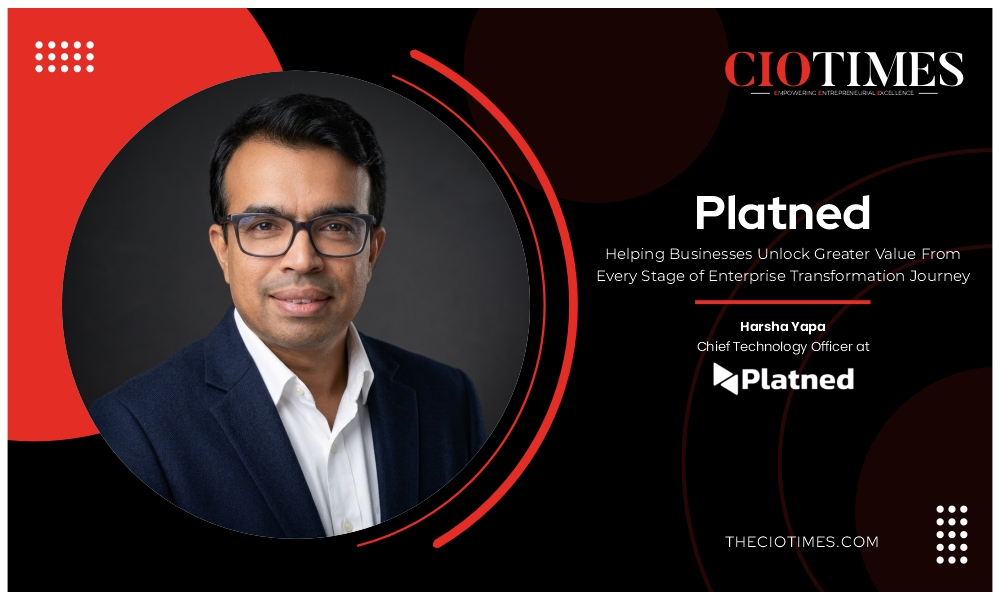
Every successful digital transformation begins with a partner that understands the bigger picture. Businesses today are looking for more than technical expertise. They want a team that listens, adapts, and stays invested for a prolonged period of time. Harsha Yapa Chief Technology Officer at Platned. It has earned its reputation as a trusted IFS Partner by taking exactly this approach. The company works alongside its clients to solve real business challenges with practical solutions. Every engagement is built on collaboration and trust. Rather than chasing quick wins, the organization focuses on creating lasting value. This commitment helps organizations strengthen their operations and move forward with greater confidence in an ever-changing business environment.
Lasting Trust
The Platned Team understands that trust is not built through promises. It is earned through every conversation, every recommendation, and every decision made along the way. Since its founding in 2016, the company has established itself as a trusted partner within the IFS ecosystem. That credibility is rooted in a team whose experience began inside the organization itself. It gave the organization actual insights about the platform and the business challenges its customers face.
What makes the company stand out is its willingness to put the client’s interests ahead of its own. If a project timeline is found unrealistic, the organization says so. If there is a simpler or more cost-effective way to solve a problem, that is the recommendation clients receive. The focus has always been on creating lasting value, not simply securing the next engagement.
The same philosophy extends beyond implementation. Some of the company’s strongest relationships have been forged during the difficult moments, when systems need stabilizing, and businesses need a partner they can rely on. Supported by disciplined governance, ISO 27001 certification, and its IFS Gold Services Partner status, the organization believes trust is ultimately measured by actions. Success comes from doing what is right for the client, even when it is not the easiest path to walk on.
Driving Lasting Change
For the Platned Team, the difference comes down to one simple question: was the project ever really about the technology, or was it about the business outcome the technology was meant to deliver? A system going live is an important milestone. Real evolution, however, is about changing the way an organization operates. These two are often mistaken for one another because a go-live is a visible, measurable, and worth celebrating. The bigger question is whether people are working smarter and achieving better outcomes. It takes far longer to answer.
From the company’s outlook, the most successful transformations share a common thread. The business owns the outcome, while technology supports the journey. Business leaders define what success looks like in practical terms, whether that means faster order-to-cash cycles, fewer maintenance disruptions, or stronger inventory performance. Process improvements are intentional, not accidental. Success is measured against meaningful business results.
Crystal clear signs of success appear post-implementation. They are visible in planners making better decisions, finance teams closing the books faster, and employees working with greater confidence than before. A go-live simply opens the door. The real value is created in everything that follows.
Demystifying Operational Silos
Across industries such as aerospace and defence, energy and utilities, manufacturing, and food and beverage, Platned continues to see many of the same operational challenges. Every industry has its own complexities, yet the underlying issues are often strikingly similar. The biggest one is fragmentation. Critical information about assets, inventory, projects, and costs is spread across disconnected systems, making it difficult for businesses to see the complete picture or act with confidence. There is also a persistent gap between planning and reality. Maintenance often remains reactive instead of predictive. Supply chains respond to disruption instead of anticipating it. Compliance is frequently pieced together after the fact instead of becoming part of everyday operations. In highly regulated sectors, where frameworks such as CMMC and NIST 800-171 continue to raise the bar, those challenges become even more significant.
The team believes modern enterprise platforms make a real difference by connecting what has long been disconnected. When operational, asset, inventory, project, and financial data come together in a single environment, organizations can finally view the business as a single, connected operation rather than a collection of separate functions. That creates the foundation for what every business is ultimately trying to achieve: less unplanned downtime through predictive maintenance, faster responses through real-time visibility, and compliance that happens naturally instead of feeling like a separate exercise. Technology alone is never the answer. Its real value lies in giving organizations the clarity to make better decisions and the confidence to solve problems before they become bigger ones.
Value First Approach
The Platned Team has seen client conversations change quite a bit over the past five years. Back then, the focus was mostly on capability and migration. Businesses wanted to know what a platform could do, how they could move away from legacy systems, or what the cloud would actually change. Those questions still matter, but they are no longer the starting point. Today, business leaders want to know what will be different after go-live and, more importantly, how that value will be proven.
The company has noticed two shifts. The first is a much sharper focus on long-term value instead of implementation alone. Organizations are looking beyond project costs because many have experienced software that was delivered on time but never delivered the business outcomes they expected. They are asking tougher questions, and rightly so.
The second shift is AI. Not long ago, it was simply part of the conversation. Today, it is often where the conversation begins. It finds that the most forward-thinking organizations are not asking whether AI can be added. They want to understand how it changes the value of the platform itself and how it can be adopted without introducing unnecessary risk. In the company’s view, those conversations are far more thoughtful and far more exciting than they were just a few years ago.
Driving Adoption
The toughest part of any transformation is related to the people, not the technology adoption. The company believes this is where projects are ultimately won or lost, yet it is often the area that gets the least attention. A system can be technically flawless, but if people avoid using it, the transformation has fallen short. That is why the team believes change management should run through the entire project. It acknowledges that this isn’t an aspect to treat at the end.
It starts with getting stakeholders aligned before any configuration begins. Different teams often have different ideas of what success is for them. These differences are far easier to resolve early than during user acceptance testing. Just as important is user adoption. Platned has found that people are far more willing to embrace new technology where they can see how it improves their day-to-day work. The team involves end users throughout the design process, is open about the challenges that come with change, and measures adoption with the same discipline as technical readiness. A system, for the organization, is only truly live when people have made it part of the way they work.
The Future Ready Systems
It has seen customer expectations change dramatically over the years. Digital transformation is no longer viewed as one big project with a single finish line. Clients want to see progress sooner, adapt as priorities change, and realise value along the way. That shift has pushed the company towards a more iterative approach, delivering practical capabilities early and building on them over time.
Resilience has reshaped the conversation just as much. Businesses are thinking more about continuity, what happens when things go wrong, and how quickly they can recover. That is why it builds resilience into every engagement from the start instead of treating it as something to deal with later. It is also one of the reasons managed services have become such an important part of the business.
The biggest change goes beyond technology. Agility and resilience are no longer features to deliver. They are part of the way modern businesses need to operate. The focus is on helping clients build systems that are ready for whatever comes next, without having to start another transformation from scratch.
Value Beyond
The role of an implementation partner has changed dramatically. The old approach of delivering a project, handing over the system, and moving on no longer works. Businesses today expect a partner that stays with them long after the go-live. It helps to adapt, improve, and get more value from their IFS investment over time.
That is how the company defines its role today. Implementation is only the beginning. Continuous improvement, managed services, and ongoing advice have become just as important as the initial rollout. As businesses grow and priorities shift, the team continues to help clients make the most of their platform instead of treating every new challenge as a separate project.
The company has also gone beyond conventional implementation by developing practical accelerators, specialized tools, and AI solutions through its Platned AI division. The organization measures success by the value clients continue to gain from the platform years after the project is complete.
AI Evolution
Platned believes AI will reshape ERP in ways the industry is only beginning to understand. For years, ERP systems have been built to capture data and keep businesses running. That is starting to change. AI is helping businesses spot what matters faster, handle routine work, and make better decisions with the information they already have. It is a shift that goes beyond automation, and one Planted is embracing through AI capabilities built directly into IFS Cloud.
As AI becomes part of everyday business, the role of a trusted implementation partner becomes even more important. Adding AI is not simply about introducing new technology. It is about making sure the right safeguards are in place, data is managed responsibly, and people stay involved where judgement really matters. For businesses operating in highly regulated industries, getting that balance right is essential.
It believes the companies that succeed with AI will not necessarily be the first to adopt it. They will be the ones that adopt it thoughtfully. Innovation and responsibility do not compete with one another. They go hand in hand. That is the approach the company brings to every engagement, helping clients embrace AI in a way that delivers lasting value instead of short-term excitement.
Trust Tested
Platned does not believe its character comes from one defining moment. It is shaped over time, in the smaller decisions that often go unnoticed. How issues are handled, what gets prioritised under pressure, and whether the harder but right path is chosen when no one is watching. For the company, trust is not something earned once. It is something continuously tested.
One situation stands out. A managed services client faced a system issue that was difficult to pinpoint. There was an easier option available: apply a quick fix and move on. Instead, Planted chose to slow down and investigate properly. The team traced the root cause, resolved it fully, and ensured it would not return.
The system recovered, but the real outcome was more about confidence than resolution. It reinforced a simple belief within the organization: values show up when things are uncomfortable. It is easy to talk about doing the right thing in calm moments. It matters far more when pressure is high, and shortcuts are available. Those are the moments that quietly define how the company works with its clients.
Living with Systems
Platned envisions a project as a continuous effort. Once a system goes live, the real work starts from there. The focus shifts to what’s next. These steps include trying to keep things stable, improving how the system functions, and helping businesses get more out of it over time. That’s where its application managed services practice comes in, shaped by its early experience in IFS’s own managed services team.
After deployment, the relationship feels less like delivery and more like ongoing support. It’s about being there when issues come up, keeping the system in good shape, and quietly helping clients take advantage of things they may not have had the time to explore before.
Success isn’t just tracked through system performance either. Uptime matters, of course, but it doesn’t tell the full story. What matters is whether people are actually working better, whether things feel easier on the ground, and whether the original goals of the investment are showing up in day-to-day operations.
AI-driven Change
The team observes a few clear shifts shaping the future of enterprise transformation. Among these is AI, which is moving closer to the core of enterprise platforms. It is starting to change how systems behave, turning ERP from something that records activity into something that can help interpret and act on it.
Another shift is how companies now view transformation itself. Projects are no longer seen as finished at go-live. Instead, there is an expectation that platforms will keep evolving alongside the business, which naturally changes how clients work with partners. Resilience has also moved to the foreground. Security, compliance, and stability are now part of the main conversation, especially in regulated industries where the cost of disruption is high.
Taken together, these changes are pushing the ecosystem toward longer-term thinking, deeper engagement, and more responsible adoption of new capabilities. That is the space Platned is building for.
Lasting Value
Envisioning the future, the team believes the organizations that get the most value from digital transformation will be the ones that approach it with clarity and intent, not just investment. It starts with purpose. The strongest organizations connect technology directly to business outcomes and stay focused on whether those outcomes are actually being achieved. Closely tied to that is a willingness to change how work gets done.
Adoption remains a quiet differentiator. Even the best systems fall short if people do not fully embrace them, which is why the human side of change often determines real success. It also sees a clear split in how organisations approach AI. The most effective ones are ambitious, but careful, moving forward with discipline around governance and risk rather than rushing in.
In the end, it is less about scale or technology and more about intent. The organisations that think long term, stay consistent, and treat transformation as an ongoing effort are the ones that see lasting value.
Scaling Trust
Platned views the recognition among “The Most Trusted IFS Partners to Watch in 2026” as meaningful, but not something to rest on. For the company, trust is straightforward. It means clients feel their interests will be looked after, even when that is not the easiest route. It comes down to doing the work properly and being upfront about it.
Technical skill may start the relationship, but trust is what carries it forward. It is what brings clients back with harder problems and longer engagements. As Platned grows into new regions, strengthens managed services, and builds out AI-led work on IFS Cloud, it is careful not to lose that foundation.
Growth, in the team’s experience, is when the trust is most easily tested, so the focus is on keeping the same discipline as things scale. That means staying grounded, being thoughtful in newer areas like AI, and showing up when things get tough. Trust isn’t a mere label for the organization. It is something built slowly, in every engagement.
Also Read :- CIO Times Magazine For More Information