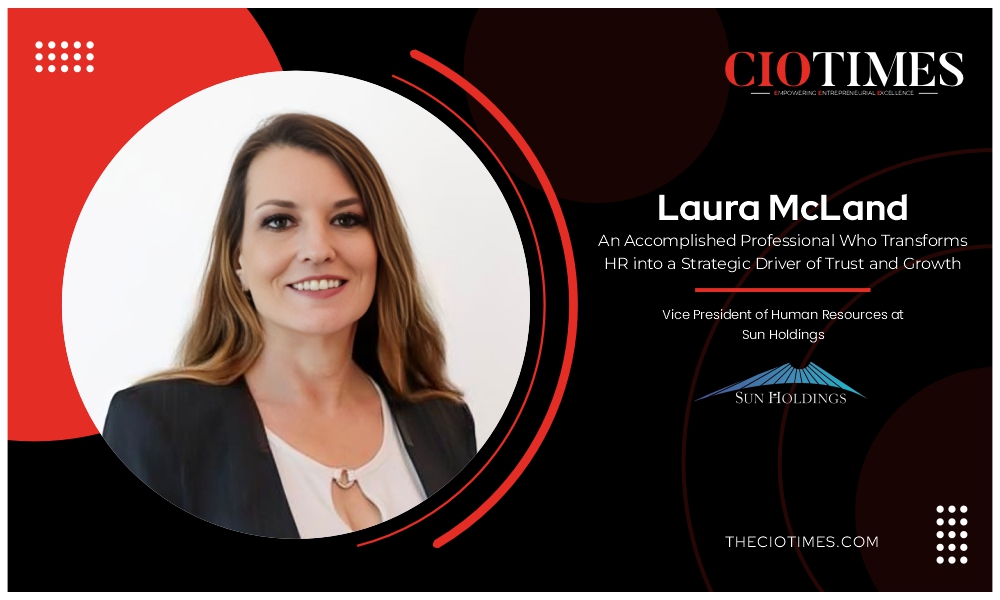
Human resource leaders play a significant role in shaping the overall work environment or work experience. They pay attention to what employees need, act on it, and build genuine trust over time. By encouraging fairness, supporting personal growth, and fostering a sense of belonging, they help employees feel respected and valued. Laura McLand, Vice President of Human Resources at Sun Holdings, exemplifies these qualities. Leaders like her maintain strong relationships with both management and employees, ensuring harmony within the organization. As a result, the workplace becomes more connected, motivated, and productive.
Brand Portfolio
The organization operates as a nationwide holding group with a strong presence across multiple states, managing over 1200 locations and supporting more than 30,000 jobs while serving millions of guests each year. Its portfolio spans fifteen distinct business concepts, most of which operate within the restaurant and retail industries. The company encompasses widely recognized brands such as Burger King, Popeyes, Arby’s, McAlister’s, IHOP, Applebee’s, Papa John’s, GNC, Taco Bueno, Bar Louie, Freebirds, Uncle Julio’s, and select airport dining outlets. This diverse mix demonstrates the organization’s steady growth and broad reach across both food service and retail sectors.
Tactical HR
HR becomes strategic when it delivers measurable business results that generate value. At Sun Holdings, the HR team aligns with the needs of brands and understands the accountability for operational outcomes. It has a robust model across recruiting, benefits, payroll, HR, and learning and development, ensuring consistent and seamless support of the business. In a fast-paced and multi-brand environment, speed and execution are crucial.
The team has established clear success metrics. Turnover, time-to-fill, and engagement only matter if they translate into stronger retention, lower labor costs, improved guest experience, and better unit economics. For example, reducing turnover by 20% or cutting time-to-fill from five days to under two produced direct operational and financial impact.
The team also adopted an operator-focused mindset. Understanding P&Ls, labor models, and store-level drivers of profitability is key. Business leaders are expected to rely on data and make decisions that reflect both operational needs and long-term financial impact.
She adds, “In a multi-brand organization, consistency and transparency are everything. When operators see HR as a partner that can solve problems, remove friction, and directly improve results, the role naturally evolves.”
Unified Growth
Although people come from different backgrounds, they usually want the same basic things from their jobs. The real difference lies in how those needs are delivered, not in the needs themselves. HR brings all these ideas together under one clear direction, grounded in a shared promise of opportunity, consistency, speed, and accountability.
For frontline teams, it is important to keep things simple, making hiring easier, onboarding smoother, and growth paths clearer. For corporate teams, the approach leans toward building depth, strengthening leadership, and planning for long-term careers.
Within corporate roles, the emphasis is on specialization, leadership growth, and succession planning. While the rhythm of work differs, expectations for performance remain high. It is important to foster movement between frontline and corporate roles, proving growth happens across the organization. This continuity helps deepen both culture and connection.
Scalable Human Connection
Moving quickly at such a massive scale only works when a solid foundation is in place. The Sun Holdings Team focuses on building clear policies, compliant processes, and scalable systems that ensure every employee has a consistent experience, regardless of location. Within that structure, it gives brands the room to adapt to their own local labor markets, operational needs, and unique cultural nuances. The real secret is knowing exactly what needs to stay consistent and where it makes sense to be flexible.
The organization stays deeply tuned into the front lines by leaning on operator feedback, real-time data, and a culture of constant improvement.
Laura McLand adds, “If something isn’t working, we adjust quickly and assess whether the issue is localized or systemic.”
Ultimately, the team believes a people-first model at scale comes down to having a clear understanding on what must remain uniform and the wisdom to execute it in a way that truly resonates across the entire organization.
Accolades Energize
Sun Holdings has been awarded as “America’s Greatest Workplaces” by Newsweek magazine showing that a focus on cultural truths is important, including:
1. A culture that is built on a people-first, performance-driven philosophy. The belief is simple: when employees feel understood and supported, the business delivers stronger results. The team invests heavily on frontline leadership because the culture begins the moment someone joines the organization. The focus on empathy, development, and accountability creates a workplace where people can perform at a high level and contribute to long-term success.
2. Consistency and follow‑through are essential to strong leadership. The organization ensures that leaders build competence and communicate effectively, and these skills are developed in a smooth, intentional way.
“When managers are trained to communicate effectively, coach in the moment, and handle issues with fairness, trust scales naturally.”
3. Behaviors and outcomes go hand-in-hand. Reduced turnover is linked to operational success, which strengthens stability, guest experience, and improves overall financial performance.
4. Improving the employee experience is essential. The team has set standards for recruitment practices, employee onboarding, performance feedback, and integrating flexibility at the ground level. These elements create a smoother, more supportive environment for employees at every level.
5. Honoring employees has proven to be an ideal cultural move when it is authentic and delivered at the right moment. Fostering more real-time, peer-driven moments has reinforced a sense of harmony across the workforce. Trust grows when employees see and experience meaningful actions, not just hear about them.
She adds, “I feel that the leadership philosophy should be clear, consistent, and present. Our culture isn’t built only through big moments, but through thousands of small, aligned leadership actions repeated every day across the country.”
The Gaging Lens
Technology should ease work and not cause friction that lead to gaps between leaders and teams. The team has a three-criterion structure for evaluating and integrating systems like the Applicant Tracking System (ATS) and the HR Information System (HRIS):
- Does this improve the employee experience in a meaningful way?
- Does it give our leaders the tools to manage their workforce?
- Does it create time for more human interaction, or less?
A conscious use of technology with a foresight about the consequences later is considered.
She shares an example saying, “Automation in recruiting can accelerate screening and reduce time-to-fill, but we add touchpoints where candidates feel seen with automated responses, timely follow-up, and transparency. We utilize AI when it is practical, to enhance the experience, not detract from it.”
Internally, the approach is similar. AI-centered reporting in the ATS and HRIS can provide early signs of turnover risk. With this information, the team closely monitors trends and takes action when turnover begins to rise, ensuring issues are addressed before they affect performance.
Balanced Growth
Her past work record shows remarkable achievements in hiring great talent. When we mentioned this to her, she has a sensible, down-to-earth approach to underlying HR costs. Rather than making broad cuts, the Sun Holdings Team looks closely to how systems are built to see where they may be missing the mark. By removing unnecessary complexity and partnering with people who truly understand the business, efficiency happens naturally, all while keeping high standards in place.
The team is also incredibly realistic about the balance between speed and quality. When it comes to hiring, her focus is on what it takes to get a person “through the door and on the floor”. It isn’t about speed; it’s about removing barriers. That involves cutting red tape, letting managers lead, and using AI tools to support rather than be rigid gatekeepers. In a busy environment, this is vital. A vacant spot quickly leads to exhausted teams and overtime, so getting someone hired within forty-eight hours is essential for maintaining stability and keeping operations running smoothly.
Laura McLand is just as protective of how people spend their time and energy. The team believes that the administrative side of HR should be handled by systems that are both agile and dependable. When recruiting, payroll, and benefits operate within one smooth ecosystem, it makes the daily experience of being an employee feel much more seamless.
It leans on structure where it provides real value. By establishing a consistent way to handle core tasks, HR reduces unnecessary rework and creates a rhythm people can count on. Open, honest communication within the office and across different brands keeps everyone on the same page and helps leaders work more effectively for their teams.
Ultimately, metrics that truly matter for the human side of business include: staying power, productivity, and real-world results. By looking at the big picture, HR stops being a series of silos and starts being a driver for success.
The team also knows that putting money into people is the ultimate budget win. Great frontline leaders make smarter hires and build teams that want to stay. That is why she focuses on training and growth; it is an investment that pays back in loyalty and skill.
It is important to create an HR department that simply works uncomplicated, connected, and tuned into how life happens, while never losing sight of the small, personal moments that make a job worth having.
A Compliance-friendly Outlook
The team monitors compliance and the changing landscape in HR. It crafts compliance into systems and processes to ensure harmony and fewer issues. Employment law is complicated; the leaders on the frontline need clear and actionable guidance for decisions.
“We translate requirements into practical one-page documents, and system prompts that guide behavior in real time. That allows leaders to make decisions confidently and quickly. We also focus on helping leaders understand both the ‘what’ and the ‘why’ behind policies so they can make sound decisions quickly.”
The team operates with thoughtful discipline. It applies flexibility and adequate control based on the needs of each situation, which saves time and avoids unnecessary delays. Also, consistent and timely communication ensures adjustments can be made as conditions change. Compliance and operational momentum stay intact.
The team aspires to represent compliance as a ‘feel-good’ part and not a barrier in daily operations.
“When leaders are clear, confident, and supported by well-designed systems and a support team, you can move fast and stay disciplined.”
Conscious Integration
Cultural integration as something that needs real intention. If not, gaps start to show in performance, engagement, and retention. The team focuses on building a people-first culture, shaping shared leadership behaviors while still safeguarding what makes brands work. The team works with brand leaders to provide personalized support instead of trying to fit everyone into one fixed mold.
It is important that cultural integration never feels forced. From her perspective, acquired organizations bring strengths that made them successful in the first place. The team takes the time to learn what each brand stands for, what their people connect with, and what local leaders are proud of. This approach protects what works while creating space for shared growth.
Her team prefers an environment where integration is shaped through leadership in everyday practice. She focuses on aligning leaders not just around strategy, but to support their teams each day, including:
- What does good leadership actually look like?
- How do leaders support their people?
Communication plays a big role too, especially during times of change. When direction feel unclear, trust can erode quickly. That’s why the team leans into transparency even if the answer is still in progress. People don’t expect everything to be perfect, but they do want honesty and consistency.
Culture is defined in everyday moments, such as how people are hired, how performance is reviewed, and how recognition happens. Those experiences shape how employees really feel about the organization, so she makes sure they’re aligned and intentional from the start. Laura McLand meets with the brand leaders regularly, to ensure that the employee experience is meeting expectations, and makes adjustments whenever needed.
Laura McLand keeps a close eye on what’s working and what’s not, looking at retention, engagement, internal movement, and overall performance across newly integrated teams. If something feels off, it is addressed quickly. HR works with leaders to share clear, consistent updates so teams know what’s happening and what to expect.
In a diverse organization, she values what makes each brand unique, while using leadership and employee engagement to connect teams across the business. That balance helps culture grow in a way that still feels genuine and keeps trust strong.
Competency Growth
The Sun Holdings Team believes succession planning needs to be intentional and dynamic. Capability building is their new focus instead of replacements. When identifying high-potential talent, it looks at the candidate’s career. Some more core indicators are: learning agility, resilience under pressure, ability to build and develop teams, and decision-making in fast-moving environments. The emphasis is on voluntary readiness to learn and not on just performance and potential.
To identify high-potential talent, the team has three core signals:
- Real experiences
Relevant experience, brand exposure, depth of knowledge, and leading through complexity are far more valuable than classroom learning. It looks for high-caliber leaders who can grasp the depth of operations.
2. Leader-led development
Senior leaders are expected to proactively coach and mentor potential talent. The training team consistently provides hands-on development and resources that easily translate to the field and provides leaders with the tools to be successful in their roles.
3. Feedback and visibility
Leaders get more direct, frequent feedback, and they’re given visibility into the business. That context accelerates their ability to think and operate at the next level. Bench strength, internal fill rates, and readiness timelines are metrics we review consistently.
Laura McLand asserts, “Succession planning at scale is about building a system where talent is continuously identified and developed. We are focused on filling open positions proactively with leaders who are already prepared for what’s next.”
Leading Through Evolution
In her formative years, Laura McLand was always ready to roll up her sleeves. She stayed close to every decision and process, because in those early startup environments, alignment was essential in building the foundation from the ground up. The focus back then was on creating something strong enough to scale whenever the organization was ready to grow.
One of the most significant shifts for her has been learning how to think at scale. She now looks at the entire horizon and designs systems that go work in tandem with each other and builds processes that are simple, yet durable across thousands of locations.
Stepping into bigger enterprise roles, her leadership found a new perspective. She thinks about the big picture and how to lift her teams. She still shows up when it matters, but the real win is when her team feels they’ve got this on their own. She also puts a lot of heart into culture and engagement, making sure those human elements are tied directly to the company’s goals. When that alignment clicks, great performance usually follows.
Communication feels very different when you’re talking to a large audience. In massive organizations, especially, one has to be intentional. She keeps priorities simple and reinforces the most crucial tasks. It helps leaders understand the ‘what’ and ‘why’ behind every move.
Laura McLand also deeply cherishes her fellow leaders and the trust she has established among them. She prefers to be in close alignment with them to ensure similarity in corporate goals and objectives.
Connected Human Performance
Laura McLand envisions employee experience, business results, and a company’s reputation as part of the same living system. In a world where people have a louder voice than ever, those connections are visible and they matter more than ever.
Employee experience is the bedrock of everything for the Sun Holdings Team. It isn’t about big announcements. It is built in the quiet, everyday moments. How an employee is welcomed on the first day, how they’re supported through a challenge, and how their hard work is noticed. When these moments feel thoughtful and consistent, people don’t just show up; they truly lean in. As time passes, that translates into the kind of results that keep a business steady. Also, people stay longer, work better, and the whole operation becomes much more resilient.
A change that the team has witnessed is just how fast things move. Whether an experience is exceptional or frustrating, people talk, and that feedback reaches the public in a heartbeat. This means companies have to be much more intentional and honest about how they show up. Laura McLand believes in being honest about what the company promises its people and what it expects in return. That kind of straight talk is how you build real trust, especially when things are growing fast.
Laura McLand asserts, “We communicate what employees can expect from us and what we expect in return, which builds trust in a high-growth environment.”
Laura McLand makes sure the frontline stays at the center of the conversation. Creating an authentic workplace is about making sure people feel seen and supported. When this happens, a great experience naturally leads to great performance. That success is what makes a company a place where people truly want to build a career.
Future-Ready People
HR leadership has grown far beyond the conventional corporate boundaries. In a world carved by AI, digital tools, and changing heartbeats, HR is a crucial component shaping how businesses move into the future.
The HR team leans on AI to get a clearer view of things like why people leave, who will thrive in a role, and how to plan for the road ahead. But the data isn’t the finish line. They have built a system that helps them listen more closely and understand the story behind the numbers.
Automation is a silent helper that is changing the daily grind for the better. By clearing away the redundant tasks and making streamlined processes, the team focuses on the human side of the work.
She adds, “We work internally to ensure our HRIS systems communicate effectively, and the HR teams are aligned so that the automation is consistently applied to utilize their full benefit.”
The team is aware that today’s employees are very clear about what they need. They are in search of honesty, flexibility, and an opportunity to grow their career. It takes a meets them where they are, integrating simple everyday tools like mobile messaging to keep conversations open and effortless.
Also, as AI becomes more useful, HR continues to play a crucial role in ensuring the systems are leveraged ethically and responsibly. The team guards against bias, maintains transparency, and protects the trust employees place in the organization.
Human resource leaders shape the work experience by responding to employee needs, building trust, and fostering fairness and growth to create a more connected, motivated, and productive workplace.
Also Read :- CIO Times Magazine for More information