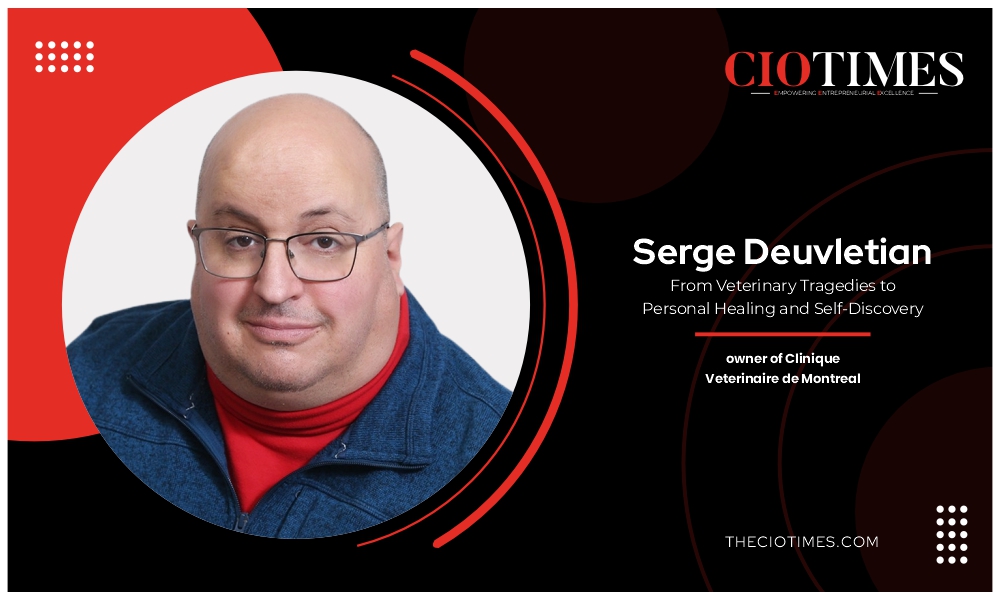
For most people, a television catchphrase disappears as quickly as it is heard. For Serge Deuvletian , a veterinarian from Montreal, one sentence followed him throughout his life. As a child, he often heard television host Bob Barker conclude episodes of The Price Is Right with a reminder to pet owners: help control the pet population by having pets spayed or neutered. At the time, the words seemed little more than a familiar sign-off. Decades later, they would become deeply intertwined with his professional identity, personal struggles, and understanding of responsibility.
Long before he entered veterinary medicine, Serge Deuvletian believed he had already found his calling. Animals fascinated him. Animated characters such as Garfield captured his imagination, and he developed an early conviction that he was destined to become a veterinarian. Unlike many professionals who arrive at their careers through careful planning, his decision was largely instinctive. It simply felt right.
Looking back, however, he now sees his life as a story filled with unexpected turns and contradictions. While veterinary medicine became his profession, sports became his emotional refuge. He often wonders whether his natural talents may have been better suited to another path altogether.
His love affair with sports began in childhood. One time his father took him to watch a Montreal Concordes football game at the Olympic Stadium. The crowd was sparse and the result unremarkable, but the experience left a lasting impression. Week after week, he followed his team, developing a lifelong attachment to the Canadian Football League. Sports would eventually become more than entertainment; they would become a lens through which he interpreted triumph, disappointment, perseverance, and fate.
Years later, one of his proudest personal victories came not in a veterinary clinic but on a badminton court. During his final year before university, he captured a championship after years of falling short. The achievement reinforced a lesson that would define much of his life: persistence mattered, even when success seemed elusive.
Building a Practice and Finding Purpose
After graduating, Serge Deuvletian entered veterinary medicine determined to make a difference. His early experiences included a brief but impactful period working at the SPCA. There, he witnessed the harsh realities of animal overpopulation. The experience was sobering. Every day brought reminders of how many unwanted animals never found homes.
Moving season and the Christmas period were particularly difficult. The emotional weight of seeing countless abandoned pets strengthened his belief in responsible animal care and reinforced the importance of spaying and neutering programs. Despite growing up with a father who successfully operated his own pharmacy, Serge Deuvletian initially had little interest in entrepreneurship. Running a business seemed secondary to practicing medicine. Yet circumstances eventually led him to open a veterinary clinic of his own.
The clinic occupied a modest location beside his father’s pharmacy. The arrangement offered stability but also carried expectations. Although he was not burdened by bank loans, he felt an immense responsibility to succeed. From the beginning, he approached each day with intensity. He built relationships with clients, developed his own style of practice, and worked tirelessly to establish a reputation. The clinic became more than a workplace. It became an extension of himself.
For several years, the formula appeared to work. He gained confidence in his abilities and believed he was steadily becoming the veterinarian he had always wanted to be. Then everything changed.
The Pet That Changed Everything
In late 2004, a routine procedure produced a devastating outcome. A dog undergoing a standard neutering procedure unexpectedly died. The event shattered Serge Deuvletian’s confidence and permanently altered his perception of veterinary medicine. For any veterinarian, losing a patient is difficult. Losing one during a procedure that is performed thousands of times every day can be especially traumatic. The death forced him to confront questions about professional judgment, responsibility, and self-doubt.
Although complications can occur even under proper care, Serge became consumed by the belief that he had made a mistake. He replayed every decision repeatedly, wondering whether different choices might have changed the outcome. The emotional burden became overwhelming. Rather than processing the event as an unfortunate medical tragedy, he internalized it as a personal failure. The experience planted the seeds of a psychological struggle that would intensify over the coming years.
He attempted to compensate by studying harder and demanding more from himself. Anatomy books, educational materials, and endless self-evaluation became part of his daily routine. Instead of restoring confidence, however, the effort often deepened his sense of inadequacy. The pressure eventually spread beyond the clinic walls. Relationships became strained. Isolation increased. What had once been a fulfilling profession gradually became a source of anxiety and emotional exhaustion.
Confronting Mental Health
As the years passed, Serge found himself descending into a period of profound emotional turmoil. A second unexpected patient loss reopened wounds that had never fully healed. By then, years of accumulated guilt, stress, and self-criticism had taken their toll. The situation reached a breaking point. He sought professional help, beginning a journey through counseling, psychology and psychiatric care. What initially started as an attempt to manage stress evolved into a deeper exploration of how his mind worked. Along the way, specialists introduced him to a diagnosis he had never previously considered: Asperger’s syndrome, now recognized within the autism spectrum.
The diagnosis provided a framework for understanding many lifelong experiences. Difficulties with social interaction, intense focus on specific interests, and unique patterns of thinking suddenly made more sense. Rather than offering immediate relief, however, the discovery marked the beginning of another long process of self-examination. Serge became determined to understand every aspect of his condition.
Therapy became a central part of that effort. Through psychologists, social workers, and autism specialists, he began learning strategies that helped him navigate challenges he had previously struggled to explain. The process was often difficult. Yet it also provided hope. For the first time, he possessed language and context for experiences that had defined much of his life.
The Search for Answers
During this same period, another story captured his attention. Former CFL player Tony Proudfoot publicly revealed that he had been diagnosed with ALS, the devastating neurodegenerative disease commonly known as Lou Gehrig’s disease.
What began as admiration for an athlete quickly evolved into something more personal. Serge became fascinated by ALS, its causes and its connection to the legendary baseball player whose name it bears. As he immersed himself in research, he developed theories linking historical figures, neurological conditions and autism. Whether others agreed with his conclusions mattered less than the sense of purpose the investigation provided.
The search became a mission. He read extensively, attended events, met researchers and engaged with professionals from multiple disciplines. He traveled widely, spoke with specialists, and connected with individuals who shared an interest in autism research. These pursuits gave structure to a period that might otherwise have been defined solely by struggle. They also reinforced a recurring theme throughout his life: the determination to keep searching for answers even when certainty remained elusive.
Sports once again played an important role. Players, teams, and championships became markers along his personal timeline. Significant life events seemed to align with memorable sporting moments, creating associations that helped him make sense of complex experiences. To outsiders, the connections may have appeared unconventional. To Serge, they formed a narrative that linked different chapters of his life together.
Lessons Beyond the Clinic
While his personal journey unfolded, Serge continued practicing veterinary medicine. The profession remained demanding, but experience gradually brought perspective. He came to recognize that medicine, whether practiced on animals or humans, contains unavoidable uncertainty. Not every outcome can be controlled.
That realization proved transformative. For years, he had viewed adverse outcomes as evidence of personal failure. Over time, he began to accept that some tragedies occur despite a practitioner’s best efforts. Conversations with specialists in veterinary anesthesia further reinforced this understanding. Rare reactions, hidden conditions, and unpredictable complications can affect even the most routine procedures. The insight did not erase past pain, but it helped place it in context.
Meanwhile, his clinic survived challenges that might have overwhelmed other businesses. During the COVID-19 pandemic, the practice remained resilient. Decades of hard work had created a stable foundation capable of weathering uncertainty. By then, Serge Deuvletian had accumulated a lifetime of experiences that extended far beyond medicine. He had studied autism, participated in research projects, traveled extensively, met athletes and experts, and engaged in a continuing process of self-discovery. The journey had not unfolded according to plan. Yet it had produced lessons he never expected to learn.
A Different Kind of Victory
Today, Serge Deuvletian views his story through a different lens than he once did. The young man who believed he had chosen the perfect career now acknowledges that veterinary medicine brought immense suffering. Yet he also recognizes that the same profession forced him to confront questions he might otherwise have avoided.
The few losses that once defined him no longer carry the same power. Instead, they have become part of a broader narrative about resilience, growth, and adaptation. His understanding of autism has evolved. So has his perspective on success. Rather than measuring achievement solely through professional accomplishments, he values the personal progress that came from years of effort, therapy, and reflection.
Even physical challenges became part of that process. Managing stress, adjusting to change, and navigating the demands of daily life required persistence that often went unseen by others. Retirement now sits somewhere on the horizon. When he looks ahead, he does so with a sense of peace that once seemed impossible. The story is not one of perfection. It is a story of endurance.
For a man who spent years calling himself “the world’s stupidest man,” the greatest lesson may be that human beings are often far harsher on themselves than reality demands. The pets that passed, the mistakes he feared, the diagnoses he received, and the questions he pursued all became chapters in a much larger journey.
In the end, Serge Deuvletian’s life has been defined not by a single profession, diagnosis or accomplishment, but by his ability to keep moving forward. The veterinarian who once entered practice believing he had all the answers ultimately discovered something far more valuable: meaning is not found in avoiding hardship. It is found in how one responds to it.
And perhaps that is why a simple television message remained with him for so many years. What began as a reminder about responsible pet ownership eventually became something larger: a reminder that caring for others also requires caring for oneself.
After decades spent helping animals, confronting personal demons, and searching for understanding, Serge Deuvletian has reached a place where fulfillment no longer depends on certainty. It comes from knowing he endured, learned, and continued the journey. For him, that may be the greatest victory of all.
Also Read :- CIO Times Magazine for More Information