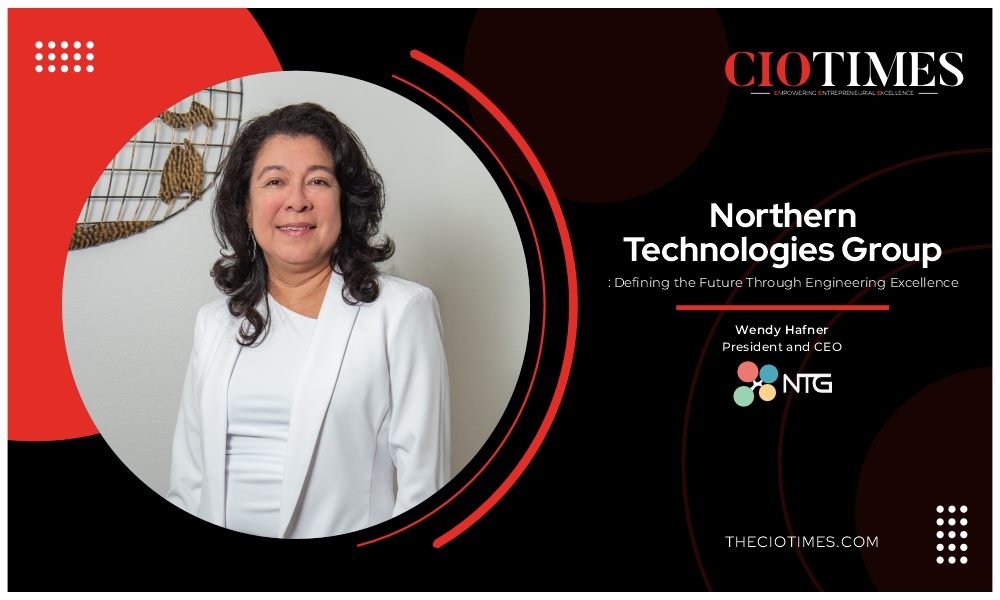
Cybersecurity is consistently evolving at an unstoppable pace. Envisioned previously as an operational necessity, now it is looked upon as a defining business imperative. In the prevalent era of AI and cloud mechanisms, resilience is measured by how assertively it can innovate amid uncertainty. Organizations integrate intelligence, automation, and strategic foresight to protect critical assets while enabling business growth. Organizations like Northern Technologies Group contribute significantly to strengthening trust, ensuring continuity, and empowering transformation in a cybersecurity-centric infrastructure. Its two decades of expertise enhance the operations of federal and commercial clients.
Driving Secure Innovation
Northern Technologies Group has partnered with enterprises and federal agencies to solve complex technology and cybersecurity challenges. Its capabilities span cybersecurity, cloud, managed IT, network engineering, consulting, and around-the-clock SOC and NOC operations. What distinguishes the company is its ability to combine deep technical expertise with a practical understanding of business priorities.
Each engagement is designed to enhance resilience, reduce risk, and improve operational performance. As digital environments become increasingly interconnected, the team continues to help organizations modernize with confidence, protect critical assets, and build secure, scalable infrastructures that are prepared for tomorrow’s progressing threat landscape.
Resilient Leadership
The company’s roots are firmly grounded in supporting some of the world’s most demanding defense and national security missions. Those early experiences established a lasting principle: technology underpins operational continuity, mission success, and resilience. From the beginning, the organization recognized that reliability, security, and performance are mission-critical. This mindset continues to shape how the Northern Technologies Group team assesses risk, navigates complexity, and makes strategic decisions.
Guided by this foundation, the organization approaches every engagement with discipline rather than assumption. The organization evaluates potential risks, operational impact, recovery priorities, and the long-term value of every recommendation. Built on mission-critical expertise, the team has carried the same commitment into delivering end-to-end technology and cybersecurity solutions for federal and commercial clients alike.
This experience has nurtured a culture defined by preparation, accountability, and clear communication. The organization understands that clients rely on the team to safeguard critical infrastructure, protect sensitive data, meet compliance requirements, and maintain operational continuity. Every decision is driven by one objective: delivering the right solution for the mission, the environment, and the people who depend on it.
Business Alignment
The difference between a technology provider and a trusted partner extends beyond the solutions delivered. While providers offer tools, the organization begins by understanding each client’s operating environment, business priorities, risk profile, budget considerations, and long-term objectives. Guided by the belief that no two organizations face the same challenges, the team designs secure, scalable, and sustainable solutions. These are tailored to each client’s unique mission rather than relying on one-size-fits-all approaches.
That distinction has become even more important as technology continues to commoditize. Many providers can deploy hardware, implement software, or manage day-to-day operations. What makes a partner indispensable is sound judgment. This includes being aware of when to avoid unnecessary complexity, challenge assumptions, simplify solutions, and align technology investments.
For the organization, partnership also extends a step ahead of implementation. The organization’s managed services, compliance advisory, cloud, and engineering capabilities are built on continuous support, optimization, and accountability. Operating with a vendor-agnostic, client-first philosophy, the NTG team remains focused on protecting critical systems and data while helping clients stay ahead of an evolving threat landscape.
The Boardroom Cyber Strategy
The team’s outlook about cybersecurity as a business priority. Not as an isolated IT function. It recognizes that cyber risk directly influences operational resilience, enterprise value, regulatory compliance, and customer trust. When engaging with executive leadership, it reframes technical vulnerabilities into business outcomes that leaders readily apprehend.
The team rejects fear-driven sales approaches that encourage unnecessary technology investments. Instead, it advocates a structured, pragmatic approach to risk management. This philosophy is reflected in its guidance around frameworks such as CMMC 2.0 and NIST SP 800-171, where compliance is treated as a strategic journey supported by detailed gap assessments, prioritized remediation, and well-defined evidence workflows rather than a reactive exercise.
A strong example is the organization’s engagement with Catamount Machine Works. It is a precision CNC manufacturer serving aerospace, defense, and government sectors. The client needed to achieve CMMC 2.0 alignment without diverting leadership and staff from core operations. The team addressed critical gaps across identity, endpoint, and data security while integrating its NOC and SOC for continuous monitoring. The result was a 60 to 70% reduction in internal IT and security management efforts, alongside greater confidence in the organization’s compliance posture.
Its own environment meets CMMC Level 2 requirements aligned with NIST SP 800-171 Rev. 2. Having successfully implemented these standards internally, and for clients like Catamount, the organization brings practical experience to every engagement. This enables the NTG team to help business leaders distinguish between immediate investment priorities, procedural improvements, and long-term strategies that strengthen resilience without compromising growth or operational efficiency.
Governance Combined with Agility
The organization is immensely experienced when it comes to working with both federal agencies and commercial enterprises. This exposure has given the team a unique perspective on resilience, governance, and technology adoption. Federal environments emphasize discipline, structured governance, documentation, and operational resilience, while commercial organizations excel in agility, innovation, customer focus, and speed. Operating at the intersection of both sectors has reinforced the belief that each has valuable lessons to offer the other.
From the federal outlook, commercial organizations can benefit from adopting structured risk management, formalized processes, security-by-design, and a stronger focus on mission continuity. Through its work with the Department of Defense, the Intelligence Community, Allied Forces, and other federal agencies, the team has seen how repeatable processes and operational discipline become critical when failure is not an option.
Conversely, commercial enterprises demonstrate how speed, efficiency, and continuous innovation drive competitive advantage. Technology adoption is viewed as a business imperative rather than an optional investment. Federal IT environments, however, often face structural constraints, including clearance requirements, lengthy procurement cycles, and legacy infrastructure designed for long-term stability. Government organizations can benefit from embracing greater commercial discipline around ROI, agility, and modernization as strategic mission enablers. The strongest organizations are those that successfully combine the governance and resilience of federal operations with the adaptability, innovation, and execution speed of the commercial sector.
Thoughtful Design
Engineering excellence at NTG begins with asking the right questions before recommending any solution. The organization evaluates the underlying business challenge, operational risks, critical assets, scalability requirements, and long-term sustainability. Rather than focusing on technology alone, the team delivers solutions that are practical, resilient, and aligned with each client’s mission.
This philosophy was shaped through mission-critical engineering experience. During a coalition network deployment in Afghanistan, conventional network designs proved inadequate for evolving operational demands. Challenging standard approaches, an advanced ‘black core’ network was crafted using MPLS, MP-BGP, and advanced traffic engineering to securely support diverse mission networks across fibre, microwave, and satellite infrastructure. The architecture proved highly resilient and remains operational today.
This same strategy continues to guide every engagement. The team is encouraged to challenge convention when it creates greater value, whether through phased modernization instead of disruptive replacements, eliminating technology overlap before adding new platforms, or strengthening governance before accelerating automation. The objective remains unchanged: delivering secure, practical, and accountable solutions that advance each client’s long-term mission.
Solutions Integrity
Engineering excellence at the Northern Technologies Group defines how every engagement is approached. Before recommending a solution, engineering teams are encouraged to ask fundamental questions:
- What problem is truly being solved?
- What risks and operational constraints exist?
- What must be protected?
- What needs to scale?
- And will the solution remain effective and manageable over the long-term?
This disciplined approach is rooted in real-world experience. The engineering philosophy embedded within the team was honed through mission-critical network deployments where conventional approaches fell short. One defining example involved the deployment of a coalition communications network across Afghanistan. While established guidance favored legacy architectures, evolving mission demands required greater flexibility and resilience. Instead of following convention, an advanced ‘black core’ architecture was engineered using service-provider technologies, including MPLS, MP-BGP and advanced traffic engineering. It enables the secure transport of multiple mission networks across a hybrid fiber, microwave and satellite infrastructure. The result was a disruptive solution whose impact endures through its continued operational use.
This experience continues to shape the team’s engineering culture. Teams are empowered to challenge assumptions, validate conventional thinking, and prioritize long-term customer outcomes. Whether recommending phased modernization instead of disruptive rip-and-replace initiatives, or establishing governance and visibility ahead of automation, the objective remains constant: delivering secure, scalable, and accountable solutions that align with each customer’s mission and create lasting value.
Forecasting the Enterprises’ Demands
The tech-dominated era has made it compelling for every organization to adopt AI, cloud, automation, and data-driven operations. Organizations get ahead of themselves by treating transformative technologies like AI, cloud, and Zero Trust as plug-and-play tools rather than operational capabilities. The team envisions enterprises rushing to deploy agentic AI or migrate complex workloads to the cloud without first establishing the fundamentals, such as strict data governance, clean identity and access management, and an enforceable Zero Trust architecture. Layering advanced capabilities on top of a fragmented data or network baseline doesn’t solve complexity. It adds to the risk.
At the edge is where most organizations underestimate opportunity. The real power of AI is extending real-time visibility, automated threat containment, and resilient processing directly to the operational front lines. Whether it is a tactical environment for a warfighter or a distributed commercial footprint.
The recent alignment with contract vehicles like SEWP VI reflects exactly this demand. Agencies and enterprises don’t want isolated cloud environments or standalone cybersecurity tools sitting next to each other. They want integrated architectures like Edge AI, secure hybrid cloud, and automated Zero Trust working together to deliver real-time resilience and measurable outcomes. Technology should never be deployed just to chase a trend.
Focusing on the Aftermath
Mere investment in technology without proper implementation won’t ever serve the purpose. When transforming digitally, the challenges like technology, culture, and leadership are all interlinked with each other. Organizations never struggle because the tools are not available; it is due to unclear goals, fragmented ownership, inconsistency in processes, or resistance to change from the team itself.
The discovery process in the organization is initiated the same way: crafting insights about the customer’s environments before pitching. Loopholes in operational friction are scrutinized, the risks or constraints are gauged, whether or not technology is diminishing the pace of speed is verified, and success measures are defined for the coming 12 to 24 months.
Overall, this reflects a larger truth: transformation has to be tied to business outcomes. If leadership doesn’t define the outcome, culture doesn’t support adoption, or processes never adjust, even excellent technology can underperform. The team sees it as a structured journey. It understands the environment, defines the risks, aligns stakeholders, modernizes responsibly, and stays engaged as the organization evolves.
Unbiased Innovation
Northern Technologies Group has intentionally remained vendor-agnostic. Engineering excellence is rooted in objectivity, not in commercial allegiance. While this philosophy has meant foregoing attractive business opportunities, the organization considers customer trust and technical integrity far more valuable than short-term gains.
Within the federal technology landscape, the team has witnessed how vendor-driven procurement often leads to significant investments in solutions that fail to address operational priorities. Commercial incentives and aggressive sales targets can overshadow mission requirements, resulting in underutilized technologies and diminished long-term value.
The organization remains focused on delivering solutions driven solely by technical merit and customer outcomes. Its engineering teams evaluate every engagement independently, recommending architectures that best serve the mission. It strengthens resilience and maximizes long-term value. Integrity, accountability, and mission success will always outweigh sales objectives, ensuring every recommendation is guided by what is right for the customer.
Partners in Progress
The organization perceives every engagement as a long-term partnership. It begins with the discovery approach rather than being assumptive. The teams spend their time interpreting each client’s operating environment, strategic priorities, constraints, and objectives before designing solutions. This process ensures every recommendation is aligned with measurable business outcomes.
This outlook shapes the organization’s managed services approach. As the industry is moving towards centralization, the team operates a 24/7/365 managed IT services through an on-site Network Operations Center. The Northern Technologies Group team wants their clients to feel that the team has gained all insights related to the business and the client isn’t just stranded waiting in the service queue. It shares the example of Catamount Machine Works.
When the team took charge of their IT, security, and CMMC 2.0 compliance work, the technical results mattered: a 60 – 70% drop in the internal time their team spent on IT and security. But the Catamount team said Northern Technologies Group operates as a true extension of their team, not a vendor working through a ticket queue. This is the conclusion each engagement should produce according to the team. Service-level agreements matter, but long-term outcomes matter more.
Pictured Competencies
Cybersecurity leaders are evolving from technical specialists into strategic risk leaders. As AI transforms both cyber threats and defense, organizations will need leaders who can integrate governance, compliance, cloud, identity, incident response, and executive decision-making while balancing security investments with operational priorities.
This vision helps the cybersecurity strategy of the team. It combines Zero Trust architecture, Defense in Depth, vendor-agnostic engineering, and 24/7/365 Security and Network Operations Centers to help customers build resilient security frameworks. Its CMMC-focused expertise further strengthens the connection between cybersecurity maturity, regulatory compliance, and operational resilience.
The team believes resilience will be defined by disciplined execution rather than technology alone. Organizations that bring together governance, visibility, secure architectures, skilled teams, and engaged leadership will be best positioned to navigate an increasingly complex threat landscape.
Calculated Expansion
A pivotal growth indicator for the team is its decision to evolve beyond specialized Department of Defense engineering services into comprehensive, end-to-end technology solutions. After more than a decade focused on engineering excellence for federal customers, the organization strategically expanded into technology procurement, cybersecurity, global support, and integrated service delivery.
The shift transformed Northern Technologies Group’s trajectory, enabling it to extend its engineering-led approach across broader markets while delivering greater strategic value to customers. It also paved the way for the launch of its managed IT services division and the development of proprietary monitoring capabilities. It strengthens the organization’s commitment to innovation and operational excellence.
The experience reinforced a defining leadership principle: sustainable growth must be driven by core strengths. It is not solely reliant on market opportunities available. Engineering judgement, mission focus, and customer trust continue to guide every strategic decision, ensuring expansion remains purposeful, disciplined, and aligned with long-term value creation.
Collaborations for Progress
Northern Technologies Group strives to leave every client with greater confidence, resilience, and clarity. Whether supporting federal missions, modernizing infrastructure, securing commercial enterprises, or enabling regulatory compliance. The organization’s purpose remains consistent: delivering engineering excellence that strengthens long-term operational success.
From its origins in the dot-com era to supporting global defense initiatives and advising commercial enterprises, the team has remained guided by resilience, innovation, and uncompromising engineering standards. Every engagement reflects the organization’s commitment to solving complex challenges with precision and purpose.
Beyond implementing technology, the organization seeks to build enduring partnerships founded on trust and measurable impact. By understanding each client’s mission and delivering solutions aligned with long-term objectives, the organization aims to leave behind stronger capabilities, greater resilience, and a foundation for sustained success long after every project is complete.
Also Read :- CIO Times Magazine For More Information