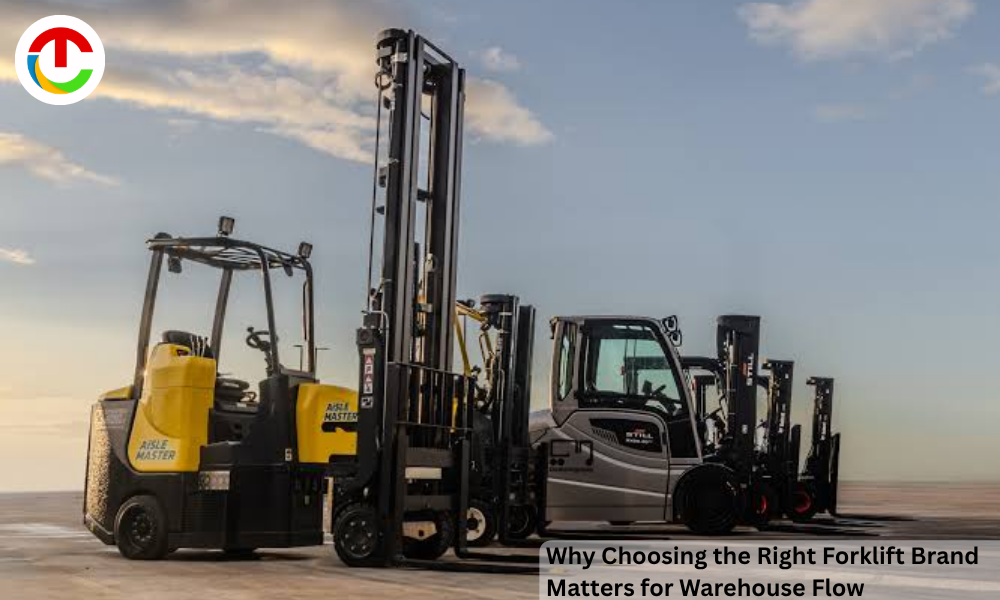
Warehouse flow depends on more than aisle width and storage design. Each lift truck affects travel speed, pallet placement, operator movement, and dock timing. The right Forklift Brand supports predictable handling across shifts, while a poor match creates delays through downtime, difficult controls, or limited service access. The decision also shapes training, maintenance planning, and replacement costs. Evaluating equipment against daily operating demands gives warehouse leaders a practical basis for smoother material movement.
A dealer relationship matters because equipment decisions continue after delivery. A local service team can confirm truck specifications, maintenance access, parts planning, and operator support before finalizing a purchase. Buyers comparing equipment support in their area can contact a Komatsu forklift dealer to discuss available models, service arrangements, and application fit without separating the truck from its operating environment.
Lets Know the Right Forklift Brand Matters for Warehouse Flow
1. Brand choice affects warehouse flow
A forklift brand influences how quickly operators complete each movement. Acceleration, steering response, visibility, mast control, and load stability all affect pallet handling inside busy aisles.
Responsive controls reduce the corrections operators make before placing a pallet in a rack. Consistent handling also limits unnecessary stops near docks, staging areas, and picking locations.
Brand selection affects standardization, too. A warehouse with similar trucks across shifts simplifies operator training, inspection routines, and basic troubleshooting. Familiar controls reduce adjustment time when employees move between work areas.
2. Match truck capabilities to daily work
The right Forklift Brand starts with the loads it must handle. Warehouse leaders should document pallet weights, load dimensions, lift heights, rack clearances, and movement frequency.
A truck without suitable capacity restricts receiving and storage work. A truck with excess capacity can take up more aisle space, consume more energy, and add cost without improving performance.
Travel conditions also require attention. Indoor operations involve different requirements than yards or mixed indoor-outdoor routes. Floor quality, doorway height, ramp grades, turning space, and surface debris all affect equipment selection.
3. Consider energy and shift patterns
Battery-powered trucks require a charging plan that matches operating hours. Decision-makers should review charging locations, available breaks, battery changes, and power requirements before replacing existing equipment.
Fuel-powered trucks require storage, refueling procedures, and suitable ventilation. The right choice fits the warehouse schedule without interrupting receiving or dispatch during peak periods.
4. Service access protects throughput
A Forklift Brand that remains out of service disrupts more than one operator. It can delay pallet movement, increase pedestrian traffic, and place extra demand on nearby trucks.
Service planning should cover inspection intervals, common replacement parts, technician availability, and expected response times. Maintenance needs continue throughout the truck’s working life.
Parts access also affects repair duration. A warehouse that keeps frequently used components available can return equipment to service faster than one that waits for every part to arrive.
5. Operator fit improves daily performance
Operator interaction affects both workflow and equipment care. Controls should be easy to understand, visibility should suit the load, and the driving position should support repeated movements during a shift.
Training becomes simpler when trucks share familiar control layouts. Supervisors can reinforce inspection procedures, load-handling rules, and travel practices across a consistent equipment group.
A brand choice should also support the warehouse’s safety procedures. Speed controls, warning systems, visibility aids, and access features must fit the site’s traffic plan and operating rules.
6. Compare total operating cost
The purchase price shows only one part of the financial picture. A complete comparison includes energy use, scheduled maintenance, repairs, tires, training time, and expected service life.
Downtime belongs in that calculation. A lower initial price loses its advantage if repairs interrupt receiving, storage, or dispatch during high-volume periods.
Replacement planning matters as well. Warehouse leaders should review fleet age, usage levels, parts support, and future capacity needs before buying a truck that creates an isolated equipment group.
7. Use measurable selection criteria
A practical evaluation starts with a written operating profile. It should record load requirements, aisle measurements, daily hours, surface conditions, energy access, and service expectations.
Decision-makers can then compare brands against the same criteria. Demonstrations should test actual tasks, including pallet pickup, rack placement, turning, doorway travel, and loading near the dock.
Operators should provide feedback after each evaluation. Their experience with visibility, controls, comfort, and maneuverability reveals issues that specifications alone cannot show.
Conclusion
Choosing a forklift brand should begin with the warehouse’s work pattern, not a catalog preference. Leaders should document load weights, travel distances, aisle widths, shift schedules, battery or fuel needs, and service response expectations. They can then compare suitable trucks and ask dealers about maintenance plans, operator training, and parts availability. That process turns brand selection into an operating decision with measurable criteria, helping each truck support consistent movement through receiving, storage, picking, and dispatch.
Also Read :- How RFID Tracking Saves Time for Warehouse and Facility Teams