Every year, organizations spend millions to protect their physical assets, buildings, and equipment, yet one of their most precious assets, data, can be compromised in seconds. According to the IBM Cost of a Data Breach Report, the global average cost of a data breach has reached a record high of $4.99 million in 2026, marking a 12% increase from the previous year. Due to this dramatic rise, data protection has become a critical priority for organizations rather than simply an IT concern.
Why data protection is critical for organizations?
Today, almost every company possess data, such as product information, customer data, personnel files, and financial transactions. This data helps companies to understand customers, make smarter decisions, and thereby achieve business success. That’s why data is one of the most significant asset for a company. However, acquiring data is not enough; data protection is also important. Any data breach or leak can cause massive financial losses and interrupt trade. By adopting appropriate cybersecurity frameworks, companies can protect sensitive data and respond to cyber threats.
1. NIST Cybersecurity Framework (CSF) 2.0
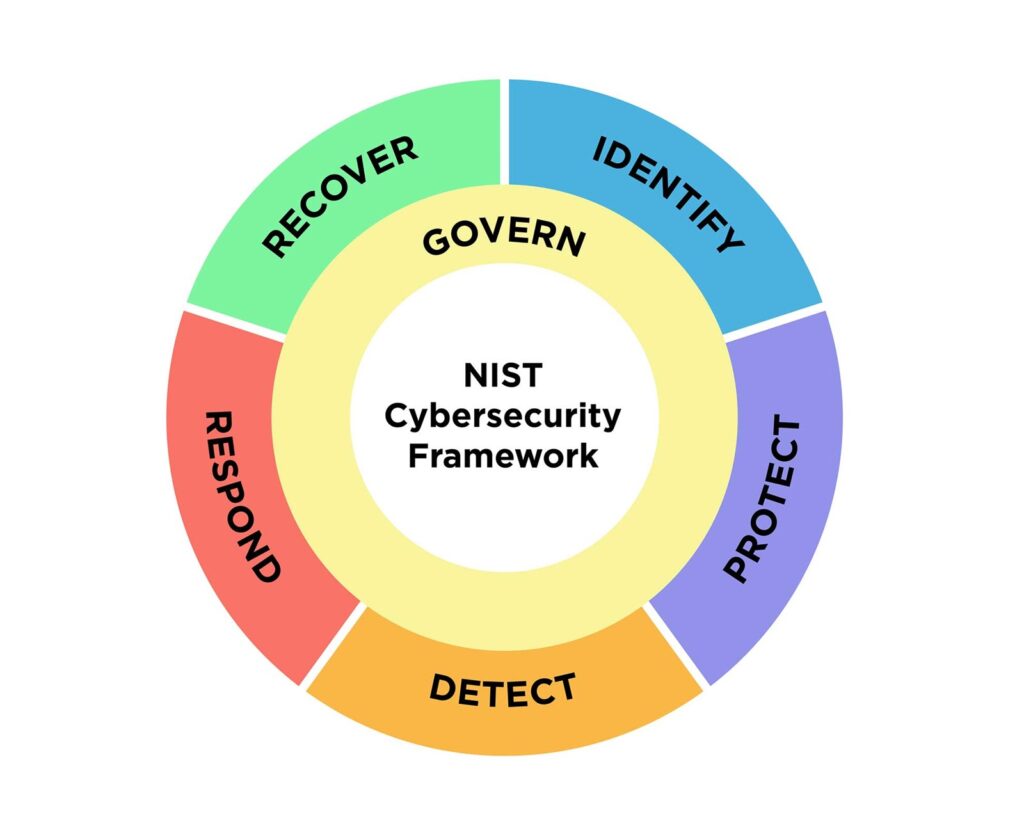
Released in 2024 bythe National Institute of Standards and Technology (NIST), NIST Cybersecurity Framework (CSF) 2.0 is a voluntary, outcomes-based set of guidelines. It is designed to help organizations of any size to understand, evaluate, and improve their management of cybersecurity risk.
Core Functions:
- Govern: Set expectations, build organizational strategy, and policy so leadership manages risk.
- Identify: Learn about the data, people, assets, and systems that drive the business.
- Protect: Apply safeguards to secure data and critical services.
Advantages
- Common Language: Converts complicated technical security concepts into clear business terms for executives.
- Broad Scope: Applicable to all organizations, moving past the original focus on critical infrastructure.
- Flexibility: Concentrates on desired outcomes rather than forcing rigid technical rules.
Limitations
- Not a Checklist: Does not inform about which software or hardware to buy.
- Implementation Gap: Needs more effort and mapping documents to convert high-level outcomes into daily technical controls.
Best for All organizations: The framework is best for all organizations including large enterprises, small businesses, and government agencies building a security baseline.
2. ISO/IEC 27001 and ISO/IEC 27002
Developed jointly by the International Organization for Standardization (ISO) and the International Electrotechnical Commission (IEC), ISO/IEC 27001 and ISO/IEC 27002 are international cybersecurity standards. They offer a systematic framework for safeguarding sensitive data, minimizing cyber risks, and building organizational resilience. Undoubtedly, one of the best frameworks for data protection.
Core Functions
1. ISO/IEC 27001: The Governance Framework
- Risk Assessment: Based on unique business needs, it mandates a systematic process to identify, analyze, and evaluate security threats.
- Management Buy-In: Builds clear security policies, accountability structures and organizational leadership duties.
2. ISO/IEC 27002: The Control Blueprint
- Actionable Guidance: By expanding on the 93 controls listed in ISO 27001’s Annex A, providing the actual steps needed to deploy them.
Advantages
- Trust and Global recognition: ISO 27001 certification serves as international proof to partners, clients, and regulators that you take data protectionseriously.
- Save costs: Mitigates the astronomical financial and reputational damages caused by data breaches and cyberattacks.
Limitations
- High Resource Investment: To achieve and maintain formal ISO 27001 certification, it needs massive amounts of time, administrative paperwork, and financial budget.
- Complex for Small Teams: Often, small businesses without good cybersecurity expertise find the jargon and extensive documentation overwhelmingly complicated.
Best For
- B2B Tech & SaaS Companies: Important for firms storing customer data in the cloud, enterprise buyers demand security verification.
3. CIS Critical Security Controls (CIS Controls)
In the sphere of data protection, this is a prioritized, consensus-driven set of 18 actionable practices. It is designed to protect organizations from the most common and dangerous cyberattacks.
Core functions
- Offense Informs Defense: Concentrates exclusively on real-world attack vectors to stop actual threats like Phishing and ransomware.
- Compliance On-Ramp: Directly maps to regulations like HIPAA, GDPR, and PCI DSS.
Advantages
- Scalable: Easily adapts to small businesses and global corporations.
- Reduced Attack Surface: By enforcing asset inventories and secure configurations, it drastically cuts down vulnerabilities.
- Limitations
- Heavy for execution: Needs internal technical skill and continuous monitoring to enforce properly.
- Lack of complete guarantee: Implementation does not ensure 100% immunity from sophisticated threats.
Best For
SMBs and startups: Exceptional for organizations starting their cybersecurity journey using IG1 safeguards
4. COBIT 2019
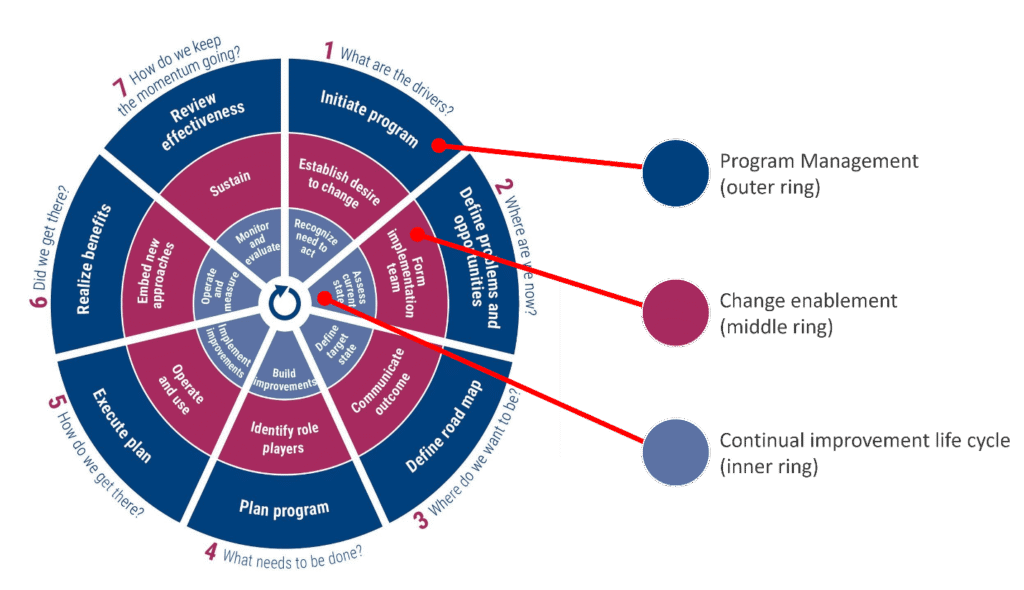
Created by ISACA, COBIT 2019 is a globally recognized framework for the governance and management of enterprise information and technology (I&T).
Core Functions
- EDM: Evaluate, Direct, and Monitor (Governance domain)
- APO: Align, Plan, and Organize (Management domain)
Advantages
- Strategic Alignment: Fills the gap between IT technical issues and broader business goals.
- Customizable: To tailor governance to specific organizational needs, uses “design factors” (size, strategy, risk profile).
Limitations
- High Complexity: Can be dense, bureaucratic, and overwhelming for smaller teams or agile startups.
- Resource-Heavy: For full implementation, it demands significant time, specialized expertise, and cross-department alignment.
Best for
Large-scale enterprises: Complicated organizations seeking an overarching governance structure to unify disparate IT, security, and risk teams.
5. HITRUST CSF
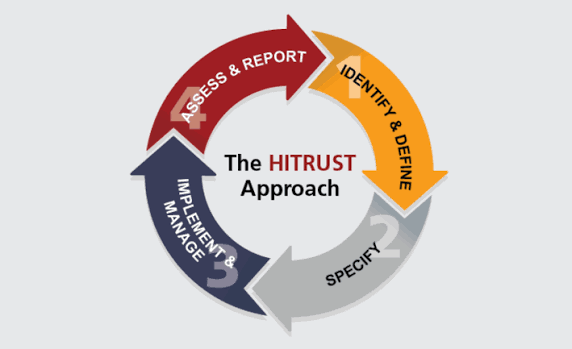
Developed by HITRUST Alliance, the HITRUST CSF (Common Security Framework) is a certifiable, risk-based cybersecurity and privacy framework. It unites and harmonizes various global security standards and regulations (including NIST, HIPAA, ISO 27001, PCI DSS, and GDPR) into a single, comprehensive control library.
Core Functions
Prescriptive Guidance: It translates general legal conditions into clear, highly technical requirement statements outlining exactly how to secure systems.
Risk-Based Scalability: Based on an organization’s size, volume, records, geographic reach, and systemic risk profile, it scales implementation strictness dynamically.
Advantages
- Audit Efficiency: By mapping single tests to multiple compliance benchmarks, it reduces redundant assessments and audit fatigue.
- Commercial Differentiator: Carrying intense market weight, HITRUST certification serves as gold-standard proof of security that helps win competitive B2B vendor bids.
- Limitations
- Costly and resource drain: Being a costly framework, smaller enterprises can find it financially expensive when licensing the software, hiring internal teams, and retaining an authorized third-party auditor.
- Long Implementation Timelines: Depending on organizational readiness, it typically takes 3 to 12 months and over 200 hours of labour to achieve initial validation.
Best For
Business Associates & healthcare vendors: Companies providing cloud infrastructure, software, or billing solutions to hospital networks or insurers.
Stay safe, stay protected
With their unique capabilities and features, all the above frameworks are competent players in your data protection endeavour. They are strategic building blocks that enable organizations become more competitive, resilient, and trustworthy in an era of increased cyber accountability. By evaluating your unique customer requirements, industry regulations, and business goals, you can choose an appropriate framework and build a security posture that actually protects the business and helps it grow.
Also Read :- How Does the Best VPN for Privacy Protect Your Online Data