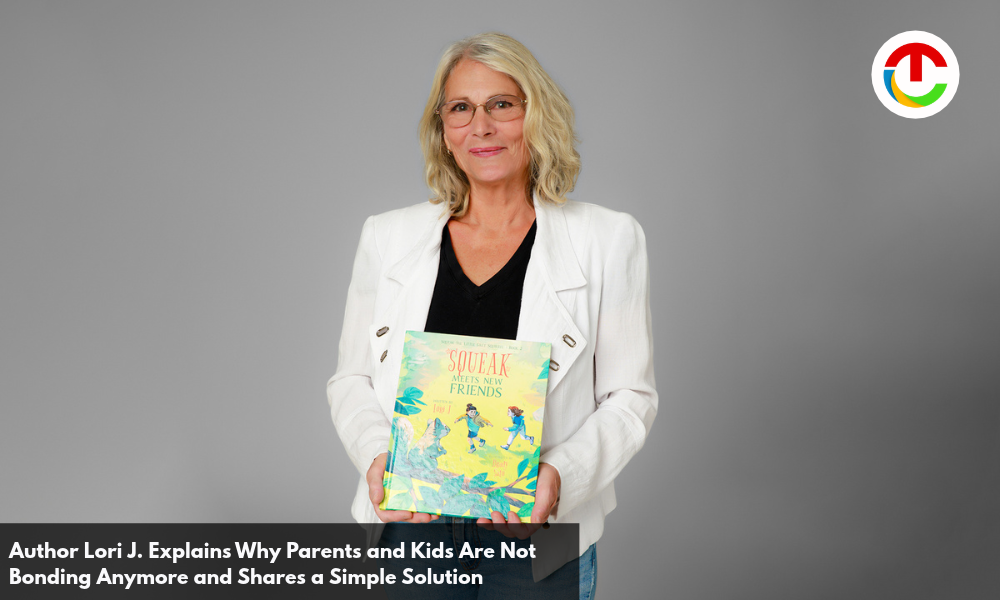
Image credit: Author Lori J.
Author Lori J., a retired early childhood educator, has shared a mutual complaint from parents and caregivers: they can no longer form a meaningful connection with children.
She reveals the many factors at play.
The major factor many parents shared is how parenting has become a long list of demands. Work, household responsibilities, school schedules, screens, activities, errands, and everyday pressures make uninterrupted family time very difficult to enjoy.
Moreover, children and caregivers can be physically close yet have few opportunities for meaningful interaction. A child may spend hours in the same room as a parent without a sustained conversation, shared experience, or the undivided attention that makes them feel seen. Digital entertainment is another issue here; children are constantly overstimulated and require different forms of engagement every few minutes.
There is also a developmental factor to consider. Young children communicate differently from adults. Toddlers don’t always have the vocabulary to explain what they are thinking or feeling.
In such circumstances, parents or caregivers don’t need to plan elaborate activities or expensive outings. Author Lori J. reiterates that one of the easiest ways to strengthen the parent-child relationship is something already found in many homes: a book. Bonding time can begin with sitting down together and reading a story.
Shared Reading Is a Natural Bonding Opportunity
Author Lori J. approaches early childhood from decades of experience working with young children. Her perspective (“‘Terrific Twos,’ not ‘Terrible Twos!’”) about toddlerhood is to cherish the age when curiosity, imagination, language, and emotional awareness are developing rapidly.
During this time, especially, the parent-child connection can blossom. Bonding does not necessarily require hours of free time. A short period of shared reading time becomes meaningful when the child knows that the caregiver is present and interested.
Reading together combines several forms of interaction. The caregiver and child sit together, look at the same pages, listen to the same story, and respond to what is happening.
A child can point at a picture and ask a question. A caregiver can pause to explain a word, laugh at a character, or ask what the child thinks will happen next. The conversation can be incredibly helpful to development when the discussion moves from the story to something the child has experienced in everyday life.
Author Lori J. recommends making story time a regular ritual, even if the available time is only fifteen or twenty minutes.
Bonding through books does not belong exclusively to parents. Grandparents, older siblings, babysitters, teachers, childcare providers, and other caregivers can use shared reading to build relationships with young children.
A small group of children can also read together, creating opportunities to listen, cooperate, discuss characters, and respond to one another.
Benefits of Bonded Reading Time
Shared reading supports many areas of early childhood development, such as:
1. Language development:
Hearing stories read aloud exposes young children to vocabulary, sentence patterns, sounds, and expressions they dont usually encounter in everyday conversation.
2. Cognitive development:
Stories encourage children to remember details, make connections, anticipate what might happen, and think about cause and effect.
3. Emotional learning:
Characters introduce situations involving friendship, fear, kindness, conflict, curiosity, and helping others. These situations give children language for discussing feelings.
4. Imagination:
Illustrated stories invite children to picture places, characters, and events beyond their immediate surroundings.
And of course, reading creates a repeated opportunity for connection. The developmental benefits are important, but the relationship being built around the book is invaluable.
“Every child deserves stories that make them feel brave, curious, and loved. That’s what I hope to give with every book I write,” says Author Lori J.
Author Lori J.’s Squeak Books Turn Story Time Into Connection
Author Lori J.’s beloved Squeak series can be a natural starting point for parents and caregivers.
Squeak, The Little Grey Squirrel is the first book. It introduces young readers to Squeak’s world and themes of curiosity, bravery, and discovery. The second book, Squeak Meets New Friends, introduces children to compassion through a baby squirrel in need of help. Squeak’s Colouring Book further gives children an opportunity to continue engaging with the characters through creative activity.
The books are not just stories. They are conversation starters. After reading, an adult might ask what the child noticed, how a character felt, or what the child would have done in the same situation.
Making Connection Part of Everyday Life
Author Lori J.’s ideas establish how a major problem can be effectively solved in fifteen to twenty minutes a day. Many parents and caregivers feel like they can no longer bond with the kids. This is why a shared reading session can become a daily point of connection. A caregiver can sit beside the child, read slowly, ask a few questions, and allow the child to respond. Over time, this can become familiar moments that children anticipate.
For Author Lori J., children’s stories are therefore more than entertainment. They give adults and children a shared world to enter together, even on the busiest days.
Connect with Author Lori J. and explore more about her children’s books and resources for parents and caregivers.
Also Read :- Entrepreneur and Speaker Uri Poliavich: International Conferences and Public Speaking