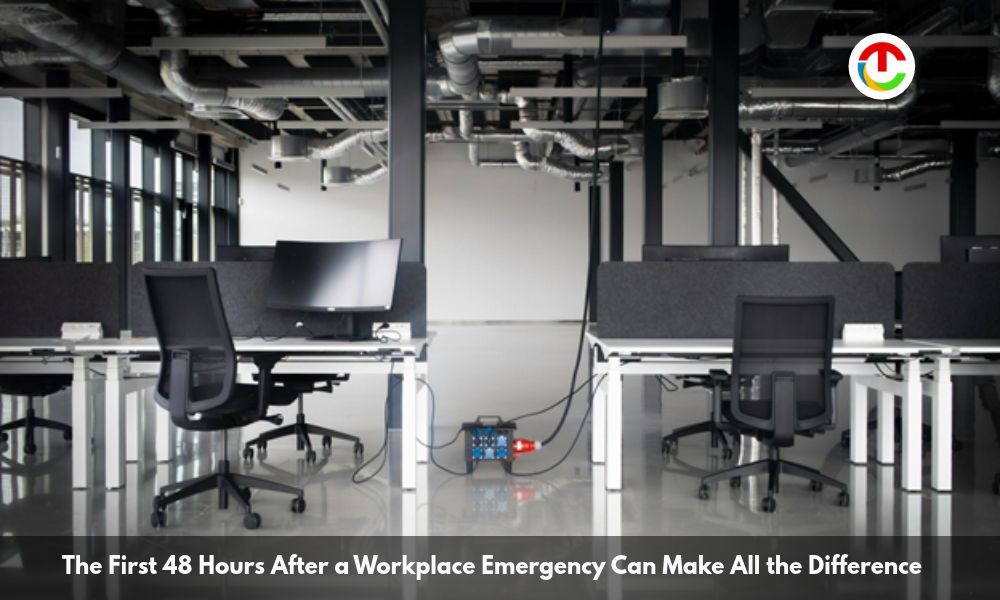
Photo by Fer Troulik on Unsplash
Workplace Emergency can disrupt business operations with little warning. Flooding, equipment failures, fires, and unexpected structural damage may leave owners facing difficult decisions while employees and customers wait for information. The way a company responds during the first two days can strongly influence the extent of disruption and the recovery process.
Although every emergency requires a different response, several priorities remain consistent. Protecting people, assessing damage, securing essential records, and arranging professional assistance are fundamental steps towards restoring normal operations.
The first 48 hours are particularly important because certain problems can worsen when left unattended. Water damage may spread into surrounding materials, damaged equipment can create additional hazards, and communication delays may complicate business relationships. Establishing a practical response plan allows organisations to manage these challenges more effectively while preparing for a safe return to work.
Assess Property Damage Before Beginning Cleanup
Once emergency services have addressed immediate dangers and the premises are declared safe to enter, business owners can begin assessing visible damage. This initial inspection helps determine which areas require professional attention and which operations may be temporarily affected.
Commercial properties often contain different surfaces, machinery, and storage areas requiring specialised cleaning. Outdoor concrete, loading bays, and service areas may need attention following incidents involving dirt, debris, or other suitable removable residues.
Businesses planning property restoration can explore equipment and services from https://hotsyhouston.com/, a provider of industrial pressure washers, commercial cleaning solutions, equipment rentals, and technical support. Its specialised cleaning equipment can help with appropriate exterior and industrial surface-cleaning tasks once hazardous conditions have been resolved.
Photographing damage before cleanup is another important step. Detailed records can support insurance discussions, repair estimates, and internal evaluations.
Owners should avoid entering unstable structures or operating potentially damaged electrical equipment until qualified professionals confirm that doing so is safe.
Respond Quickly When Water Damage Occurs
Water intrusion is among the most disruptive problems affecting commercial buildings. Burst pipes, leaking roofs, storms, and plumbing failures can damage flooring, furniture, electrical systems, and stored inventory.
Prompt assessment is important because moisture can penetrate building materials and create conditions that encourage microbial growth. However, the required restoration process depends on the source of the water, contamination levels, and affected materials.
Businesses researching recovery timelines can consult SweepScrub, which provides guidance on how long water damage restoration may take. Understanding the different stages of extraction, drying, cleaning, and repairs can help owners establish more realistic expectations for reopening.
Professional restoration teams may use water extraction equipment, air movers, dehumidifiers, and moisture meters to assess and manage affected areas.
Although the first 48 hours are important for initiating recovery, complete restoration may require considerably longer. Prioritising appropriate professional intervention helps reduce additional damage and supports safer recovery decisions.
Protect Employees and Communicate Clearly
Employee safety should remain the primary consideration throughout any workplace emergency. Before focusing on equipment or financial losses, managers must account for staff members and establish whether anyone requires medical attention or additional assistance.
Clear communication becomes particularly important when employees cannot return to their normal workplace. Managers should explain which areas remain inaccessible, whether alternative working arrangements are available, and when further updates can be expected.
A designated communication channel can reduce confusion. Email, workplace messaging systems, or direct telephone contact allow organisations to share consistent information.
Employees should also know whom to contact about personal belongings, scheduling concerns, and workplace access.
Providing accurate updates rather than speculative reopening dates helps maintain confidence during an uncertain period. Effective communication demonstrates that the business is managing the situation responsibly while prioritising the people affected.
Document Losses and Contact Insurance Providers

Photo by Proxyclick Visitor Management System on Unsplash
Financial documentation is another important responsibility during the early stages of recovery. Business owners should record damaged equipment, inventory losses, repair requirements, and operational interruptions as accurately as possible.
Photographs, purchase records, maintenance documents, and inventory reports can help establish the condition and value of affected assets.
Contacting the insurance provider promptly allows owners to understand reporting requirements and determine which expenses may be covered under their policies.
It is also useful to maintain records of emergency spending. Temporary accommodation, equipment rentals, professional inspections, and essential repairs may generate expenses that require later review.
Business interruption insurance, where applicable, may provide protection against certain financial losses arising from covered incidents.
Maintaining organised documentation makes it easier to coordinate recovery costs and evaluate the financial impact of an unexpected closure.
Establish Temporary Plans for Essential Operations
Not every workplace emergency requires a complete suspension of business activity. Depending on the circumstances, certain operations may continue from alternative locations or through modified working arrangements.
Companies should identify which services are most important to customers and determine whether they can be maintained safely.
For office-based organisations, remote working may provide a temporary solution when employees have access to secure systems and necessary equipment. Retailers and service providers may need alternative arrangements for customer inquiries, appointments, or outstanding orders.
Suppliers should receive timely updates when deliveries or payment arrangements are affected. Customers also benefit from clear information about service availability and expected changes.
Prioritising essential activities helps businesses preserve important relationships while allowing recovery work to continue without unnecessary pressure.
Turn the Experience Into Better Workplace Emergency Preparation
Once immediate risks have been addressed, businesses can begin reviewing what the incident revealed about their existing emergency procedures.
Common weaknesses include outdated contact lists, insufficient equipment maintenance, limited data backups, and unclear employee responsibilities. Identifying these issues creates opportunities to improve future preparedness.
An updated emergency plan should establish evacuation procedures, communication responsibilities, essential supplier contacts, and arrangements for protecting important information.
Regular inspections of plumbing, electrical systems, drainage, and building infrastructure can also help identify maintenance problems before they develop into larger incidents.
Staff training deserves attention because employees need to understand how to respond when unexpected situations occur.
Ultimately, the first 48 hours after a workplace emergency are about making informed decisions under pressure. Prioritising safety, arranging appropriate restoration services, documenting losses, and maintaining communication can help businesses regain control of difficult circumstances.
A well-organised response cannot eliminate every consequence of an emergency, but it can reduce avoidable complications and establish a stronger foundation for recovery. Businesses that learn from these experiences are better prepared to protect their employees, property, and operations when future challenges arise.
Also Read :- The Role of HR Leaders in Strengthening Workplace Safety and Compliance