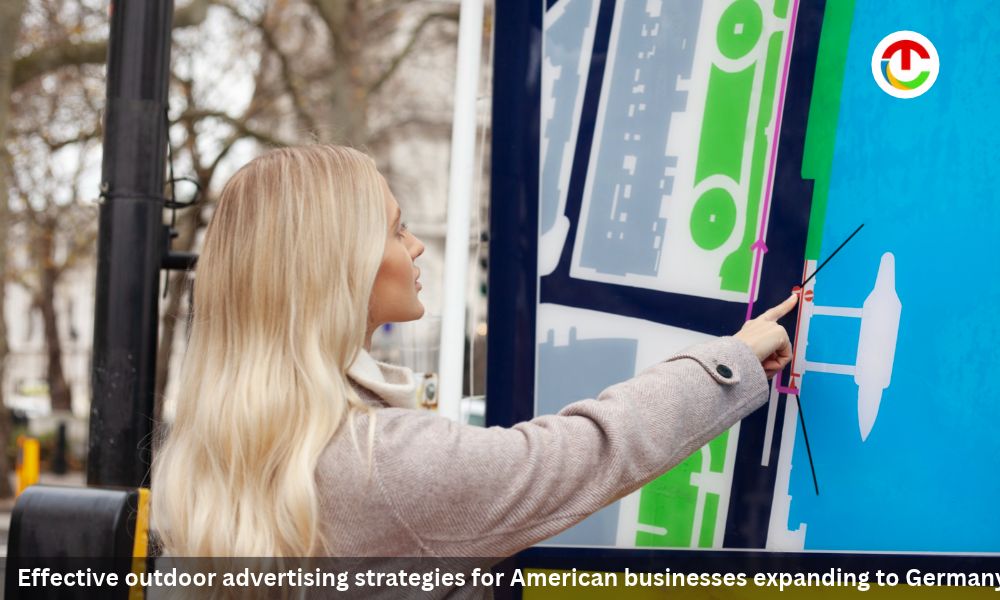
German shoppers have read street advertising for generations, and spending on the channel is still climbing. For a US brand entering the market, billboards and screens put a launch in front of a whole city at once.
Outdoor advertising in Germany rewards brands that time their campaigns well and write for a German audience, and tracking what your ads in Germany return shows which cities deserve more of the budget.
Why outdoor matters in German ad plans?
Out[3] of home took almost a tenth of German advertising in 2025, and digital screens drove the channel’s growth while the wider ad market shrank. That[4] momentum carried into 2026, when outdoor’s share passed 10% for the first half of the year, a record high.
How the German market is structured?
Several features shape any outdoor plan a US brand puts together in Germany:
- A small group of operators holds most of the inventory, much of it under long-term concession contracts with cities.
- up a new advertising structure usually requires approval from the local authority.
- Many municipalities restrict moving images near road traffic, so digital screens cluster in pedestrian zones and stations.
- Germany had more than 286,000 outdoor advertising spaces in 2022, spread across a federal country where Berlin is one large city among several, so national coverage needs at least three to five of the largest cities.
Strategies for US brands expanding into Germany
1. Plan for the trade fair calendar
Germany hosts two-thirds of the world’s leading trade fairs, and for a B2B brand, the routes from the airport to the exhibition grounds in Hanover, Frankfurt, Munich or Cologne carry buyers who flew in to sign deals. Frankfurt Airport is the country’s busiest, and a booking in its arrivals halls catches decision-makers heading to the city’s fairgrounds. Book early, as sites near major venues can be in demand when big events are on.
2. Write the creative in German
Translating a US slogan word for word rarely works on a German poster, so brief a native copywriter and allow extra space, as German copy often runs longer than the English source. A driver has seconds to read a billboard, which leaves room for one message set in large, high-contrast type.
Germany ranked fourth in the world in the EF English Proficiency Index 2025, which can tempt brands to skip translation, but people still read their first language fastest when a poster gets only a glance.
Keep your brand name and product names in English if they are part of the identity, and write the headline and call to action in German. Have a native speaker check the final artwork on a mock-up before it goes to print.
3. Check what you can advertise
Germany banned outdoor tobacco ads in 2022 and has since extended the ban to heated tobacco and e-cigarettes, with exceptions only at specialist retailers. Alcohol and gambling brands should take local legal advice before booking.
Any digital campaign that uses audience data or cameras also falls under the EU’s General Data Protection Regulation.
4 .Use screens for timing
Digital screens let you switch creative for a football match or a cold snap without reprinting anything. Christmas markets and Oktoberfest give seasonal hooks, and rotating content to match them keeps a long campaign fresh while your brand identity stays fixed. Prepare the seasonal versions up front, so each switch is a scheduling job and needs no new approvals.
5 : Track response from day one
Give each design its own QR code or discount code and point it to a German-language landing page. Some media owners can share footfall data for the streets near your sites, which gives you a second read on response. For a larger campaign, a brand survey before and after the flight shows whether awareness moved in the booked cities.
Conclusion Outdoor Advertising in Germany
Start with one or two cities and a single season, measure what moves, then widen the map. A Frankfurt or Munich test shows how German buyers respond to your message before the national budget is committed, and the results give your regional team a stronger case for scaling.
Keep the creative consistent as the campaign grows, so new cities see the same brand the test cities did.
Also Read :- GMB Local SEO: How to Audit Your Google Business Profile Like a System
- Source here: https://statista.com/statistics/384003/out-of-home-media-revenue-germany
- Sources here:https://auma.de/en/exhibit/exhibit-in-germany
- Source here: https://www.fraport.com/en/newsroom/press-releases/2026/traffic-figures/fraport-traffic-figures-2025.html
- Source here: https://www.ef.com/assetscdn/WIBIwq6RdJvcD9bc8RMd/cefcom-epi-site/fact-sheets/2025/ef-epi-fact-sheet-germany-english.pdf
- Source here: https://www.iamexpat.de/expat-info/german-expat-news/tobacco-advertising-almost-completely-disappear-germany
- Source here: https://www.hunton.com/privacy-and-cybersecurity-law-blog/2019/07/26/edpb-adopts-guidelines-on-data-processing-through-video-devices/
- Source here: https://invidis.com/news/2026/01/germany-dooh-market-surges-over-25-in-2025/
- Source here: https://invidis.com/news/2026/07/dooh-in-dach-german-ooh-tops-10-percent-again/
- Source here: https://verwaltung.bund.de/leistungsverzeichnis/EN/leistung/99108012005005/herausgeber/NI-8664259/region/030000000000