Modern architecture today is increasingly being defined by the systems, methodologies, and strategic thinking that shape how spaces are conceived and executed. As industries evolve through data, technology, and organizational intelligence, leading firms are reimagining architecture as a structured process driven by analysis, efficiency, and informed decision-making.
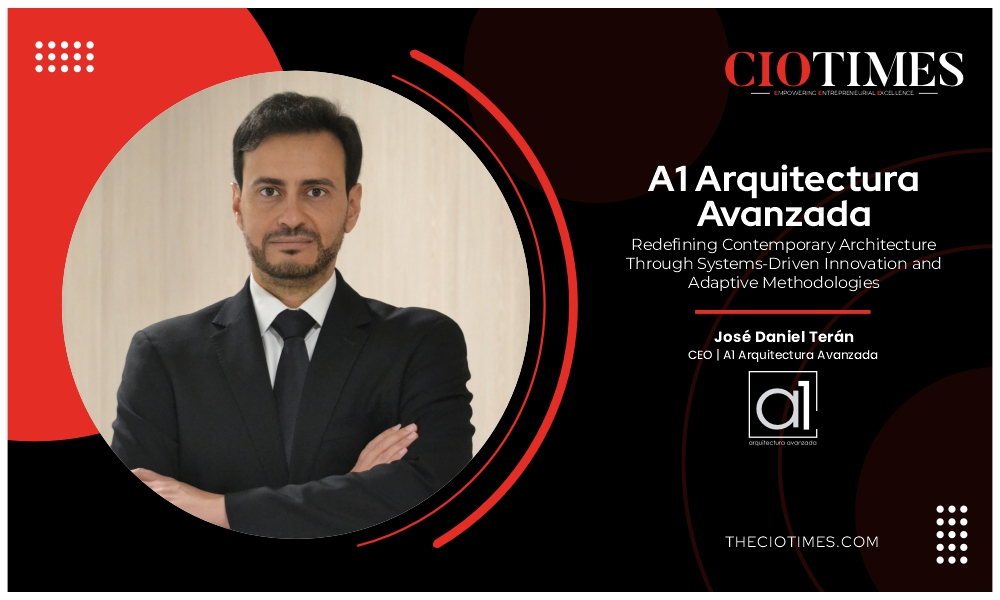
In this ecosystem, A1 Arquitectura Avanzada stands apart through its approach to advanced architecture. The firm’s research-oriented philosophy was shaped in part by founder José Daniel Terán’s postgraduate studies in Advanced Architecture in Barcelona, where systems thinking and advanced design methodologies became the foundation of A1’s approach. It is centered on the deployment of information, process optimization, and scalable methodologies. Rather than pursuing architecture as a purely formal outcome, the firm focuses on creating adaptable systems that strengthen both architectural practice and organizational performance in an increasingly complex built environment.
Structured Intelligence
A defining aspect of the company is its philosophy of ‘advanced architecture’ as a system-driven discipline rather than a stylistic outcome. For the firm, advanced architecture is not centered on futuristic forms or a predetermined aesthetic language, but on the development of systems that enable better understanding of information and more coherent decision-making.
Operating through a Bottom Up methodology, A1 Arquitectura Avanzada structures information by analysing variables such as climate, orientation, topography, family dynamics, materiality, budget, sustainability, and operational efficiency before any formal outcome is considered. The organization parameterizes these relationships to guide the design process, positioning the architect as a catalyst that interprets and structures information rather than imposing design intentions. This same methodology also shapes the company internally, influencing workflows, team organization, process optimization, and strategic decision-making across the firm.
Adaptive Systems
A strong emphasis on parameterization and structured processes defines how the organization approaches evolving project conditions and incomplete inputs. The organization views architecture as a continuously emerging process where information shifts throughout every stage of development, requiring systems that remain adaptable and responsive.
For A1 Arquitectura Avanzada, parameterization serves as a methodology for organizing complexity and understanding how multiple variables influence one another, rather than as a tool for automation. Every project is approached as an ongoing research process, analysing relationships between environmental conditions, technical requirements, budget, user experience, and spatial quality. Over the years, this methodology has also been validated through several internationally award-winning built projects, demonstrating its effectiveness beyond research and into real-world architectural practice. As new information emerges, the system evolves alongside it. This adaptability allows the firm to maintain methodological coherence while remaining flexible as clients, contexts, and project conditions continue to change over time.
Systems Through Uncertainty
When projects require decisions under uncertainty, the organization balances structured methodologies with human judgment. The organization views methodologies as tools that help organize information, while recognizing that architecture still depends on experience, intuition, and observation. Structured systems are used to reduce uncertainty and support clearer decision-making rather than replace human interpretation.
The organization continuously evaluates relationships between variables to understand how each decision affects the project as a whole. While methodology provides structure, adaptability comes through critical thinking and professional experience. This balance between systems and human interpretation is fundamental to the process.
Addressing Customized Needs
When translating client needs into structured frameworks, the organization considers human, cultural, and experiential factors to be central to its methodology. The organization places significant emphasis on understanding how people live, how families function, their daily routines, and the ways they emotionally experience space. These dynamics become part of the information analysed throughout the process.
Rather than imposing predefined ways of living, the organization views its role as organizing information and guiding more informed decisions. The firm approaches the architect as a catalyst that connects environmental, technical, emotional, and functional aspects into a coherent system. For the organization, personalization itself represents a form of luxury, enabling projects that are more meaningful, efficient, and aligned with the client’s real needs.
Integrating Several Variants
One of the biggest limitations of traditional architecture is that the majority of the decisions are made intuitively and independently from each other. Often, design, construction, technical coordination, and operational efficiency are disconnected processes. This generates inconsistencies, delays, unnecessary costs, and inefficient solutions.
The team tries to integrate all such components from the beginning. Better decision-making is initiated throughout the process by organizing information early and understanding relationships between systems.
It also questions the idea of the architect as someone who imposes solutions. According to the team, architecture should emerge from understanding context, users, and relationships rather than from ego or formal intention.
Deployed Methodologies
In bringing together multiple disciplines within a clear and workable process, the organization focuses on structured coordination. The organization recognizes that complexity exists naturally within architecture, but believes that when information is properly structured, processes become significantly clearer and more efficient.
The A1 Arquitectura Avanzada Team works with specialized teams and interdisciplinary collaboration from the early stages of development, all operating within a shared methodology. Rather than fragmenting workflows, the firm integrates information into coordinated systems that maintain coherence across design, technical development, sustainability strategies, and construction processes. The organization’s objective is not to make architecture more complex, but to create processes that are more efficient, understandable, and strategically aligned.
Systemic Adaptability
Working within Ecuador presents unique environmental, geographical, and cultural conditions that strongly shape the systems and processes developed by the team. The organization views this complexity as a catalyst for creating adaptive methodologies capable of responding to diverse realities and evolving contextual conditions.
Climate, topography, local materials, and social dynamics play a central role in the firm’s approach. Rather than applying predefined solutions, the team develops projects directly from contextual information and site-specific conditions. At the same time, the organization recognizes that many global architectural challenges involve sustainability, adaptability, efficiency, and responsible resource management. Working within Ecuador has enabled the firm to develop systems that naturally respond to these broader concerns, allowing its projects to remain locally grounded while maintaining international relevance.
Practical Execution
As projects move from structured systems into execution, the organization focuses on keeping processes practical, adaptable, and grounded in real-world conditions. For the organization, execution is where architecture becomes tangible, making constant coordination between design, technical development, and construction essential throughout the process.
It approaches methodology as a tool for organizing complexity rather than adding to it. The firm recognizes that unexpected situations are inevitable during construction, which is why flexibility remains central to its workflow. By establishing clear structures and organized information from the beginning, the organization is able to respond efficiently while maintaining coherence across every stage of delivery. Its goal is to ensure that projects remain buildable, efficient, and aligned with their original intentions.
After some professional and formal questions, we asked a set of casual-toned questions. The fireside conversation was as follows:
1. What book are you reading currently?
“Natures” is a research book that compiles critical thinking on the inclusion of systems from nature to apply them in architecture at different levels and from diverse perspectives.
2. One word that best describes your personality:
Curious.
3. What’s the most important lesson you’ve learned?
Be a good person. Money, fame, recognition, awards, and success don’t matter. If you are not able to consider yourself a good person, nothing has value, and you’ve failed in life.
To consider yourself as such, you should value, accept, respect, and understand the people around you.
4. What’s the best professional advice you’ve received?
I was asked one day why I didn’t try applying my knowledge of advanced architectural principles to a traditional business structure instead of a project. From then on, everything changed.
What is your favorite quote?
Actually, I love these two quotes; I intend to keep them in my mind when I approach every project.
“Study nature, love nature, stay close to nature. It will never fail you,” Frank Lloyd Wright.
“Nothing is invented, for it’s written in nature first. Originality consists of returning to the origin.” Antoni Gaudí.
Also Read :- CIO Times Magazine for More information