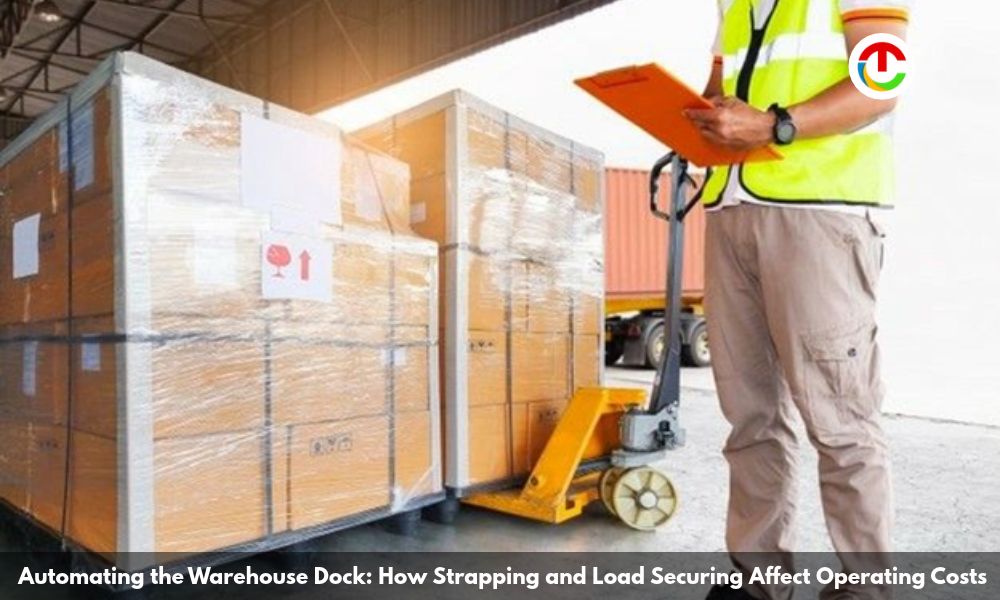
The outbound Warehouse Dock is where a warehouse either protects the value it has built up or quietly gives it away. Loose cartons and inconsistent strapping can lead to damaged freight, claims and rework. These costs rarely appear under one budget line, so dispatch is often overlooked in automation plans.
For operations and technology leaders, the question is where better securing processes could reduce avoidable work, and whether the savings justify change.
Dispatch Warehouse Dock Costs: Why They Stay Hidden
Dock costs are scattered across departments. Labour appears in dispatch hours, damage in customer service records and rework in the time spent correcting packages before loading. Without a shared view, dispatch costs are easily underestimated.
Picking and storage automation often receive more attention. The last few minutes before freight leaves may receive less scrutiny, even though they influence handling efficiency and the condition in which goods arrive.
Start by following ten representative packs or pallets through dispatch. Record handling steps, time spent securing each one and any corrections needed. This can reveal recurring delays before proposing new technology.
Manual Strapping: Where Labour, Damage and Inconsistency Creep In
Manual strapping can work well for occasional or unusually shaped packs. At higher volumes, results depend more on operator technique and workload. Inconsistent tension can crush packaging or leave strapped items vulnerable to movement during handling. Repeating the task throughout a shift can also add physical fatigue.
It is important to separate packaging from transport restraint. Strapping cartons or bundles helps keep items together, while securing a complete load to a vehicle requires a suitable restraint method. A guidance on unitising loads makes that distinction clear. The principle is useful, although specific transport requirements vary by jurisdiction.
The operational case rests on repeatability: fewer adjustments, fewer damaged packs and fewer corrections before dispatch.
Automation Options: Manual, Semi-Automatic and Fully Automatic Compared
Manual tools have low initial costs and suit irregular loads or limited throughput, but require an operator to apply and tension each strap.
Semi-automatic machines typically tension and seal the strap while an operator positions the pack. They can reduce effort and improve consistency without a fully integrated line. Fully automatic systems can secure packs as they move through a conveyor-based process, with less direct handling at the strapping station. They require more space, planning and capital.
For businesses moving from hand tools to semi-automatic or fully automatic strapping machines, it helps to compare throughput ratings, strap types and service support from suppliers before committing.
The distinction between pack types matters too. Equipment built for cartons or bundles is not automatically suitable for unitising an entire pallet. Start with actual dimensions, weight and stability, not promises of faster cycles.
Choosing Equipment: Throughput, Pack Type, Maintenance and Integration
Write down peak packs per hour, average volume, package dimensions and the frequency of changeovers. Even a fast machine can become a bottleneck if it needs frequent adjustments. Ask suppliers to demonstrate equipment using representative products, including awkward or fragile packs.
Choose strap material and tension settings for the load. Polypropylene may suit many cartons, while heavier or less stable applications may require different materials or securing methods. If freight travels by road, confirm vehicle restraint responsibilities separately with the carrier.
Look beyond purchase price. Assess consumables, servicing, spare parts, operator training and the cost of downtime. A related article on forklift selection likewise emphasises service access and total operating cost.
Check which data the machine can export. Cycle counts and fault codes may feed into production monitoring or Warehouse Dock systems, but integration capability varies. Do not assume direct compatibility with a warehouse management system.
Measuring Payback: Metrics to Track Before and After an Upgrade
Collect a baseline over several weeks, including busy and quieter periods. Track:
- Labour minutes per pack or pallet
- Damage claims linked to outbound packaging
- Rework and re-strapping rates
- Strap and other consumable use
- Equipment stoppages and maintenance costs
Connected equipment may capture cycles and faults automatically. Labour time, claims and rework usually need separate records. Compare similar pack types and volumes so that workload shifts do not distort results.
A simple payback estimate divides total installed cost by expected annual net savings. Include installation and training in the cost, then subtract ongoing maintenance and operating expenses from any savings. Time released is valuable capacity, but becomes a cash saving only if staffing costs or paid hours fall.
Rolling Out Change: A Phased Approach to the Warehouse Dock
Start with one lane or product family where securing takes substantial time or rework is common. Test the equipment on real orders, across busy and quiet shifts, and record what changes. Involve dock staff to identify handling problems and interruptions that reports miss.
If results justify expansion, add adjacent lanes gradually and update procedures and training. Keep a workable fallback method until the new process is stable. The aim is measurable improvement without creating a new dispatch bottleneck.
Taking the Warehouse Dock Seriously
The dispatch Warehouse Dock deserves the same evidence-led investment decisions as picking and storage. Better strapping and load securing can improve consistency, but the business case depends on real freight, real labour costs and measurable outcomes. Test first, calculate the return and let the results determine how far to automate.
Also Read :- Why Choosing the Right Forklift Brand Matters for Warehouse Flow