CIOs are responsible for more than uptime, cloud migration, infrastructure performance, and cybersecurity tooling. They are also responsible for what happens when hardware leaves the organization. That is why enterprise ITAD should be treated as a governance function, not an afterthought at the end of a hardware refresh.
IT asset disposition determines how retired servers, storage systems, switches, GPUs, drives, and related data center equipment are audited, removed, sanitized, remarketed, reused, or recycled. In an enterprise or data center environment, it becomes a control point for security, compliance, continuity, sustainability, and value recovery.
The CIO’s question is simple: can the organization prove what happened to every retired asset? If the answer is unclear, the risk is already larger than it needs to be.
ITAD Is a Risk-Control Function, Not a Disposal Task
Retired IT equipment can still carry business risk. A decommissioned server may contain customer information, financial records, health data, credentials, proprietary code, configuration files, logs, or backups. A storage array may contain data from several business units. A switch, firewall, or management controller may retain configuration details that reveal network structure.
The risk does not disappear when hardware is powered down.
That is why enterprise IT asset disposition should be planned with the same discipline used for cybersecurity, procurement, legal review, and vendor risk management. Assets need to be identified, tracked, handled, and documented from removal to final disposition. For CIOs, the goal is to close the asset lifecycle with evidence.
That evidence should include asset inventories, serial numbers, chain-of-custody records, sanitization or destruction certificates, transport records, recycling certificates where applicable, and disposition reports that internal teams can retrieve during an audit. Without that record, the organization is relying on trust. That is not a control.
Data Sanitization Standards Matter
Data-bearing media should be handled through a documented sanitization process. The current NIST Guidelines for Media Sanitization give organizations a recognized framework for making sanitization decisions based on media type, confidentiality level, and intended reuse or disposal.
For CIOs, the important point is not whether someone says a drive was “wiped.” Was the correct sanitization method selected for the media and risk level? Was the process verified? Was the result documented? Can the certificate be tied back to the correct asset, drive, or serial number?
NIST distinguishes between clear, purge, and destroy. That distinction matters because some assets may be suitable for verified erasure and reuse, while others may require physical destruction because of risk profile, media condition, client requirements, or regulatory expectations.
Chain of Custody Turns Process Into Proof
Chain of custody is where ITAD becomes defensible. A useful custody trail should show where equipment was collected, who handled it, when it moved, how it was transported, where it was received, and what happened after intake.
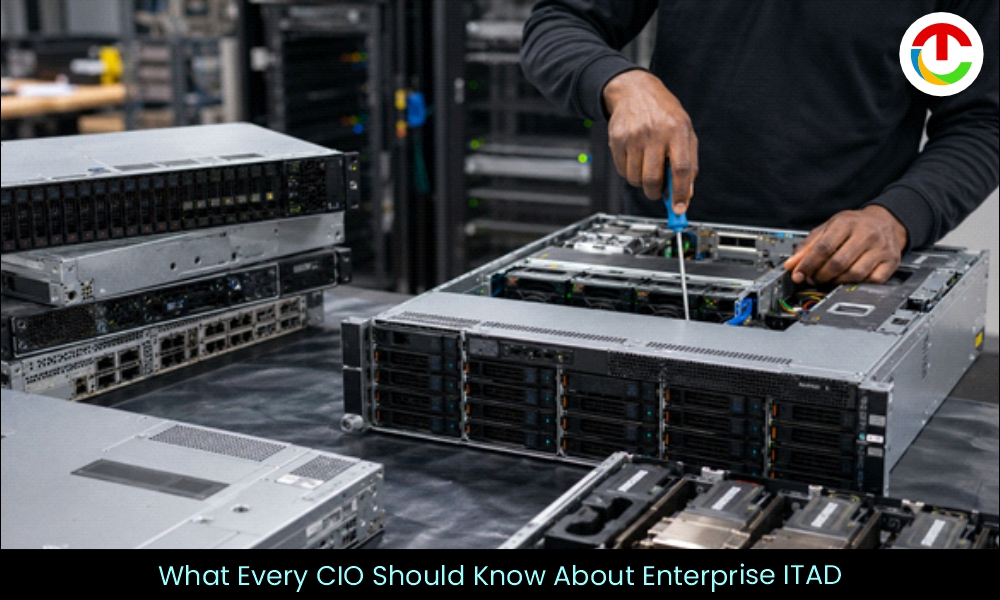
This is especially important during data center asset disposition projects. Decommissioning a rack, cage, server room, or full data hall involves more than removing equipment. Teams may handle servers, storage arrays, networking devices, drives, power supplies, cables, AI servers, and GPUs. Those assets need to be mapped, labeled, packed, transported, reconciled, and processed without losing traceability.
If an asset appears on the pickup manifest but not on the intake report, the exception needs to be identified quickly. If a drive is removed from a server, the organization should still be able to connect that drive to its sanitization or destruction record. Model numbers, part numbers, asset tags, serial numbers, condition notes, and pass-or-fail outcomes create useful records for IT, finance, compliance, and audit teams.
Value Recovery Should Never Override Security
Retired enterprise hardware can hold resale value. Servers, storage systems, network switches, components, and GPUs may still be useful in secondary markets, especially when they are tested, configured, and prepared through a controlled refurbishment process.
That value should be recovered where possible, but not at the expense of security or documentation.
A strong enterprise ITAD process separates assets by condition, sensitivity, marketability, and reuse potential. Reusable hardware can be tested, cleaned, inspected, configured, and remarketed. Non-reusable material should move into responsible recycling streams with proper reporting.
For CIOs, the right outcome is not simply the highest resale number. The better outcome is a controlled balance of data protection, auditability, recovery value, speed, and environmental responsibility.
Sustainability Is Now Part of IT Leadership
ITAD affects sustainability performance. Hardware refresh cycles, cloud migrations, AI infrastructure growth, and data center consolidation projects can create large volumes of retired equipment. If that equipment is poorly managed, it becomes part of a growing global e-waste problem.
Reuters reported on UN findings that the world generated 62 million metric tons of e-waste in 2022, with annual e-waste projected to reach 82 million metric tons by 2030. That makes responsible enterprise e-waste management and IT hardware reuse more than a facilities concern. It is now part of IT governance.
CIOs should prioritize reuse before recycling when data security and equipment condition allow it. Reuse extends the productive life of hardware and can preserve more value than immediate material recovery. Recycling remains necessary for damaged, obsolete, or non-reusable assets, but it should happen through documented channels.
CIOs Should Bring ITAD Into Project Planning Early
One common ITAD mistake is timing. Too many organizations wait until hardware is already removed, stacked, or blocking space before deciding how it should be processed. That creates pressure, and pressure leads to shortcuts.
ITAD planning should begin before the refresh, migration, or consolidation project starts. CIOs should define the asset scope, data risk profile, internal stakeholders, documentation requirements, logistics plan, sanitization standards, and reporting needs before the first rack is touched.
This makes execution cleaner. Data center teams can coordinate decommissioning windows. Finance can account for potential value recovery. Security and compliance teams can define evidence requirements. Procurement can evaluate the provider before the project is already urgent.
What CIOs Should Require From an ITAD Partner
A CIO does not need to manage every pallet, barcode, or certificate personally. The standard, however, should come from leadership.
At a minimum, an enterprise ITAD partner should support asset auditing, serialized inventory, secure logistics, chain-of-custody reporting, standards-based data erasure, physical destruction options, value recovery, recycling documentation, and final reporting.
For data center environments, the partner should understand the asset classes involved. Servers, storage systems, networking equipment, drives, AI servers, GPUs, and components each require different handling decisions. The provider should explain how assets are received, reconciled, tested, sorted, refurbished, resold, harvested, destroyed, or recycled.
The CIO’s Bottom Line
Enterprise ITAD closes the loop on technology ownership. It turns retired equipment from a loose operational task into a managed lifecycle process with controls, documentation, and measurable outcomes.
For CIOs, the priority is clear: reduce data risk, protect compliance posture, recover value where possible, and prevent retired infrastructure from becoming unmanaged liability. That requires planning, standards, custody records, sanitization evidence, and responsible reuse or recycling.
As infrastructure estates become more complex, ITAD will become harder to ignore. Data center consolidation, AI hardware turnover, storage refreshes, and hybrid infrastructure changes will keep putting pressure on asset lifecycle management.
The organizations that handle Enterprise ITAD strategically will not just dispose of equipment. They will protect the business after the equipment leaves the building.