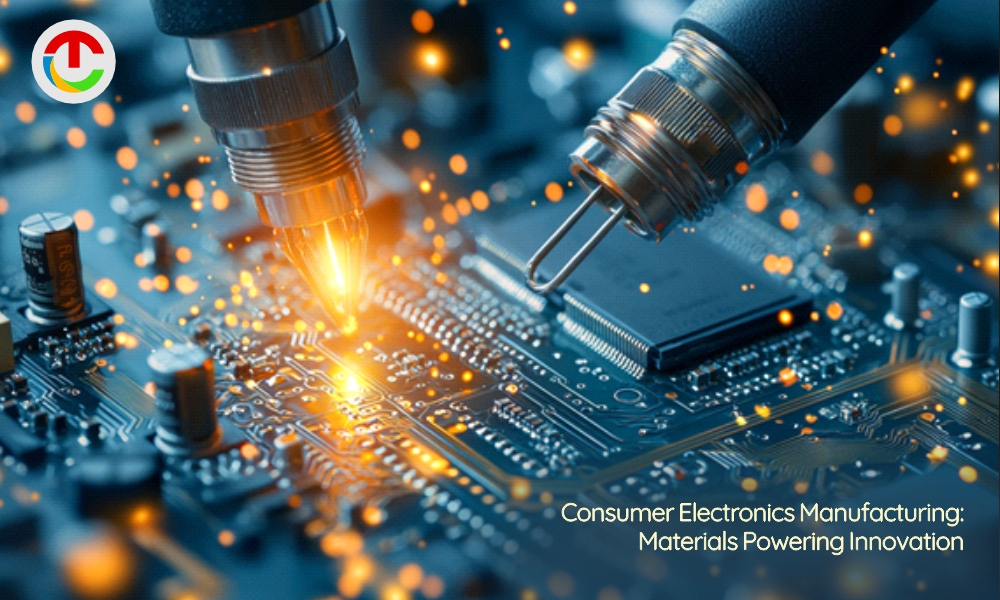
Walk into any modern electronics facility and you will see that performance is no longer just about design. It’s about materials. Daily-use devices, from smartphones to power-hungry laptops and connected home systems, are being sold in far greater numbers than before. Smaller footprints, higher processing speeds, and longer lifecycles all require one thing: materials that can quietly handle stress without compromise.
That’s the reality behind today’s electronics manufacturing industry. Behind the polished finishes and compact assemblies is a layer of engineering decisions that determine whether a product performs reliably—or fails prematurely. For engineers and sourcing teams, especially those working across aerospace, EVs, batteries, and e-mobility, the margin for error is effectively zero.
This is where advanced insulation materials, particularly MICA-based solutions, have carved out a critical role.
Why Materials Matter More Than Ever
The fundamentals of electronics manufacturing haven’t changed—control electricity, manage heat, and maintain structural integrity. What has changed is the intensity. Devices are running hotter, components are packed tighter, and expectations around durability are significantly higher.
Heat, in particular, has become a defining constraint. As processing power increases, so does thermal output. If that heat isn’t properly managed, it affects everything from efficiency to safety. Excessive heat remains one of the leading causes of electronic component degradation.
Materials are the first line of defense. And those should be able to maintain insulation under sustained thermal load, resist breakdown across voltage fluctuations and stay dimensionally stable through repeated heating and cooling cycles.
It’s not a theoretical requirement. It’s a practical one, seen daily in production environments.
MICA in Modern Electronics: A Quiet Workhorse
MICA has been used in electrical systems for decades, but its relevance today is stronger than ever. What makes it stand out isn’t just one property—it’s the combination.
It insulates electricity extremely well. It tolerates high temperatures without degrading. And importantly, it holds its structure even when conditions fluctuate.
That’s why discussions around MICA uses in everyday life include advanced electronics. It’s not just about electronics like appliances or heaters. Today, MICA is embedded in power modules and circuit protection systems, battery insulation layers in portable and EV applications, high-frequency electronics where stability is critical and thermal barriers in compact consumer devices.
A MICA insulation sheet in particular offers a level of reliability that synthetic alternatives often struggle to match at higher temperatures. It continues to perform even when pushed beyond typical operating thresholds.
For engineers, that consistency matters more than anything else.
Managing Heat in Compact Consumer Devices
One of the defining challenges in consumer electronics manufacturing is the balance between size and performance. Consumers want thinner devices, but they also expect faster processors and longer battery life. That combination inevitably leads to higher heat density.
Traditional materials—especially polymer-based insulators—can struggle under extreme conditions. Over time, they may soften, degrade, or lose their insulating properties. MICA behaves differently.
Its natural layered structure acts as a thermal barrier, slowing heat transfer while maintaining electrical isolation. Even under continuous exposure to elevated temperatures, it retains its properties. That’s a key reason it’s used in smartphones and tablets, particularly around battery and processor zones, power adapters where heat buildup is constant, wearable devices that require both insulation and user safety and compact computing systems where airflow is limited.
Electrical Insulation: Stability Under Pressure
Electrical insulation is one of those things that only gets noticed when it fails. In high-density electronics, where components sit millimeters apart, even a minor breakdown can have serious consequences.
Within the electronics manufacturing industry, insulation materials must perform consistently across a wide range of conditions—temperature swings, humidity, and electrical stress included.
MICA stands out here as well. It provides high dielectric strength, reducing the risk of electrical leakage, gives resistance to arcing, which is critical in high-voltage environments and stability over time, even with repeated use.
These characteristics are particularly valuable in systems where reliability is non-negotiable:
- EV power electronics
- Aerospace control systems
- Military-grade communication hardware
- Industrial automation equipment
In these applications, insulation isn’t just about performance—it’s about safety and compliance.
Moving Beyond Standard Materials: Engineered MICA Solutions
As requirements evolve, so do materials. Standard MICA in its natural form is already highly capable, but modern applications often demand additional performance characteristics. That’s where engineered composites come in.
Axim Mica develops advanced MICA materials by integrating with high-performance binders such as ceramics and PTFE (Teflon). The goal isn’t to change what makes MICA effective—it’s to extend its capabilities.
Ceramic-bonded MICA is designed for environments where thermal resistance is pushed to extremes. It maintains strength and insulation even under prolonged exposure to high temperatures, making it suitable for:
- EV battery systems
- Industrial heating elements
- High-temperature electronics
On the other hand, PTFE (Teflon) MICA composites introduce flexibility and chemical resistance. These are useful in applications where materials need to be machined, shaped, or exposed to more dynamic conditions.
What’s consistent across both is performance. These materials are engineered to behave predictably, even when operating conditions are anything but.
Cross-Industry Relevance: From Consumer Tech to Critical Systems
Although the focus here is on consumer electronics manufacturing, the same materials are used in far more demanding environments. That crossover is telling.
In electric vehicles, for example, thermal management is directly tied to safety. Battery systems must be isolated and protected from thermal runaway. MICA insulation is commonly used as a barrier between cells and modules.
In aerospace, materials are exposed to rapid temperature changes and extreme conditions. Reliability isn’t just expected—it’s mandatory.
In industrial systems, equipment runs continuously, often under high loads. Materials must withstand not just heat, but time.
The common thread across all these industries is the need for materials that don’t degrade unexpectedly. MICA fits that requirement consistently.
Reliability Isn’t a Feature—It’s the Baseline
There’s a tendency in some sectors to treat reliability as a differentiator. In reality, for industries like electronics, aerospace, and EVs, it’s simply the baseline expectation.
Materials need to perform the same way on day one as they do months or years later. That requires:
- Controlled manufacturing processes
- Consistent raw material quality
- Thorough thermal and electrical testing
Looking Ahead: Materials and the Next Phase of Electronics
The direction of the electronics manufacturing industry is clear—devices will continue to get smaller, more powerful, and more integrated. At the same time, electrification is expanding across sectors, from mobility to energy systems.
That combination will only increase pressure on materials.
Thermal loads will rise. Electrical demands will grow. And expectations around lifespan and safety will become even stricter.
Materials like MICA, particularly in engineered forms, are well-positioned to meet these challenges. Not because they are new, but because they are proven—and adaptable.
Conclusion
In consumer electronics manufacturing, materials rarely get the spotlight. But they are the reason modern devices work as reliably as they do.
MICA-based materials, with their combination of thermal resistance, electrical insulation, and structural stability, have become an essential part of that equation. Whether in everyday electronics or high-performance systems, they provide a level of consistency that engineers can build around.
Axim Mica’s approach is grounded in that reality—developing materials that are tested, reliable, and engineered for demanding conditions.
Advanced MICA materials engineered for extreme performance. Trusted by aerospace, EV, and electronics leaders worldwide. Precision, insulation, and durability — built into every layer.