James O McKinsey, the famous management consultant, had quoted
, “The key to success in consulting is always going above and beyond what is expected.”
Advisory firms undoubtedly play a vital role in strengthening businesses by refining their operations and guiding smarter decision-making. They bring specialized expertise and an outside perspective that helps identify inefficiencies, streamline processes, and improve overall productivity. By introducing proven strategies and modern tools, these firms enable businesses to adapt quickly to changing markets and customer needs. D. R. McNatty& Associates, Inc, is a name synonymous with the said traits of consulting firms.
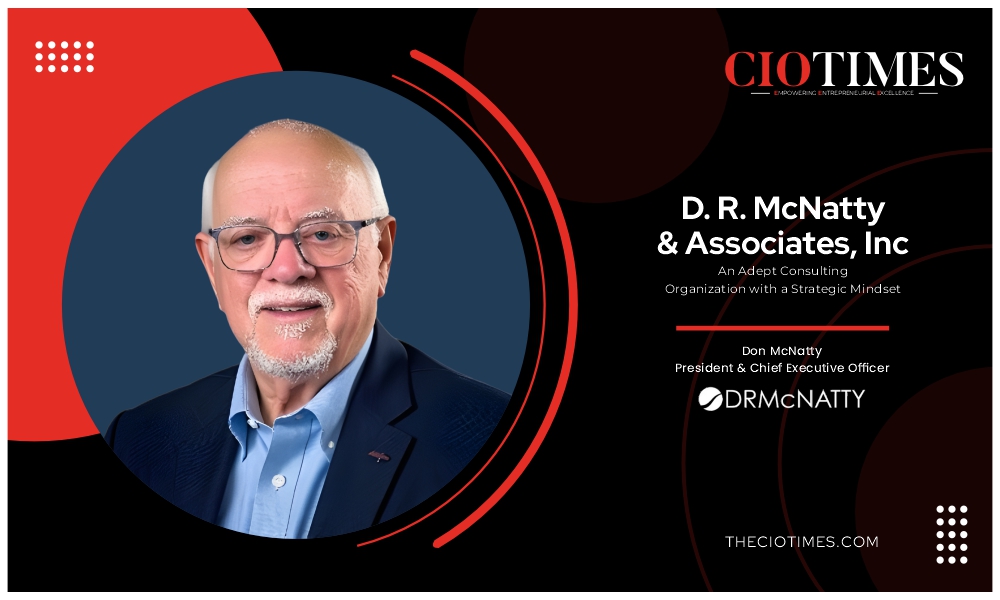
Established in 1989, Don McNatty President & Chief Executive Officer D. R. McNatty& Associates, Inc the organization is a full-service professional solutions firm that offers expertise in program management, project management, and technology. Over 30 years of expertise, it has supported successful capital construction programs, and we’ve built a strong foundation in both project management and technology services. The team works closely with clients to provide practical, reliable support, including dedicated assistance for project management offices, helping organizations run projects more smoothly and effectively from start to finish.
Enduring Relevance
Since 1989, the D. R. McNatty Team has stayed grounded in an industry that never stands still by being thoughtful about how they work and grow. Rather than following the typical model, the organization made a conscious choice early on to keep consultant utilization between 75% and 85% of available hours. The rest of their time is intentionally spent exploring new technologies, keeping up with industry shifts, and shaping ideas that can truly benefit their clients. While many firms focus on maximizing billable hours, the team sees things differently. They understand that constantly delivering on today’s work without stepping back to learn and adapt can slow progress over time.
In a field like project management technology, staying still isn’t really an option. Their consultants are encouraged to stay curious, whether that means trying out a new analytics tool, attending industry events, contributing to Oracle user groups, or testing fresh approaches. This prolonged devotion to learning is a big part of what keeps the DRMcNatty Team relevant. It also helps build genuine trust with their clients. When they bring forward a new idea, it comes from their own experience and belief in its value, not from outside influence. After more than thirty-five years, that sense of trust is something they continue to value and protect.
Evolving Success
Over the years, the D. R. McNatty Team has seen innumerable capital construction programs reach completion, and with that experience, their idea of success has steadily evolved. In the early days, it would step in at the beginning of a project to help clients. This was to help in choosing and implementing a project management information system. It is also ready to move away once everything is done and running.
As years passed, the team recognized that the real value wasn’t in a one-time engagement, but in the relationship itself. They began maintaining ongoing connections with clients through user groups, industry newsletters, technical webinars, and regular conference participation.
Today, their clients call on the DRMcNatty Team throughout the entire project lifecycle. Their definition of success has evolved accordingly. It’s no longer just about getting a system up and running on time and on budget. Success now means that the technology they helped implement is still being used effectively years later, that it has expanded across the organization, and that the client’s teams have built the internal capability to sustain and grow it on their own. Early in their journey, the DRMcNatty team might have considered a project closed when the go-live milestone was hit.
Today, they consider it successful only when they connect with a client two or three years later, and their team is using the platform with confidence, teaching new employees how to use it, and finding new ways to apply it to problems never originally anticipated.
Driven Involvement
The D. R. McNatty Team believes the X-factor is involvement. The direct and genuine involvement of the people who will actually use the tools every day. It brings end users into the design, configuration, and deployment process from the very beginning. When project managers, engineers, and controls professionals help shape the system, they feel ownership over it. They become champions rather than reluctant adopters, and that difference is everything when an entire organization is asked to change how it works.
PMOs that try to implement change in isolation, designing workflows in a conference room without input from the people in the field and the office. They are heading towards failure. By the time the system is built, key decisions have already been made without the input of the people most affected by them. Fixing that after the fact is expensive and demoralizing. And frankly, after more than thirty-five years in this industry, the team is still amazed at how many organizations repeat that mistake. The PMOs that truly move the needle are the ones that stop thinking of themselves as enforcers of process and start acting as enablers of better project delivery. They use data to facilitate conversations, not to assign blame. They invest in training that is practical and scenario-based. And they pilot on a smaller project before rolling out to the entire portfolio, so they can learn and adjust before the stakes are at their highest.
A Project Drift
In large-scale or complex programs, there are early warning signs that come uninvited and unknowingly. For the D. R. McNatty Team, one of the first cues to consider is when work starts happening out of sequence. The tasks often unfold in a different order than originally planned. This usually means the plan is no longer steering execution, and people are making judgment calls in real time without reflecting those changes in the controls framework.
When the schedule shifts from guiding what’s ahead to simply documenting what’s already happened. One of the team’s most dependable tools begins to lose its value. Another sign worth paying attention to is a rise in communication volume, especially when questions and requests for clarification exceed what’s typical for that stage of the project. When that pattern shows up, it often signals that assumptions are starting to crack or that information isn’t moving as clearly as it should. Questions left hanging tend to be early signals that rework may follow.
The D. R. McNatty Team should also watch for how consistently the project management system is being used. If updates start coming in late, data entry becomes uneven, or team members fall back on spreadsheets and email for decisions that belong in the system. It suggests the platform is losing its place in daily work. That points to both a governance concern and a cultural shift, something that’s best addressed early. Even before it settles in and becomes business as usual.
Adoption Drives Value
It is rarely about the tool itself. The team at D. R. McNatty & Associates, Inc., platforms like Oracle Primavera Unifier, Oracle Primavera Cloud (OPC), and P6 have already proven their strength on some of the largest capital programs worldwide. Where things tend to slip is what happens after the system goes live. Once implementation is done, the harder part begins, that is, helping people adapt and actually use it. When a system falls short on value, it is seldom because the software didn’t pass the test. More often, it comes down to the organization not exerting itself enough to prepare its teams for a different way of working.
Construction teams are practical by nature. If a system helps them close RFIs faster, stay on top of cost changes, or communicate more clearly, they will use it. But if it feels like extra admin, slows them down, or adds steps, they will work around it, and over time, it risks becoming shelfware. What stands out is that readiness needs attention before the first configuration workshop, not after go-live. The DRMcNatty Team should reflect on whether there is clear executive backing, whether current processes are ready to be structured, and whether teams are open to new ways of working. If those answers are unclear, even the best technical setup will struggle. The organizations that succeed are the ones that see implementation as the start of the journey, not the finish line.
Grounded Solutions
The D. R. McNatty Team works where technology exists in practical execution. It has an undisturbed focus on making sure systems genuinely support field teams rather than add to their workload. Their strength comes from experience; most consultants come from construction, engineering, and infrastructure backgrounds. They have previously worked in project management, controls, and field roles. Due to it, they have insights beforehand about how work actually happens and shape solutions around that reality.
They know there’s a difference between reading a schedule and being accountable for delivering it, as it shows in the questions they ask. The team constantly scrutinizes whether a field or workflow step adds real value. If it doesn’t help someone make a decision or do their job better, they challenge it. The aim is to revamp the process so that technology removes friction rather than adding it. When a project engineer in the field sees that a new workflow actually saves them time and reduces the back-and-forth on submittals and RFIs, adoption follows naturally. That is the result the team crafts toward from the very first requirements conversation.
Timely Decisiveness
The team often finds that the real issue isn’t a lack of data. It is that the data arrives too late to be productively used. Many organizations rely on financial reports to understand project health, but by the time cost overruns or variances show up, the damage is already done. At that point, teams are reacting, not managing. To shift that, the DRMcNatty Team remains focused on earlier signals such as schedule trends, productivity, resource use, and risks that give teams a chance to act while there’s still time. The aim is to support decisions in the moment, not after the fact.
The real challenge isn’t collecting more data, but making it meaningful. By shaping systems around who needs to decide what, and when, the team helps ensure the right information reaches the right people at the right time, closing the gap between data and action.
Consistent Relations via Multiple Channels
Sustainability is the focus of the team from the very beginning. Each project focuses on identifying and developing internal champions within the client’s organization. These are people who understand the system deeply enough to train others, troubleshoot issues, and evolve the platform as the organization’s needs grow.
The D. R. McNatty Team doesn’t stop at system configuration or simply handing things over. They make sure the knowledge built during implementation actually stays within the organization, even after their team steps back. They stay engaged through user groups, check-ins, and regular outreach, keeping a close sense of what’s working and where teams are struggling.
They also share learning more broadly through webinars, podcasts, and a knowledge base that’s open beyond active clients. These sessions cover real-world challenges, best practices, and platform updates, so even long-completed clients can still pick up something useful. This ongoing connection is intentional. It’s one of the reasons the team relationships often last for years, not just until project closeout.
A Practical Transformation
The D. R. McNatty Team starts by cutting through the noise. With consultants who come directly from the industries they serve, they’re able to look past vendor messaging and offer clear guidance on what actually works and what doesn’t bring tangible results in real projects. That clarity matters when digital transformation comes with real cost and pressure to show results.
Instead of rolling out every feature at once, they focus on what delivers immediate value to users and projects. The belief is simple: don’t just digitize the prevailing workflows, rethink them. Often, organizations prefer old email or paper processes to new systems, which only preserves the same inefficiencies in a different form. The tool goes live, but the work doesn’t really improve.
The team challenges clients to think again about how work flows. Where the operative steps can be simplified, approvals streamlined, and outdated practices need to be removed. Platforms like Oracle Primavera Unifier and Oracle Primavera Cloud offer strong capabilities, but they’re often underused.
When those capabilities are paired with redesigned processes, real value shows up. This alignment is what turns digital investment into measurable impact.
People Drive Risk
The D. R. McNatty Team finds that the biggest risks are rarely technical. They are related to the organization. A common one is losing involvement after funding and kickoff. Executives often drive the initiative early, but step back once implementation begins. Without visible, ongoing support, momentum fades, and teams start to question how important the change really is. That doubt spreads quickly and is difficult to reverse.
Another frequent issue is end users being left out of the design. When the people who use the system daily aren’t involved, workflows end up looking good on paper but don’t match real work. By the time users see the system in training, key decisions are already made, which often leads to frustration instead of adoption.
The team also witnesses organizations’ swift movements in linking finance and project controls before processes are fully defined. The result is a system that seems integrated but produces outputs users don’t fully trust. Once that trust breaks, system usage drops.
Learning in Context
The team focuses on one simple idea: training only works when it feels real to the people using it. Instead of relying on a generic, one-size-fits-all approach, they ground learning in the actual everyday situations end users face. During discovery, they spend time with client teams to gain insights into how work really flows. There are some decisions that come up, where delays take place, and what tends to cause friction. That becomes the backbone of the training itself.
Rather than walking people through features in isolation, the team builds scenarios around real work moments. They craft situations like handling an RFI that affects both cost and schedule, or pulling together a quick budget update before an executive review. It helps users see the system in context, which makes it easier to understand and remember.
They also know that a single training session is never enough on its own. So they reinforce learning over time with short follow-up sessions. They also include milestone-based refreshers, quick reference guides, and ongoing access to webinars and knowledge resources. Internal champions are also supported so they can step in and help teammates when questions come up in real situations.
Information-backed Decisions
The availability of data is abundant, which only elevates the discussion around transparency and accountability in capital programs. AI and advanced analytics are making it almost impossible to ignore trends or artificially control the whole narrative around project performance. When a predictive model flags a likely cost overrun six months before it appears in a financial report, there’s a responsibility to act on that signal. Increasingly, there’s no plausible reason not to. Institutional knowledge is no longer siloed with individual people or small groups who can choose what to share and what to hold back. As project data is increasingly captured, standardized, and shared across platforms and teams, that knowledge becomes collective and it persists beyond any single person’s tenure with an organization.
That is a significant shift for an industry that has conventionally relied heavily on the expertise of a few key individuals. It means organizations can make decisions based on evidence rather than relationships or internal politics. It means a project controls team managing an infrastructure program can learn from the patterns of hundreds of similar programs that came before them. And it means that the organizations willing to embrace genuine transparency, sharing performance data openly, acting on early warnings, and holding themselves accountable to the numbers will have a significant advantage over those that don’t. The technology to make all of this possible is already here. The question now is entirely a leadership one.
Also Read :- Cio Times Magazine For more information