AI will advanced an organization technology platform; thus, securing AI ecosystems has its becoming a strategic priority. This is especially true as AI becomes an integral part of enterprise operations. Organizations like Data Theorem enable AI by securing safeguard models, data, applications, and decisions from increasingly sophisticated threats. Its Leading AI security companies are addressing this challenge through advanced capabilities in threat detection, model protection, data governance, and compliance. Such organizations’ focus extends beyond conventional cybersecurity. It encompasses the distinct risks created by intelligent systems, including adversarial attacks and unauthorized usage. Forward-looking organizations combine technical depth with enterprise scalability. They enable businesses to adopt AI with greater confidence while strengthening resilience, accountability, and control across increasingly intelligent digital environments.
Smart Protection
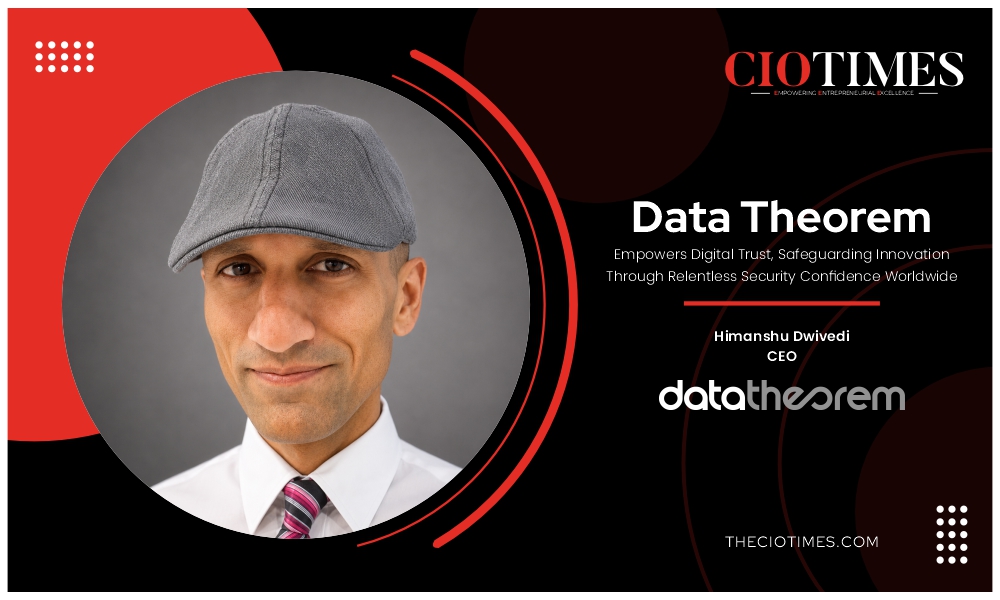
Data Theorem is an AImodern application security company helping enterprises secure applications across code, APIs, cloud, & mobile, and AI environments. Its platform combines continuous discovery, automated security testing,AI exploits, runtime protection, and AI-powered remediation to address vulnerabilities across the application lifecycle.
The company takes an application-centric approach to security, helping organizations identify their attack surface, prioritize material risks, and respond to threats before they convert into breaches. Its capabilities are designed to strengthen security without slowing development, giving enterprises greater visibility, resilience, and control as application environments become increasingly distributed and AI-driven.
Key Solutions
- Application Security
- AI Security
- Active Runtime Protection
- API Security
- Cloud Security (CNAPP)
- DevSecOps
- Asset Discovery
- Compliance
- Mobile Application Security
- SAST, SCA & SBOM
AI Defense
Data Theorem believes enterprise leaders must prioritize speed over staffing. Adversaries have always held an advantage over cyber defenders because they never had to play by the rules. AI now enables attackers to become more capable, powerful, and faster at exploiting organizations. The team advocates for AI-driven defense, including auto-remediation and comparable Exploit AI tools, to strengthen AppSec resilience continuously.
Critical Automation
The cybersecurity industry has long struggled with the imbalance between the volume of vulnerabilities discovered and the risks that genuinely matter. Data Theorem contends that organizations should not attempt to redefine what constitutes ‘critical risk’ in an AI-driven world. Risk remains a subjective construct that cybersecurity professionals often attempt to reduce to a mathematical equation, but it is not. As an organization with ‘theorem’ in its name, it urges enterprises to move beyond ‘analysis paralysis’ and embrace AI auto-remediation to address issues of any severity (High, Medium, or Low) before code is checked in from the developer’s AI CLI.
The team says, “Everything else has stopped being a decision and become a task. The world where all code can be fixed before being submitted to the CI pipeline is here; adoption only awaits.”
In a world where two low-security issues and one medium issue can be chained together by AI into active exploits, all vulnerabilities demand remediation. If a definition of “critical” must endure, the team asserts it should be this: the critical issue is the one that cannot be fixed automatically.
Autonomous Security Evolution
As software development becomes constantly autonomous through AI-assisted coding, the team believes the industry is witnessing the evolution of a new security paradigm rather than merely accelerating the vulnerabilities of the existing one. Cybersecurity programs must match and exceed autonomous AI coding assistance with AI auto-remediation. The era of self-healing software has arrived, enabling AppSec programs to shift focus away from vulnerabilities and exploits toward runtime defense and remediation.
The team states, “Regulation will slow this progress down as it is still heavily focused on discovery and issue identification, but that will change over the next 8 years”
Strategic Security Leadership
Security has long been relegated to a defensive role at the margins of innovation. Data Theorem says that application security must be elevated to a strategic capability through disciplined product management. Enterprises should empower CSOs with product managers to lead security programs. The distinction is decisive: a security product manager advocating a ‘million-dollar security feature’ aligns with revenue priorities, while an AppSec professional warning of a ‘million-dollar vulnerability’ is too often dismissed in fear, uncertainty, and doubt.
Consider the user experience: would executives prefer customers to manage a 12-character password on an iPhone, or deliver the seamless convenience of Face ID? Facial recognition was not simply a functional enhancement for iPhone and Android. It created a global market worth billions. No AppSec team has ever been funded with such vision, and the team emphasizes that this is the problem requiring resolution.
AI Security Leadership
With automation becoming central to cyber defense, the team maintains that human judgment now provides very limited competitive advantage. Confidence today rests in airplanes that are 90 to 95 percent automated over human-only pilots. Likewise, passengers may prefer autonomous vehicles to cars driven by strangers, where the latter is inconsistent and unknown. Automation, while not flawless, delivers consistency and improves continuously.
Human AppSec teams remain highly capable, yet the high turnover in AppSec approximately every 18 months cannot compete with the pace of AI and automation. Where human judgment does remain indispensable is in defining what an organization is prepared to lose. That is a business determination, not a security one. Machines should decide how to remediate; leaders must still decide what is worth protecting.
Surge in Zero Trust
A lot of present-day enterprises function across cloud-native applications, APIs, mobile ecosystems, and now AI agents. This transition has broadened the literal meaning of an organization’s attack surface. The attack surface is like the universe, with no end in sight, and expands every day. Thus, every endpoint needs its own security model, which is the rise of “Zero Trust” in the security world.
Invisible Governance
One of the industry’s enduring challenges is the disconnect between security teams and business leadership. Data Theorem emphasizes that cybersecurity should not be treated as an executive burden. Just as citizens expect the water they drink each morning to be safe without question, executives should expect software to function securely by default. When leadership is forced to worry about cybersecurity, the enterprise inevitably suffers.
Making security invisible to executives is itself a governance discipline, and Data Theorem outlines three guiding principles.
- Measure outcomes, not activity. No board presentation should highlight vulnerability counts, as counts reflect activity. The percentage of issues auto‑remediated before check‑in represents a true outcome.
- Equip the CSO with product managers so security programs are positioned as features tied to revenue rather than risks tied to fear.
- Integrate security into the sales cycle. When a program shortens a customer’s procurement review by two weeks, that is a metric a CFO understands and will defend at budget time.
The team says, “Governance done well means the executive team never has to think about cybersecurity, which is exactly the point.”
The Threat Gap
Every technological revolution expands opportunity while simultaneously intensifying systemic exposure. Envisioning the future, the organization points to AI-driven exploits as the most underestimated risk vector. As vulnerabilities escalate into active breaches, the ability to compromise software will become increasingly accessible to attackers empowered by artificial intelligence.
The contrast is striking: being advised that a lock could be picked reflects a hypothetical concern; receiving notice that an intruder is already inside searching through possessions represents an active exploit. The former signals possibility; the latter confirms reality, while the distinction is decisive. Enterprises continue to allocate investment almost entirely to the first scenario.
Repeated Resilience
The discipline of application security is shifting from static checkpoints to a continuous model of defense. Data Theorem observes that most application security teams have already advanced toward ongoing protection, while regulation and compliance remain constrained by point‑in‑time assessments.
To reinforce resilience, AppSec must continue its evolution by adopting automated remediation and removing manual dependence, ensuring programs can sustain pace with the relentless threats that AI‑driven exploit services are expected to generate daily.
An Innovation Gap
The rapid expansion of AI‑generated software has accelerated development velocity to unprecedented levels. The team adds that innovation has consistently outpaced the industry’s ability to secure it, making this challenge familiar to security teams. The web was insecure at its inception, as were Wi‑Fi networks, cloud computing, mobile applications, and now AI. Security programs have long adapted to this reality, recognizing that the cycle never ends.
The experience is akin to parenting: each day presents new circumstances, requiring constant adjustment to avoid falling behind, though rarely offering the chance to get ahead. The result often leaves security with a sinking sense of inevitability, yet it remains the reality. In five years, another disruptive technology will emerge, and security teams will once again be required to recalibrate and keep pace.
Establishing Digital Trust
Data has become one of the world’s most valuable strategic assets. It has resulted in positioning digital trust as a crucial business differentiator. Data Theorem highlights that application security must serve as a definitive statement on data rather than a hypothesis.
With data already established as the new monetization medium, demonstrated by trillion‑dollar AI enterprises, organizations must safeguard their information with the same rigor applied to protecting financial accounts.
AI Cyber Confrontation
The coming decade of cybersecurity will be defined by a fundamental confrontation with artificial intelligence itself. The team draws a parallel to Terminator 2 in 1991, where new AI and old AI battled across the globe. While not a perfect analogy, the future of defense will center on detecting and protecting against AI at every level, both legacy and emerging.
As nearly all content on the Internet becomes AI-generated, nearly all attacks will be AI-augmented. The old “AI” hackers and organized crime will diminish in significance, while the new “AI” AI-driven cyberattacks will command full attention, introducing several unknown vectors.
In response, the team has developed a platform to detect and defend against AI-augmented threats, spanning Mobile Secure, Mobile Protect, API Secure, Cloud Secure, Code Secure SAST, and AppSec Agent. The objective is not to enable customers to observe the conflict, but to ensure defense operates at the same speed as the attack, across every layer an adversary can reach.
Data Minimalism
The prevailing assumption most in need of challenge concerns data itself. The organization emphasizes that information is inherently difficult to secure, expands faster than anticipated, and is dispersed across every corner of the enterprise. The cost of protecting data is high, and the financial impact of a breach can be even greater.
For this reason, Data Theorem urges CSOs and CFOs to adopt a new assumption: treat all data as ephemeral, removing information from the organization year over year regardless of circumstance. Retain only the data that directly drives intellectual property and eliminate everything else. This approach reduces both the attack surface and the liability cost associated with enterprise data.
Also Rad :- CIO Times Magazine For More Information