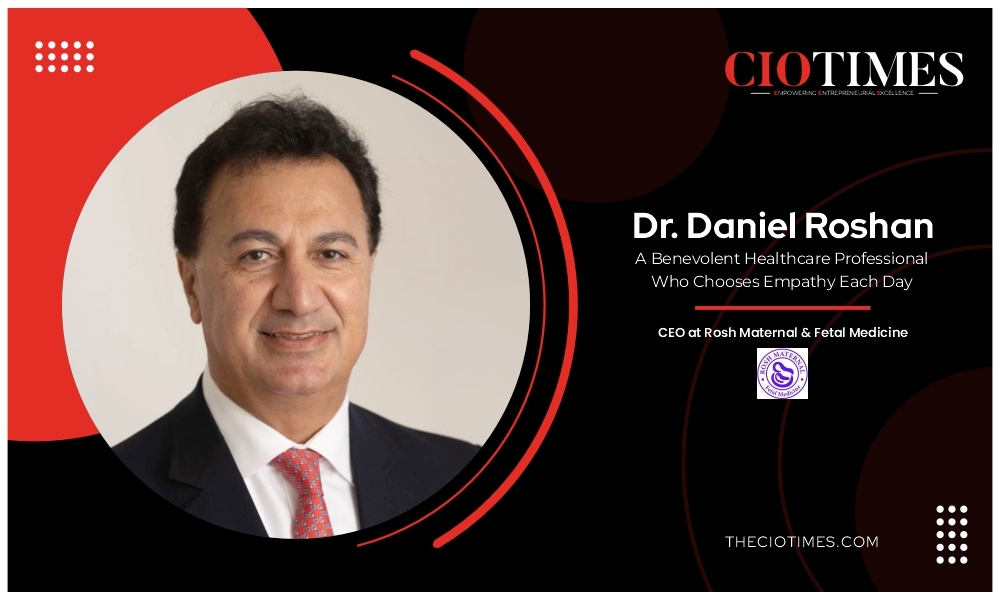
The gift of motherhood is one that a woman cherishes for a lifetime. Every new life begins with a story of care, courage, and trust. To nurture this consistently, we have leaders like Dr. Daniel Roshan, CEO of Rosh Maternal-Fetal Medicine, who has dedicated his leadership to making those stories healthier and safer for families everywhere. By combining advanced maternal-fetal medicine with a deeply human approach, he helps and guides mothers through some of pregnancy’s most delicate moments. His work is about maintaining a sense of comfort during times of uncertainty and creating hope during vulnerable moments. His excellence is in championing the miracle of motherhood with empathy, innovation, and an unwavering commitment to patient care.
Humane Care
Over three decades in maternal-fetal medicine, his understanding of care has evolved far beyond clinical diagnosis and treatment. Early in his career, his focus was largely centered on the medical and technical demands of the profession. It was about managing complex pregnancies, interpreting imaging, and making critical decisions in high-pressure situations. With time and experience, however, he came to realize that meaningful healthcare extends far beyond clinical expertise alone.
Working at the intersection of science, uncertainty, and deeply human experiences has shown him that pregnancy, particularly high-risk pregnancy, is often one of the most emotionally vulnerable periods in a person’s life. Patients are not simply searching for medical answers; they are looking for reassurance, empathy, honesty, and someone they can trust to guide them through uncertainty with compassion and care.
Currently, he views medicine as both a science and a deeply personal human connection. While clinical excellence remains essential, he believes that creating an environment where patients feel heard, respected, and emotionally supported is equally important. He adopts a more holistic philosophy of care. It recognizes that emotional, psychological, and personal dimensions are behind every patient experience.
For Dr. Daniel, every consultation, ultrasound, and conversation carries emotional significance for families. His role extends beyond providing medical guidance; it is also about helping patients feel safe, empowered, and supported during some of the most difficult and uncertain moments of their lives.
Humanity in Medicine
Today’s environment has been shifting towards efficiency. Dr. Daniel Roshan believes truly human-centred medicine begins with empathy. Modern medicine is often shaped by systems, technology, and performance metrics. He feels patients deserve more than efficient treatment. They mean genuine connection. He envisions treating each patient ‘like family’ means listening with patience, communicating with honesty, and ensuring individuals never feel alone during difficult moments.
Within high-risk obstetrics, this philosophy becomes even more important because many patients arrive with fear, uncertainty, and emotional exhaustion. Some are dealing with previous pregnancy loss, infertility, or serious maternal and fetal complications. In such vulnerable moments, he believes patients need more than clinical expertise; they need assurance, compassion, and emotional presence.
He views human-centred medicine as recognizing that every patient’s experience is deeply personal and deserving of individualized care. He treats dignity, trust, and humanity just as important as delivering excellent medical outcomes, even in the most medically complex situations.
A Selfless Professional
Dr. Daniel Roshan witnesses patients dealing with recurrent pregnancy loss, fetal complications, or medically fragile pregnancies. It has taught him resilience and hope. Patients come with past devastating and fearful experiences that he needs to wipe out and establish positivity in their psyche. He does not forget to give credit to the patients who come again to him with strength and hope to be parents soon.
These occurrences have given him insights about emotional well-being and healing being interconnected.
He adds, “While medicine focuses heavily on physical outcomes, the psychological dimension of pregnancy is equally important. Anxiety, grief, trauma, and uncertainty can profoundly affect patients and families.”
At times, being a physician, the best component to provide to the patients is reassurance, consistency, and emotional support during this difficult journey. He has seen that healing is not only based on outcomes. In medically challenging situations, too, patients keep in mind how they were treated, the feeling of being respected, and whether the physician was caring enough or not. According to him, compassion has a prolonged impact.
Guided Sensitivity
Maternal-fetal medicine places physicians in some of the most emotionally and medically complex moments a family can experience. Over the years, Dr. Daniel has learned that balancing clinical precision with emotional sensitivity requires both expertise and compassion. In high-risk obstetrics, every decision can significantly impact both mother and child, which is why careful analysis, experience, and evidence-based judgment remain essential.
At the same time, he understands that families experience these moments emotionally, not just medically. Behind every diagnosis or difficult conversation are parents facing fear, uncertainty, and hope all at once. He emphasizes that patients deserve honesty about risks and options, but they also need reassurance, empathy, and the comfort of feeling truly supported during vulnerable moments.
He believes calm, compassionate communication can make an enormous difference during uncertainty. He also recognizes that physicians carry emotional weight themselves, witnessing both joy and heartbreak throughout their careers. For Dr. Daniel Roshan, maintaining humanity while making objective medical decisions remains one of the most important responsibilities in maternal-fetal medicine.
Evolving Care
Modern obstetrics has changed tremendously through advances in prenatal diagnostics, fetal imaging, genetic testing, and high-risk pregnancy care. Dr. Daniel believes these innovations have helped physicians detect complications earlier and care for mothers and babies with far greater precision than ever before. Technology has undoubtedly improved outcomes and expanded what modern medicine can achieve.
At the same time, he feels the philosophy of maternal care has evolved just as deeply. Patients today are more informed, more involved, and more empowered in their healthcare decisions. Rather than simply directing care, physicians now work alongside families, helping them navigate complex and often emotional journeys with guidance, honesty, and trust.
He has also seen growing awareness around the emotional side of pregnancy care, including maternal mental health, trauma-informed support, and patient advocacy. While medicine continues to advance technologically, he believes the heart of care should always remain human. According to him, innovation should strengthen the connection between physician and patient, not replace it.
Accountability with Honesty
Undoubtedly, in maternal-fetal medicine, physicians are entrusted with decisions that affect entire families and future generations. The responsibility is a serious one, as every recommendation carries emotional, ethical, and lifelong consequences. He approaches these moments with careful thought, honesty, and humility.
Dr. Daniel Roshan balances medical evidence with compassion and respect for the patient’s values and wishes. Different situations and decisions exist within areas of uncertainty.
He shares, “My role is to provide patients with clear information, thoughtful guidance, and unwavering support so they can make informed decisions with confidence. Over the years, I have learned that responsibility in medicine is not something one becomes immune to.”
Emotional baggage exists as he realizes the importance of these delicate moments. Maintaining a sense of responsibility is crucial, as it exhibits the seriousness and humanity of the work he does as a healthcare professional.
Experiences Shape Perspective
During his 26 years at NYU Langone Health, Dr. Daniel worked in an environment where thousands of births and high-risk cases were managed every year. The intensity and pace of maternal-fetal medicine taught him that leadership is not only about making the right medical decisions, but also about remaining steady, compassionate, and present during life’s most critical moments. In situations where emotions often run high, he learned the value of calm communication, teamwork, and trust.
Those years also shaped his understanding of responsibility in a deeply personal way. For Dr. Daniel, every patient represented a family placing their hopes and fears in the hands of their physicians. That perspective reinforced the importance of leading with both clinical precision and humanity.
He continues to carry forward the belief that meaningful healthcare begins with trust, compassion, and a genuine commitment to the people behind every medical case.
Fostering Assurance
Dr. Daniel Roshan believes emotional trust between physician and patient is one of the most important aspects of maternal-fetal medicine, especially for families who arrive after difficult pregnancies, years of uncertainty, or emotionally painful experiences. In high-risk pregnancy care, patients are often carrying fear, anxiety, and vulnerability alongside medical concerns. He feels that without trust and emotional connection, even the best medical care can feel overwhelming or incomplete.
Over the years, he has seen how trust helps patients feel more comfortable speaking openly, asking difficult questions, and making challenging decisions with greater confidence. When patients feel genuinely supported, it strengthens not only communication but also their overall sense of reassurance and well-being throughout pregnancy.
He establishes trust through empathy, consistency, honesty, and compassion. Patients remember whether they felt heard, respected, and truly cared for during vulnerable moments. For Dr. Daniel, meaningful healthcare is not only about medical expertise, but also about creating a sense of comfort, safety, and human connection when families need it most.
Expertise and Empathy
He envisions excellence in healthcare as the ability to combine clinical expertise and humanity. Clinical outcomes are critically important, but excellence cannot be measured solely through statistics or procedures. It must also include patient trust, compassion, ethical responsibility, and long-term impact. True excellence means creating an environment where patients feel safe, respected, and cared for as individuals.
It means maintaining the highest standards of medical care while never losing sight of the emotional experiences patients carry with them. It also means building a team culture rooted in empathy, professionalism, and shared purpose.
He adds, “I believe the future of healthcare depends on preserving humanity within medicine.”
He is principled about technology and innovation being priceless, but he is a flagbearer when it comes to the human relationship between physician and patient.
Intact Human Connections
The conventional healthcare sector is rapidly leaning on efficiency, digitalization, and measurable performance indicators. Also, modern medicine has achieved immense clinical and technological progress, according to Dr. Daniel Roshan. But he also believes that there is a risk of emotional detachment if efficiency becomes the dominant priority. Digital systems, performance metrics, and administrative demands can improve organization and access, but they can also unintentionally reduce the time physicians spend connecting with patients.
In obstetrics, especially, medicine cannot become purely transactional. Pregnancy involves profound emotional experiences, hopes, fears, and life-changing moments. Patients need human connection as much as clinical expertise. Technology should support compassionate care, not replace it.
He adds, “The challenge for healthcare moving forward is finding balance—embracing innovation while preserving empathy, communication, and humanity.”
Any amount of advanced healthcare systems should not fail to make people feel cared for as individuals. They must be cared for as individuals, not revenue numbers.
A Human Legacy
For Dr. Daniel Roshan, the photographs displayed throughout his offices represent far more than successful medical outcomes. Each image tells the story of a family’s journey through uncertainty, hope, resilience, and trust. Many of those mothers and babies first came to him during emotionally difficult moments filled with fear and unanswered questions. Seeing those families grow over the years has become one of the most rewarding and meaningful parts of his work.
He views these photographs as powerful reminders of the deeply human side of medicine. Beyond clinical care, they reflect relationships built over time through compassion, support, and trust. Every image represents a moment that carried enormous emotional significance for a family and serves as a reminder of why this work matters so deeply.
He adds, “Medicine is demanding, and there are difficult days, but those images remind me why this work matters.”
He says the photographs also provide perspective during the more demanding days of medicine. They remind him that the true legacy of healthcare is not measured only through achievements or professional recognition, but through the lives touched, the trust earned, and the compassion shared with patients and families throughout a lifetime of care.
Equitable Care
Dr. Daniel Roshan emphasizes that maternal healthcare disparities remain one of the most urgent and deeply concerning challenges in the United States today. Across many communities, access to quality prenatal care, maternal education, early intervention, and specialized treatment still varies greatly. In his experience, these gaps often lead to preventable complications and unequal outcomes for mothers and babies, particularly in underserved populations.
He believes creating a more equitable future in maternal-fetal care will require both structural improvements and a more compassionate healthcare philosophy.
He adds, “Structurally, we need improved access to comprehensive maternal healthcare, particularly in underserved communities.”
Earlier prenatal care, stronger specialist support, better patient education, and improved continuity of care are all essential to reducing these disparities.
At the same time, he believes healthcare systems must place greater emphasis on equity, cultural sensitivity, and patient advocacy. He feels every patient deserves to feel heard, respected, and genuinely supported, regardless of background or circumstance. For him, maternal healthcare should never be determined by geography, income, or access alone. Creating lasting change will require compassion, investment, and a shared commitment to treating maternal health as a true public health priority.
The Sentiment Behind Each Birth
Dr. Daniel Roshan’s career has been inspiring him, and he considers it a profound privilege. He feels humbled to be part of some of life’s most crucial moments.
He shares, “Every pregnancy represents hope, possibility, and trust. Even after decades in this field, I never lose sight of the responsibility and meaning behind the work.”
He is in awe of the families and feels overwhelmed by the resilience of patients and families, especially those who face extraordinary challenges with courage and determination. Their strength reinforces the importance of compassion, advocacy, and commitment in medicine.
He considers himself fortunate to have gotten the opportunity to make a meaningful difference. Not only through medical care, but through emotional support and human connection. He never takes for granted the patient’s trust during vulnerable moments. This trust is his daily motivation to provide the highest level of care possible.
He adds, “At its core, maternal-fetal medicine is about helping families navigate uncertainty while preserving hope. Being able to contribute to that journey remains deeply fulfilling and continues to give my work purpose every day.”
Also Read :- CIO Times Magazine for more information