Enterprise software rarely fails at the moment of purchase. The contract gets signed, the platform gets configured, and the launch goes to plan. The difficulty tends to surface later, when the new system lands in an organization that still writes requirements, makes decisions and hands off work the way it always has. Before long, the interface is new and the meetings sound exactly as they did.
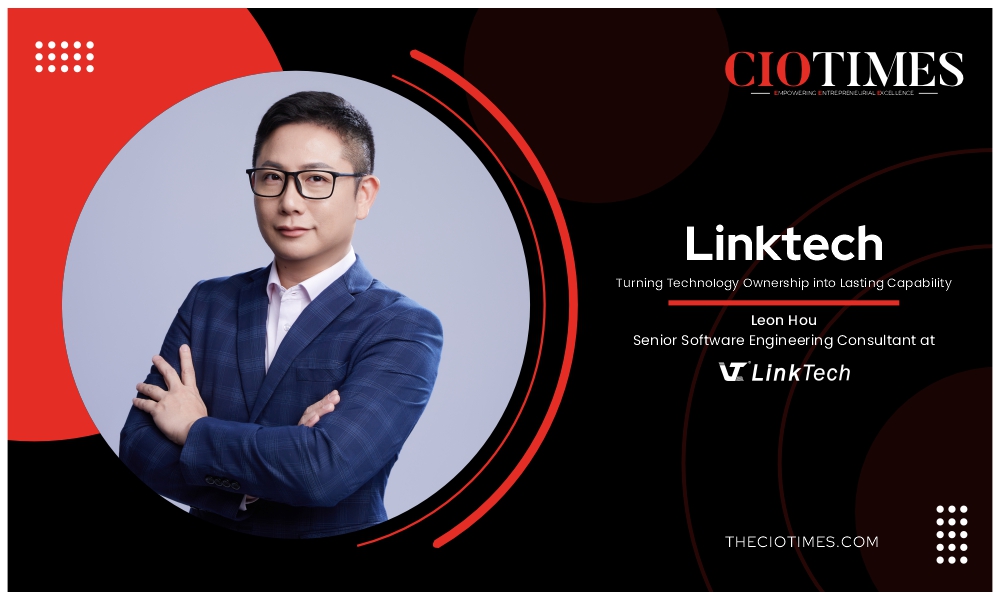
Linktech Inc. has built its business in that gap. An Atlassian Platinum Solution Partner in Taiwan, the company says it has spent more than ten years helping local companies set up Atlassian solutions and wider enterprise software delivery platforms.
Over that time, one misconception has stood out. Leon Hou, Senior Software Engineering Consultant at Linktech, describes it this way: “The biggest misunderstanding we run into is that people treat digital transformation like a shopping trip. Buy a modern platform, add an AI module, plug in a delivery toolchain, and the transformation is considered complete.”
In Linktech’s view, technology is almost never the limiting factor. The harder work lies in changing how people work with each other: how requirements get written down, how decisions get made, how work passes from one team to the next, and who is actually answerable when something goes wrong.
Leon frames the distinction plainly: “Technology makes transformation possible. Changing the organization is what makes it happen, and seeing that difference early often decides whether a project keeps paying off for years or quietly fades after go-live.”
Alongside the full Atlassian product line, Linktech offers enterprise software delivery platforms spanning work and project management, testing and automation, source control, software supply chain security and enterprise data services. Its consulting, implementation, training and managed services help organizations across Taiwan advance Agile development, project management, DevSecOps and data-driven decision making.
Mapping the Work Before the Platform
Linktech has watched this play out both ways. Some companies have installed excellent tools and gained almost no improvement, simply because nobody changed the way work happened around them. Other teams, working with fairly modest tools, have made substantial progress because they addressed the process and the mindset first.
Leon is direct about what that means for Linktech’s own work: “That is why our projects rarely start with a product demo.” Instead, the first step is drawing out how work really moves through the client’s company today. Linktech’s team looks for the places where work stalls, gets done twice or falls through the cracks. Only once that picture is clear does the conversation turn to which platform setup would support the way the client wants to work.
Owning Technology Versus Using It
Linktech draws a firm line between owning technology and being able to use it. In Leon’s words: “Owning technology simply means you have paid for it. Possessing technological capability means your teams can actually use it well, day after day, and keep getting results from it.”
According to Linktech, the space between those two conditions is where a great deal of enterprise technology budget quietly disappears. A company can buy a complete enterprise software delivery platform and still get very little out of it. The old way of working may never have changed. Only two or three people might really understand how the system is set up, or nobody owns the job of improving it after launch.
Linktech chooses to work in exactly that space, and its role goes well beyond selling licenses and setting systems up. The company helps redesign how work flows, runs hands-on training where teams learn by doing, agrees simple rules on who owns what, and makes sure the know-how is written down and shared. The goal is for the capability to stay with the client long after the consulting engagement ends.
Real capability, Linktech says, is easy to recognize. New people get up to speed quickly, and teams adjust their own workflows without calling in outside help. The same platform keeps delivering more value each year, so the company never has to start over when staff or requirements change.
The same reasoning shapes how Linktech thinks about competitive advantage. Because a competitor can license the same platform next quarter, the company argues, tools on their own rarely keep anyone ahead for long. What lasts is how well an organization has learned to use them: how solid its processes are, how skilled its people are, how clean and consistent its data is, and whether it keeps improving year after year.
Linktech points to two companies running exactly the same platform and ending up in completely different places. One invested in getting the process right, kept training people and built a habit of improving a little at a time. The other treated the rollout as a project with an end date.
Linktech’s workshops, OKR consulting, business intelligence and data engineering work, and ongoing support are all aimed at building a layer of ability on top of the technology, so clients keep getting more from the same platform instead of flattening out after go-live. The real advantage, as the company sees it, is an accumulated ability to keep getting better with the tools a company already owns. Leon explains why that edge holds: “That advantage compounds precisely because you cannot buy it off a price list the way you buy a license.”
Fewer Tools, Better Connected
Owning more technology can also work against a company. Leon puts it bluntly: “More tools rarely mean a more mature company. Very often it just means more risk.” Each extra system means one more login and one more connection to maintain. It also adds a place where data can fall out of step, and something else to secure and govern.
When a client asks whether to add something new, Linktech applies three straightforward tests. Does it solve a problem the client actually has right now? Will it connect properly to what the client already runs, or sit off to one side on its own? And will the effort of looking after it stay in proportion to what it gives back? If the answer to any of those is no, the company says, the tool looks impressive on paper while quietly making daily life harder.
Linktech’s advice almost always leans toward tidying up rather than adding on. The company encourages clients to treat their Atlassian environment as the main backbone for planning, documentation, source control and service requests, and to extend that backbone on purpose instead of bolting on one more disconnected tool every year. A smaller, well-connected set of tools, in Linktech’s view, means fewer places for information to hide, less for people to learn and far less to manage.
Deciding What Legacy Deserves
Deciding what to keep can be harder than deciding what to add. Linktech tells leaders to stop asking whether something is old or new and to work through four more useful questions instead. Is it still earning its keep? What does it cost to maintain, and what risk does it carry? Does it play nicely with everything else? And does it have anywhere left to go?
The answers can point in very different directions. An old system that is stable, well understood, cheap to run and still doing its job may be worth keeping, even when something shinier exists. A system that eats a disproportionate share of the budget, is hard to secure or blocks everything else from connecting is worth modernizing, no matter how much money went into it years ago. On that point, Leon leaves no room for sentiment: “Money already spent should never decide what happens next.” A system nobody genuinely needs anymore should be retired, however long it has been in place.
In practice, Linktech takes clients through this step by step instead of replacing everything at once. The team looks for the pieces causing the most risk or the most daily friction, moves or connects those into the current platform environment first, and checks the results before going further. That keeps a company from modernizing just for the sake of it, while steadily clearing out the technical debt that has piled up over the years.
Clean the Process, Then Add AI
AI gets the same scrutiny. In Linktech’s experience, bolting it onto an unchanged process usually brings a small improvement that runs out of steam quickly. The result, Linktech says, is an assistant that writes text a bit faster inside a process that is still manual, inconsistent and hard to measure.
In Linktech’s view, the companies getting real value from AI are the ones willing to fix the process first. The company traces this back to a lesson Agile and DevOps taught years ago: tidy up a workflow and get data out of it before automating it. Leon sums up the risk in one line: “Automating a messy process just gives you a messy process running at speed.”
So, when clients come to Linktech about AI, the first questions are about the work itself. Which handoffs could be removed completely instead of sped up? Which decisions could rest on shared data rather than on whoever has the most seniority? Where does the process need to become consistent before AI has anything reliable to learn from?
Once the process is clean and the data is there, Linktech says, AI really does change how work happens. It can trace a problem back across connected systems, write up reports on its own and cut the time people spend hunting for information. Linktech wants clients to see AI as the reason to finally clean up an old system, rather than as decoration laid on top of it.
Where Accountability Stays Human?
Linktech takes a similar line on automation. Leon states the company’s rule of thumb: “Automate anything that can sensibly be automated, but never automate away who is answerable.”
Repetitive work with clear rules, such as entering data, updating statuses, running routine tests and pushing deployments, should be handed to machines wherever possible so people can spend their time on work that needs judgment. Wherever real risk, security, compliance or a serious business decision is involved, a person has to stay in the loop. That person also needs genuine authority to stop or redirect what is happening, rather than simply serving as a rubber stamp.
The DevSecOps setups Linktech builds show where that line falls. Pipelines usually handle builds, tests and routine security scans continuously on their own. The approval before going live, the handling of security exceptions and the calls made during an incident stay with named people who carry the responsibility.
Linktech says the sophistication of the technology has very little bearing on where that line sits. The test is simpler: if something goes wrong, is the damage serious enough that someone has to answer for it? Leon’s reasoning rests on a plain observation: “A system cannot answer for anything.” Deciding this up front and writing it into the process design, Linktech says, is what keeps automation an asset when something eventually does go wrong.
Watching the Gaps Between Systems
Things do go wrong, and Linktech has a clear view of where. As Leon observes: “In complicated environments, things rarely break because one component failed. They break in the gaps between systems, processes and teams.” The trouble might be a handoff that nobody owns, a data field two teams interpret differently, or a blind spot between two tools that each look perfectly healthy on their own.
Linktech looks at the whole chain instead of any single tool: how the systems are running, how work flows, who owns what, whether the data lines up and where decisions actually get made. In practice, that means bringing DevOps observability habits into the connected platform environment. The team tracks how long work takes end to end, where it sits waiting at handoffs, and where defects first appear across planning, source control and CI/CD, rather than only watching whether the servers are up. That data then sits next to honest cross-team reviews to find where responsibility is genuinely falling through the cracks.
The early warnings tend to be familiar: a handoff that slips week after week, tickets bouncing back and forth between two teams, or the same category of incident resurfacing under a different name. Catching those at the data and process level, Linktech says, gives it time to fix things long before a customer notices an outage or an auditor notices a gap.
The Organizational Side of Speed
Many of those gaps come back to ownership. In Linktech’s view, today’s delivery and DevSecOps tooling can absolutely provide speed, security and reliability at the same time, and the organizational side is usually the bigger obstacle. Leon is specific about the cause: “What breaks it in practice is nobody being clear on who owns what.”
After an outage, development and operations point at each other. Security gets treated as somebody else’s job instead of everybody’s, and the release decision ends up split among three departments with three different incentives. No tool, the company says, will fix that friction. The clients who struggle here usually already own a perfectly capable technology stack. What has not kept up is the way the organization is put together, with ownership scattered and nobody clearly owning the software lifecycle from end to end.
Because of this, Linktech’s projects almost always pair the technical work of connecting the toolchain with the less glamorous work of agreeing who owns what and who decides what. Tools can make a fast, safe, reliable way of working possible. Whether a company gets there depends on how it is organized.
Best Practice Versus Best Fit in Taiwan
Organization also decides how well global methods travel. In Linktech’s experience, global best practice comes with assumptions baked in about how fast decisions get made, how much risk is acceptable, what regulators expect and how a company is structured. Those assumptions do not automatically hold in a real company, and especially not in Taiwan.
A framework designed around a flat, fast-moving organization can run straight into the more layered approval chains, stricter regulatory requirements and long-standing legacy systems that Linktech describes as common in Taiwanese manufacturing, finance and technology firms. In Leon’s words: “Best practice and best fit are two different things.”
As a platinum-level partner bringing global enterprise platforms into Taiwan, Linktech says most of its real value is translation. It adapts methods and tools that have worked elsewhere to how each client actually makes decisions, what it must comply with, what it already runs and what resources it has.
Sometimes that means rolling a platform out in phases that fit a company’s approval cycle. Sometimes it means making a global DevSecOps standard work alongside legacy systems nobody can replace overnight. Linktech keeps relearning the same lesson: how carefully a framework is fitted to the client in front of it matters far more than how well it worked somewhere else.
Why Adoption Still Stalls?
The one problem Linktech believes the industry still approaches incorrectly goes back to where this story began. The industry, Linktech says, keeps treating technology adoption as if it were the same thing as organizational adoption. The company argues that the industry has become very good at building powerful tools and fairly good at getting companies to buy and install them, yet far less reliable at making sure a company actually changes how it works afterwards.
Linktech sees this pattern more than any other in delivery and project management rollouts across Taiwan. The platform goes live and the launch is marked internally as a success. Six months later, people have quietly drifted back to old habits, because nobody dealt with the process, the incentives or the skills around the tool.
The problem persists, Leon says, because it is genuinely harder than writing better software: “It takes steady change management, ongoing training and a lot of organizational patience, and none of those things fit neatly onto a product roadmap or into a sales quarter.” Closing that gap, Linktech says, is the whole reason its consulting practice exists.
Building for a More Agentic Enterprise
The gap matters more as systems grow more autonomous, predictive and connected. The first assumptions to go, Linktech expects, will be the ones built around people joining things up by hand: copying data between systems, chasing teams for status updates, approving large volumes of low-value requests one at a time, and deciding mainly on seniority rather than shared, current data. The company says AI agents working across connected enterprise platforms can already pull that information together faster and more thoroughly than a person searching manually.
What gains value, in Linktech’s view, is everything that resists automation. Clear governance keeps autonomous systems accountable, and good judgment handles the calls that stay genuinely unclear. The ability to connect systems never designed to talk to each other becomes an asset. So does a serious commitment to data quality, because an autonomous system will spread bad data just as fast as good data, along with AI literacy across the organization, so people can direct, question and correct these systems instead of simply trusting whatever comes out. Linktech expects companies building those abilities now to benefit fastest, since none of them can be picked up at the moment they turn out to be necessary.
Five years out, the company expects enterprise technology to be considerably more agentic, more predictive and far more joined up. It anticipates AI agents working across planning tools, documentation, code repositories and chat to track down root causes, draft documents and kick off routine tasks once a person approves.
DevOps, the company expects, will move toward AI-assisted platform engineering, with infrastructure and pipelines that largely set themselves up and repair themselves as long as the observability underneath is strong. Linktech predicts governance for AI will become as normal a requirement as security compliance is today, and that software supply chain integrity will probably widen from managing artifacts and scanning for vulnerabilities into a broader layer of trust covering code, dependencies and AI-generated output.
Linktech is building for that market now. It is going deeper on the AI features coming through the Atlassian ecosystem, expanding its DevSecOps and software supply chain security work, and growing its business intelligence and data engineering services so clients have the clean, well-structured data future systems will depend on. Its own consultants are being trained constantly to guide clients through the technology and the organizational change that comes with it. Leon closes where the story began: “Our view has not changed: the tools will keep moving, and what we offer that lasts is helping companies build the ability to make the most of whatever arrives next.”
Also Read :- CIO Times Magazine For More Information