Buildings tend to outlast the people who commission them. A shopping district survives the developer who broke ground on it. A residential block outlives the market cycle that justified its financing in the first place. The built environment carries this peculiar power: what gets approved today becomes the physical inheritance of a place for decades, regardless of what happens to the balance sheet that funded it.
For Cayman Developers, that permanence functions as a design constraint rather than an afterthought. Every project the company approves is measured not only against current market demand but against a longer question, what this becomes in twenty years, once the launch marketing has faded and the building is simply part of the neighbourhood.
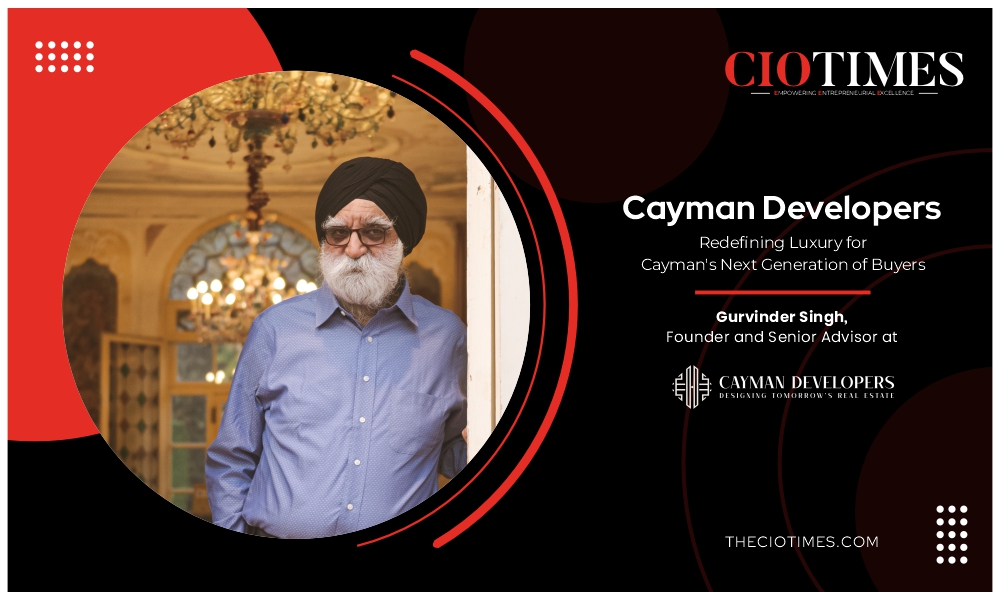
At the center of that approach is Gurvinder Singh, Founder and Senior Advisor at Cayman Developers. Gurvinder describes the tension in direct terms: “If we’re simply responding to what the market wants today, we’re unlikely to create something that remains relevant tomorrow.” That tension, between commercial viability and long-term relevance, shapes the company’s approach to every development it approves.
Cayman is developing rapidly, and Gurvinder sees that growth as carrying both opportunity and obligation. The company’s answer, in his telling, is not to simply add more buildings to the landscape, but to build places that become part of the fabric of the islands themselves. That distinction, between adding inventory and shaping identity, runs through how Cayman Developers approaches nearly every decision it makes, from site selection to the compromises it will and will not entertain.
Building for Tomorrow
Before approving a development, Cayman Developers considers how the project will function five, ten and twenty years after completion, not only at launch. That includes how the architecture will age, how homes will adapt as the lifestyles of the people living in them change, and whether the development will still contribute positively to its neighbourhood once the novelty of a new project has worn off.
Site selection, density, materials, landscaping and infrastructure all follow from that long view. It also shapes how Cayman Developers thinks about a community’s staying power well beyond the building itself. The company evaluates whether a development will remain socially, economically and culturally relevant decades later by weighing location, connectivity, affordability, functionality and durability, and by asking how the project fits within the broader character of the islands.
Gurvinder sums up the standard plainly: “So, yes, we absolutely respond to today’s market, but our objective is to create tomorrow’s benchmark. If a development we complete today still feels thoughtfully designed, relevant, and valuable decades from now, then we have done our job properly.”
The company treats its reputation as inseparable from that outcome. Its developments remain part of Cayman’s landscape long after they are completed and sold, which Gurvinder regards as reason enough to prioritize durability over short-term appeal.
Conviction Over Consensus
Cayman Developers does not make decisions because they happen to be popular at a given moment. Gurvinder says the company looks instead at underlying fundamentals, population growth, changing buyer expectations, the strength of the Cayman economy, and the limited supply of well-designed residential communities, rather than at where short-term sales activity happens to be pointing.
Following that logic, the company has repeatedly moved into neighbourhoods other developers were not yet building in. Gurvinder believes Cayman Developers has identified areas with future potential ahead of the wider market, a pattern he attributes to time spent listening to buyers and understanding how people actually live across the islands, and one he says has been borne out as those neighbourhoods developed.
ARZA, West Bay, is the clearest example Gurvinder points to. Cayman Developers set out to create a development offering a more refined residential experience while remaining practical and accessible to the local market. The project was later named Best Luxury Residential Development in Cayman in 2024, a result Gurvinder sees as confirmation that there is genuine demand for quality-driven development. He credits ARZA with catalyzing renewed interest in the surrounding neighbourhood, pointing to other projects that have since aligned with the same vision.
On the company’s resistance to following the crowd, Gurvinder is unambiguous: “There is no value in going against the market simply to be different.” The company’s philosophy, in his framing, has always been to anticipate what the market will need next rather than simply react to it.
The same instinct shapes how Cayman Developers treats data. The company relies heavily on market data, but Gurvinder separates data from decision-making itself. Data can describe what has already happened and what is currently selling, he says, but it is far less useful in predicting what buyers will want next. That gap is where experience and instinct come in, balanced against the numbers to find market segments the company believes are underserved.
Gurvinder distills the balance into a single line: “Data gives you the framework; experience and instinct tell you where to take it.”
Beyond Buildings
Gurvinder draws a distinction between a project that occupies land and one that becomes a place people actually inhabit in the fullest sense. The individual homes need to function exceptionally well, he says, but the spaces between those homes matter just as much: how people arrive, how they move through a community, how they interact with neighbours, and how they experience the landscaping and outdoor spaces around them.
Cayman Developers, as a result, does not treat a development as simply a collection of units. Architecture, landscaping, circulation, privacy, amenities, lighting, streetscape and the relationship with the surrounding neighbourhood are all considered components of a single experience, one the company believes collectively creates a sense of identity for the people who live there.
There is also a test of time built into the standard. A project can look impressive at launch, Gurvinder notes, because everything about it is new. True placemaking reveals itself only years later, once residents remain proud of where they live, the community has developed its own character, and the surrounding neighbourhood has benefited from the project’s presence rather than been isolated from it.
That responsibility carries particular weight in Cayman, where communities are small and interconnected enough that what gets built inevitably becomes part of the island’s broader identity. In Gurvinder’s words, “successful placemaking is when a development stops being described by its buildings and starts being described by the experience of being there.” That, he says, is the standard Cayman Developers continues working toward.
Redefining Luxury
In Gurvinder’s view, the definition of luxury has genuinely shifted, though what matters more is that buyers have become more sophisticated about what they consider valuable. Luxury is no longer simply about size, exclusivity or expensive finishes, he says. Those attributes still have their place, but increasingly buyers are looking for quality of life, authenticity, privacy, convenience, and a sense that a home has been thoughtfully designed around the way they actually live.
This shift is especially relevant in Cayman, where buyers are highly informed and have experienced real estate markets around the world. Gurvinder believes they can recognize the difference between something simply expensive and something genuinely well considered.
For Cayman Developers, luxury increasingly means the details that improve everyday living: intelligent layouts, natural light, indoor-outdoor connectivity, privacy, quality materials, durability, and technology that is integrated rather than intrusive. Sustainability plays a role too, not as a marketing feature but through efficient design, responsible material selection, and homes built to perform in the local environment over the long term. Flexibility matters as well. A well-designed home, in the company’s approach, should be able to adapt as a family’s needs change rather than becoming obsolete as lifestyles evolve.
Gurvinder sums up the shift this way: “I don’t think luxury has become less aspirational; I think it has become more intentional. The premium is no longer simply for what a property looks like or how exclusive it is. It is for how intelligently it has been conceived and how much better it makes your life.”
Design as Identity
Asked whether exceptional architecture is ultimately a financial investment, a brand differentiator, or an ethical responsibility to the communities that inherit it, Gurvinder answers that it is all three, though if pressed to prioritize, he would put brand differentiation first. As he explains it, “we don’t want to compete simply on price, size, or volume. We want our developments to be recognized for a distinct standard of design, quality, and execution.” That investment, he adds, still has to be commercially disciplined and purposeful.
That said, Gurvinder is clear that the responsibility to the communities the company builds in sits close behind. Cayman Developers’ projects stay part of the island’s landscape long after the sale closes, which means the company has to consider how each one will age, how it fits within its surroundings, and whether the quality of construction and design will hold up over time.
Ultimately, Gurvinder frames the company’s design philosophy as inseparable from its identity. The ambition is for someone to see a Cayman Developers project and recognize the thought and quality behind it. If that recognition builds stronger brand equity, greater value for homeowners, and a positive contribution to the surrounding community, Gurvinder considers that the right balance struck.
Discipline, Not Compromise
Compromise, in Gurvinder’s telling, is an inherent part of development. Land, financing, construction costs, market conditions and timelines all force decisions and require prioritization. The distinction Cayman Developers works to protect is the one between a commercial compromise and a compromise that fundamentally changes the quality of the product.
The company is willing to be flexible on elements that can be optimized without affecting the end result: adjusting a floor plan, refining specifications, changing procurement strategies, or finding more efficient ways to deliver a project. Commercial discipline is essential, and Gurvinder sees no value in spending unnecessarily simply because something was originally specified a certain way.
What the company will not compromise on is quality, integrity and the homeowner experience. Gurvinder says Cayman Developers will not cut corners on structural integrity, construction standards, critical materials, or any element that materially affects how a home performs and feels over time. Nor will it pursue a project simply because the financials work, if that project does not meet the standard the company wants to represent.
Gurvinder treats reputation as the asset underwriting all of it: “Our reputation is ultimately an asset, and it takes years to build but very little time to damage.” Every project carries the company’s name, which means thinking beyond the immediate transaction to what it says about Cayman Developers five, ten or twenty years from now. He distills the principle into a single sentence: “we will optimize the business, but we will not compromise the product or our reputation to do it.”
Much of that discipline starts well before construction begins. The real estate industry tends to celebrate finished buildings, but Gurvinder points to an earlier and more consequential set of conversations inside the company’s leadership team. Gurvinder describes the starting point plainly: “For us, the conversation starts with one question: does this project deserve to exist?” From there, leadership examines the site, the market, the design opportunity, the economics, and the project’s broader impact on the community, challenging whether the concept is genuinely differentiated, commercially sound, and aligned with the standard Cayman Developers has set for itself. If there is no clear reason a project should be better than what already exists, it does not move forward. The goal, as Gurvinder frames it, is for every development the company adds to the Cayman landscape to add value, not simply add inventory.
A Culture Built on Reputation
At Cayman Developers, culture is built around three principles: integrity, accountability and excellence. Gurvinder describes that as doing what the company says it will do, taking ownership of outcomes, and refusing to lower standards simply because growth creates pressure to do so.
The same commitment extends to how leadership operates day to day. Gurvinder places a strong emphasis on staying hands-on, arguing that leadership cannot function from a distance in development, since decisions made in an office eventually become physical realities on a construction site and, ultimately, someone’s home. He says the company often puts itself in the shoes of buyers to reach the most sensible and practical decisions.
Gurvinder frames that discipline as a product of constant learning rather than a fixed formula. Every project, in his view, teaches the company something new, provided it stays open-minded, keeps listening to buyers, the community and other stakeholders, and remains willing to challenge its own status quo by pushing boundaries and testing new strategies or materials. That habit of treating each development as a chance to improve, he says, is what allows the company to get better with every project it completes.
As Cayman Developers grows, Gurvinder says the company protects that culture by being selective about the people and partners it brings into the organization, choosing individuals who understand that its reputation is built project by project and decision by decision. He puts it plainly: “Growth is important, but maintaining the standards that earned us our reputation is non-negotiable.”
Resilience, in Gurvinder’s assessment, follows the same discipline. Markets move, regulations evolve and buyer preferences shift, and what matters is having the clarity to adapt without losing sight of core principles. That means not becoming overly dependent on a single market cycle or assumption. The company continuously reassesses its projects, costs and strategy, and Gurvinder says it is prepared to adjust when the facts change, but not simply because the market becomes noisy.
He extends that principle to the organization as a whole: “resilience is ultimately a team characteristic – a company culture.” When people communicate openly, take accountability and stay focused on the long term, Gurvinder says, uncertainty becomes something a company manages rather than something that derails it. As he puts it, “the objective has always been to build a business capable of outlasting individual market cycles—not one that is only successful when conditions are favourable.”
Shaping Cayman’s Future
Gurvinder believes the wider industry is still underestimating a shift toward quality of life over quantity of space, and how well a development supports the lifestyle of the people who buy into it.
Buyers, in his view, are becoming more selective about how a home fits their life, prioritizing location, privacy, wellness, functionality, flexibility and access to community over simply buying the largest property they can afford. He expects that shift to matter more in Cayman as buyers grow more sophisticated and the cost of land continues to rise.
As Gurvinder puts it, “The next generation of successful developments will not necessarily be the biggest; they will be the ones that make the most intelligent use of space and create the strongest overall living experience.”
Cayman Developers carries that same long view into its civic role. Gurvinder sees commercial success and civic responsibility as complementary rather than competing, a philosophy that begins with thoughtful planning: how a project fits its surroundings, how it affects traffic and infrastructure, how resilient it is to the local climate, and whether it contributes positively to its neighbourhood.
Commercial ambition, in his framing, should end at the point where pursuing additional returns starts to compromise the long-term interests of the community, a boundary he sees as good business as much as good citizenship. In his words, “we are not just building assets; we are helping shape the Cayman that future generations will inherit.”
Global demand for Cayman real estate continues to rise, and Gurvinder maintains that the islands are not simply a destination for investment capital, but a place people want to live, work and build their lives.
That is why Cayman Developers develops for the local lifestyle first, understanding the needs of residents, respecting the character of each neighbourhood, and building homes suited to the local environment. Global investment, in his view, is a positive force when it supports the islands’ long-term growth rather than displacing what makes them distinct.
Asked what he hopes distinguishes Cayman Developers decades from now, Gurvinder returns to the same standard that has run through the company since its earliest developments: “I would hope Cayman Developers is remembered not simply for the projects we built, but for raising the standard of what development could be in Cayman.”
That legacy, as he describes it, is measured less by the buildings themselves than by whether they have aged well, retained their relevance, and contributed positively to the communities around them.
Gurvinder closes on the same note: “We want to contribute to a stronger Cayman – one where development and preservation, commercial success and community value, can coexist.” It’s a legacy measured less in buildings than in whether the islands still feel like themselves.
Also Read :- CIO Times Magazine For More Information