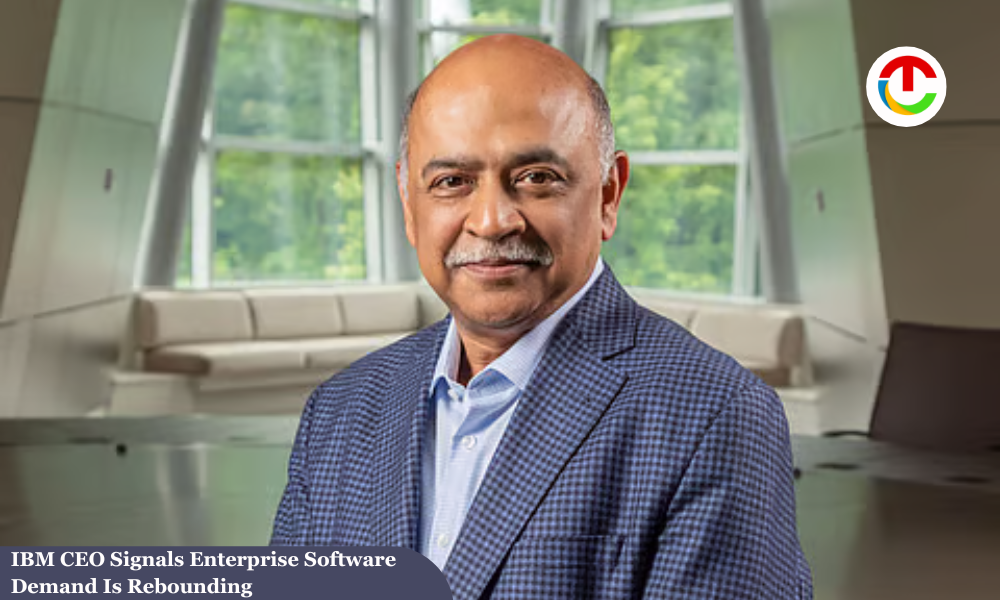
IBM CEO Krishna has sought to reassure investors that recent weakness in enterprise software spending reflects a temporary delay rather than a broader slowdown in technology demand. Speaking after concerns over the company’s second-quarter performance, Krishna revealed that roughly one-third of the major software deals postponed during the period have already returned, suggesting that customer spending is beginning to normalize.
The update comes as Wall Street continues to assess whether inflationary pressures and shifting enterprise budgets could dampen technology investments in the months ahead.
Hardware Costs Temporarily Shifted Customer Spending
According to IBM CEO Krishna, the disruption was largely driven by a sharp increase in semiconductor prices, which prompted many enterprise customers to prioritize investments in physical server infrastructure over software purchases. Chip-related hardware costs reportedly surged by nearly 60% year-over-year, leading companies—particularly large Fortune 100 organizations—to redirect portions of their capital expenditure budgets toward securing essential hardware.
This shift temporarily reduced spending on IBM’s upfront software offerings, contributing to weaker-than-expected quarterly results and weighing on the company’s stock performance.
However, Krishna emphasized that the delayed transactions are gradually returning.
“About one-third of the deals that slipped out of the second quarter have already come back,” he noted, describing the trend as an encouraging sign that customers merely postponed purchases rather than cancelling them altogether.
AI Continues to Drive Long-Term Growth
Despite the temporary slowdown, IBM CEO Krishna reaffirmed that artificial intelligence remains one of IBM’s strongest growth engines. He stressed that enterprise demand for AI solutions continues to expand, reinforcing confidence in the company’s long-term software strategy.
IBM is also refining its revenue model to reduce exposure to fluctuations in one-time software purchases. Around 80% of the company’s Enterprise Software revenue now comes from recurring subscription contracts, while the remaining 20% is generated through upfront sales—the segment most affected during the recent spending delays.
Krishna said IBM intends to place even greater emphasis on expanding its subscription-based business to create more stable and predictable revenue streams.
Expanding Investments in Quantum Computing
Beyond AI, IBM CEO is strengthening its position in quantum computing through increased investment and the acquisition of quantum research lab HRL Laboratories. Krishna described quantum technology as a strategic priority with significant implications for national security, scientific advancement, and economic competitiveness.
Looking ahead, he projected that quantum computing could generate a trillion-dollar impact on the global technology industry by the end of the next decade, positioning IBM to play a leading role in the sector’s future growth.
Also Read :-IBM Reaffirms AI Strategy Despite Earnings Miss and Market Setback