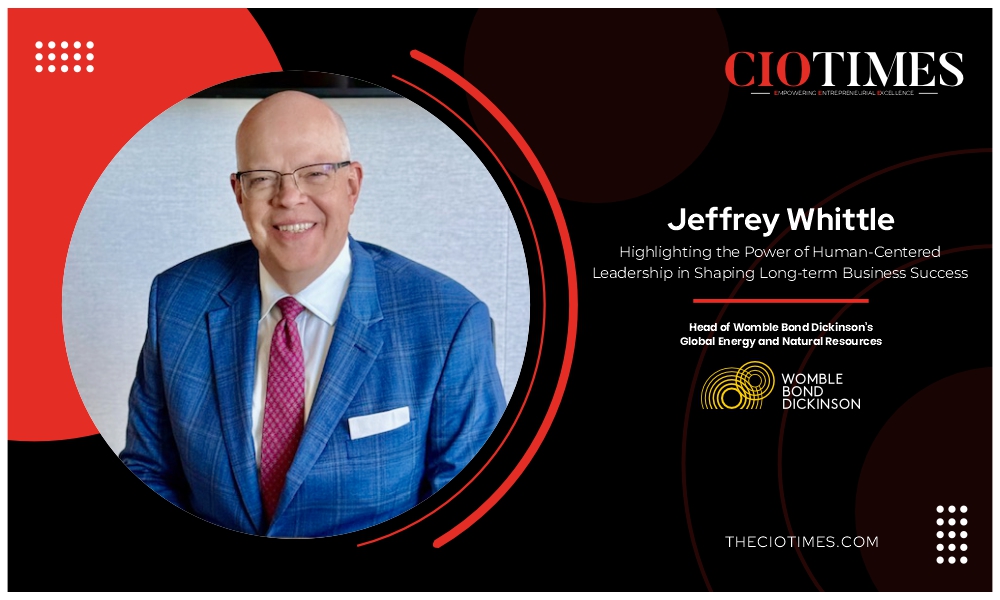
Patent professionals have never been more important than today. They are the bedrock of safeguarding innovation. Detail-oriented as they are, their deep understanding of technology and law goes far beyond. They ensure ideas are not just protected but meaningfully positioned in the market. We have leaders like Jeffrey Whittle, Head of Womble Bond Dickinson’s Global Energy and Natural Resources, who ask the right questions and build strong and defensible portfolios. He plays a dual role of a guardian and a strategist as he adds value for his clients in the long run. His 30 years of rich experience make him stand out as his work has reached globally.
Jeffrey Whittle works closely on complex and global deals that include mergers and acquisitions, joint ventures, and technology licensing, where technology or innovation is at the fundamental core. He actively helps businesses navigate through high-value generation, implementing technology-oriented transactions across several jurisdictions. Apart from client work, he has shouldered leadership roles within his law firm and the wider licensing community, earning recognition from leading industry bodies. He also stays in close proximity to the legal ecosystem through speaking, writing, mentoring, and advisory contributions.
Innovation Supports Capitalization
An ideal IP strategy grows with the business. A strong team brings IP into the conversation early, with researchers, engineers, legal experts, and leaders all working in sync. When everyone is aligned, decisions become clearer, progress feels more natural, and risks are easier to manage. In such an environment, IP becomes more than protection. It starts to guide how ideas take shape, how opportunities are approached, and how a business stands out in the market. It quietly supports a company’s product strategy and growth every step of the way, Jeffrey believes.
He states, “Challenges often arise when IP strategy operates in isolation. Misalignment can result in missed opportunities, incomplete protections, delayed filings, or vulnerabilities that competitors exploit.”
Strategic IP Evolution
Jeffrey Whittle thinks of IP as more than a simple safety net. He envisions it as the heartbeat of how modern companies grow and compete. These days, IP defines what makes a brand unique, guides where the money goes, and provides real leverage during high-stakes deals, particularly in those fast-moving, energy and tech-heavy spaces where the landscape shifts daily.
The newness in the innovation demands businesses to be sharp and needs proactive IP strategies to protect their hard work and keep their edge. But witness that IP has outgrown its old role as a legal chore. It’s a powerful tool for the future. When managed with a clear vision, it builds real and enduring value that outlives the paperwork.
Energizing Innovation
Jeffrey Whittle highlights that the energy world currently is navigating a deep transformation, as conventional systems find a new rhythm through digital tools and smart automation. Technologies like machine learning, cloud platforms, and AI are no longer futuristic concepts. These are becoming part of the daily grind. With this evolution comes a genuine responsibility toward how one owns data, shares it across borders, keeps it safe, and bridges the gap between modern tech and the reliable old systems we still lean on.
Meanwhile, sustainability has shifted from a nice-to-have option to a core value of how we operate. Whether businesses are perfecting carbon capture, cutting down emissions, or reimagining both green and traditional power, the way forward relies on human-centered innovation. In this space, solid IP and smart data habits quietly fuel every breakthrough. Companies that stay balanced and look ahead aren’t just surviving the shift; they are earning trust and paving the way for a more sustainable, resilient future.
Partnered Innovations
He highlights the fact that innovation does not take place in exile these days. Cross‑sector collaborations, joint ventures, university partnerships, vendor‑integrated developments, and global research alliances all play vital roles in advancing technology. These partnerships can yield significant value but also introduce risks if intellectual property expectations are unclear.
Jeffrey states, “Effective IP structuring defines each party’s rights with clarity, addressing ownership of pre‑existing or background technology, creation of new IP or foreground technology, data access, commercialization pathways, and exit considerations.”
Intellectually crafted agreements identify each other’s contributions and reduce uncertainty. It enables innovation to progress while reducing the risk of conflict.
Future Proofing
Tech deals in the industrial and energy worlds have grown much more complex than they once were. They are no longer just about physical assets; they now weave together software, data, and connected platforms that often span several continents. Naturally, this brings up big questions about protecting ideas, navigating taxes, and figuring out how things might change down the road. Getting it right, as Jeffrey often notes, takes a thoughtful, holistic approach that considers the legal fine print alongside real-world security, privacy, and how these systems actually function day-to-day.
At the same time, technology moves fast. These agreements need to feel flexible and alive, rather than rigid, protecting the essentials while leaving plenty of room to grow. The companies that really succeed are the ones that think several steps ahead, staying mindful of new rules, emerging AI, and changing views on data and confidential information. By doing that, they build partnerships that aren’t just solid for right now, but continue to provide real, lasting value well into the future.
Value Through Governance
Data has quietly become the heartbeat of how we work today, but its real value depends entirely on how we treat it. Without a bit of care, it can quickly turn into a headache, bringing up concerns about privacy, security, and complex rules.
Jeffrey Whittle says, “Effective governance addresses the full data lifecycle and integrates seamlessly with operational processes.”
When we take the time to manage data thoughtfully, like Jeffrey often suggests by being clear about who sees it and keeping it accurate and safe, something shifts. It stops being just a collection of files and starts becoming something we can actually lean on. It begins to guide better choices, gives AI a meaningful foundation to work from, and makes automation feel both responsible and ready to grow.
1. Futuristic Technologies
The upcoming technologies pose a challenge to conventional intellectual frameworks. These technologies include artificial intelligence, automation systems, analytic engines, and advanced digital platforms.
Jeffrey Whittle shares, “Questions surrounding inventorship, ownership of algorithm‑generated outputs, data rights, and transparency continue to evolve, requiring modernized understandings consistent with legal interpretations.”
Forward‑looking approaches allow innovators to protect their work while maintaining accountability. As global regulations develop, organizations must be prepared to analyze these changes quickly, adapt to market conditions, and ensure their IP strategies remain effective and resilient.
2. Human-Centric Leadership
Jeffrey Whittle believes that innovation actually lights up when people from different backgrounds feel heard and work toward something mutual. When legal, technical, commercial, and operational teams are genuinely connected, it creates a harmony where ideas can grow and move forward with a purpose in mind. This effort is clearly tied to the company’s broader vision; everything starts to feel more aligned.
Leadership, in such a setting, is more about connection rather than direction. It’s about making complex things easier to understand, helping people see how their work matters, and creating a space where thoughtful, creative thinking is encouraged. In environments that are constantly changing, this kind of leadership helps teams stay steady, support each other, and keep moving ahead with integrity.
3. Connected Growth
No organization truly grows on its own anymore. In today’s world, the best progress happens when we stay connected, whether that’s through industry networks, academic circles, or global partnerships. These relationships help us keep a pulse on change, learn from those around us, and see what’s heading our way before it actually arrives.
Being part of these communities also brings a real sense of shared momentum.
Jeffrey Whittle says, “These networks expand access to emerging research, enhance cross‑sector collaboration, and support responsible deployment of new technologies.”
Over time, as Jeffrey often points out, this openness does more than just make us adaptable; it helps us grow with more genuine confidence and a much clearer sense of where we’re going.
Impactful Innovation and Energy Additionality
Moving toward a sustainable, lower carbon-emitting, and energy additionality world is really about us finding better ways to live, work, and build a future where communities have effective energy choices and actually want to inhabit. But for those big ideas and innovative energy additivities to truly take root, they have to work in the real world, in everyday settings where businesses and investors feel steady enough to get behind them.
This is where intellectual property quietly does its best work. When an idea is protected, it gives people like Jeffrey the confidence to pour their time, heart, and resources into bringing it to life. It makes teaming up easier, supports growth that actually lasts, and helps new technology from enhanced battery storage with critical minerals, new geothermal harnessing techniques, increased electrification efficiencies, more effective carbon capture, storage and usage reach the regions and communities that can utilize it most. Ultimately, it’s what helps turn our best intentions into a tangible, real-world impact.
Strategic Foresight
Even the most seasoned teams have blind spots; it’s just a natural part of growing and moving through a world that never stops shifting. Sometimes these gaps slip in quietly, whether it’s trying to keep up with new rules, staying a step ahead of cyber threats, or ensuring that an IP strategy actually grows at the same pace as the business.
Jeffrey Whittle states, “Ongoing evaluation of technology posture and data maturity, coupled with thoughtful IP strategy, enables organizations to operate from a position of strength.”
What truly counts is catching them early and being patient for strategies to play out. When we take a moment to pause and reflect, as Jeffrey often emphasizes, we give ourselves the room to respond with intent rather than just reacting under pressure.
Human Leadership
Innovation doesn’t seem to look back any time soon. In the midst of all the chaos and changing business environments, organizations that choose to adapt and have disciplined governance with a robust IP strategy that aligns with business objectives and a forward-looking leadership lens will be set to thrive.
He shares, “Success requires educated and effective leadership that understands IP strategies and their importance and unites legal insight, commercial planning, technology foresight, and sustainability objectives.” Organizations will not lose relevance when they invest in people, global partnerships, and adaptive technology protection frameworks. This will result in significantly enhancing shareholder value and providing impactful competitive advantages.
Also Read:- CIO Times Magazine for More Information