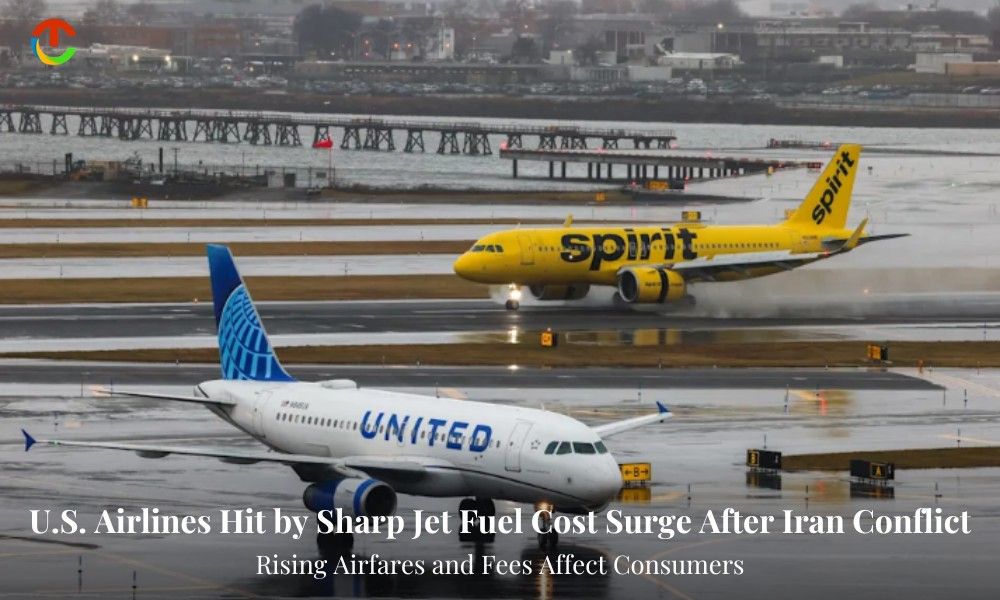
As rising fuel costs spread throughout the industry, many airlines, such as American Airlines, have already issued financial warnings. The strain on airline operations and traveler finances is growing as domestic airfares rise substantially and carriers reduce tens of thousands of trips.
Fuel Costs Reach Crisis Levels
As the world’s oil markets responded to the developing Iranian war, the price of jet fuel surged. Monthly fuel expenditures for US airlines skyrocketed:
Between February and March, fuel prices increased by $1.8 billion.
According to certain market sources, the price of jet fuel virtually doubled to $150–$200 per barrel.
Airlines Are Under Increasing Financial Stress
The financial repercussions were immediate and significant because gasoline is one of the biggest operating costs in the sector.
Budget Stress & Carrier Warnings
A number of American airlines, including American Airlines, issued warnings about severe pressure on their full-year budgets. A difficult financial environment is indicated by the fact that many carriers are now forecasting over $4 billion in increased fuel expenses for 2026.
Important financial strains consist of:
Reduced profit margins when fuel accounts for a greater portion of operating expenses
Decreased operational flexibility for aircraft allocation and route planning
Increased break-even load factors compel airlines to maximize capacity
Summer Travel Is Affected by Flight Cuts
Ahead of the busiest travel season, airlines have started to adjust their timetables due to rising fuel costs.
Regional airports of moderate size
Popular places to go on vacation
Lower-yield or off-peak routes
Rising Airfares and Fees Affect Consumers
- Travelers are directly impacted by the fuel surge, not just airline balance sheets.
- Increased Costs & Additional Fees
- Compared to last year, domestic airfares have increased by over 18%.
- Baggage fees have been raised by many airlines, and some have added seasonal surcharges.
- Low-cost carriers have increased base pricing on some routes since they are usually more susceptible to changes in fuel prices.
- Fare inflation is predicted to persist until late 2026 if fuel prices stay high, according to U.S. government statistics.
Is the Sector Able to Stabilize?
Aviation professionals caution that airlines may continue to experience instability if the world’s oil markets do not stabilize. Fuel price fluctuations may continue all year long, and the Iranian crisis is still unpredictable.
Airlines are investigating tactics like these in order to adapt:
Fuel cost hedging to lower risk
Purchasing fuel-efficient aircraft
Reducing low-yield operations through route network optimization
Increasing the use of sustainable aviation fuel (SAF)
Read our Exclusive interview with Nicolette Stepakoff