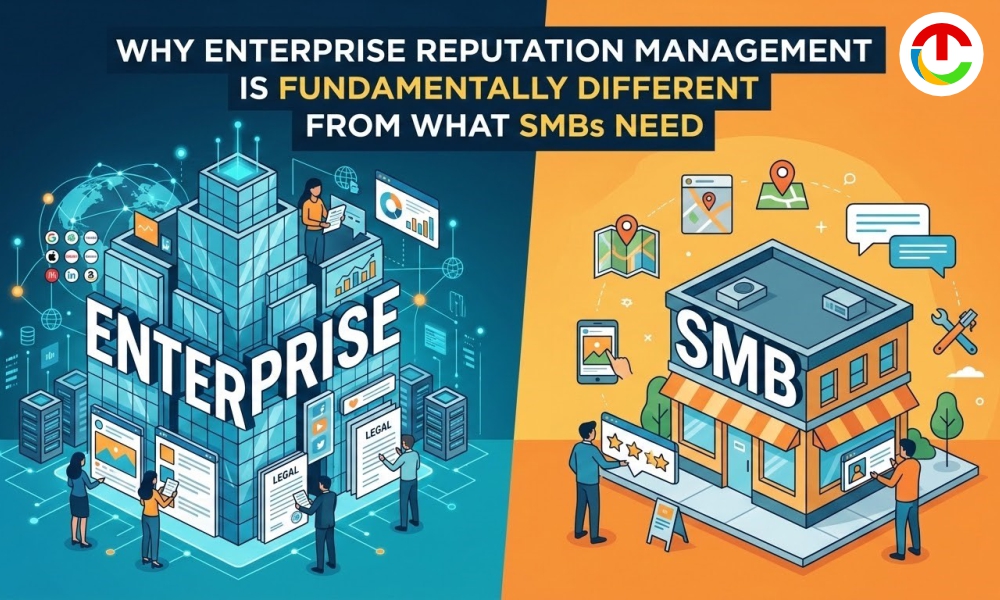
Enterprise reputation crises rarely resemble the challenges faced by smaller organizations. While SMBs manage localized feedback and basic review platforms, global corporations navigate interconnected stakeholder networks, multi-product exposure, and regulatory scrutiny that spans jurisdictions. This distinction shapes everything from resource allocation and measurement frameworks to technology requirements. Understanding these differences reveals why enterprise reputation management demands specialized approaches rather than scaled-up versions of SMB tactics.
Scale and Complexity Are Not the Same Thing
Enterprise reputation programs operate across 50 to 200 stakeholder groups. SMB programs typically manage 5 to 15 direct relationships. That’s not just a bigger number. It’s a fundamentally different operating environment.
Enterprise networks extend to investors, regulators, employees, and media contacts across 15 or more countries. SMBs handle local customers and two or three suppliers in a single market. Enterprise brands monitor 200,000 or more brand mentions monthly. SMBs track between 500 and 2,000 in the same period.
Compliance requirements reflect this gap, too. Enterprises maintain dedicated teams and structured reporting. Smaller organizations often restrict monitoring to manual processes and basic tools because resource limitations make anything else impractical.
Global Stakeholder Networks Create Coordination Demands SMBs Never Face
Fortune 500 companies coordinate reputation messaging across dozens of country offices with dedicated regional teams reporting to central governance. Institutional investors require quarterly ESG reporting that influences share price and funding decisions. Twelve or more regulatory bodies across jurisdictions enforce standards that vary by region.
Eight thousand or more employees need consistent internal communications to maintain alignment. Two hundred or more media outlets require coordinated responses to maintain accurate coverage. Enterprise social media governance requires six approval layers before content reaches public platforms. A small business owner can post directly and respond immediately without any of that.
GDPR Article 33 requires breach notifications within 72 hours across EU operations. This timeline establishes strict data-handling protocols that smaller organizations rarely encounter in practice.
Multi-Product Exposure Multiplies Reputation Risk
Procter & Gamble manages 65 distinct brands, where a single product recall can affect 12 unrelated categories due to shared manufacturing facilities. Automotive companies face recall cascades affecting three to five vehicle lines simultaneously. Pharmaceutical enterprises manage 200 or more drug SKUs, and a single safety signal can trigger class-wide scrutiny.
Enterprise ORM platforms like RepTrak measure brand equity across seven product categories with 50 or more metrics per brand. Review platform strategy requires separate verification protocols for B2B enterprise software divisions versus consumer electronics lines. Each division maintains distinct tools for aggregating ratings and verifying review authenticity.
Smaller businesses rarely deal with cross-brand contagion. Fewer naming layers mean reputation issues stay contained. Resource allocation stays focused on core offerings.
Regulatory and Legal Exposure in Enterprise Reputation Management
Enterprise legal exposure spans 47 regulatory frameworks. SMBs typically navigate 3 to 5 local compliance requirements. Large organizations maintain dedicated legal teams that continuously monitor SEC filings, FTC consent decrees, and EU Digital Services Act obligations.
The financial penalties alone explain why enterprises treat this differently. GDPR violations can reach 4 percent of global revenue, with a minimum fine of 20 million dollars. State privacy law fines average 2,500 dollars per violation for smaller organizations. That risk profile drives enterprises toward specialized platforms with built-in audit capabilities.
SMBs consult attorneys after problems develop. Enterprises invest in automated monitoring that flags potential compliance issues before they escalate.
Industry-Specific Compliance Adds Another Layer
Healthcare enterprises maintain HIPAA compliance across thousands of patient-review touchpoints each month. Financial services firms navigate FINRA Rule 4511, which requires multi-year retention of all social media communications. These aren’t edge cases. They’re baseline operating requirements.
Three protocols illustrate the difference clearly:
- FDA 21 CFR Part 11 requires electronic signature validation for pharmaceutical review responses
- Banking institutions follow CFPB complaint database protocols with strict response mandates
- Automotive manufacturers adhere to NHTSA Early Warning Reporting across multiple vehicle component categories
Enterprise reputation management platforms include built-in compliance audit trails. SMB tools generally don’t because smaller organizations don’t face the same documentation requirements.
Media Scrutiny Operates at a Different Magnitude
Enterprise brands receive 340 percent more media coverage than SMBs, and 23 percent of that coverage contains negative sentiment that requires immediate response protocols. That volume difference shapes how organizations structure monitoring systems and response teams.
Enterprise PR teams monitor 15,000 or more media mentions per month across 200 or more outlets using platforms such as Meltwater or Cision. SMBs track 50 to 200 local mentions using Google Alerts. The United Airlines 2017 incident generated 92,000 articles in 72 hours, requiring coordinated response across six time zones. That kind of event demands multiple departments working simultaneously, not a founder responding from a phone.
SMBs resolve 90 percent of coverage issues within 48 hours through direct owner intervention. That speed advantage comes from fewer stakeholders, not better processes.
Resource Allocation Reflects Fundamentally Different Risk Profiles
Enterprise reputation budgets average 2.3 million dollars annually. SMB allocations range from $ 12,000 to $ 45,000 for comprehensive monitoring and response. The gap reflects scope, risk exposure, and operational requirements, not organizational preference.
Enterprises employ dedicated reputation specialists who focus exclusively on brand perception across multiple markets. These professionals coordinate with legal teams and communications departments to maintain consistent messaging at every touchpoint.
Small business owners typically assign reputation tasks to existing marketing staff, juggling several responsibilities. That limits response speed and analytical depth when issues arise.
Three resource categories separate the two approaches:
1. Monitoring staff:
Enterprise analysts track brand mentions continuously across digital channels. SMBs depend on periodic manual checks alongside other duties.
2. Legal retainers:
Enterprises have immediate access to specialists across multiple jurisdictions. Small businesses usually consult attorneys only after problems develop.
3. Technology licensing:
Enterprise solutions integrate with compliance systems and offer advanced sentiment analysis globally. SMB tools focus on core review monitoring for local visibility.
Approval Speed vs. Governance Requirements
Enterprise response protocols require 7 approval signatures and average 4.2 hours for negative review responses. SMBs respond directly to owners within 47 minutes. That gap isn’t a failure of enterprise organizations. It’s the cost of necessary governance.
Enterprise negative review handling follows a six-step process, including legal review, brand team approval, and regional manager sign-off before public posting. SMBs use a two-step direct response that allows immediate engagement. These structural differences produce distinct reputation management workflows.
The consequences show up in crisis data. 34% of enterprise crises escalate due to approval delays that exceed 24-hour media cycles. SMBs resolve 78 percent of issues before they spread virally. Corporate governance requirements prioritize compliance over speed in many scenarios, and that tradeoff is often the right one given the regulatory stakes.
Measurement and KPIs Across Enterprise Reputation Management
Enterprise reputation dashboards track 47 distinct KPIs, including Net Promoter Score across 12 stakeholder segments. SMBs monitor five core metrics focused on review ratings and local search visibility.
At enterprise scale, organizations measure RepTrak Pulse scores quarterly across seven reputation dimensions and rely on Brand Finance valuations annually to track brand equity. Internal dashboards monitor sentiment polarity across 200 or more social channels to detect shifts before they escalate.
Small businesses focus on simpler indicators:
- Google Business Profile rating averages
- Review velocity to maintain a consistent feedback flow
- Local citation consistency scores
These metrics directly influence customer acquisition in specific service areas. The monitoring approach must match available resources and complexity level, not what a larger competitor uses.
Technology Platforms Serve Different Operating Realities
Enterprise reputation platforms integrate 12 data sources with AI-powered sentiment analysis, processing 2.3 million mentions monthly. SMB tools monitor 3 to 5 platforms with basic alert functionality.
Brandwatch costs $1,200 per month and connects to 50 or more data sources, offering AI sentiment analysis, crisis alerts, and API access. It operates at an enterprise scale but involves high cost and complex setup. Mention provides service for $99 per month, with coverage across six social platforms and basic alert features. It works well for SMB-scale operations.
Talkwalker monitors 250 million or more sources daily and serves enterprise needs through extensive coverage. Google Alerts tracks 50 brand terms for smaller organizations seeking straightforward monitoring.
Enterprise systems connect with Salesforce, ServiceNow, and internal CRM databases. SMB implementations typically remain standalone. Companies like NetReputation operate at both ends of this spectrum, making the contrast between SMB and enterprise tooling especially clear in practice.
Brand Architecture Creates Exposure Paths That Don’t Exist at SMB Scale
Unilever manages 400 brands under 25 category umbrellas, requiring six distinct messaging architectures to prevent reputation spillover between unrelated product lines. Enterprise reputation management requires mapping these connections before problems emerge, not during active incidents.
Brand architecture takes three general forms:
- Masterbrand: The parent name supports hundreds of product lines, creating shared exposure across all of them
- Endorsed structure: Sub-brands carry partial backing from the corporate name
- Freestanding brands: Complete separation, each with its own identity and risk profile
Architecture decisions affect how quickly issues travel across divisions. A product failure in one area can reach unrelated business units when shared names or visual systems connect them.
Smaller organizations face simpler structures with one to three product lines and direct communication between founders and customers. Cross-brand contagion rarely applies when there are fewer naming layers.
Third-Party Dependencies at Scale
Enterprise brands manage relationships with 47 review platforms and 23 social networks, requiring dedicated partnership managers. SMBs interact with 4 to 6 platforms through standard business accounts.
Review platform algorithm changes creates ongoing challenges at enterprise scale. Google updates local ranking factors thousands of times each year. Companies must adjust monitoring systems regularly across multiple locations and markets.
Social media API rate limits add complexity. Twitter provides access to millions of tweets monthly through paid academic tiers. Meta restricts Graph API calls to 200 per hour. These constraints require enterprises to plan data collection carefully and often pay premium rates for adequate access.
Third-party data aggregators reflect similar pricing gaps. Yext handles over 70 citation sources at enterprise pricing. Smaller plans cost far less. Enterprises negotiate direct API access with review sites for bulk response features. SMBs rely on standard business portals that limit responses to 500 characters and place them in 24-hour moderation queues.
Long-Term Reputation Equity Is a Board-Level Asset
Enterprise Reputation Management equity compounds over 15 to 20-year cycles, where a single crisis can reduce brand value by 23 percent, requiring 3 to 5 years of recovery investment. Brand perception at this scale depends on consistent stakeholder trust across multiple continents. That’s not a marketing problem. It’s a balance sheet risk.
Recovery timelines differ sharply between company sizes. Enterprise damage often persists beyond 24 months. Smaller operations typically complete recovery within 8 months.
Equity building at enterprise scale involves corporate social responsibility programs, executive visibility campaigns, and sustained media relations. These efforts create layers of brand trust that buffer against future incidents. Stakeholder sentiment monitoring helps leadership track how perception shifts over extended periods.
Smaller businesses face different constraints. SMB reputation management focuses on immediate impact on customer acquisition rather than long-term narrative control. Local reputation management becomes the priority when resources are limited and broader brand equity investments are constrained. Both approaches are rational given the different stakes involved.
Also Read :- Why CPG Brands Use Trade Spend Optimization Platforms to Identify Investment ROI?