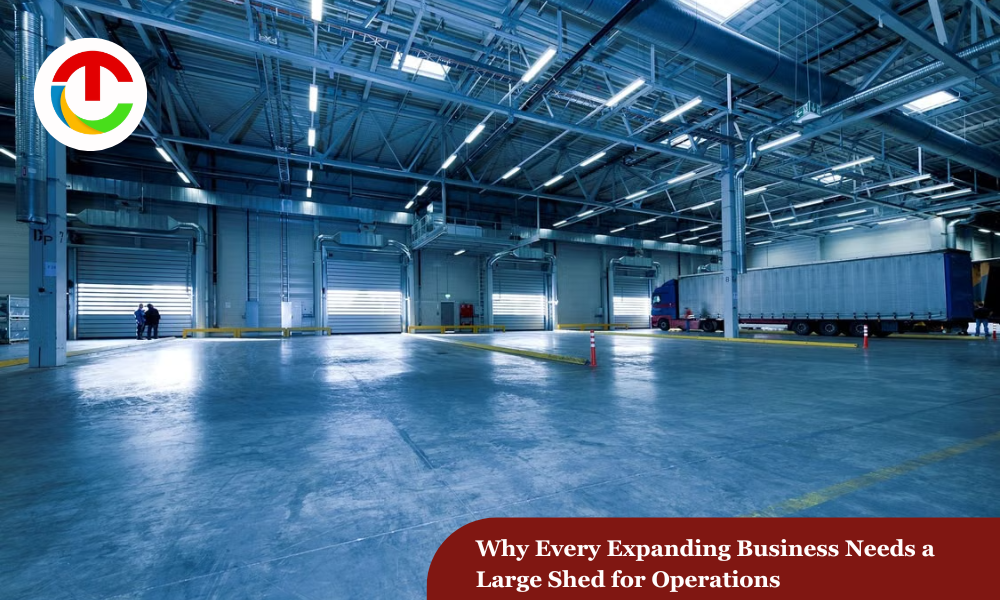
Growth is exciting for any business, but it also brings new challenges, particularly when it comes to space, storage, and operational efficiency. Many businesses underestimate how quickly they can outgrow their existing facilities. When that happens, productivity suffers, operating costs rise, and maintaining efficient day-to-day operations becomes increasingly difficult. Investing in the Large Shed for Operations and commercial infrastructure early helps businesses avoid these growing pains and build a stronger foundation for long-term success.
As businesses expand, Large Shed for Operations demands often outpace what existing facilities can support. More staff, inventory, vehicles, and equipment all require room to operate efficiently. Planning ahead allows businesses to minimise disruptions, improve workflows, and create space for future growth instead of constantly reacting to capacity issues.
The Space Problem Every Growing Business Faces
For many growing businesses, space is the first major constraint. Warehouses become overcrowded, office space turns into makeshift storage, and valuable equipment ends up sitting outside exposed to the weather. While these temporary fixes may work for a while, they often create inefficiencies that become more expensive over time.
The amount of Large Shed for Operations space available has a direct impact on productivity. A cramped facility forces employees to work around obstacles instead of focusing on their tasks. It slows logistics, increases the risk of workplace incidents, and creates unnecessary pressure across every part of the business.
A well-designed large shed gives businesses the room they need to operate efficiently. Separate areas can be allocated for storage, production, equipment, vehicles, and staff, creating a more organised and productive workspace. Having enough room is no longer simply a convenience. It becomes essential for businesses planning to scale.
Why Commercial Sheds Are the Practical Choice?
Steel commercial sheds have become a popular choice because they offer durability, flexibility, and excellent long-term value compared with many traditional commercial buildings.
Businesses that handle large volumes of stock, construction materials, machinery, or heavy equipment benefit from wide, open internal spaces that can be tailored to suit their operations. Ceiling height, bay widths, access doors, internal layouts, and loading areas can all be customized to support specific business requirements.
Steel also performs exceptionally well across a wide range of climates. Whether exposed to heavy rainfall, high temperatures, strong winds, or coastal conditions, a properly engineered steel structure provides reliable protection for valuable assets and equipment. Industry organisations consistently recognise steel as one of the strongest and most cost-effective materials for large commercial structures.
Common Operational Uses Across Industries
One of the biggest advantages of commercial sheds is their versatility. They can be adapted to suit a broad range of industries while continuing to support changing operational requirements over time.
1. Manufacturing and Production
Manufacturing businesses value commercial sheds for their large, unobstructed floor areas. Open layouts make it easier to install production lines, assembly stations, cranes, and specialised equipment while maintaining efficient workflows throughout the facility.
2. Warehousing and Distribution
Distribution and logistics businesses rely on efficient storage and product movement. Commercial sheds can accommodate pallet racking, loading docks, roller doors, and designated dispatch areas that help reduce handling times and improve order fulfilment.
3. Agriculture and Rural Operations
Agricultural businesses require reliable storage for machinery, vehicles, fertilisers, livestock equipment, and harvested crops. Commercial sheds provide weather protection while remaining flexible enough to accommodate changing seasonal storage requirements.
4. Trades and Service Businesses
Builders, electricians, plumbers, landscapers, and other trade businesses need secure facilities for vehicles, tools, materials, and equipment. A commercial shed provides both protected storage and a practical base for daily operations, helping businesses stay organised while reducing the risk of theft and weather damage.
Cost Efficiency Over the Long Term
Building a commercial shed represents a significant investment, but it often delivers substantial long-term value. Steel structures are typically quicker to construct than many traditional commercial buildings, allowing businesses to occupy the space sooner and minimise operational disruption.
Maintenance costs are also generally lower. Steel requires far less ongoing upkeep than many alternative building materials, reducing maintenance expenses over the life of the structure. As businesses grow, additional bays or extensions can often be added with minimal disruption, making expansion far more straightforward than relocating to a new premises.
Leasing commercial property can become a substantial ongoing expense for growing businesses. Owning purpose-built infrastructure removes much of that recurring cost while adding long-term value to the business itself. Business advisory organisations frequently identify investment in operational infrastructure as an important factor in supporting sustainable business growth.
Planning and Approvals: What to Expect
Before construction begins, businesses will usually need to obtain local approvals, comply with zoning requirements, and satisfy relevant building regulations. For businesses undertaking their first commercial building project, this process can seem complex.
Working with an experienced shed supplier helps simplify every stage of the project. Established suppliers understand local approval processes, coordinate site assessments, assist with documentation, and help ensure the project meets all applicable building standards. Their experience can significantly reduce delays and minimise costly changes later in the project.
Building regulations vary between jurisdictions, so engaging experienced designers and builders early helps ensure compliance while keeping the project moving efficiently.
Making the Decision to Invest
Many growing businesses eventually reach a point where their existing facilities begin to limit future growth rather than support it. Recognising that point early allows business owners to invest before operational bottlenecks start affecting productivity and profitability.
A Large Shed for Operations is far more than another building on the property. It improves operational efficiency, protects valuable assets, supports future expansion, and creates a stronger foundation for long-term success. For businesses planning to grow, investing in the right infrastructure is rarely a question of if. More often, it’s a question of when.
Also Read :- How Effective Leaders Create Cultures of Better Decision Making