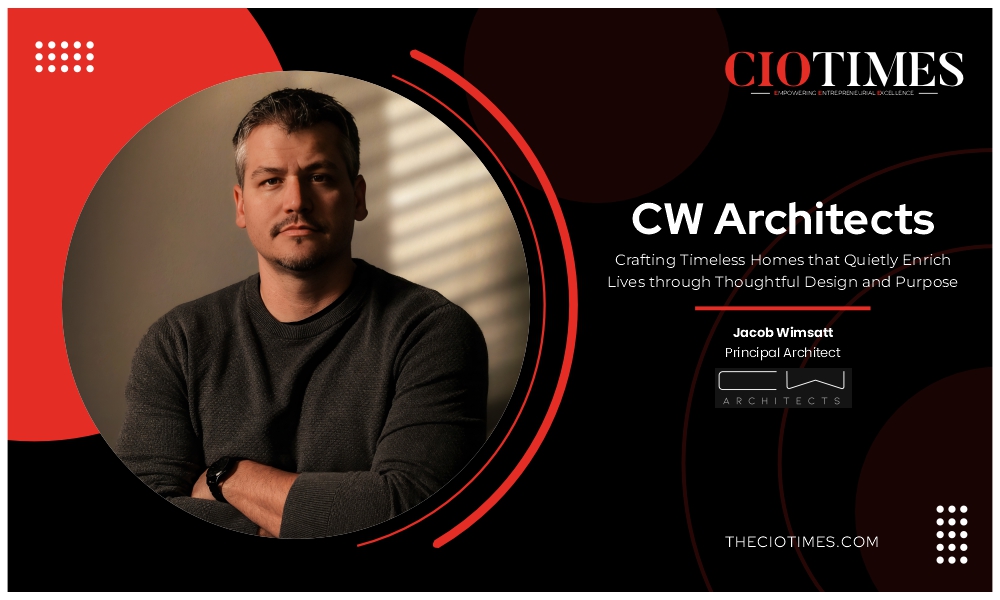
Architecture is about more than just buildings. It shapes how people live, work, connect, and experience the world around them. Today’s leading architecture and design firms are combining creativity with purpose to create spaces that are functional, sustainable, and built for the future. Jacob Wimsatt is a Principal Architect at CW Architects . CW Architects continues to raise the bar through innovative thinking, technical excellence, and a deeply personal approach to residential design.Rather than transforming skylines, CW Architects focuses on shaping custom homes that quietly enrich daily life, respond to the character of the land, and create lasting value for the families who live in them.
A Creative Journey
CW Architects’ journey has been shaped by both opportunity and resilience.
The firm was built on the partnership between Brian Clements and Jacob Wimsatt, a relationship that brought together Brian’s years of experience, strong client relationships, and dedication to service with Wimsatt’s emerging design voice, marketing influence, and technology-forward mindset. That partnership reinforced a belief that still guides the firm today: great architecture is built on trust, responsibility, thoughtful design, and excellent service. Creativity matters, but creativity alone is not enough.
Brian’s passing in 2024 marked a defining chapter for CW Architects. It prompted a period of reflection and reaffirmed that the firm could not be built around one person alone. It had to be guided by shared values: collaboration, integrity, meaningful client service, and a commitment to architecture that responds honestly to people and place.
The firm’s evolution has also been shaped by the projects it has chosen to pursue. While its early portfolio included commercial, multi-family, and development work, CW Architects gradually found its focus in custom residential architecture. The firm shifted toward clients who value design as a partnered journey and appreciate homes that respond to both their lifestyle and the character of the site.
Rather than following a signature style, CW Architects believes every home should have its own identity. Whether it is a hillside residence, a lakeside retreat, a contemporary renovation, or a family home, each project is designed to reflect the people who live there and the place it belongs.
Running a successful practice has also influenced Wimsatt’s perspective. Balancing design with project management, client relationships, technology, and day-to-day operations has reinforced the importance of a clear process that keeps clients informed and supported from start to finish.
For CW Architects, the most valuable architecture comes from blending creativity with discipline, technical expertise with empathy, and beautiful design with a genuine understanding of the people it is created for.
Timeless Design
For Jacob and the team at CW Architects, Warm Modern Architecture is not simply a design style; it is the philosophy that guides every project. While modern architecture is often defined by clean lines and minimal forms, the firm sees those as design outcomes rather than the objective. The real focus is on creating homes that feel personal, timeless, and deeply connected to the people who live in them and the landscapes they occupy.
At the heart of this philosophy are three guiding principles: minimalism, wellness, and longevity. For CW Architects, minimalism is not about creating empty spaces; it is about removing distractions so that natural light, honest materials, and the surrounding environment can take center stage. The result is architecture that feels calm, balanced, and easy to live in.
Wellness is equally important. Every home is designed to support everyday life, from moments of privacy and quiet reflection to gathering with family and friends. Thoughtful planning, natural light, and a seamless connection to the outdoors help create spaces that feel comfortable and restorative. The firm also believes great architecture should stand the test of time. Rather than following passing trends, the organization focuses on thoughtful proportions, enduring materials, and designs that continue to feel relevant for years to come.
More than anything, Warm Modern Architecture reflects a simple idea: people want homes that are both beautiful and welcoming. By balancing contemporary design with warmth, comfort, and a strong sense of place, CW Architects creates spaces that feel authentic, lasting, and uniquely personal.
Design Balance
Technology has never been an end in itself; it has always been a means to create better architecture and a better client experience. The firm’s early embrace of digital design tools helped shape its approach, reinforcing the belief that innovation should only be adopted when it adds genuine value to the design process.
This philosophy continues to guide every project. Rather than embracing new technologies simply because they are available, the organization carefully considers how each tool can improve communication, decision-making, and collaboration. Virtual reality is a good example. By allowing clients to walk through their future homes before construction begins, the firm helps them experience the scale, light, proportions, and flow of a space in ways that traditional drawings cannot. This leads to more informed decisions and greater confidence throughout the design journey.
At the same time, the practice believes technology should always remain in service of architecture, not the other way around. While tools such as BIM, virtual reality, artificial intelligence, and parametric design have transformed the profession, they cannot replace thoughtful design, careful listening, or professional judgment. Beautiful renderings and sophisticated models may present a compelling vision, but they cannot answer the deeper questions that shape a meaningful home.
Every project at CW Architects begins with understanding people before technology. The firm focuses on how clients want to live, how the site should influence the design, and how each space should feel throughout the day. Questions around comfort, privacy, connection, light, and everyday routines remain central to the design process.
Once these foundations are established, technology becomes a powerful enabler. It helps refine ideas, improve coordination with consultants, and provide builders with greater clarity before construction begins. Innovation is successful only when it strengthens the human experience. Used with purpose, technology makes the design process more collaborative, more transparent, and ultimately more responsive to the people every project is created for.
Timeless Luxury
Luxury doesn’t mean what it used to. Years ago, it was often defined by grand entrances, larger homes, and ornate details. Today, the firm sees a very different mindset. While clients still appreciate exceptional craftsmanship and beautiful design, they are placing far greater value on how a home supports their everyday lives.
More than ever, homeowners are looking for spaces that feel comfortable, peaceful, and personal. Luxury might be a light-filled kitchen where the family naturally gathers, a quiet corner to unwind, a seamless connection to the outdoors, or a home that simply makes daily routines feel easier. Clients are also moving away from chasing trends. Instead, they want homes that reflect who they are, respond to the character of the site, and continue to feel relevant for years to come.
That shift has naturally shaped the way CW Architects designs. The firm isn’t interested in creating homes that simply look luxurious; it wants them to feel that way. Every decision is made with intention, whether it’s framing a beautiful view, bringing natural light into a room, or choosing materials that age gracefully. Often, it’s the smallest details that have the biggest impact, creating spaces that feel effortless rather than extravagant.
The conversations with clients have also changed. They’re thinking beyond the present and asking how their homes will adapt over time. Longevity, sustainability, ease of maintenance, and flexibility have become just as important as aesthetics. True luxury is found in thoughtful design. It’s about creating homes that feel welcoming, connected to their surroundings, and genuinely enjoyable to live in. When architecture quietly enhances everyday life, it becomes something far more valuable than a passing trend; it becomes timeless.
Inspired Living
A home is never viewed as just a structure. It is the setting for life’s most meaningful moments, the place where families reconnect, milestones are celebrated, quiet mornings begin, and ordinary days become lasting memories. That perspective shapes the way the firm approaches every project, believing that architecture should leave people with a feeling, not simply an impression. The team believes that emotions are often influenced by the smallest design choices. The warmth of natural light, a carefully framed view, the comfort of a quiet corner, or the way one space naturally leads into another can completely change how a home is experienced. These details are rarely the first things people notice, but they are often the ones they remember.
Nature is just as important to the conversation. Whether a project sits among mature trees, overlooks a lake, rests on a hillside, or is woven into an established neighbourhood, CW Architects believes the home should feel like it has always belonged there. Instead of competing with the landscape, the architecture is designed to work alongside it, allowing both to enhance one another.
The firm also recognizes that homes quietly shape the way people live together. The placement of a kitchen, the openness of shared spaces, the privacy of a reading nook, or the connection between indoors and outdoors all influence how families gather, relax, and spend time with one another. Good design supports these everyday experiences without drawing attention to itself.
For CW Architects, every project begins with understanding the people behind it. Before thinking about forms or materials, the firm spends time learning how its clients want to live and what home truly means to them. When those conversations guide the design, the result is architecture that feels genuine, welcoming, and timeless. In the end, the firm’s greatest success is creating homes that people don’t just admire; they genuinely love living in.
Inspired by Constraints
Every project begins with a simple understanding: constraints are part of the creative process, not something that gets in the way of it. Every home comes with its own realities: budgets, site conditions, local regulations, environmental considerations, and construction challenges. Rather than seeing these as limitations, the firm sees them as opportunities to make better, more thoughtful decisions.
That mindset influences the way the team works from day one. Instead of waiting until later in the project to deal with difficult conversations, CW Architects prefers to address them early. Bringing practical considerations into the design process from the beginning helps shape architecture that is both inspiring and achievable.
Budget is a good example. The firm believes a successful design can actually be built without losing its essence. Rather than asking clients to choose between beauty and practicality, the goal is to help them understand how design, quality, complexity, and cost all work together. Honest conversations early on often lead to stronger outcomes later.
Collaboration plays an equally important role. Ideas are rarely developed in isolation. The team believes the best solutions come from open discussions, different perspectives, and a willingness to challenge ideas before they become final. The same thinking extends to builders, who are involved early in the process so that construction knowledge, costs, and site realities become part of the conversation, not unexpected obstacles further down the road.
This approach helps protect what matters most. Every project has a central idea, whether it’s celebrating a view, creating a stronger connection to nature, or designing spaces that bring people together. Once that vision is clear, the team can adapt to changing circumstances without losing the heart of the design. Preserving design integrity has never meant refusing to change. It means knowing what truly matters and making thoughtful decisions every step of the way. When creativity is supported by collaboration and grounded in real-world experience, the result is architecture that feels genuine, lasting, and deeply connected to the people who call it home. By bringing builders into the conversation early, CW Architects can understand budget, construction methods, and site realities as the design develops rather than waiting for a late value-engineering process to strip away the ideas that made the project meaningful in the first place.
Connected Design
For CW Architects, technology is not something that drives the design process—it is something that supports it. Every new tool the firm adopts has to answer one simple question: does it help create a better home and a better experience for the client? If the answer is yes, it becomes part of the process. If not, it is simply another piece of software.
That practical mindset has shaped the way the team works. Technologies such as BIM, 3D modeling, virtual reality, and parametric design allow ideas to be explored long before construction begins. Instead of asking clients to imagine a home from drawings alone, the firm can help them experience the scale of a room, understand how light will move through the space, and see how different parts of the home connect. Those conversations become more natural because everyone is looking at the same vision.
The benefits extend well beyond presentation. As a design develops, these tools give the team a clearer understanding of materials, construction complexity, and overall project scope. That means potential challenges can be identified much earlier, giving everyone more time to make thoughtful decisions instead of reacting to costly surprises later. Technology has also changed the way CW Architects collaborates with builders and consultants. Shared digital models create a common point of reference, making it easier to discuss complex details, coordinate decisions, and stay aligned throughout construction. The result is fewer misunderstandings and a smoother path from design to reality.
Even with all these advancements, the firm believes technology will never replace human connection and the human experience. It cannot decide what makes a space feel welcoming, how a home should respond to its surroundings, or what matters most to the people who will live there. Those decisions still come from listening, experience, and thoughtful design. For CW Architects, the real value of technology is not that it makes the process faster. It makes it clearer. It brings people into the conversation earlier, encourages better collaboration, and gives clients the confidence that the home they imagine is the one that will ultimately be built.
Built Better
Meaningful sustainability goes far beyond certifications, checklists, or regulatory requirements. At its core, the firm believes sustainability begins with longevity. A home that is thoughtfully designed, deeply valued by its owners, and built to endure for generations will always have a greater impact than one created around short-term trends or temporary appeal.
This perspective shapes the way the organization approaches every project. While energy performance, material selection, site orientation, and environmental responsibility remain important considerations, the firm views sustainability through a broader lens. The goal is not simply to create efficient homes, but to design places that continue to feel relevant, functional, and enjoyable decades into the future.
A key part of that philosophy is resilience. As environmental conditions, energy demands, and lifestyles continue to evolve, homes must be prepared to adapt. CW Architects believes resilient design is rooted in practicality: carefully managing natural light, responding intelligently to climate conditions, selecting durable materials, and reducing unnecessary complexity. The result is architecture that performs consistently while remaining comfortable and easy to maintain over time.
Adaptability is equally important. The firm recognizes that homes are rarely static. Families grow, children leave home, work patterns change, and new priorities emerge. Designing with flexibility in mind allows a home to evolve alongside its occupants without compromising its character or design integrity. The team also believes that sustainability should never be approached with a one-size-fits-all mindset. Every property presents its own opportunities, challenges, and environmental conditions. Understanding the relationship between the site, climate, construction context, and client lifestyle is essential to creating solutions that are both responsible and enduring.
Ultimately, the firm sees sustainability as an exercise in stewardship. It is about using resources thoughtfully, respecting the uniqueness of a place, and creating homes that remain valuable long after they are completed. The most sustainable buildings are not necessarily the ones with the latest technologies; they are the ones that continue to serve people well, adapt gracefully, and stand the test of time.
Many Voices
Great collaboration starts with a willingness to listen. Every project brings together people with different priorities, experiences, and expectations, and the firm believes those different perspectives are what make the design process stronger. Clients, builders, engineers, consultants, and designers all look at a project through a different lens, and each viewpoint has something valuable to contribute. For Jacob and the team, collaboration is not a slogan; it is a leadership practice that depends on trust, humility, and a willingness to let the best idea win.
The challenge is bringing those voices together without losing the heart of the design. A homeowner may be imagining how their family will use a space every day. A builder may be thinking about how that idea can be brought to life efficiently. An engineer is focused on performance and safety. For CW Architects, the role of the architect is to connect those conversations and shape them into a shared vision.
The firm has learned that the best ideas rarely come from one person working alone. Often, a thoughtful question from a client uncovers something that had been overlooked. A builder’s practical insight can lead to a smarter detail. An engineer’s recommendation may simplify the design while making it even stronger. When people are encouraged to speak openly, the project almost always benefits. Of course, collaboration also requires direction. Not every suggestion belongs in the final design, and knowing which ideas strengthen the project and which ones move it away from its purpose is an important part of the architect’s role. Listening is essential, but so is having the confidence to guide the process with clarity.
Communication is what keeps everything moving forward. Whether through conversations, drawings, digital models, or presentations, the team believes people make better decisions when they understand the thinking behind them. That shared understanding builds trust and keeps everyone working toward the same goal. The most successful projects are the ones where everyone feels heard, every perspective is respected, and the final design reflects the strength of true collaboration. In the end, good architecture is never the result of one voice it grows from many voices working together with a shared sense of purpose.
People-first Approach
The CW Team believes the future of residential architecture will be defined as much by human connection as by technological advancement. While tools like artificial intelligence are evolving rapidly, the firm sees them as a way to improve the design experience. The firm does not see it as a replacement. The team also acknowledges that AI has raised concerns about creativity becoming less personal. However, it also believes technology should support better communication, stronger collaboration, and more informed decision-making. Whether used to visualize a design, organize project information, or explore ideas more efficiently, these tools enhance the process while keeping clients at the center of every decision.
For the firm, designing a custom home will always be deeply personal. Every project reflects a family’s lifestyle, aspirations, budget, and the unique qualities of its site. While technology can make the journey smoother, it can never replace the trust, conversations, and guidance that define a successful architect-client relationship. CW Architects also believes technology can make architecture feel even more human. By using tools like AI, BIM, and virtual reality to simplify complex decisions and improve visualization, the team is able to spend more time listening, collaborating, and creating a better experience for clients. The firm sees another important shift in how architecture is presented. Beyond polished renderings and finished photography, clients increasingly want to understand the people, process, and care behind every project. That authenticity is becoming just as valuable as the final design itself.
The team also expects homes to continue evolving as they adapt to changing lifestyles. They are now places to live, work, gather, and recharge, while also needing to respond to environmental challenges and rising construction costs. As the industry changes, CW Architects is committed to embracing innovation without losing sight of what matters most. The firm will continue using technology to make the design process smarter and more efficient, but its greatest focus will always be creating homes that feel personal, thoughtful, and genuinely connected to the people who live in them.
Future Roles
Jacob and his team at CW believe the role of architects today extends well beyond designing buildings. Architects are increasingly expected to be trusted advisors, problem-solvers, and long-term partners who help clients navigate complexity while creating spaces that positively impact both people and the environment.
The firm sees the profession becoming even more connected to broader challenges such as climate change, housing affordability, urban growth, evolving family lifestyles, and advances in technology. While custom homes may not shape public policy, every project influences land use, energy consumption, material choices, neighbourhood character, and overall quality of life. The team helps clients understand that these broader impacts are an essential part of the design process. The firm also believes wellbeing will play a much greater role in residential architecture. As people become more mindful of how their homes influence mental health, family life, work-life balance, and connection to nature, thoughtful design will become increasingly important.
At the same time, the organization believes an architect’s role as a trusted guide will only grow in importance. With endless inspiration and advice available online, clients don’t need more information. What they need is informed judgment and practical guidance tailored to their unique needs. The team believes the most successful architects will be those who combine creativity with empathy, technical expertise with thoughtful service, and bold ideas with disciplined execution.
A Quiet Legacy
For CW Architects, the true purpose of architecture is not to build a personal legacy, but to create homes that genuinely serve the people who live in them. Rather than thinking about how its work might be viewed by future generations, the firm focuses on the families, the land, and the everyday moments that will shape each home. Every project begins with one simple question: how can this home make life better for the people who call it their own?
If the firm’s work leaves a lasting impression, the CW Architects Team hopes it reflects that mindset. The team strives to create homes that feel thoughtful, carefully considered, and deeply connected to their surroundings. They hope each project shows that time was taken to listen, understand the site, and make decisions with care. The values that guide the firm are simple: service, humility, clarity, wellness, and longevity. Those principles naturally influence every design. By responding honestly to the site, avoiding short-lived trends, and keeping the client’s needs at the center of every decision, the team believes its homes are more likely to stand the test of time.
For the firm, that lasting quality is never the starting point it’s the result of getting the fundamentals right. Every project is approached by asking how the home can support everyday life, strengthen the connection to its surroundings, and create spaces that feel calm, comfortable, and welcoming for years to come. CW Architects believes that when those questions are answered with care, meaningful architecture follows naturally. Ultimately, the firm’s goal is not to create monuments or showcase a signature style. It is to create homes that feel personal, timeless, and deeply connected to the people who live in them. If those values are quietly felt every day, then the architecture has done exactly what it was meant to do.
Also Read :- CIO Times Magazine for More information